Genesis 1
Las Escrituras en Ashéninka Ucayali del Sur del Perú · Tap a verse to see its cross-references.
About this book
About Genesis
- Among Jews the book is called Bereshith, meaning in the beginning, from its first word; Christians know it as Genesis, the Greek name used in the Septuagint, meaning creation or generation, because it tells of the origin of all things. It is the first of the five books that Jews call the Torah, the law, and that are collectively known as the Pentateuch, a Greek term for the five-fold book. Easton thinks the division into five books probably came from the Greek translators, and that the familiar book names are Greek.Sources: Easton: Genesis
- Easton's Bible Dictionary (1897) attributes Genesis to Moses and allows that he may have used older documents or traditions already current in his time. It gives no date of composition. By what Easton calls the usual computation, the narrative spans about 2,369 years.Sources: Easton: Genesis
- Easton divides Genesis into two principal parts. Chapters 1-11 give a general history of humankind down to the Dispersion; chapters 12-50 give the early history of Israel down to the death and burial of Joseph. Five figures organize the successive periods: Adam, Noah, Abraham, Isaac, and Jacob.Sources: Easton: Genesis
- Abram sojourned in Chaldea until he left Ur and traveled some three hundred miles north to Haran. Jacob later fled to Laban's house at Haran in Mesopotamia and married Laban's daughters, Leah and Rachel. The narrative then reaches Egypt: Easton takes Joseph's Pharaoh to be probably Apopi, the last Hyksos king, while some argue for the reign of Thothmes III.Sources: Abraham · Laban · Pharaoh (of Joseph)
- Easton notes that Sarah, Abraham's wife, died at one hundred and twenty-seven, the only woman's age recorded in Scripture, and that her death led Abraham to buy the cave of Machpelah as a family burial place.Sources: Sarah
Notes written with AI assistance from open sources (Theographic Bible Metadata, CC BY-SA 4.0; Easton’s Bible Dictionary, public domain) and reviewed before publishing.
Rowetsikae-takiro Maawoeni
1Owakira etanta-nakari rowetsikan-teetzi, riitakira Tajorentsi wetsika-kirori inkite eejatzi kepatsi. 2Tema tekatsi jeekatsini kepatsiki, iyoshiita inkaari eejatzi tsireni-kaakiri. Apatziro anashaata ishire Tajorentsi inkaari-mashiki.
3Ari iñaawae-tanaki Tajorentsi, ikantzi: “Okoñeetyii”, matanaka koñeetyaanaki. 4Iñaatziiro Tajorentsi kameetha okantanaka okoñeetyaanaki. Rinashitakawo koñeetyaatsiri, eejatzi tsirenikaakiri. 5Iitakiro “kitejeri”. Rooma kaari koñeeta-tsini iitakiro “tsireniri”. Ari otsireni-tanee opoñaashita okiteje-tanee, rootaki etana-kawori apaani kitejeri iroka.
6Opoñaashita ikantanee Tajorentsi: “Otzimi aatzinkironi nijaa-paeni, rootaki inashi-tyaawoni.” 7Imatakiro Tajorentsi, tzimanaki aatzinkironi nijaa. Eenitatsi nijaa jeekaneen-tsiri jenokinta, itsipa jaawiki. Ari okantanakari. 8Iitakiro Tajorentsi aatzinkirori nijaa ‘inkite”. Ari otsireni-tanee opoñaashita okiteje-tanee, rootakira apitetatsiri kitejeri iroka.
9Opoñaashita ikantzi Tajorentsi: “Apataatyaa nijaa-paeni okaatzi tzimatsiri jaawiki, okoñaatantyaari jempe opiryaa-pathate.” Matanaka ikantakiri. 10Iitakiro Tajorentsi jempe opiryaa-patha-tanaki “kepatsi”. Rooma jempe apataatanaka nijaa-paeni iitakiro “inkaari”. Ikanta raminakiro Tajorentsi kameetha okantaka. 11Opoñaashita ikantzi Tajorentsi: “Oshooki kepatsiki inaashi-yitachari inchato eejatzi pankirentsi, tzimatsini okithoki ithotee-teri eejatzi rowaetyaari.” Matanaka ikantakiri. 12Ari oshookanaki kepatsiki inashi-yitachari inchato eejatzi pankirentsi. Tzimayitanaki okithoki inchatopaeni. Ari okimitakari pankirentsi. Raminakiro Tajorentsi irokapaeni kameetha okantaka. 13Ari otsireni-tanee opoñaashita okiteeje-tanee, rootaki mawatatsiri kitejeri iroka.
14Opoñaashita ikantzi Tajorentsi: “Itzimi jenokinta oorenta-chani, riitaki inashi-takae-yaawoni kitejeri eejatzi tsireniri. Rootaki riyoetan-tyaawori kitejeri-paeni, ojarentsi-paeni, eejatzi kitejeri roemoshirenkan-teetari. 15Riitaki oorentaa-chani jenokinta ikoñeetya-kahaero jaawiki.” Matanaka ikantakiri Tajorentsi. 16Aripaete rowetsikakiri Tajorentsi apite antari oorenta-chani. Apaani antari oorenta-chari kitejeriki, riima itsipa ewonkiri oorenta-chari tsireniriki. Ari rowetsika-kiriri eejatzi maawoeni ompokiro-paeni. 17Rowanakiri Tajorentsi irika-paeni jenokinta, riitaki koñeetya-kahaerori maawoeni kepatsiki, 18kitejeriki eejatzi tsireniriki. Rootaki riyoetan-tyaawori kitejeri eejatzi tsireniri. Ikanta raminakiri Tajorentsi irika-paeni kameetha ikantaka. 19Ari otsireni-tanee opoñaashita okiteje-tanee, rootaki 4-tatsiri kitejeri iroka. 20Opoñaashita ikantzi Tajorentsi: “Ishekitee nijaaki inaashi-yitachani shimapaeni, eejatzi shiwankiri-paeni aayita-tsini.” 21Tema rowetsikakiri Tajorentsi antari-paeni jeekatsiri inkaariki, eejatzi maawoeni inashi-yi-tachari jeekatsiri nijaaki, osheniyi-tanaki. Rowetsikakiri ikaatzi inashi-yi-tachari shiwankiri-paeni aayita-tsiri. Ikanta raminakiri Tajorentsi irika-paeni kameetha ikantaka. 22Itajonkawenta-nakiri Tajorentsi, ikantziri: “Itzimayitee iryaani-paeni, ishenitan-teeyaari nijaaki-paeni. Ari ikimitee-yaari eejatzi shiwankiri-paeni rosheki-yitee kepatsiki.” 23Ari otsireni-tanee opoñaashita okiteje-tanee, rootaki 5-tatsi kitejeri iroka.
24Opoñaashita ikantzi Tajorentsi: “Roshekitee kepatsiki ikaatzi inaashi-yitachari, ipireetari-paeni, antami-weri-paeni, anayita-tsiri, maawoeni tzimatsini kepatsiki.” Matanaka ikantakiri. 25Ikanta rowetsika-yitakiri Tajorentsi maawoeni irika-paeni kameetha ikantaka.
26Opoñaashita ikantzi Tajorentsi: “Jame owetsiki atziri kimiteeni aaka. Riitaki iyothanita-tsini rawijeri jeekatsiri inkaariki-paeni, shiwankiri-paeni, ipireetari-paeni, maawoeni tzimatsiri kepatsiki, eejatzi ikaatzi anayita-tsiri jaawiki.” 27Imatakiri Tajorentsi rowetsikakiri atziri, roshiya-kaakari jempe ikanta rirori. Rowetsikaki shirampari eejatzi tsinani. 28Iroka ikantakiri Tajorentsi itajonkawenta-nakiri: “Itzimayitee peentsite, poshekiyitee. Pinampi-teeyaawo maawoeni kepatsiki, pipinkathari-wentante. Piyothanitee pawijiri maawoeni tzimatsini jaka kepatsiki. Pawijiri ikaatzi jeekayitatsiri nijaa-ki, shiwankiri-paeni, ipireetari-paeni, antami-weri-paeni, eejatzi ikaatzi anayita-tsiri jaawiki.”
29Ikantaki eejatzi Tajorentsi: “Nopakimiro okaatzi shookatsiri kepatsiki tzimatsiri okithoki, eejatzi inchato-paeni okaatzi kithoki-tatsiri. Rootaki powayitee-yaari eerokapaeni. 30Riima antami-weri-paeni, ikaatzi anayita-tsiri jaawiki, shiwankiri-paeni, rowaeyaawo inchashi-paeni.” Matanaka ikantakiri Tajorentsi. 31Ari raminakiri Tajorentsi ikaatzi rowetsikakiri kameetha ikantaka. Ari otsireni-tanee opoñaashita okiteje-tanee, rootaki 6-tatsi kitejeri iroka.
Did you know?
The creation of heaven and earth
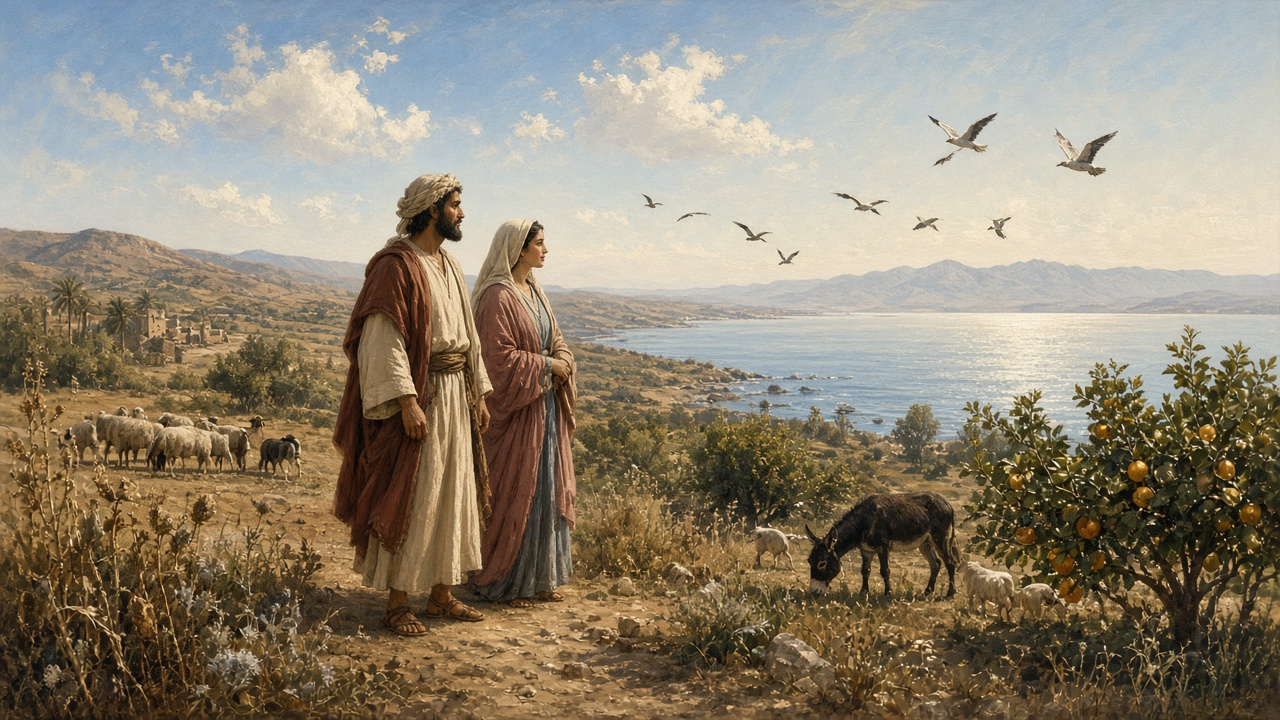
- The chapter tells the making of the heavens and the earth over six days, and each day closes with the same refrain: there was evening, and there was morning. Light is brought into being on the first day and named “day,” while the darkness is named “night.” Only on the fourth day are two great lights and the stars set in the expanse of the sky, to separate day from night and to mark seasons, days, and years.Sources: the Bible text itself
- The story opens on an earth that is formless and void, with darkness over the surface of the deep and the Spirit of God hovering over the waters. God makes an expanse and calls it “sky,” separating the waters above from the waters below. The waters under the sky are gathered into one place so that dry land, called “earth,” and the seas appear, and the earth brings forth seed-bearing plants and fruit trees.Sources: the Bible text itself
- On the sixth day livestock, land crawlers, and beasts of the earth are made, and human beings are created male and female in the image of God, blessed, and told to fill the earth and rule the other creatures. Seed-bearing plants and fruit trees are given to them for food, and every green plant to every creature that has the breath of life, and God looks at all that has been made and calls it very good. One event chronology places the start of the creation of all things in 4003 BC and gives it a duration of seven days.Sources: the Bible text itself · Creation of all things
Notes written with AI assistance from open sources (Theographic Bible Metadata, CC BY-SA 4.0; Easton’s Bible Dictionary, public domain) and reviewed before publishing.
Credits and license for this translation
Las Escrituras en Ashéninka Ucayali del Sur del Perú
The Holy Bible in the South Ucayali Ashéninka language of Peru
Las Escrituras en Ashéninka Ucayali del Sur del Perú
copyright © 2008 Wycliffe Bible Translators, Inc.
Language: Ashéninka Ucayali del Sur (Ashéninka, South Ucayali)
Translation by: Wycliffe Bible Translators
This translation is made available to you under the terms of the
Creative Commons Attribution-Noncommercial-No Derivatives license 4.0.
You may share and redistribute this Bible translation or extracts from it in any format, provided that:
You include the above copyright and source information.
You do not sell this work for a profit.
You do not change any of the words or punctuation of the Scriptures.
Pictures included with Scriptures and other documents on this site are licensed just for use with those Scriptures and documents.
For other uses, please contact the respective copyright owners.
2016-06-08
Source: http://ebible.org/cpy/ · eBible.org