Exodus 13
Las Escrituras en Ashéninka Ucayali del Sur del Perú · Tap a verse to see its cross-references.
1Ikanta rapiiteero Tajorentsi iñaanateeri Moisés, ikantziri: 2“Pashita-kaeyaanari rantarite-paeni itzimakaan-teetani. Tema maawoeni omapokaaniro otzimiri otomi-paeni pisheninka Israel-paeni, eejatzi ashi ipireetari-paeni, tema riitaki nashi irika-paeni.”
3Ari rapiiteero Moisés ikanteeri isheninka-paeni Israel-paeni, ikantziri: “¡Nosheninkapaeni! Pikenkishire-teero kiteejeri pishitowan-taari Apitantoniki, jempe rompera-wiitakimi. Tema ishintsinka Tajorentsi romishitowan-teemiri. Rootaki eero powantaawo rowaetee-tziro shineya-kaerori atanteetari. 4Tema irika kashiri iiteetziri “Eerikiri”, riitaki pishitowan-tayitaari. 5Riitaki irika kashiri poemoshirenkan-teeyaari paata aririka pahaero inampi Owinteni-jatzi, Thaawantaarinijatzi, Ochempi-weni-jatzi, Thaantewenijatzi, eejatzi Kayaawenijatzi. Tema rootaki ikashiya-kaakiriri Tajorentsi paerani awaejatzite pashitee-yaawo. Ari oshookapae janta osheki pankirentsi, eejatzi jempe itzimapae osheki ipireetari. 6Tema okaatzi 7 kiteejeri powaeyaawo atanteetari kaari rowaeteetzi shineya-kaeroni. Roo kanteencha aririka omonkaa-tapaeya 7-tatsiri kiteejeri, poemoshirenkaeri Tajorentsi. 7Tema okaatzi 7 kiteejeri rowaetyaawo atanteetari kaari rowaeteetzi shineya-kaeroni. Eero otzimi eepichokiini pinampiki opatha rowaetee-tzirori shineya-kaerori. 8Otzimatyee pikaman-teeri paata pitomi, pikanteeri: ‘Opoñaantari oemoshirenkiro iroka kiteejeri, tema eenitatsi rantzimota-kinari paerani Tajorentsi noshitowan-taari nojeeka-witaka Apitantoniki.’ 9Poshiya-kaanteero iroka ñaantsi pikenta-kotyaawomi pakoki eejatzi pipankaki. Pikenkithata-koteero riyotakahaemiri Tajorentsi, tema ishintsinka Tajorentsi raanteemiri paerani pijeeka-witaka Apitantoniki. 10Otzimatyee pametee-yaawo poemoshirenkaero ojarentsiki-paeni aririka omonkaa-tapaeyaa. 11Ari rareeta-kahae-mi Tajorentsi iipatsiteki Owinteni-jatzi, jempe otzimi ikashiya-kaakimiri eeroka eejatzi piwaejatziteni. Aririka rashita-kahae-miro eeroka, 12pashita-kahae-yaari eerokapaeni Tajorentsi maawoeni romapokaetani itzimaetziri. Ari pikantiriri shirampari omapokani otzimiri pipira-paeni, tema riitaki Tajorentsi ashitariri. 13Riima omapokani otzimiri iryaani pipira ikyaakoetari, pipoyaa-tantyaari oryaanitsiti pipira kaari ipinkaetzi. Eerorika itzimi pipoyaa-tantyaariri, pikatzikiri. Ari pikantiriri eejatzi itomi-paeni ikaati picharini-teeyaari, pipoyaa-tantyaari iryaani pipira rowaetari. 14Aririka rojampitimi pitomi-paeni, ikantimi: ‘Iita kantakota-chari iroka?’, pikantiri eeroka: ‘Rootaki kantakotacha ishintsinka Tajorentsi romishitowan-teeri ajeekawita Apitantoniki, rompera-waetee. 15Okantakaakawo ikijo-shire-tawaetaki pinkathari Faraón, tee ishinetana niyaatee, rootaki rowamaan-takariri Tajorentsi rantariti itomi-paeni Apitantoni-jatzi, ari ikanta-kiriri eejatzi omapokachari otzimiri iryaani ipira-paeni. Rootaki notan-taanariri Tajorentsi shirampari omapokani otzimiri iryaani nopira. Ari nokanteeriri etawori itomi-paeni notyomi-paeni. 16Pikemita-kaantiro eeroka pikenta-kotyaawomi ñaantsi pakoki eejatzi pipankaki, tema shintsiri Tajorentsi ramanteeri paerani ajeekawitaka Apitantoniki.’”
17Ikanta ishineteeri paerani Faraón riyaatee Israel-paeni, tee ikinakaa-neeri Tajorentsi iipatsiteki Kinakinawaetaniripaeni, ari eenta-thakiwita. Tema ikantakitzii Tajorentsi: “Aririka iñaakiro Israel-paeni omanarentsi-paeni, ari ikowanaki ipiyaneero Apitantoniki.” 18Rootaki itapota-kaantakariri Tajorentsi ochempi-mashiki roojatzi Inkaariki Kityonkaariki. Tema wetsikaeyakani Israel-paeni rowarityaa ishitowan-taari Apitantoniki. 19Tema ramaero Moisés itonki-pooki José, rootaki ikowakiri paerani José, Ikantaki: “Aririka ineshironka-teemi paata Tajorentsi, nokoyi pikantina kameetha, paaneenawo paata notonki-pooki.” 20Ikanta rawijanaki Israel-paeni ijeekawi-tapaaka Pankoshaaki, areetee-yakani Shewamentaaki jempe etanakawo otonkaawo ochempi-mashi. Ari imahaeya-paakini. 21Riitaki Tajorentsi jewatapiin-takiriri. Tema iñiiro okantajamata kitejipaeteki menkori, riyotzi ari ikineeyini. Rooma tsireni-paeteki opaamatzi menkori, rootaki okoñaatantari jempe ikini ranashi-teeyini. Ari okanta ranashi-tantakari kiteejeriki eejatzi tsireniriki. 22Tema tee ookiri Israel-paeni kitejipaeteki okantajamataha menkori, ari okimitzitakari tsireni-paeteki okoñeetyaa-kotziri opaamajamataki.
Did you know?
The Firstborn and the Departure from Egypt
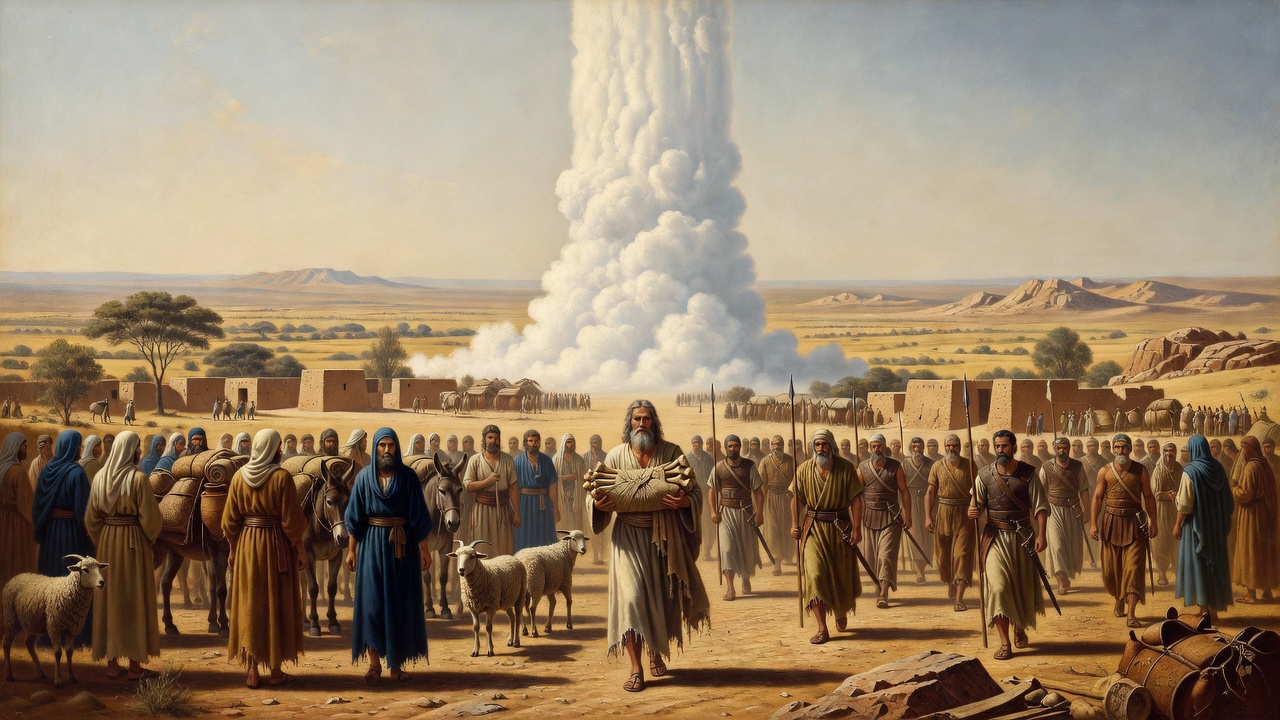
- God did not lead them by the shorter road through the land of the Philistines, lest war make them return to Egypt, but by the wilderness toward the Red Sea, which separates Asia from Africa. They set out from Succoth, the first encampment after leaving Ramesses and also the civil name of Pithom, and made their third camp at Etham, on the edge of the wilderness. Etham is perhaps another name for Khetam, or “fortress,” on the wall of Shur, which ran from the Mediterranean to the Gulf of Suez, and the camp was probably a little west of modern Ismailia.Sources: the Bible text itself · Succoth · Etham · Red Sea
- Moses took the bones of Joseph with him, because Joseph had made the sons of Israel swear that, when God attended to them, they must carry his bones from that place. Joseph was the elder of the two sons of Jacob by Rachel.Sources: the Bible text itself · Joseph (son of Jacob)
- The LORD told Moses to consecrate every firstborn male; the firstborn from every womb among the Israelites, both of people and of animals, belonged to him. Every firstborn donkey was to be redeemed with a lamb, or else have its neck broken, and every firstborn son was to be redeemed. When a son asked what this meant, he was to be told that Pharaoh had stubbornly refused to let them go, so the LORD killed every firstborn in Egypt, of people and of animals, and brought them out of the house of slavery.Sources: the Bible text itself
Notes written with AI assistance from open sources (Theographic Bible Metadata, CC BY-SA 4.0; Easton’s Bible Dictionary, public domain) and reviewed before publishing.
Places in this chapter
Only places identified with high confidence are shown (90% or more according to the scholarly sources compiled by OpenBible). Period map: DARE (Digital Atlas of the Roman Empire), CC BY 4.0; modern map: © OpenStreetMap contributors; places: OpenBible.info (CC BY 4.0).
Credits and license for this translation
Las Escrituras en Ashéninka Ucayali del Sur del Perú
The Holy Bible in the South Ucayali Ashéninka language of Peru
Las Escrituras en Ashéninka Ucayali del Sur del Perú
copyright © 2008 Wycliffe Bible Translators, Inc.
Language: Ashéninka Ucayali del Sur (Ashéninka, South Ucayali)
Translation by: Wycliffe Bible Translators
This translation is made available to you under the terms of the
Creative Commons Attribution-Noncommercial-No Derivatives license 4.0.
You may share and redistribute this Bible translation or extracts from it in any format, provided that:
You include the above copyright and source information.
You do not sell this work for a profit.
You do not change any of the words or punctuation of the Scriptures.
Pictures included with Scriptures and other documents on this site are licensed just for use with those Scriptures and documents.
For other uses, please contact the respective copyright owners.
2016-06-08
Source: http://ebible.org/cpy/ · eBible.org