Exodus 10
Las Escrituras en Ashéninka Ucayali del Sur del Perú · Tap a verse to see its cross-references.
1Eejatzi rapiiteeri Tajorentsi ikanteeri Moisés: “Piyaati piñiiri Faraón, tema naaka kantakaari ikijo-shire-tawae-tantari rirori eejatzi inampina-paeni, rootaki iñaantee-tyaawori kaari iñaapiinteetzi. 2Rootaki pikaman-teeriri pitomi-paeni eejatzi picharini-paeni okaate nantayi-teeri Apitantoniki, tema noñaaha-yitee-ri kaari iñaapiin-teetzi. Ari piyoyiteeri eerokapaeni naakataki Tajorentsi.” 3Ari riyaatanaki Moisés eejatzi Aarón iñiiri Faraón, ikantapaakiri: “Iroka ikantzi Tajorentsi, Itajorentsite Heber-paeni: ‘¿Jempema okaateka pipakaero pikijo-shire-yitzi? Pishineteri riyaatee ikaatzi nashitari naaka, ipinkatha-teena. 4Eekiro-rika pithañaa-tyeeyaari, ari namaki inkaamani osheki tsitsiri pinampiki. 5Ipamanka-paakiro kepatsi, eero okaankitee eepichokiini. Ithonka-paakiro royaawo tzimahaan-taneen-tsiri owamayiromi jiriniki, ithonka-paakiro royaawo okaatzi shookatsiri inchato-paeni. 6Ipiyota-paakyaa pipankokipaeni, ari ikantzitakyaa ipankoki pinampina-paeni, eejatzi maawoeni ipankopaeniki Apitantoni-jatzi. Iñahaeteero kaari iñaayitzi paerani ashitzimiri eejatzi piwaejatzite-paeni.’” Ithonkakiro ikenkitha-waetakaeri Faraón, piyanaa irirori. 7Ikantanakiri inampina-paeni Faraón: “¡Pinkathari! ¿Jempema okaateka ipakaero rajarii-matee irika atziri? Pishineteri riyaatee isheninka-paeni, ipinkatha-teeri Itajorentsite. ¿Tema piñiiro rowaariperotaitakero anampi Apitantoni?” 8Ari rapiitakiro Faraón ikaemakaan-tziri Moisés eejatzi Aarón, ikantakiri: “Piyaati pipinkathateri Pitajorentsite. Roo kanteencha nokoyi pikantina jempe-rika itzimi jatatsini.” 9Ikantzi Moisés: “Tema maawoeni niyaateeyini: eentsi-paeni eejatzi antariki-paeni, notyomi-paeni eejatzi nishintyo-paeni. Ari naaneeri maawoeni nopira-paeni. Tema antawo okantyaa noemoshirenkaeri Notajorentsite.” 10Ikantanaki Faraón: “Tema tee omana pikoyi pantiro kaari-perori. ¿Poshiya-kaantzi ari noshine-takimi piyaatee, ari paayita-neeri eejatzi peentsite-paeni? Omawitakyaa itsipatimi Tajorentsi eerokapaeni. 11Eero omata pikoyiri. Piyaateeyeni eeroka antari-paeni, pipinkathateri Tajorentsi, tema rootaki pikowae-yakirini.” Roepiyawakiri Faraón tee ikoyi iñiiri.
12Ari rapiiteero Tajorentsi ikanteeri Moisés: “Powaanka-wako-teeyaa jempe ojeeki Apitantoni, tema namatyee osheki tsitsiri, ithonkiro pankirentsi tzimahaan-taneen-tsiri kaari owamaanaki jiriniki.” 13Ari rowaanka-wako-tanaka Moisés jempe ojeeki Apitantoni roteeyiro ikotzi, ikantakaakawo Tajorentsi otampyaataki kiteejeriki eejatzi tsireniriki. Okanta okiteeje-tamanee, iñeetatzii osheki tsitsiri amakiri tampyaa kinapaen-tsiri ishitowa-piintzi ooryaa. 14Tema piyotapaaka tsitsiri-paeni Apitantoniki. Tee otzimae jempe okaankiitye eepichokiini. Maperori ishenita-paaki, tee iñeetziro paerani, eero iñeeteero paata eejatzi. 15Ithonka ipamanka-paakiro maawoeni nampitsi, tsirenitankyaa-tapaaki kepatsiki. Ithonka rowapaakawo pankirentsi, maawoeni okithoki-paeni inchato okaatzi tzimahaan-taneen-tsiri kaari owamayi jiriniki. Mapero ithonkakiro, tee iñeetee Apitantoniki jempe eerishitee inchatoshi, omataka owaantsiki eejatzi antami-mashiki.
16Ari ishintsi-tanaki Faraón ikaemakaan-takiri Moisés eejatzi Aarón, ikantakiri: “Nokaaripero-tzimotakiri Pitajorentsite, ari nokantzi-takimiri eejatzi eeroka. 17Roo kanteencha, nokoyi pipeyako-teenawo nantzimota-kimiri, eero napiiteero. Pikowakoteri Tajorentsi, ipeyeeri nopankoki naaka irika-paeni owamaan-taniri.” 18Ikanta ishitowanee Moisés ipankoki Faraón ikenkitha-waetakaeri, ramananeeri Tajorentsi. 19Ari ikantakaakawo Tajorentsi oshintsiti otampyaati okinapaakiro ikyaapiintzira ooryaa, othonkaneeri aanakiri tsitsiri-paeni ookakiri Inkaariki Kityonkaariki. Tee iñeetaneeri tsitsiri maawoeni nampitsiki Apitantoniki. 20Roo kanteencha Tajorentsi, eekiro ikijo-shire-takaa-tziiri Faraón, tee ishinetziri riyaatee Israel-paeni.
21Ari rapiiteero Tajorentsi ikanteeri Moisés: “Pitzinaa-wakoti jenokinta, otsirenikaakitantyaari maawoeni Apitantoniki, tema otsirenikaakiperotatyee kantacha roteeyeetiro.” 22Ari itzinaa-wako-tanaka Moisés jenokinta, tema mawa kiteejeri otsirenikaakitaki maawoeni Apitantoniki. 23Tema tekatsi ñahaerini isheninka, okaatzi mawa kiteejeri tee okantya riyaayite jempe-rika-paeni. Riima Israel-paeni koñeetyaakotatsi ipankoki rirori-paeni. 24Ari rapiita-neero Faraón ikaemakaan-takiri Moisés, ikantakiri: “Piyaati nimaeka pipinkatha-teeri Tajorentsi, paanakiri pitomi-paeni. Apatziro pookanakiri pipira-paeni.” 25Ikantzi Moisés: “Eeroka pawakinani piratsi notayiri, riijatzi kachaa-teyamaitatsini notayiniri Tajorentsi. 26Tema otzimatyee naanakiri ikaatzi nopiratari naaka. Eero nookanaki apaani, riitaki noemoshirenkan-tapiin-tariri Notajorentsite. Tema eerorika nayiri, tee niyotzi oetarika noemoshirenkan-tyaariri Tajorentsi aririka nareetakyaa jempe noshiritawo.” 27Tema riitaki Tajorentsi kantakaakawo ikijo-shire-tantari Faraón, tee ishinetziri riyaayitee. 28Ikantanakiri Faraón irika Moisés: “¡Piyaati! Tee nokoyi pipiyi piñiina. Aririka napiitakiro noñiimi, aritaki pikamaki.” 29Ikantzi Moisés: “¡Kameetha pikantakiri! Eero napiiteero noñiimi.”
Did you know?
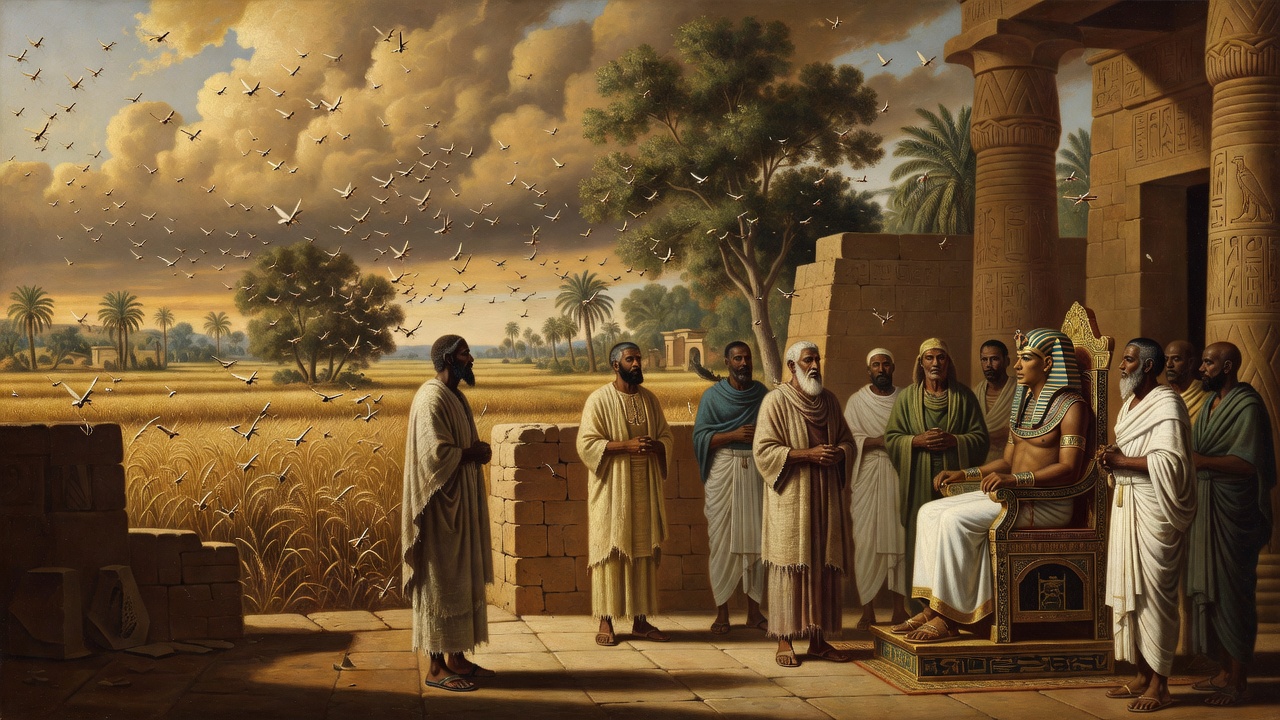
Locusts and Darkness in Egypt
- The conversations in this chapter are among the interviews that one reference places at Zoan, the residence of the Pharaoh of the Exodus. That reference identifies him as probably Menephtah I, the fourteenth and eldest surviving son of Rameses II, while noting that it is still a question whether Seti II or his father Menephtah was that Pharaoh.Sources: Pharaoh (of the Exodus) · the Bible text itself
- When Pharaoh asked that the locusts be removed, a very strong west wind carried them into the Red Sea, and not a single locust remained in Egypt. That sea extends about 1,400 miles along the west coast of Arabia and separates Asia from Africa; at Ras Mohammed, about 200 miles from its northern end, it divides into the Gulf of Suez on the west and the Aelanitic Gulf, now the Bahr el-Akabah, on the east.Sources: Red Sea · the Bible text itself
- Aaron went with Moses whenever the two stood before Pharaoh. He was the eldest son of Amram and Jochebed, born in Egypt three years before Moses, and he had been sent to meet his brother and cooperate with him in bringing about the Exodus.Sources: Aaron · the Bible text itself
Notes written with AI assistance from open sources (Theographic Bible Metadata, CC BY-SA 4.0; Easton’s Bible Dictionary, public domain) and reviewed before publishing.
Places in this chapter
Only places identified with high confidence are shown (90% or more according to the scholarly sources compiled by OpenBible). Period map: DARE (Digital Atlas of the Roman Empire), CC BY 4.0; modern map: © OpenStreetMap contributors; places: OpenBible.info (CC BY 4.0).
Credits and license for this translation
Las Escrituras en Ashéninka Ucayali del Sur del Perú
The Holy Bible in the South Ucayali Ashéninka language of Peru
Las Escrituras en Ashéninka Ucayali del Sur del Perú
copyright © 2008 Wycliffe Bible Translators, Inc.
Language: Ashéninka Ucayali del Sur (Ashéninka, South Ucayali)
Translation by: Wycliffe Bible Translators
This translation is made available to you under the terms of the
Creative Commons Attribution-Noncommercial-No Derivatives license 4.0.
You may share and redistribute this Bible translation or extracts from it in any format, provided that:
You include the above copyright and source information.
You do not sell this work for a profit.
You do not change any of the words or punctuation of the Scriptures.
Pictures included with Scriptures and other documents on this site are licensed just for use with those Scriptures and documents.
For other uses, please contact the respective copyright owners.
2016-06-08
Source: http://ebible.org/cpy/ · eBible.org