1 Samuel 13
Las Escrituras en Ashéninka Ucayali del Sur del Perú · Tap a verse to see its cross-references.
Rowayiriteetyaari Filistia-jatzi
1Antaritapaaki Saúl retanta-nakawori ipinkathari-wentziri Israel-paeni. Okanta awijanaki apite ojarentsi ipinkathari-tzira, 2riyoyaaki 3,000 rowayirite Israel-paeni. Rookanaki itsipa 2,000 itsipatyaari janta Micmas eejatzi tonkaariki Betel-ki, riyoyaaki itsipa 1,000 jeeka-neentsiri itsipatyaari Jonatán janta Gabaa-ki iipatsiteki Benjamín-paeni. Ikaatzi tzima-haanta-paentsiri atziri, roepiyeeri Saúl riyaatee ipankoki. 3Ithonkaa-takiri Jonatán rowayiritari Filistia-jatzi jeekatsiri omenthaki. Riyotee-yakini Filistia-jatzi okaatzi awijeen-tsiri. Ari itziwoo-takaantaki Saúl riyotan-tyaari maawoeni, tema ikamanteeyatziirini: “¡Pikemi maawoeni Heber-paeni!” 4Maawoeni Israel-paeni riyotaki ithonkaa-takiri Saúl rowayirite Filistia-jatzi. Rootaki ikijaneen-tantariri Filistia-jatzi irika Israel-paeni. Ipiyotee-yakani Saúl janta Gilgal-ki itsipatari atziri-paeni. 5Ipiyotzitaka eejatzi Filistia-jatzi rowayiri-tyaari Israel-paeni. eenitatsi 30,000 ishiyako-mento, 6,000 icaballote, osheki owayiri-paeni kinatsiri jaawiki, roshiyakawo impaneki tzimatsiri antawaaki inkaare. Jataki Micmas, rowetsika-yitaki ipanko-sheta janta ikyaa-piintzi ooryaa Bet-awén-ki. 6Ikanta iñaakiro ikaaripero-takotaki Israel-paeni ithonka-tyeeri Filistia-jatzi, omanee-yanakani impeeta-mooki, shiranta-tapiki, otenkanaa-yitzira eejatzi owaanka-naataha nijaa. 7Montyaanaka itsipa-paeni intatsikironta Jordán-ki, ikinaki iipatsiteki Gad eejatzi rashiki Galaad. Roojatzi ijeeki Saúl rirori janta Gilgal-ki, tema thaawaeyakini rowayirite. 8Ari royaawentaka Saúl okaatzi 7 kitejeri, ari okaatzi kitejeri ikanta-kiriri Samuel. Tee rareetzimaeta Samuel janta Gilgal-ki, piyeeyanaani atziripaeni. 9Ikantaki Saúl: “Pamaki tsimeri atayiniriita Tajorentsi, raapatziyan-teeri.” Riitaki matakirori Saúl itaakiniri. 10Ari ithonki-matakiro Saúl itayiniri, areetapaaka Samuel. Jatanaki Saúl itonkyo-tawakyaari, rowetha-tawakyaari. 11Ikanta-wakiri Samuel: “¿Iitakama pantanta-kawori awijeen-tsiri?” Ikantzi Saúl: “Noñaakiri ipiyeeyani atziri-paeni, noñaakiro tee pareetya pikanta-witakaha. Tema piyotee-yakani Filistia-jatzi janta Micmas-ki. 12Noshiyakaa-mintheetzi ari ipokaki rowayiritina Gilgal-ki, tee nokowako-taajeetziri Tajorentsi. Rootaki notaan-takariri tsimeri. 13Rakanaki Samuel, ikantzi: “Pishinki-wenta-shitaka eeroka pimatan-takawori iroka, tee pimatziro inintakaantziri Tajorentsi Piwinkatharite. Aritaki ishineta-kimiromi Tajorentsi ashi powaeromi pipinkathari-wenteerimi Israel-paeni. 14Eero piñiimaetawo okijotzi pipinkatharitziira. Ari raminee Tajorentsi itsipa ikoyiri rirori, riitaki rowaeri jewateerini ikaatzi rashitari, tema pipiyatha-takari eeroka ikanta-witakimiri.”
Did you know?
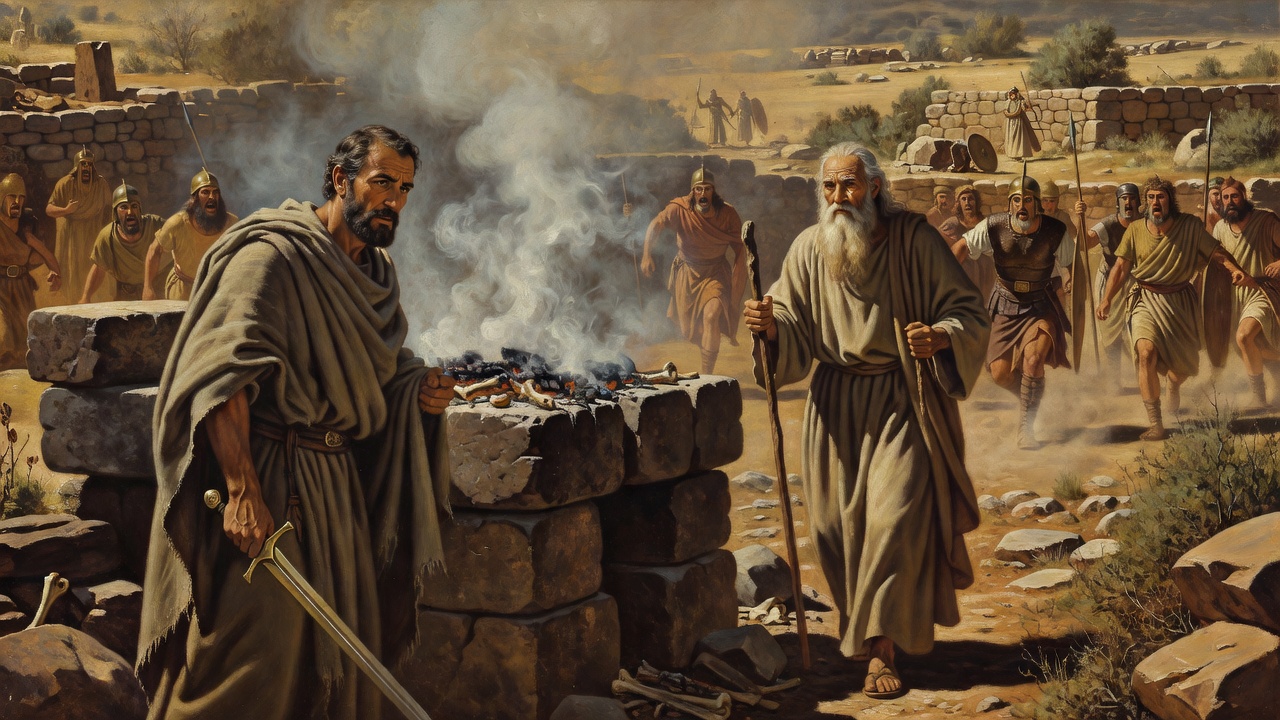
Saul's Impatience and the Philistine Threat
- The Philistines maintained a monopoly on metalworking to prevent the Israelites from forging weapons. As a result, the Israelites had to travel to Philistine territory and pay fees to sharpen their iron farming tools, leaving only Saul and his son Jonathan equipped with swords or spears.Sources: the Bible text itself
- When facing an overwhelming Philistine force, Saul waited seven days at Gilgal for Samuel to offer sacrifices. As his fearful soldiers began to scatter, Saul offered the burnt offering himself, prompting Samuel to declare that Saul's royal dynasty would not endure.Sources: the Bible text itself · Gilgal
- The military confrontation took place across the rugged hill country of Benjamin, with Philistine forces camped at Michmash and Saul's men stationed at Geba. A steep ravine known as the pass of Michmash separated the two opposing armies.Sources: the Bible text itself · Michmash · Geba
Notes written with AI assistance from open sources (Theographic Bible Metadata, CC BY-SA 4.0; Easton’s Bible Dictionary, public domain) and reviewed before publishing.
Places in this chapter
- Gilead · Today: Gilead 1 · 32.187, 35.692 · verse 7
- Jordan · Today: Jordan River · 31.761, 35.558 · verse 7
- Beth-horon · Today: Beit Ur al Tahta · 31.895, 35.084 · verse 18
Only places identified with high confidence are shown (90% or more according to the scholarly sources compiled by OpenBible). Period map: DARE (Digital Atlas of the Roman Empire), CC BY 4.0; modern map: © OpenStreetMap contributors; places: OpenBible.info (CC BY 4.0).
Credits and license for this translation
Las Escrituras en Ashéninka Ucayali del Sur del Perú
The Holy Bible in the South Ucayali Ashéninka language of Peru
Las Escrituras en Ashéninka Ucayali del Sur del Perú
copyright © 2008 Wycliffe Bible Translators, Inc.
Language: Ashéninka Ucayali del Sur (Ashéninka, South Ucayali)
Translation by: Wycliffe Bible Translators
This translation is made available to you under the terms of the
Creative Commons Attribution-Noncommercial-No Derivatives license 4.0.
You may share and redistribute this Bible translation or extracts from it in any format, provided that:
You include the above copyright and source information.
You do not sell this work for a profit.
You do not change any of the words or punctuation of the Scriptures.
Pictures included with Scriptures and other documents on this site are licensed just for use with those Scriptures and documents.
For other uses, please contact the respective copyright owners.
2016-06-08
Source: http://ebible.org/cpy/ · eBible.org