Revelation 21
KAMEETHARI ÑAANTSI: Iñaaventaitzirira Avinkatharite Jesucristo · Tap a verse to see its cross-references.
Ovakerari inkite, ovakerari kipatsi
1Ipoña noñaake ovakerari inkite, ovakerari kipatsi. Tema aritake aperotaka paisatori inkite, eejatzi paisatori kipatsi. Te iriñeetairo inkaare. 2Ipoña noñaake oshaviinkapaake inkiteki aparoni nampitsi tasorentsitatsiri, ipaitayeetziri “Ovakerari Jerusalén.” Iri Pava ovayiitakaantakerori. Ovaneenkakitaka, iroovaitake aparoni tsinane ovaneenkatashitari oimentyaari. 3Ari jiñaavaitaitanake shintsiini janta saikamentotsiki, ikantaitzi: “¡Pamene! Arira osaikimotairi kipatsisatziite iroka tasorentsithaante tsika inampitaro Pava. Arira itsipatajaantaari Pava tsika isaikayetzi isheninkataari. 4Tema Pava osheyookiperotairine, imposhenkayetaiyaari. Eero ikaamaneyetai, tekatsi onkatsitzimovaitai, tekatsi iragaachane, tekatsi kemaantsivaitaachane. Tema ari okaratapaake maaroni iroka.”
5Ipoña iñaavaitanake thointainchari saikamentotsiki, ikantzi: “Novakeratakairo maaroiteni.” Ikantanake eejatzi: “Posankinatero iroka, tema kyaaryoori ñaantsi onatzi, ari okantaitatyeeni.” 6Ari ikantana: “¡Ari overaapaaka! Naakatake oshiyarori etarori osankinarentsi. Naaka oshiyarori ovekaraantarori eejatzi. Naakatakera etakaantanakarori. Naakatake thonkaironeri. Tzimatsirika miretatsiri, ari nomiretakaiyaari jiñaa tsika otzimi ovañaantatsiri. Impashiitaiyaari, te opinarontsita. 7Irootakera noshinetakeneri kitsirinkaneriite. Naaka Pava itzimi iñaapinkathayetai. Iriitake nonkempitakaantairi notomiite. 8Iro kantamaitacha eero notomitaari tharontziite, kisoshireri, kisaneentaneri, ovantaneri, mayempiri, matsi, ñaapinkathatakeriri oshiyakaarontsi, thairiite. Aña iriira taayetaachane opaampapirothaatake inkaare, kiteryeenkataintsiri oyachaarinka. Iroora apitetanaintsine inkamayetai.”
Ovakerari Jerusalén
9Ikanta okaratapaake iroka, ipokashitapaakena aparoni maninkari ovasankitaantaneri itzimi oirikakerori itasone. Ikantapaakena: “Pimpoke, noñaakemiro oshiyakaaventari tsinaneka ontzime iinantyaari Oisha.” 10Jaashinenkatanakena tonkaari otzishiki. Joñaakakenaro nampitsi tasorentsitatsiri ipaitayeetziri Jerusalén, otzimi jovayiitairi Pava opoñagaaro inkiteki. 11Janta nampitsiki, ari jiñeetairori irovaneenkaro Pava, shipakiryaavaitake, iroovaitake okanta mapiki porekatsiri, pinaperotachari. 12Iniroite okantaka otantonampiro. Tzimatsi 12 tsika ikyaapiintaitzi. Tzimatsi ikaratzi 12 maninkariite aamakoventayetarori tsika ikyaapiintayeetzi. Ari josankinayeetakero ivairo itomiite Israel-ni. 13Okaratzi mava ikyaapiintayeetzi montetakariri ishitovapiintzi ooryaa. Eejatzi ikyaapiintzira ooryaa, okaratzi mava. Katonkokero, okaratzi mava. Kirinkakero, okaratzi mava. 14Tzimatsi okaratzi 12 iniroite mapi otzitakerori otantonampi. Ari osankinayetakari 12 ivairopayeeni otyaantajanoriite.
15Irika ñaanatakenari, joirikake imonkaramentoshithaki jovetsikayeetziri oro, iro irimonkaratantyaarori otantonampi, eejatzi tsika ikyaapiintayeetzi. 16Ari omonkaranampitavakaa iroka nampitsi, te anaavakaa. Ikanta irika, jetanakaro jimonkaranampitakero, okaratzi 2,200 kilómetro osanthanka, eejatzi okaratake ojenokitzi. 17Ipoña jimonkaratakero eejatzi otantonampi, okaratzi otontatzi 144 jimonkaratantakaro ikonaki. Iroora jimonkaratantakari irika maninkari kempitarori ikonaki atziri otzimi jimonkaratantapiintakari irirori. 18Iroka otantonampi, oshiyavaitakaro mapi porekaki okantaka. Jiyoshiita oro jovetsikantayeetakarori nampitsi, porekaki okantaka. 19Itzinkamiitantakarori otantonampi, iro jaayeetake porekakiyetatsiri mapiki, pinaperoyetachari. Jiroka ovairopayeeni mapiki tsika okanta jovetsikayeetakero: jaspe, zafiro, ágata, esmeralda, 20ónice, cornalina, crisólito, berilo, topacio, crisopraso, jacinto, amatista. 21Okaratakera 12 ikyaapiintayeetzi, iroora jaayeetake antaroperori kitamarori mapi, iro jimokakeri jovetsikantakarori. Maaroni avotsite nampitsi, jiyoshiita oro jovetsikayeetantakarori, porekaki okantaka.
22Te ontzimapai janta tasorentsipanko. Tema iro inampi Avinkatharite Pava Shintsijanokitatsiri itsipataari Oisha. Iriiyetajaantakera impoyaataiyaarone tasorentsipanko janta. 23Te inkovajaantaiya ooryaatsiri, eejatzi kashiri. Tema irovaneenkaro Pava kitainkatakagairone. Iri Oisha kempitaiyaarine ootamentotsi. 24Iriitake kitainkatakotairine iraniiyetaira atziriite janta. Pinkathariite tzimayevetachari irovaneenkaro kipatsiki, kameethaini irisaikayetai janta iñaapinkathatairi Pava. 25Eero otsirenitapai, aña okantaitatyeeni onkitaitapai. Te ashitanetaiya nampitsi janta. 26Ikaratzi tzimayevetachari irovaneenkaro kipatsiki, itzimi iñaapinkathayeetairi, kameethaini isaikayetai janta iñaapinkathatairi Pava. 27Eero itzimai janta kaariperotapaatsineri, eero iñeetairi janta antayetairone ipinkayeetziri, eero itzimapai eejatzi thaiyapaachane. Intaani inampiyetaiyaaro ikaratzi josankinatakoyetakeri Oisha irañaayetai janta.
Did you know?
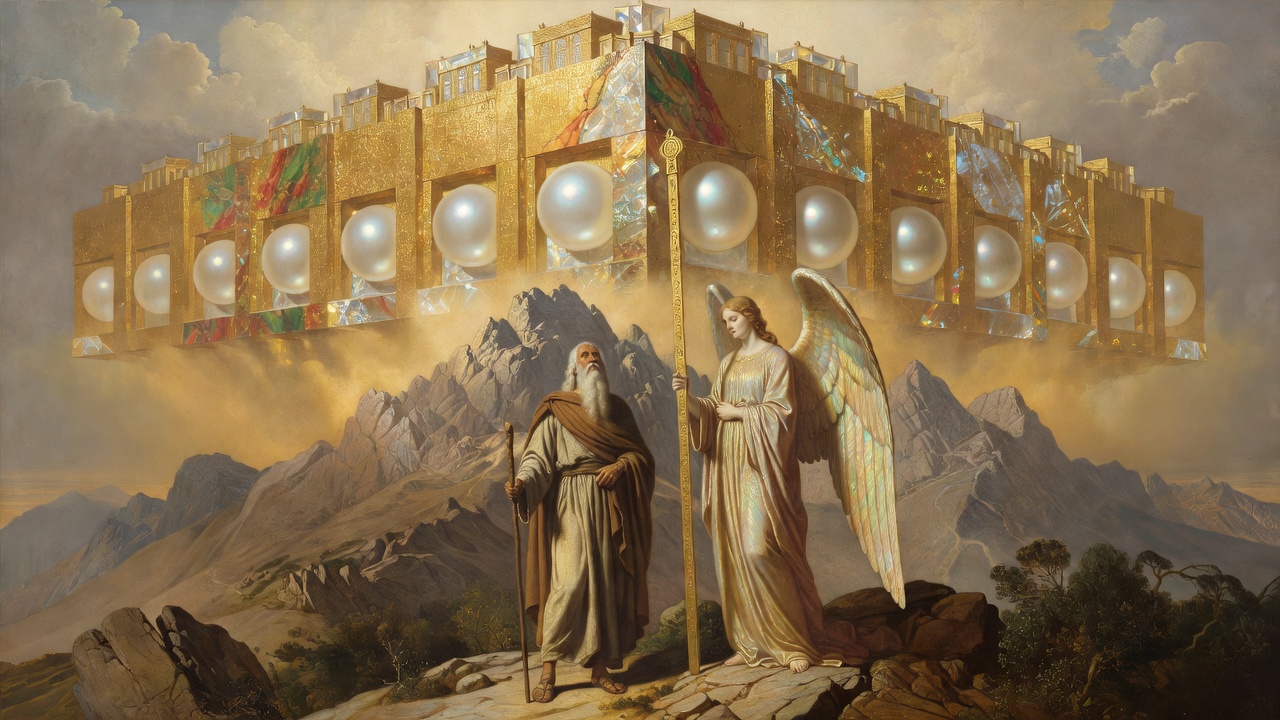
The New Jerusalem
- In this vision the city coming down from heaven is called the holy city, the new Jerusalem. Jerusalem was also known as the holy city and the city of God, and in Arabic it is el-Khuds, meaning the holy. Its name is in a dual form and means possession of peace or foundation of peace.Sources: the Bible text itself · Jerusalem
- The seer is carried in the Spirit to a great and high mountain and shown that holy city descending. Jerusalem is described as a mountain city enthroned on a mountain stronghold, and the dual form of the name probably refers to the two mountains on which it was built, Zion and Moriah, or, as some suppose, to the upper and lower city.Sources: the Bible text itself · Jerusalem
- The city wall has twelve gates, three on each side, inscribed with the names of the twelve tribes of Israel. Israel is another name for Jacob, explained as one who follows on another's heels, or as a supplanter.Sources: the Bible text itself · Jacob (Israel)
Notes written with AI assistance from open sources (Theographic Bible Metadata, CC BY-SA 4.0; Easton’s Bible Dictionary, public domain) and reviewed before publishing.
Places in this chapter
Only places identified with high confidence are shown (90% or more according to the scholarly sources compiled by OpenBible). Period map: DARE (Digital Atlas of the Roman Empire), CC BY 4.0; modern map: © OpenStreetMap contributors; places: OpenBible.info (CC BY 4.0).
Credits and license for this translation
KAMEETHARI ÑAANTSI: Iñaaventaitzirira Avinkatharite Jesucristo
The New Testament in the Pichis Ashéninka language of Peru
El Nuevo Testamento in la Pichis Ashéninka lingua de Peru
copyright © 2008 Wycliffe Bible Translators, Inc.
Language: Ashéninka, Pichis
Translation by: Wycliffe Bible Translators
Copyright Information
© 2008, Wycliffe Bible Translators, Inc.
This translation text is made available to you under the
terms of the Creative Commons License: Attribution-Noncommercial-No Derivative Works.
( http://creativecommons.org/licenses/by-nc-nd/3.0/ )
In addition, you have permission to port the text to different file formats, as long as you
do not change any of the text or punctuation of the Bible.
You may share, copy, distribute, transmit, and extract portions
or quotations from this work, provided that you include the above copyright
information:
You must give Attribution to the work.
You do not sell this work for a profit.
You do not make any derivative works that change any of the actual words or punctuation of the Scriptures.
Permissions beyond the scope of this license may be
available if you contact
us with your request.
© 2008, Wycliffe Bible Translators, Inc. All rights rese
This translation is made available to you under the terms of the
Creative Commons Attribution-Noncommercial-No Derivatives license 4.0.
You may share and redistribute this Bible translation or extracts from it in any format, provided that:
You include the above copyright and source information.
You do not sell this work for a profit.
You do not change any of the words or punctuation of the Scriptures.
Pictures included with Scriptures and other documents on this site are licensed just for use with those Scriptures and documents.
For other uses, please contact the respective copyright owners.
2014-12-03
Source: http://ebible.org/cpuNT/ · eBible.org