Matthew 11
Kameethari Ñaantsi: ikenkitha-takoitziri awinkatharite Jesucristo; Owakerari aapatziya-wakagaantsi · Tap a verse to see its cross-references.
Rotyaantziri Juan riyotaanewo
1Ikaatakero Jesús riyotaayetakeri 12 riyotaanewo. Owaaganaka inkamantante maawoiniki nampitsi saikatsiri janta.
2Ikanta Juan omitsitsiyaatantaneri, romonkyagaitakeri chapinki, ikemakotakeri rantayetakeri Cristo, rotyaantake apite riyotaanewo irirori, 3rosampiteri Jesús, inkanteri: “¿Eerokatakema iitaitziri, ‘Pokatsine?’ Kaaririka eeroka, ¿Eenitatsima itsipa naamayaari?” 4Ikanta rareetaiyakani, rosampitapaakeri Jesús. Iro ikantantanakariri irirori: “Arika piyaatai, pinkamantapairi Juan maawoini pikemakeri eeroka, okaatzi piñaayetakeri nantakeri eejatzi. 5Tema nokiryaakagairi mawityaakiri, nanashitakaayetaari kisopookiri, netsiyatakotakaayetairi pathaawaiwetachari, nokemakaayetairi witakempitari, nowañaayetairi kaminkari, nokenkithatakoyetainiri Kameethari Ñaantsi ashironkainkaripaini. 6Irootake inkimoshiretantaiyaari kaari kisoshirewentainane.”
7Ikanta ripiyayetanaa riyotaanewo Juan, rosampitanakeri Jesús ikaatzi piyowentakariri, ikenkithatakotziri Juan, ikantzi: “¿Tsika iitaka poshiyakairi piñaakeri chapinki ochempiki? ¿Iriima piñaake apaani oshiyakawori sawoo ompironkatonkitakaari tampyaa okantakaari te ithaamentashireta? 8¿Piñaapaakerima rowaneenkataka ikithaataka? Te. Tema ikaatzi owaneenkatachari ikithaata, risaikawankotziri irirori pinkathari. 9Iro piyaatashitantariri piyotaiyakeni Kamantantaneri rini. Tema rimaperotatziiro irirori rawisanakeri Kamantantaneriite. 10Tema iriitake rosankenatakoitakeri pairani, riñaanatziri Pawa Itomi, ikantziri:
Notomí, ari notyaantake etyaawone inkamantakotemi,
Iri wetsikaantemine tsika pinkenapaake eeroka.
11Pinkeme nonkante naaka: Atziripaini ikaatzi tzimayewetainchari pairani, tekaatsi anairone riyotanetakari Juan. Iro kantzimaitacha inkaate impinkathariwentairi Pawa inkiteki, tsinampashiretaatsine janta, ranagairi irirori Juan. Imaperotatyaaga. 12Tema retanakawo pairani Juan ikenkithatakaayetakemi, eenitatsi osheki atziri ñaamatanakawori kameethaini iñeero tsika ipinkatharitai Inkitesatzi. Antawoite ikowanake iñeero oshiyawaitakawo ishintsitaitzi arika romanataitya. Irojatzi ikantaita iroñaaka. 13Pairani tekera itzimiita Juan, tzimawetacha Kamantantaneri eejatzi Inintakaantaitanewo. 14Iriira Juan ikenkithatakoitakeriri pairani, iriitake Elías-tatsiri piyaatsine. 15Kowirori inkemathatero, inkemisante. 16Noshiyakaakemiri koshekawairentzi eentsi arika roshiyakaawaitya, 17ikantawaka: ‘Jame ashowite omampaantyaari.’ Temaita ikowi. Ikantawaka eejatzi: ‘Jame omampaiya owashiretantyaari.’ Te ikowiro eejatzi. 18Ari pikantaiyakani eeroka. Piñaawetawakari Juan, ritzitapaakawo rowanawo, te ririro kachori, pikantaiyakerini: ‘Raagatziiri peyari, iro ritziwentantari.’ 19Ripokawetaka Itomi Atziri, te ritzitawo owanawontsi, ririro kachori eejatzi. Pikantaiyakerini: ‘Kaariperori rini jirika, osomiyawairentzi, shinkiyantzi rini eejatzi. Raapatziyari apatotziriri koriki, raapatziyari eejatzi kaariperoshireri.’ Tekaatsi oitya, tema arika iñagaitakero onkaate awisayetaatsine paata, arira riyoitairi imapero riyotanetzi.”
Ikantamatsitaitziri kisoshireri nampitsikipaini
20Ikenkithatakotanakeri Jesús ikaatzi ñaawetakawori ritasonkawentantayetake nampitsikipaini, temaita ripakairo ikaariperoshiretaiyini. Ikantanake: 21“Ikantamatsitaitziri Corazín-satzi, eejatzi Betsaida-satzi. Osheki iñaayewetakena nitasonkawentantayetake, temaita ikemisantaiyini. Iriime ñaakenane Tiro-satzi, Sidón-satzi nitasonkawentantzi, ari rowashiretakotanakyaame ikaariperoshiretake, ripakaanakerome. Inkemisantayetaime maawoini iriroripaini. 22Paata arika raayeetairi kameethashiretaintsiri, eero rimaperoitziri rowasanketaiteri Tiro-satzi, eejatzi Sidón-satzi. Rimaperoitairi rowasanketaiteri Corazín-satzi, eejatzi Betsaida-satzi, tema iñaawetakena nitasonkawentantayetzi, temaita ikemisantzi. 23Eejatzi inkantayetaiya Capernaum-satzi, ikenkithashiretaiyani irirori riyaayetai inkiteki, iro kantzimaitacha osheki ikisoshiretake, riyaayetai ikenayetzira kaminkari. Iriime ñaakeroneme Sodoma-satzi pairani okaatzi iñaayetakeri Capernaum-satzi, inkemisantayetaime irirori, eero raperaatairime pairani Pawa saikaiyatsinime iroñaaka. 24Arika raayeetairi paata kameethashireyetaintsiri, iriira rimaperoitai rowasanketaitairi Capernaum-satzi, anaanakero rowasanketakeri pairani Sodoma-satzi.”
Pipokashitaina naaka, ari piñeero nimakoryaakaayetaimi
25Ikanta ramanamanaatanakari Jesús Ashitariri, ikantanakeri: “Papá, eeroka pinkathariwentziriri maawoini inkitesatzi, eejatzi maawoini kipatsisatzi, osheki niwetharyaakemi. Tema eeroka yotakaayetairiri oshiyakariri eentsi tsinampashiretaatsiri, kaari riyoyetzi yowairentziite. 26Tema iro inimotakemiri.” 27Ikantanakeri piyowentakariri: “Iri Ashitanari yotakaakenawori maawoini. Apaniroini riyoperotana naaka tema Itomi rowana. Ari nokantari eejatzi naaka apaniroini niyoperotziri. Irojatzi riyoyetairi inkaate niyotakaayetairi naaka. 28Arika piñeero pimakoshirewaite, arika piñeero oita ñaantsipookitzimotemine, pipokashitaina naaka, pinkamantainawo, aritake piñagairo nimakoryaakaayetaimi. 29Eero pimanintziro ñaantsipookitzimotemine, naakatake imperatzimiri pantero. Eenitatsi nokowiri niyotaimiri, te niyote naaka nowatsimaashirewaitya, tsinampashireri nini. Ari piñagairo nimakoryaashiretakagaimi. 30Tema okaatzi nimperatantari naaka, te opomeentsiperota.”
Did you know?
John's question and the cities that did not repent
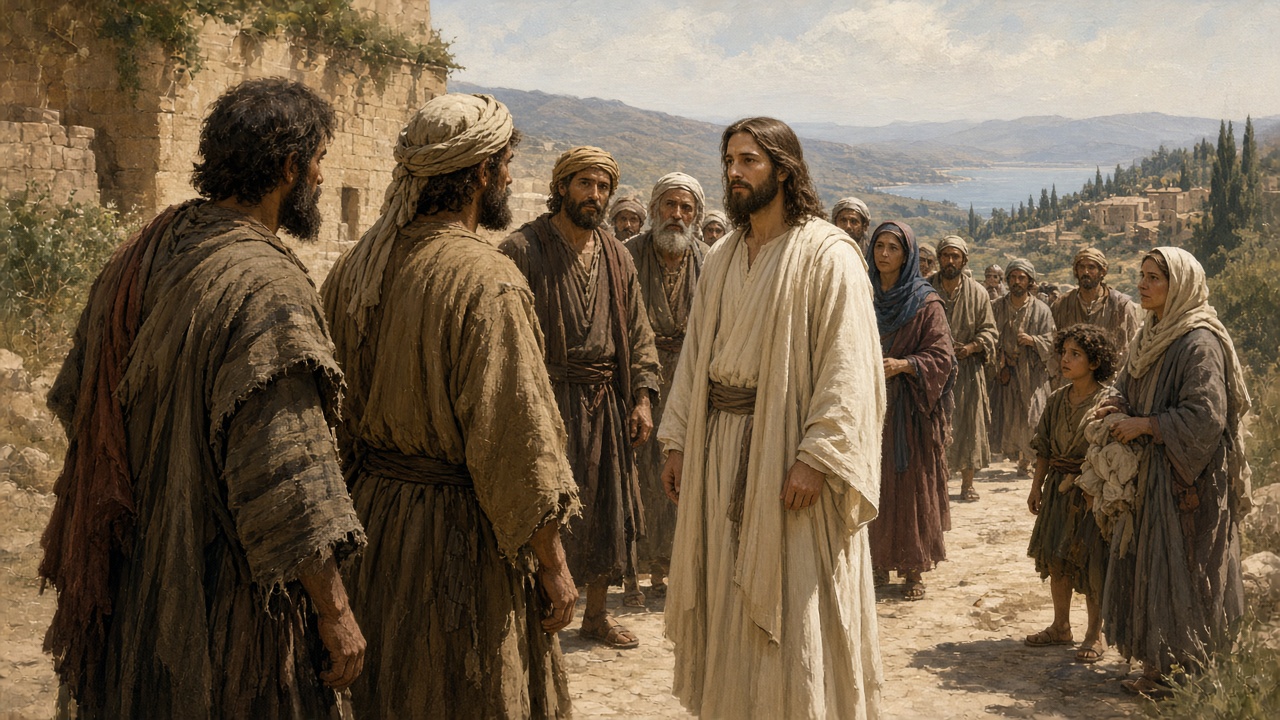
- From prison, John sent his disciples to ask whether Jesus was the one who was to come. Jesus told the crowds that John was more than a prophet—the messenger sent ahead to prepare the way—and, if they were willing to accept it, the Elijah who was to come. A Bible dictionary calls John the forerunner and says his mission was already the subject of prophecy, citing Isaiah 40:3 and Malachi 3:1; it also introduces Elijah as the Elias of the New Testament.Sources: the Bible text itself · John the Baptist · Elijah
- Jesus then denounced Chorazin, Bethsaida, and Capernaum, where most of his miracles had been performed, because they did not repent. A dictionary identifies Chorazin with modern Kerazeh, about two and a half miles up the Wady Kerazeh from Capernaum, and says that Capernaum, absent from the Old Testament, became Jesus' own city after he left Nazareth. It places Bethsaida on the east side of the lake, two miles up the Jordan in Gaulonitis, enlarged by Philip the tetrarch and named Julias after the emperor's daughter, though some have supposed there was only one Bethsaida, near where the Jordan enters the lake.Sources: the Bible text itself · Chorazin · Capernaum · Bethsaida
- He set those cities against Tyre and Sidon, which he said would have repented long ago in sackcloth and ashes, and against Sodom, which he said would have remained to this day. Sidon, on the Mediterranean coast about twenty-five miles north of Tyre, was the oldest Phoenician city there and the mother city of Tyre. A dictionary says the commerce of the whole world was gathered into Tyre's warehouses, and that Sodom, in the vale of Siddim, was destroyed by fire from heaven so completely that no trace of it has been found.Sources: the Bible text itself · Sidon · Tyre · Sodom
Notes written with AI assistance from open sources (Theographic Bible Metadata, CC BY-SA 4.0; Easton’s Bible Dictionary, public domain) and reviewed before publishing.
Places in this chapter
- Galilee · 32.760, 35.527 · verse 1
- Sidon · Today: Sandikli archaeological site in Sidon · 33.561, 35.372 · verses 21, 22
- Tyre · 33.271, 35.196 · verses 21, 22
Only places identified with high confidence are shown (90% or more according to the scholarly sources compiled by OpenBible). Period map: DARE (Digital Atlas of the Roman Empire), CC BY 4.0; modern map: © OpenStreetMap contributors; places: OpenBible.info (CC BY 4.0).
Credits and license for this translation
Kameethari Ñaantsi: ikenkitha-takoitziri awinkatharite Jesucristo; Owakerari aapatziya-wakagaantsi
New Testament in Ashéninka, Ucayali-yurúa (PE:cpb:Ashéninka, Ucayali-yurúa)
copyright © 2000 Wycliffe Bible Translators, Inc.
Language: Ashéninka, Ucayali-yurúa
Translation by: Wycliffe Bible Translators, Inc.
Ashéninka, Ucayali-yurúa [cpb], Peru
Copyright Information
© 2000, Wycliffe Bible Translators, Inc. All rights reserved.
This translation text is made available to you under the
terms of the Creative Commons License: Attribution-Noncommercial-No Derivative Works.
( http://creativecommons.org/licenses/by-nc-nd/3.0/ )
In addition, you have permission to port the text to different file formats, as long as you
do not change any of the text or punctuation of the Bible.
You may share, copy, distribute, transmit, and extract portions
or quotations from this work, provided that you include the above copyright
information:
You must give Attribution to the work.
You do not sell this work for a profit.
You do not make any derivative works that change any of the actual words or punctuation of the Scriptures.
Permissions beyond the scope of this license may be
available if you contact
us with your request.
The New Testament
in Ashéninka, Ucayali-yurúa
© 2000, Wycliffe Bible Translators, Inc. All rights reserved.
This translation is made available to you under the terms of the
Creative Commons Attribution-Noncommercial-No Derivatives license 4.0.
You may share and redistribute this Bible translation or extracts from it in any format, provided that:
You include the above copyright and source information.
You do not sell this work for a profit.
You do not change any of the words or punctuation of the Scriptures.
Pictures included with Scriptures and other documents on this site are licensed just for use with those Scriptures and documents.
For other uses, please contact the respective copyright owners.
2014-04-21
Source: http://ebible.org/cpbNT/ · eBible.org