Acts 19
Sahidica - طبعة جديدة من العهد الجديد باللغة القبطية الصعيدية · Tap a verse to see its cross-references.
1ⲀⲤϢⲰⲠⲈ ⲆⲈ ⲈⲢⲈ ⲀⲠⲞⲖⲖⲰ ϨⲚ ⲔⲞⲢⲒⲚⲐⲞⲤ. ⲠⲀⲨⲖⲞⲤ ⲀϤⲘⲈϢⲦ ⲚⲤⲀ ⲈⲦϨⲘ ⲠϪⲒⲤⲈ ⲀϤⲈⲒ ⲈⲦⲈⲪⲈⲤⲞⲤ. ⲀϤϨⲈ ⲈϨⲈⲚⲘⲀⲐⲎⲦⲎⲤ ⲘⲘⲀⲨ. 2ⲠⲈϪⲀϤ ⲚⲀⲨ ϪⲈ ⲚⲦⲈⲢⲈⲦⲚⲠⲒⲤⲦⲈⲨⲈ ⲀⲦⲈⲦⲚϪⲒ ⲠⲚⲈⲨⲘⲀ ⲈϤⲞⲨⲀⲀⲂ. ⲚⲦⲞⲞⲨ ⲆⲈ ⲠⲈϪⲀⲨ ⲚⲀϤ ϪⲈ ⲘⲠⲚⲤⲰⲦⲘ ⲢⲰ ϪⲈ ϢⲀⲢⲈ ⲞⲨⲞⲚ ϪⲒ ⲠⲚⲈⲨⲘⲀ ⲈϤⲞⲨⲀⲀⲂ. 3ⲠⲈϪⲀϤ ⲚⲀⲨ ϪⲈ ⲚⲦⲀⲦⲈⲦⲚϪⲒ ⲂⲀⲠⲦⲒⲤⲘⲀ ϬⲈ ⲈⲚⲒⲘ. ⲠⲈϪⲀⲨ ϪⲈ ⲚⲦⲀⲚϪⲒ ⲂⲀⲠⲦⲒⲤⲘⲀ ⲈⲒⲰϨⲀⲚⲚⲎⲤ. 4ⲠⲈϪⲈ ⲠⲀⲨⲖⲞⲤ ϪⲈ ⲒⲰϨⲀⲚⲚⲎⲤ ⲚⲦⲀϤⲂⲀⲠⲦⲒⲌⲈ ϨⲚ ⲞⲨⲂⲀⲠⲦⲒⲤⲘⲀ ⲘⲘⲈⲦⲀⲚⲞⲒⲀ. ⲈϤϪⲰ ⲘⲘⲞⲤ ⲈⲠⲖⲀⲞⲤ ϪⲈⲔⲀⲀⲤ ⲈⲨⲈⲠⲒⲤⲦⲈⲨⲈ ⲈⲠⲈⲦⲚⲎⲨ ⲘⲚⲚⲤⲰϤ. ⲈⲦⲈ ⲠⲀⲒ ⲠⲈ ⲒⲎⲤⲞⲨⲤ. 5ⲚⲦⲈⲢⲞⲨⲤⲰⲦⲘ ⲆⲈ ⲀⲨϪⲒ ⲂⲀⲠⲦⲒⲤⲘⲀ ⲈⲠⲢⲀⲚ ⲘⲠϪⲞⲈⲒⲤ ⲒⲎⲤⲞⲨⲤ ⲠⲈⲬⲢⲒⲤⲦⲞⲤ. 6ⲀⲨⲰ ⲚⲦⲈⲢⲈ ⲠⲀⲨⲖⲞⲤ ⲔⲀ ϬⲒϪ ⲈϪⲰⲞⲨ ⲀⲠⲈⲠⲚⲈⲨⲘⲀ ⲈⲦⲞⲨⲀⲀⲂ ⲈⲒ ⲈϨⲢⲀⲒ ⲈϪⲰⲞⲨ ⲚⲈⲨϢⲀϪⲈ ⲆⲈ ⲠⲈ ϨⲚ ϨⲈⲚⲔⲈⲀⲤⲠⲈ ⲀⲨⲰ ⲚⲈⲨⲠⲢⲞⲪⲎⲦⲈⲨⲈ. 7ⲚⲦⲞⲞⲨ ⲆⲈ ⲦⲎⲢⲞⲨ ⲚⲈⲨⲘⲈϨ ⲘⲚⲦⲤⲚⲞⲞⲨⲤ ⲚⲢⲰⲘⲈ ⲠⲈ. 8ⲀⲨⲰ ⲚⲦⲈⲢⲈϤⲂⲰⲔ ⲈϨⲞⲨⲚ ⲈⲦⲤⲨⲚⲀⲄⲰⲄⲎ. ⲀϤⲠⲀⲢⲢⲎⲤⲒⲀⲌⲈ ⲘⲘⲞϤ ⲚϢⲞⲘⲚⲦ ⲚⲈⲂⲞⲦ. ⲈϤϢⲀϪⲈ ⲀⲨⲰ ⲈϤⲠⲒⲐⲈ ⲘⲘⲞⲞⲨ ⲈⲦⲂⲈ ⲦⲘⲚⲦⲢⲢⲞ ⲘⲠⲚⲞⲨⲦⲈ. 9ⲚⲦⲈⲢⲈ ϨⲞⲒⲚⲈ ⲆⲈ ⲚϢⲞⲦ ⲚϨⲎⲦ ⲀⲨⲰ ⲀⲨⲢⲀⲦⲤⲰⲦⲘ ⲈⲨϪⲒⲞⲨⲀ ⲈⲦⲈϨⲒⲎ ⲘⲠⲈⲘⲦⲞ ⲈⲂⲞⲖ ⲘⲠⲘⲎⲎϢⲈ ⲀϤⲤⲀϨⲰϤ ⲈⲂⲞⲖ ⲘⲘⲞⲞⲨ ⲀⲨⲰ ⲀϤⲠⲢϪ ⲘⲘⲀⲐⲎⲦⲎⲤ ⲈⲢⲞⲞⲨ ⲈϤϢⲀϪⲈ ⲚⲘⲘⲀⲨ ⲘⲘⲎⲚⲈ ϨⲚ ⲦⲈⲤⲬⲞⲖⲎ ⲚⲦⲎⲢⲀⲚⲞⲤ. 10ⲠⲀⲒ ⲆⲈ ⲀϤϢⲰⲠⲈ ⲚⲢⲞⲘⲠⲈ ⲤⲚⲦⲈ. ϨⲰⲤⲦⲈ ⲚⲦⲈ ⲞⲨⲞⲚ ⲚⲒⲘ ⲈⲦⲞⲨⲎϨ ϨⲚ ⲦⲀⲤⲒⲀ ⲤⲰⲦⲘ ⲈⲠϢⲀϪⲈ ⲘⲠϪⲞⲈⲒⲤ. ⲚⲒⲞⲨⲆⲀⲒ ⲆⲈ ⲘⲚ ⲚⲞⲨⲈⲈⲒⲈⲚⲒⲚ 11ϨⲈⲚⲚⲞϬ ⲚϬⲞⲘ ⲈⲢⲈ ⲠⲚⲞⲨⲦⲈ ⲈⲒⲢⲈ ⲘⲘⲞⲞⲨ ⲈⲂⲞⲖ ϨⲒⲦⲚ ⲚϬⲒ Ϫ ⲘⲠⲀⲨⲖⲞⲤ. 12ϨⲰⲤⲦⲈ ⲚⲤⲈϪⲒ ⲚϨⲈⲚⲤⲞⲨⲆⲀⲢⲒⲞⲚ ⲘⲚ ϨⲈⲚⲤⲨⲘⲒⲔⲒⲚⲐⲒⲚⲞⲚ ⲈⲀⲨⲦⲞϬⲞⲨ ⲈⲠⲈϤⲤⲰⲘⲀ ⲚⲤⲈⲔⲀⲀⲨ ⲈϪⲚ ⲚⲈⲦϢⲰⲚⲈ ⲚⲦⲈ ⲚⲈⲦϢⲰⲚⲈ ⲖⲞ. ⲀⲨⲰ ⲚⲈⲠⲚⲈⲨⲘⲀ ⲘⲠⲞⲚⲎⲢⲞⲚ ⲚⲈⲨⲚⲎⲨ ⲈⲂⲞⲖ ⲚϨⲎⲦⲞⲨ. 13ⲀⲨϨⲒⲦⲞⲞⲦⲞⲨ ⲆⲈ ⲚϬⲒ ϨⲞⲒⲚⲈ ⲚⲒⲞⲨⲆⲀⲒ ⲈⲦⲘⲞⲞϢⲈ ⲈⲦⲞ ⲚⲈⲜⲞⲢⲔⲒⲤⲦⲎⲤ ⲈⲦⲀⲨⲈ ⲠⲢⲀⲚ ⲘⲠϪⲞⲈⲒⲤ ⲒⲎⲤⲞⲨⲤ ⲈϨⲢⲀⲒ ⲈϪⲚ ⲚⲈⲦⲈⲢⲈ ⲚⲈⲠⲚⲈⲨⲘⲀ ⲘⲠⲞⲚⲎⲢⲞⲚ ϨⲒⲰⲞⲨ ⲈⲨϪⲰ ⲘⲘⲞⲤ ϪⲈ ⲦⲚⲦⲀⲢⲔⲞ ⲘⲘⲰⲦⲚ ⲚⲒⲤ ⲠⲀⲒ ⲈⲦⲈⲢⲈ ⲠⲀⲨⲖⲞⲤ ⲔⲎⲢⲨⲤⲤⲈ ⲘⲘⲞϤ. 14ⲚⲈⲨⲚ ⲒⲞⲨⲆⲀⲒ ⲆⲈ ⲚⲚⲀⲢⲬⲒⲈⲢⲈⲨⲤ ϪⲈ ⲤⲔⲈⲨⲀ ⲈⲨⲚⲦϤ ⲤⲀϢϤ ⲚϢⲎⲢⲈ ⲈⲨⲈⲒⲢⲈ ⲘⲠⲀⲒ. 15ⲀⲠⲈⲠⲚⲈⲨⲘⲀ ⲘⲠⲞⲚⲎⲢⲞⲚ ⲞⲨⲰϢⲂ ⲠⲈϪⲀϤ ⲚⲀⲨ ϪⲈ ⲒⲎⲤⲞⲨⲤ ϮⲤⲞⲞⲨⲚ ⲘⲘⲞϤ. ⲀⲨⲰ ⲠⲔⲈⲠⲀⲨⲖⲞⲤ ϮⲈⲒⲘⲈ ⲈⲢⲞϤ. ⲚⲦⲰⲦⲚ ⲆⲈ ⲚⲦⲈⲦⲚ ⲚⲒⲘ. 16ⲀϤϤⲰϬⲈ ⲈϨⲢⲀⲒ ⲈϪⲰⲞⲨ ⲚϬⲒ ⲠⲢⲰⲘⲈ ⲈⲦⲈⲢⲈ ⲠⲈⲠⲚⲈⲨⲘⲀ ⲘⲠⲞⲚⲎⲢⲞⲚ ϨⲒⲰⲰϤ ⲀϤⲢϪⲞⲈⲒⲤ ⲈⲢⲞⲞⲨ ⲘⲠⲤⲀϢϤ ⲀⲨⲰ ⲀϤϬⲘϬⲞⲘ ⲈϨⲢⲀⲒ ⲈϪⲰⲞⲨ. ϨⲰⲤⲦⲈ ⲚⲤⲈⲠⲰⲦ ⲈⲂⲞⲖ ϨⲘ ⲠⲎⲒ ⲈⲦⲘⲘⲀⲨ ⲈⲨⲔⲎ ⲔⲀϨⲎⲨ ⲀⲨⲰ ⲈⲨⲠⲞⲖϨ. 17ⲠⲀⲒ ⲆⲈ ⲀϤⲞⲨⲰⲚϨ ⲈⲂⲞⲖ ⲚⲚⲒⲞⲨⲆⲀⲒ ⲦⲎⲢⲞⲨ ⲘⲚ ⲚϨⲈⲖⲖⲎⲚ ⲈⲦⲞⲨⲎϨ ϨⲚ ⲦⲈⲪⲈⲤⲞⲤ. ⲀⲨⲰ ⲀⲨϨⲞⲦⲈ ϨⲈ ⲈϨⲢⲀⲒ ⲈϪⲰⲞⲨ ⲦⲎⲢⲞⲨ. ⲀⲨⲰ ⲀϤϪⲒⲤⲈ ⲚϬⲒ ⲠⲢⲀⲚ ⲘⲠϪⲞⲈⲒⲤ ⲒⲎⲤⲞⲨⲤ. 18ⲚⲈⲢⲈ ϨⲀϨ ⲆⲈ ⲚⲚⲈⲚⲦⲀⲨⲠⲒⲤⲦⲈⲨⲈ ⲚⲎⲨ ⲈⲨⲈⲜⲞⲘⲞⲖⲞⲄⲒ. ⲀⲨⲰ ⲈⲨⲦⲀⲨⲞ ⲚⲚⲈⲨϨⲂⲎⲨⲈ. 19ⲞⲨⲘⲎⲎϢⲈ ⲞⲚ ⲚⲚⲈⲚⲦⲀⲨⲈⲒⲢⲈ ⲚϨⲈⲚⲘⲚⲦⲠⲈⲢⲠⲈⲢⲞⲤ ⲀⲨⲚ ϪⲰⲰⲘⲈ ⲚⲘⲘⲀⲨ ⲀⲨⲢⲞⲔϨⲞⲨ ⲘⲠⲈⲘⲦⲞ ⲈⲂⲞⲖ ⲚⲞⲨⲞⲚ ⲚⲒⲘ. ⲀⲨⲰ ⲀⲨⲈⲠ ⲤⲞⲨⲚⲦⲞⲨ. ⲀⲨϨⲈ ⲈⲢⲞⲞⲨ ⲈⲨⲈⲒⲢⲈ ⲚϮⲞⲨ ⲚⲦⲂⲀ ⲚϨⲀⲦ. 20ⲦⲀⲒ ⲦⲈ ⲐⲈ ⲚⲦⲀ ⲠϢⲀϪⲈ ⲘⲠϪⲞⲈⲒⲤ ⲀⲨⲜⲀⲚⲈ. ⲀⲨⲰ ⲀϤⲦⲀϪⲢⲞ ⲀⲨⲰ ⲀϤϬⲘϬⲞⲘ. 21ⲚⲦⲈⲢⲈ ⲚⲀⲒ ⲆⲈ ϪⲰⲔ ⲈⲂⲞⲖ ⲀⲠⲀⲨⲖⲞⲤ ⲤⲘⲚⲦⲤ ϨⲘ ⲠⲈⲠⲚⲈⲨⲘⲀ ⲈⲦⲢⲈϤⲈⲒ ⲈⲂⲞⲖ ϨⲚ ⲦⲘⲀⲔⲈⲆⲞⲚⲒⲀ ⲘⲚ ⲦⲀⲬⲀⲒⲀ ⲚϤⲂⲰⲔ ⲈϨⲢⲀⲒ ⲈⲐⲒⲈⲢⲞⲤⲞⲖⲨⲘⲀ ⲈϤϪⲰ ⲘⲘⲞⲤ ϪⲈ ⲘⲚⲚⲤⲀ ⲦⲢⲀⲂⲰⲔ ⲈⲘⲀⲨ ϨⲀⲠⲤ ⲞⲚ ⲈⲦⲢⲀⲚⲀⲨ ⲈⲦⲔⲈϨⲢⲰⲘⲎ. 22ⲀϤϪⲞⲞⲨ ⲆⲈ ⲈⲦⲘⲀⲔⲈⲆⲞⲚⲒⲀ ⲚⲤⲀ ⲤⲚⲀⲨ ⲚⲚⲈⲦⲆⲒⲀⲔⲞⲚⲒ ⲚⲀϤ. ⲦⲒⲘⲞⲐⲈⲞⲤ ⲘⲚ ⲈⲢⲀⲤⲦⲞⲤ. ⲚⲦⲞϤ ⲆⲈ ⲀϤϬⲰ ⲚⲞⲨⲞⲈⲒϢ ϨⲚ ⲦⲀⲤⲒⲀ. 23ⲀϤϢⲰⲠⲈ ⲆⲈ ⲘⲠⲈⲨⲞⲈⲒϢ ⲈⲦⲘⲘⲀⲨ ⲚϬⲒ ⲞⲨⲚⲞϬ ⲚϢⲦⲞⲢⲦⲢ ⲈⲦⲂⲈ ⲦⲈϨⲒⲎ. 24ⲞⲨⲢⲈϤⲢϨⲀⲦ ⲄⲀⲢ ϪⲈ ⲦⲨⲘⲎⲦⲢⲒⲞⲤ ⲈϤⲦⲀⲘⲒⲞ ⲚϨⲈⲚⲦⲞⲨⲰⲦ ⲚϨⲀⲦ ⲚⲦⲀⲢⲦⲈⲘⲒⲤ. ⲚⲈⲨϮ ⲚⲞⲨⲚⲞϬ ⲚⲈⲢⲄⲀⲤⲒⲀ ⲚⲚⲦⲈⲬⲚⲒⲦⲎⲤ. 25ⲠⲀⲒ ϬⲈ ⲀϤⲤⲈⲨϨ ⲞⲨⲞⲚ ⲚⲒⲘ ⲈⲦⲢϨⲰⲂ ⲈⲦⲈⲒⲞⲠⲈ. ⲠⲈϪⲀϤ ⲚⲀⲨ ϪⲈ ⲚⲢⲰⲘⲈ ⲚϢⲂⲢⲦⲈⲬⲚⲒⲦⲎⲤ. ⲦⲈⲦⲚⲤⲞⲞⲨⲚ ϪⲈ ⲈⲢⲈ ⲠⲈⲚⲰⲚϨ ϢⲞⲞⲠ ⲚⲀⲚ ⲈⲂⲞⲖ ϨⲚ ⲦⲈⲒⲈⲢⲄⲀⲤⲒⲀ. 26ⲦⲈⲦⲚⲚⲀⲨ ⲆⲈ ⲀⲨⲰ ⲦⲈⲦⲚⲤⲰⲦⲘ ϪⲈ ⲞⲨ ⲘⲞⲚⲞⲚ ϨⲚ ⲦⲈⲪⲈⲤⲞⲤ ⲀⲖⲖⲀ ⲤⲬⲈⲆⲞⲚ ϨⲚ ⲦⲀⲤⲒⲀ ⲦⲎⲢⲤ ⲀⲠⲀⲒ ϪⲈ ⲠⲀⲨⲖⲞⲤ ⲠⲒⲐⲈ ⲀⲨⲰ ⲀϤⲠⲚⲚⲈ ⲞⲨⲘⲎⲎϢⲈ ⲈⲂⲞⲖ ⲈⲚⲀϢⲰϤ ⲈϤϪⲰ ⲘⲘⲞⲤ ϪⲈ ⲚϨⲈⲚⲚⲞⲨⲦⲈ ⲀⲚ ⲚⲈ ⲚⲀⲒ ⲈⲦⲞⲨⲦⲀⲘⲒⲞ ⲘⲘⲞⲞⲨ ϨⲚ ⲚⲈⲨϬⲒϪ. 27ⲞⲨ ⲘⲞⲚⲞⲚ ⲆⲈ ⲠⲈⲒⲘⲈⲢⲞⲤ ⲔⲒⲚⲆⲨⲚⲈⲨⲈ ⲈⲦⲢⲈϤϪⲰⲰⲢⲈ ⲈⲂⲞⲖ ⲚⲦⲞⲞⲦⲚ ⲀⲖⲖⲀ ⲠⲔⲈⲢⲠⲈ ⲚⲦⲚⲞϬ ⲚⲀⲢⲦⲨⲘⲒⲤ ⲤⲈⲚⲀⲖⲞ ⲈⲨⲰⲠ ⲘⲘⲞϤ ⲀⲨⲰ ⲚⲤⲈⲚⲦⲤ ⲈⲠⲈⲤⲎⲦ ⲈⲂⲞⲖ ϨⲚ ⲦⲈⲤⲘⲚⲦⲚⲞϬ ⲦⲀⲒ ⲈⲦⲈⲢⲈ ⲦⲀⲤⲒⲀ ⲦⲎⲢⲤ ⲀⲨⲰ ⲦⲞⲒⲔⲞⲨⲘⲈⲚⲎ ϢⲘϢⲈ ⲚⲀⲤ. 28ⲚⲦⲈⲢⲞⲨⲤⲰⲦⲘ ⲆⲈ ⲀⲨⲘⲞⲨϨ ⲚϬⲰⲚⲦ ⲀⲨⲰ ⲀⲨⲀϢⲔⲀⲔ ⲈⲂⲞⲖ ⲈⲨϪⲰ ⲘⲘⲞⲤ ϪⲈ ⲞⲨⲚⲞϬ ⲦⲈ ⲦⲀⲢⲦⲈⲘⲒⲤ ⲚⲦⲈⲪⲈⲤⲞⲤ. 29ⲀⲨⲰ ⲀⲦⲠⲞⲖⲒⲤ ⲦⲎⲢⲤ ⲘⲞⲨϨ ⲚϢⲦⲞⲢⲦⲢ. ⲈⲀⲨϮ ⲠⲈⲨⲞⲨⲞⲒ ϨⲒ ⲞⲨⲤⲞⲠ ⲈⲠⲈⲐⲨⲀⲦⲢⲞⲚ. ⲈⲀⲨⲦⲰⲢⲠ ⲚⲄⲀⲒⲞⲤ ⲘⲚ ⲀⲢⲒⲤⲦⲀⲢⲬⲞⲤ ϨⲈⲚⲘⲀⲔⲈⲆⲰⲚ ⲈⲨⲘⲞⲞϢⲈ ⲘⲚ ⲠⲀⲨⲖⲞⲤ. 30ⲈⲢⲈ ⲠⲀⲨⲖⲞⲤ ⲆⲈ ⲞⲨⲰϢ ⲈⲂⲰⲔ ⲈϨⲞⲨⲚ ⲈⲠⲆⲎⲘⲞⲤ ⲘⲠⲈ ⲘⲘⲀⲐⲎⲦⲎⲤ ⲔⲀⲀϤ. 31ϨⲞⲒⲚⲈ ⲆⲈ ⲞⲚ ϨⲚ ⲚⲀⲢⲬⲰⲚ ⲈⲨⲞ ⲚϢⲂⲎⲢ ⲈⲢⲞϤ. ⲀⲨⲦⲀⲨⲞⲞⲨ ⲚⲀϤ ⲈⲨⲤⲞⲠⲤ ⲈⲦⲘⲦⲢⲈϤⲂⲰⲔ ⲈϨⲞⲨⲚ ⲈⲠⲈⲐⲨⲀⲦⲢⲞⲚ. 32ⲚⲈⲨⲀϢⲔⲀⲔ ϬⲈ ⲈⲂⲞⲖ ⲠⲞⲨⲀ ⲠⲞⲨⲀ ⲘⲚ ⲠⲈϤϢⲀϪⲈ. ⲚⲈⲀ ⲠⲘⲎⲎϢⲈ ⲄⲀⲢ ⲦⲰϨ. ⲀⲨⲰ ⲠⲈⲨϨⲞⲨⲞ ⲚⲈⲨⲤⲞⲞⲨⲚ ⲀⲚ ⲠⲈ ϪⲈ ⲚⲦⲀⲨⲤⲰⲞⲨϨ ⲈⲦⲂⲈ ⲞⲨ. 33ⲈⲂⲞⲖ ⲆⲈ ϨⲘ ⲠⲘⲎⲎϢⲈ ⲀⲨⲚⲈϪ ⲞⲨⲀ ϪⲈ ⲀⲖⲈⲜⲀⲚⲆⲢⲞⲤ ⲈϨⲞⲨⲚ ⲚϬⲒ ⲚⲒⲞⲨⲆⲀⲒ. ⲀⲖⲈⲜⲀⲚⲆⲢⲞⲤ ⲆⲈ ⲀϤϪⲰⲢⲘ ⲚⲦⲈϤϬⲒϪ. ⲀϤⲞⲨⲰϢ ⲈⲀⲠⲞⲖⲞⲄⲒⲌⲈ ⲘⲠⲘⲎⲎϢⲈ. 34ⲚⲦⲈⲢⲞⲨⲈⲒⲘⲈ ⲆⲈ ϪⲈ ⲞⲨⲒⲞⲨⲆⲀⲒ ⲠⲈ. ⲀⲨⲤⲘⲎ ⲚⲞⲨⲰⲦ ϢⲰⲠⲈ ⲚⲞⲨⲞⲚ ⲚⲒⲘ ⲚⲚⲀⲞⲨⲚⲞⲨ ⲤⲚⲦⲈ. ⲈⲨⲀϢⲔⲀⲔ ⲈⲂⲞⲖ ϪⲈ ⲞⲨⲚⲞϬ ⲦⲈ ⲦⲀⲢⲦⲈⲘⲒⲤ ⲚⲦⲈⲪⲈⲤⲞⲤ. 35ⲠⲈⲄⲢⲀⲘⲘⲀⲦⲈⲨⲤ ⲆⲈ ⲚⲦⲈⲢⲈϤⲔⲀⲦⲀⲤⲦⲒⲖⲈ ⲘⲠⲘⲎⲎϢⲈ. ⲠⲈϪⲀϤ ⲚⲀⲨ ϪⲈ ⲚⲢⲰⲘⲈ ⲚⲢⲘⲚⲈⲪⲈⲤⲞⲤ. ⲚⲒⲘ ⲄⲀⲢ ⲚⲢⲰⲘⲈ ⲠⲈⲦⲈⲚϤⲤⲞⲞⲨⲚ ⲀⲚ ⲚⲦⲠⲞⲖⲒⲤ ⲚⲈⲪⲈⲤⲞⲤ ⲈⲤϢⲘϢⲈ ⲚⲦⲚⲞϬ ⲚⲀⲢⲦⲨⲘⲒⲤ ⲘⲚ ⲠⲌⲈⲨⲤ. 36ⲈⲢⲈ ⲚⲀⲒ ϬⲈ ⲞⲨⲞⲚϨ ⲈⲂⲞⲖ ϢϢⲈ ⲈⲢⲰⲦⲚ ⲈⲦⲢⲈⲦⲚⲤⲘⲚ ⲦⲎⲨⲦⲚ. ⲚⲦⲈⲦⲚ ⲦⲘⲢⲖⲀⲀⲨ ⲚϨⲰⲂ ϨⲚ ⲞⲨⲀⲤⲀⲒ. 37ⲀⲦⲈⲦⲚⲈⲒⲚⲈ ⲄⲀⲢ ⲚⲚⲈⲒⲢⲰⲘⲈ ⲈⲠⲈⲒⲘⲀ ⲘⲠⲞⲨϢⲖ ⲢⲠⲈ. ⲀⲨⲰ ⲘⲠⲞⲨϪⲒⲞⲨⲀ ⲈⲦⲚⲚⲞⲨⲦⲈ. 38ⲈϢϪⲈ ⲦⲨⲘⲎⲦⲢⲒⲞⲤ ϬⲈ ⲀⲨⲰ ⲚⲈϤϢⲂⲢⲦⲈⲬ ⲚⲒⲦⲎⲤ ⲞⲨⲚⲦⲞⲨ ⲞⲨϢⲀϪⲈ ⲘⲘⲀⲨ. ϢⲀⲨⲚ ϨⲈⲚⲀⲄⲞⲢⲀⲒⲞⲤ. ⲀⲨⲰ ⲞⲨⲚ ϨⲈⲚⲀⲚⲐⲨⲠⲀⲦⲞⲤ ⲘⲀⲢⲞⲨⲤⲘⲘⲈ ⲚⲀⲨ. 39ⲈϢϪⲈ ⲔⲈϨⲰⲂ ⲆⲈ ⲠⲈⲦⲈⲦⲚϢⲒⲚⲈ ⲚⲤⲰϤ. ⲤⲈⲚⲀⲂⲞⲖϤ ⲈⲂⲞⲖ ϨⲚ ⲦⲤⲞⲞⲨϨⲤ ⲈϢⲀⲤϢⲰⲠⲈ. 40ⲦⲚϬⲒⲚⲆⲨⲚⲈⲨⲈ ⲄⲀⲢ ⲈⲦⲢⲈⲨϮϢⲦⲞⲨⲎⲦ ⲈⲢⲞⲚ ⲈⲦⲂⲈ ⲠⲈⲒϢⲦⲞⲢⲦⲢ ⲘⲠⲞⲞⲨ ⲈⲘⲚ ϨⲰⲂ ⲚⲦⲘⲎⲦⲈ ⲈⲨⲚϢϬⲞⲘ ⲘⲘⲞⲚ ⲈϮⲖⲞⲄⲞⲤ ϨⲀⲢⲞϤ. ⲚⲦⲈⲢⲈϤϪⲈ ⲚⲀⲒ ⲆⲈ ⲀϤⲔⲀ ⲠⲘⲎⲎϢⲈ ⲈⲂⲞⲖ.
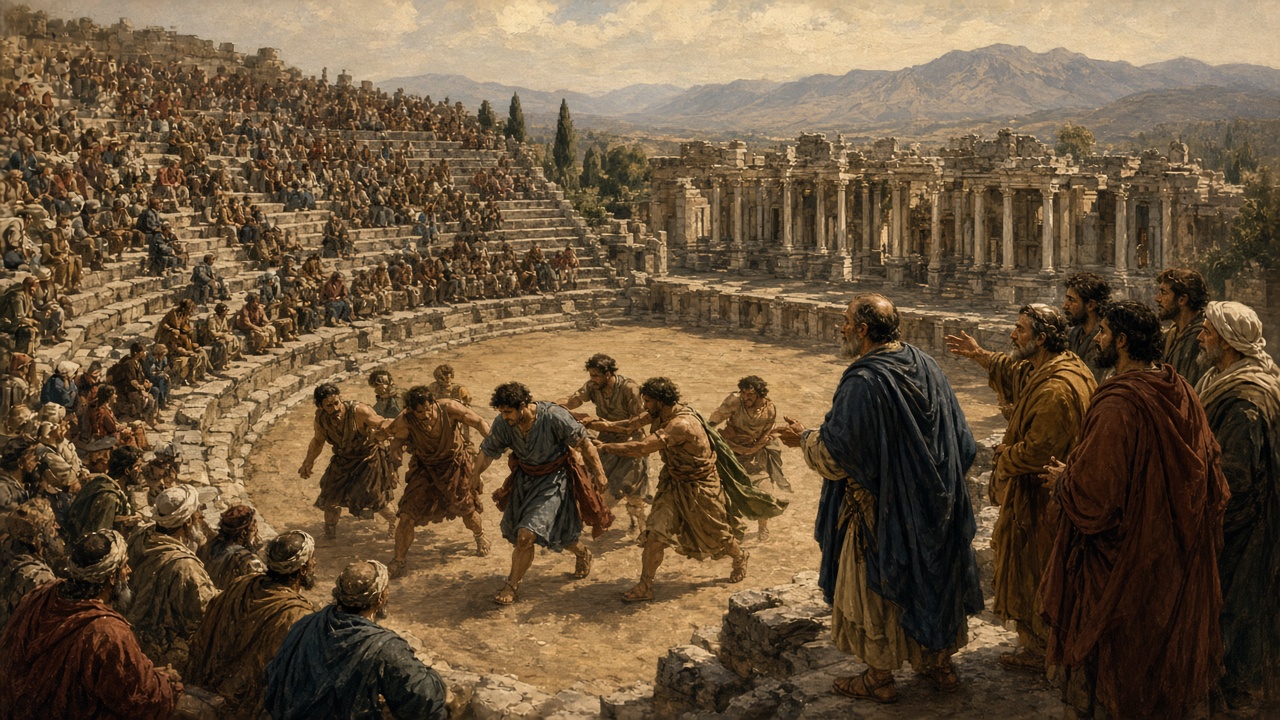
Did you know?
Paul, the Way, and Artemis in Ephesus
- Ephesus was the capital of proconsular Asia, the Roman province covering the western part of Asia Minor, and in Roman times it bore the title of the first and greatest metropolis of Asia. The city was distinguished for the temple of Artemis, whom the Romans called Diana, built outside the walls and reckoned one of the seven wonders of the ancient world. At its center stood an ancient image of the goddess, reputed to have fallen from the sky.Sources: Ephesus · Diana · Asia
- Demetrius, a silversmith at Ephesus, made silver shrines of Artemis, models of her temple or of her statue, which sold readily to visitors from all over Asia Minor. Acts says this trade was the craftsmen's source of prosperity, and that Demetrius warned them of danger to their business and to the honor of the temple of Artemis, the goddess he said was worshiped throughout the province of Asia and the whole world.Sources: Demetrius · the Bible text itself
- The crowd rushed into the theatre of Ephesus, which Easton's Bible Dictionary (1897) describes as the largest in the world, open to the sky and able to hold 50,000 spectators. Friends of Paul among the chiefs of Asia, wealthy citizens elected each year to preside over the games and religious festivals of their cities, begged him not to go in. The city clerk then reminded the assembly that Ephesus was guardian of the temple of the great Artemis and of her image, said to have fallen from heaven.Sources: Ephesus · Asia · the Bible text itself
Notes written with AI assistance from open sources (Theographic Bible Metadata, CC BY-SA 4.0; Easton’s Bible Dictionary, public domain) and reviewed before publishing.
Places in this chapter
- Corinth · 37.906, 22.879 · verse 1
- Ephesus · 37.939, 27.341 · verses 1, 17, 23, 26, 35
- Asia · 38.400, 28.300 · verses 10, 22, 26, 27, 31
- Achaia · 38.720, 22.540 · verse 21
- Jerusalem · 31.777, 35.234 · verse 21
- Macedonia · 41.600, 22.540 · verses 21, 22, 29
- Rome · 41.892, 12.485 · verses 21, 40
Only places identified with high confidence are shown (90% or more according to the scholarly sources compiled by OpenBible). Period map: DARE (Digital Atlas of the Roman Empire), CC BY 4.0; modern map: © OpenStreetMap contributors; places: OpenBible.info (CC BY 4.0).
Credits and license for this translation
Sahidica - طبعة جديدة من العهد الجديد باللغة القبطية الصعيدية
Sahidica - A New Edition of the New Testament in Sahidic Coptic
copyright © 2000-2006 J Warren Wells
Language: ⲘⲉⲧⲢⲉⲙ̀ⲛⲭⲏⲙⲓ (Coptic)
Dialect: Sahidic
Translation by: J Warren Wells
Coptic: Sahidic NT "Sahidica - A New Edition of the New Testament in Sahidic Coptic"
Copyright (c)2000-2006 by J Warren Wells. All rights reserved.
For more information visit www.sahidica.org .
This edition is available free of charge for use in free electronic
editions of the New Testament as long as the full title and copyright
information are included and credited. For written permission to use
all or any part of this document in print editions, contact the editor
at www.sahidica.org .
This edition is primarily meant for use by teachers and students of
Sahidic Coptic, and to a lesser degree by Coptologists involved in
scholarly research, textual criticism, or New Testament translation.
PURPOSE
Please note: This text is a work in progress. As such, there
is an ongoing effort to standardize the spelling of words in
the text. Be aware that version updates periodically appear.
The primary purpose is to produce a standardized edition of
the Sahidic NT similar to standard Greek editions.
An additional purpose of this text is to allow side-by-side
comparison with the Greek New Testament. To facilitate this
effort, a new version of the Greek text has been developed,
which is meant to better represent the Greek text upon which
the Sahidic was based. This text is entitled "The New Testament
According to the Egyptian Greek Text" [NTAEG]
This text does not include representation of either accents or
supralinear strokes, since these are used inconsistently in the
original texts. There is also a higher degree of standardization
in spelling and punctuation; like today's standard Greek master
texts, but unlike both the original Sahidic texts, and the PHI
and Coptic Society texts. Moreover, as in standard Greek texts,
instances of the Nomina Sacra have been expanded to their full
forms. This is again a departure from earlier versions of the
Sahidic, including the PHI and Coptic Society texts, which are
Both inconsistent in their usage.
Special thanks to David Brakke of Indiana University Bloomington,
Brigitte Comparini of the Packard Humanities Institute, and
Michael Heiser, Academic Editor, at Logos Research Systems; for
their assistance in making this edition possible.
BASIS
Sahidica was initially based (by permission) on the Coptic New Testament,
which is an electronic publication, which was edited by David Brakke.
(PHI-CD 5.3 dated 7/2/91. Los Altos. Packard Humanities Institute. 1991).
During later development, Sahidica was electronically collated against
the Coptic CD I by the St. Shenouda The Archmandrite Coptic Society.
Los Angeles, CA dated April, 1998.
These two editions were reduced to a raw electronic form, which allowed both
to be compared electronically letter by letter with Sahidica in order to
accurately detect and report every single variation and input error in any
of the texts. Though errors are inevitable, the collators of three seperate
editions are highly unlikely to make the same errors. Therefore, this method
helps to insure the integrity of the Sahidica edition.
Throughout the project, Sahidica was also collated against printed editions
of the following coptic manuscripts, which manuscripts date from the third
century and later.
Matt: Pierpont Morgan Library M-569 collated against Bodmer XIX papyrus
Mark:* PPalau Rib. Inv.Nr.182 collated against Pierpont Morgan Library M-569
Luke: PPalau Rib. Inv.Nr.181 collated against Pierpont Morgan Library M-569
John: PPalau Rib. Inv.Nr.183 collated against Pierpont Morgan Library M-569
Acts: Chester Beatty B (Copt.Ms.814) collated against Berlin P.15926 and British Museum MS Or.7594
Paul: Chester Beatty A (Copt.Ms.813) collated against Pierpont Morgan Library M-570 and M-571
James-Jude:** Pierpont Morgan Library M-572 collated against the Pierpont Morgan Library M-573 and M-601***
Revelation: Berlin MS Or.408 ( British Museum Ms Or.3518) collated against British Museum MS Or.6803
* Note: The longer and shorter endings of Mark are based on Horner; cf Kahle (JTS.1951.p49-57)
** Note: 1st Peter was also collated against the Crosby-Schøyen Ms.193.
*** Note: Portions of James and Jude were reconstructed from M-573, M-601, and four other mss.
Note on Interpolations
The short and long endings of Mark are ommited from the PPalau ms 182, but they do appear in most mss.
To better represent the overall Sahidic tradition, both endings are included, but in double brackets.
The pericope of the adultress (John 7:53-8:11) does not appear in any Sahidic ms. Herein it is omitted.
2014-09-16
Source: http://ebible.org/copshc/ · eBible.org