1 Timothy 4
Sahidica - طبعة جديدة من العهد الجديد باللغة القبطية الصعيدية · Tap a verse to see its cross-references.
1ⲠⲈⲠⲚⲈⲨⲘⲀ ⲆⲈ ϪⲰ ⲘⲘⲞⲤ ϨⲢⲎⲦⲰⲤ ϪⲈ ϨⲚ ⲐⲀⲎ ⲚⲚⲈⲨⲞⲈⲒϢ ⲞⲨⲚ ϨⲞⲒⲚⲈ ⲚⲀⲤⲀϨⲰⲞⲨ ⲈⲂⲞⲖ ⲚⲦⲠⲒⲤⲦⲒⲤ ⲈⲨⲔⲰ ⲚϨⲦⲎⲨ ⲈϨⲈⲚⲠⲚⲈⲨⲘⲀ ⲘⲠⲖⲀⲚⲞⲤ ⲘⲚ ϨⲈⲚⲤⲂⲰ ⲚⲆⲀⲒⲘⲰⲚⲒⲞⲚ. 2ϨⲚ ⲞⲨϨⲨⲠⲞⲔⲢⲒⲤⲒⲤ ⲘⲘⲚⲦⲢⲈϤϪⲈ ϢⲀϪⲈ ⲚϬⲞⲖ. ⲈⲢⲈ ⲦⲈⲨⲤⲨⲚⲒⲆⲎⲤⲒⲤ ⲢⲞⲔϨ ⲈⲢⲞⲞⲨ. 3ⲈⲨⲔⲰⲖⲨ ⲘⲠϪⲒϨⲒⲘⲈ ⲀⲨⲰ ⲈⲦⲢⲈⲨⲤⲀϨⲰⲞⲨ ⲈⲂⲞⲖ ⲚⲚϬⲒ ⲚⲞⲨⲞⲞⲘ. ⲚⲀⲒ ⲈⲚⲦⲀ ⲠⲚⲞⲨⲦⲈ ⲤⲞⲚⲦⲞⲨ ⲈⲦⲢⲈ ⲚⲠⲒⲤⲦⲞⲤ ϪⲒⲦⲞⲨ ϨⲚ ⲞⲨϢⲠϨⲘⲞⲦ ⲘⲚ ⲚⲈⲚⲦⲀⲨⲤⲞⲨⲚ ⲦⲘⲈ. 4ⲤⲰⲚⲦ ⲄⲀⲢ ⲚⲒⲘ ⲚⲦⲈ ⲠⲚⲞⲨⲦⲈ ⲚⲀⲚⲞⲨⲞⲨ. ⲀⲨⲰ ⲘⲚ ⲖⲀⲀⲨ ⲦⲤⲦⲎⲨ ⲈⲂⲞⲖ. ⲈⲨϪⲒ ⲘⲘⲞϤ ϨⲚ ⲞⲨϢⲠϨⲘⲞⲦ. 5ϢⲀⲨⲦⲂⲂⲞ ⲄⲀⲢ ϨⲒⲦⲘ ⲠϢⲀϪⲈ ⲘⲠⲚⲞⲨⲦⲈ ⲈⲦⲞⲚϨ. ⲘⲚ ⲠⲈϢⲖⲎⲖ. 6ⲚⲀⲒ ⲈⲔϢⲀⲚⲔⲀⲀⲨ ⲈϨⲢⲀⲒ ⲚⲚⲈⲤⲚⲎⲨ ⲔⲚⲀϢⲰⲠⲈ ⲚⲞⲨⲆⲒⲀⲔⲞⲚⲞⲤ ⲈⲚⲀⲚⲞⲨϤ ⲘⲠⲈⲬⲢⲒⲤⲦⲞⲤ ⲒⲎⲤⲞⲨⲤ ⲈⲔⲤⲀⲚⲀϢⲦ ϨⲚ ⲚϢⲀϪⲈ ⲚⲦⲠⲒⲤⲦⲒⲤ. ⲘⲚ ⲦⲈⲤⲂⲰ ⲈⲦⲚⲀⲚⲞⲨⲤ ⲦⲀⲒ ⲈⲚⲦⲀⲔⲞⲨⲀϨⲔ ⲚⲤⲰⲤ. 7ⲚⲒϢⲂⲰ ⲆⲈ ⲚϨⲖⲖⲰ ⲈⲦⲂⲎⲦ ⲠⲀⲢⲀⲒⲦⲒ ⲘⲘⲞⲞⲨ. ⲄⲨⲘⲚⲀⲌⲈ ⲘⲘⲞⲔ ⲈⲦⲘⲚⲦⲈⲨⲤⲈⲂⲎⲤ. 8ⲦⲄⲨⲘⲚⲀⲤⲒⲀ ⲄⲀⲢ ⲘⲠⲤⲰⲘⲀ ⲞⲨⲚⲞϤⲢⲈ ⲦⲈ ⲠⲢⲞⲤⲞⲨⲔⲞⲨⲒ ⲚⲞⲨⲞⲈⲒϢ ⲦⲘⲚⲦⲈⲨⲤⲈⲂⲎⲤ ⲆⲈ ⲞⲨⲚⲞϤⲢⲈ ⲦⲈ ⲚⲞⲨⲞⲈⲒϢ ⲚⲒⲘ ⲈⲨⲚⲦⲀⲤ ⲘⲘⲀⲨ ⲘⲠⲈⲢⲎⲦ ⲘⲠⲰⲚϨ ⲠⲀ ⲠⲈⲒⲘⲀ ⲘⲚ ⲠⲀ ⲠⲔⲈⲞⲨⲀ. 9ⲞⲨⲠⲒⲤⲦⲞⲤ ⲠⲈ ⲠϢⲀϪⲈ. ⲀⲨⲰ ϤⲘⲠϢⲀ ⲚⲦⲀⲈⲒⲞ ⲚⲒⲘ. 10ⲈⲦⲂⲈ ⲠⲀⲒ ⲄⲀⲢ ⲦⲚϨⲞⲤⲈ ⲀⲨⲰ ⲤⲈⲚⲞϬ ⲚⲈϬ ⲘⲘⲞⲚ ϪⲈ ⲀⲚⲚⲀϨⲦⲈ ⲈⲠⲚⲞⲨⲦⲈ ⲈⲦⲞⲚϨ ⲈⲦⲈ ⲠⲀⲒ ⲠⲈ ⲠⲤⲰⲦⲎⲢ ⲚⲢⲰⲘⲈ ⲚⲒⲘ ⲘⲀⲖⲒⲤⲦⲀ ⲚⲘⲠⲒⲤⲦⲞⲤ. 11ⲠⲀⲢⲀⲄⲄⲈⲒⲖⲈ ⲚⲚⲀⲒ ⲀⲨⲰ ⲚⲄϮⲤⲂⲰ. 12ⲘⲠⲢⲦⲢⲈ ⲖⲀⲀⲨ ⲔⲀⲦⲀⲪⲢⲞⲚⲒ ⲚⲦⲈⲔⲘⲚⲦϢⲎⲢⲈ ϢⲎⲘ ⲀⲖⲖⲀ ϢⲰⲠⲈ ⲚⲤⲘⲞⲦ ⲚⲘⲠⲒⲤⲦⲞⲤ ϨⲘ ⲠϢⲀϪⲈ ϨⲚ ⲚⲈϨⲂⲎⲨⲈ ϨⲚ ⲦⲠⲒⲤⲦⲒⲤ ϨⲘ ⲠⲦⲂⲂⲞ 13ⲠⲢⲞⲤⲈⲬⲈ ⲈⲠⲰϢ ϢⲀⲚϮⲈⲒ. ⲈⲠⲤⲞⲠⲤ. ⲈⲦⲈⲤⲂⲰ. 14ⲘⲠⲢⲀⲘⲈⲖⲈⲒ ⲈⲠⲈϨⲘⲞⲦ ⲈⲦⲚϨⲎⲦⲔ ⲠⲀⲒ ⲈⲚⲦⲀⲨⲦⲀⲀϤ ⲚⲀⲔ ϨⲒⲦⲚ ⲞⲨⲠⲢⲞⲪⲎⲦⲒⲀ. ⲀⲨⲰ ⲠⲦⲀⲖⲞ ⲚⲚϬⲒϪ ⲚⲚⲈⲠⲢⲈⲤⲂⲨⲦⲈⲢⲞⲤ. 15ⲘⲈⲖⲈⲦⲀ ⲚⲚⲀⲒ ϢⲰⲠⲈ ϨⲚ ⲚⲀⲒ. ϪⲈ ⲈⲢⲈ ⲦⲈⲔⲠⲢⲞⲔⲞⲠⲎ ⲞⲨⲰⲚϨ ⲈⲂⲞⲖ ⲚⲞⲨⲞⲚ ⲚⲒⲘ. 16ϮϨⲦⲎⲔ ⲈⲢⲞⲔ ⲀⲨⲰ ⲚⲄϬⲰ ϨⲒϪⲰⲞⲨ ϨⲚ ⲦⲈⲤⲂⲰ. ⲈⲔⲈⲒⲢⲈ ⲄⲀⲢ ⲘⲠⲀⲒ ⲔⲚⲀⲦⲞⲨϪⲞⲔ ⲘⲚ ⲚⲈⲦⲤⲰⲦⲘ ⲈⲢⲞⲔ.
Did you know?
False Teaching and Godly Training
- The chapter says the Spirit expressly states that in later times some will abandon the faith to follow deceitful spirits and the teachings of demons. They are influenced by the hypocrisy of liars whose consciences are seared with a hot iron, and they will prohibit marriage and require abstinence from certain foods.Sources: the Bible text itself
- The letter answers those demands by saying God created such foods to be received with thanksgiving by those who believe and know the truth. Every creation of God is good, and nothing received with thanksgiving should be rejected, because it is sanctified by the word of God and prayer.Sources: the Bible text itself
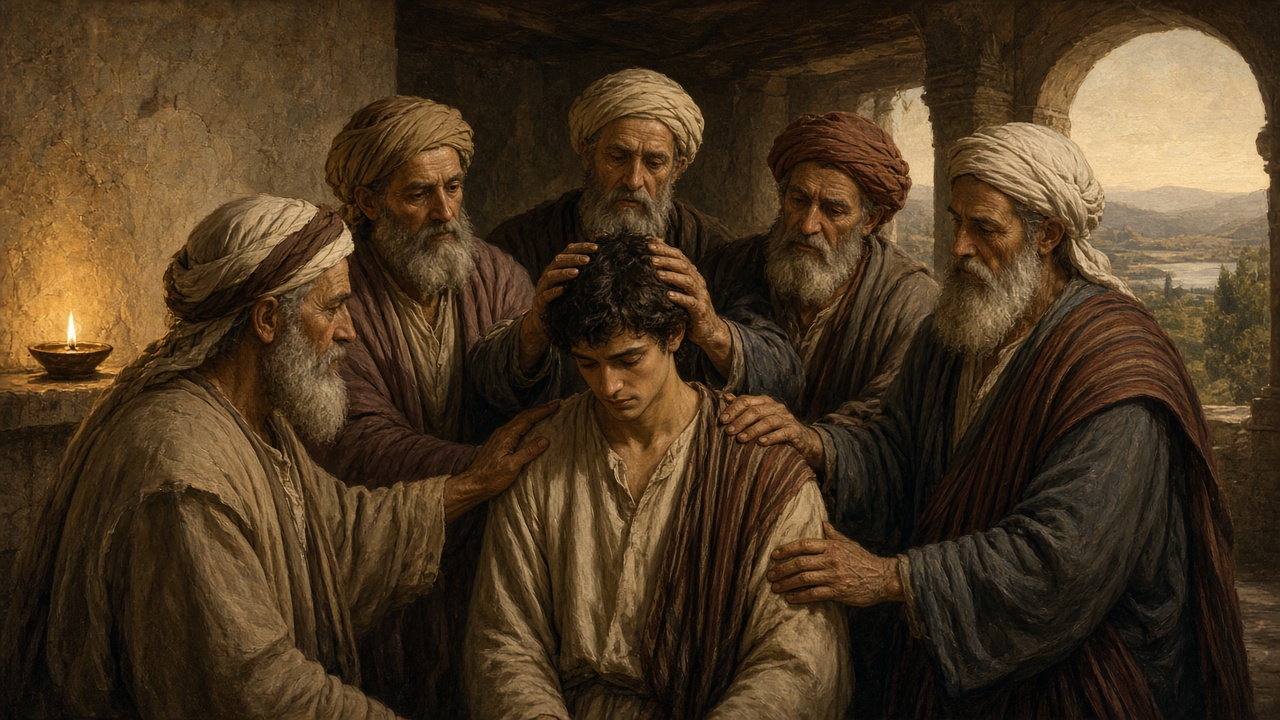
- The writer urges the young person he addresses not to let anyone despise his youth, but to set an example in speech, conduct, love, faith, and purity. Until the writer comes, he is to devote himself to the public reading of Scripture, to exhortation, and to teaching, and not neglect the gift given through prophecy when the elders laid hands on him. Physical exercise, the letter adds, is of limited value, while godliness is valuable in every way, holding promise for the present life and the life to come, a saying the letter calls trustworthy and worthy of full acceptance.Sources: the Bible text itself
Notes written with AI assistance from open sources (Theographic Bible Metadata, CC BY-SA 4.0; Easton’s Bible Dictionary, public domain) and reviewed before publishing.
Credits and license for this translation
Sahidica - طبعة جديدة من العهد الجديد باللغة القبطية الصعيدية
Sahidica - A New Edition of the New Testament in Sahidic Coptic
copyright © 2000-2006 J Warren Wells
Language: ⲘⲉⲧⲢⲉⲙ̀ⲛⲭⲏⲙⲓ (Coptic)
Dialect: Sahidic
Translation by: J Warren Wells
Coptic: Sahidic NT "Sahidica - A New Edition of the New Testament in Sahidic Coptic"
Copyright (c)2000-2006 by J Warren Wells. All rights reserved.
For more information visit www.sahidica.org .
This edition is available free of charge for use in free electronic
editions of the New Testament as long as the full title and copyright
information are included and credited. For written permission to use
all or any part of this document in print editions, contact the editor
at www.sahidica.org .
This edition is primarily meant for use by teachers and students of
Sahidic Coptic, and to a lesser degree by Coptologists involved in
scholarly research, textual criticism, or New Testament translation.
PURPOSE
Please note: This text is a work in progress. As such, there
is an ongoing effort to standardize the spelling of words in
the text. Be aware that version updates periodically appear.
The primary purpose is to produce a standardized edition of
the Sahidic NT similar to standard Greek editions.
An additional purpose of this text is to allow side-by-side
comparison with the Greek New Testament. To facilitate this
effort, a new version of the Greek text has been developed,
which is meant to better represent the Greek text upon which
the Sahidic was based. This text is entitled "The New Testament
According to the Egyptian Greek Text" [NTAEG]
This text does not include representation of either accents or
supralinear strokes, since these are used inconsistently in the
original texts. There is also a higher degree of standardization
in spelling and punctuation; like today's standard Greek master
texts, but unlike both the original Sahidic texts, and the PHI
and Coptic Society texts. Moreover, as in standard Greek texts,
instances of the Nomina Sacra have been expanded to their full
forms. This is again a departure from earlier versions of the
Sahidic, including the PHI and Coptic Society texts, which are
Both inconsistent in their usage.
Special thanks to David Brakke of Indiana University Bloomington,
Brigitte Comparini of the Packard Humanities Institute, and
Michael Heiser, Academic Editor, at Logos Research Systems; for
their assistance in making this edition possible.
BASIS
Sahidica was initially based (by permission) on the Coptic New Testament,
which is an electronic publication, which was edited by David Brakke.
(PHI-CD 5.3 dated 7/2/91. Los Altos. Packard Humanities Institute. 1991).
During later development, Sahidica was electronically collated against
the Coptic CD I by the St. Shenouda The Archmandrite Coptic Society.
Los Angeles, CA dated April, 1998.
These two editions were reduced to a raw electronic form, which allowed both
to be compared electronically letter by letter with Sahidica in order to
accurately detect and report every single variation and input error in any
of the texts. Though errors are inevitable, the collators of three seperate
editions are highly unlikely to make the same errors. Therefore, this method
helps to insure the integrity of the Sahidica edition.
Throughout the project, Sahidica was also collated against printed editions
of the following coptic manuscripts, which manuscripts date from the third
century and later.
Matt: Pierpont Morgan Library M-569 collated against Bodmer XIX papyrus
Mark:* PPalau Rib. Inv.Nr.182 collated against Pierpont Morgan Library M-569
Luke: PPalau Rib. Inv.Nr.181 collated against Pierpont Morgan Library M-569
John: PPalau Rib. Inv.Nr.183 collated against Pierpont Morgan Library M-569
Acts: Chester Beatty B (Copt.Ms.814) collated against Berlin P.15926 and British Museum MS Or.7594
Paul: Chester Beatty A (Copt.Ms.813) collated against Pierpont Morgan Library M-570 and M-571
James-Jude:** Pierpont Morgan Library M-572 collated against the Pierpont Morgan Library M-573 and M-601***
Revelation: Berlin MS Or.408 ( British Museum Ms Or.3518) collated against British Museum MS Or.6803
* Note: The longer and shorter endings of Mark are based on Horner; cf Kahle (JTS.1951.p49-57)
** Note: 1st Peter was also collated against the Crosby-Schøyen Ms.193.
*** Note: Portions of James and Jude were reconstructed from M-573, M-601, and four other mss.
Note on Interpolations
The short and long endings of Mark are ommited from the PPalau ms 182, but they do appear in most mss.
To better represent the overall Sahidic tradition, both endings are included, but in double brackets.
The pericope of the adultress (John 7:53-8:11) does not appear in any Sahidic ms. Herein it is omitted.
2014-09-16
Source: http://ebible.org/copshc/ · eBible.org