Genesis 26
Chiga Tevaen'Jema Atesuja 1, Aisheve Caña'cho · Tap a verse to see its cross-references.
Isaac Gerarni ja'cho
1Tsa'caen tson'jen'ni qquipoesuiteve da pa'cco tsa ande, Abraham can'jeinte daqquia'caen. Tsa'caen dasi Isaacja filisteo ande'su Gerar canqqueni ja. 2Tsa filisteo'su na'suja Abimelec. Tseni tsu Na'su Chigaja attiamba su: “Egiptoni jajama. Ma'ttinga ña su'ninda tse'ttini can'jenjan. 3Ja'ñojan va andeni can'jenjan. Ñajan quei'ccu can'jemba gi quenga ñotsse tsoña. Nane pa'cco va andema gi quenga toya'caen que dushundeccunga'qque afeya. Tsa'caen gi tsoña que yaya Abrahamnga su'choma naniñe. 4Que omba'su dushundeccuma gi atapoeña sefacconi'su o'feacan'tsse. Tsomba gi pa'cco va andema afeya. Toya'caen gi que omba'su dushundeccui'ccu poi ande'su aindeccuma ñotsse tsoña. 5Nane Abrahamjan ñama pañamba pa'cco ña mandapa antte'choma nanitsse tson. Tsa'caen ña atesian'choma pañamba tsonsi gi tise dushundeccui'ccu poi ande'su aindeccuma ñotsse tsoña.”
6Tsa'caen susi Isaacja Gerarni can'jen. 7Tsa'caen can'jensi tseni can'jensundeccu Rebecane iñajampaña'fasi Isaacja “Ña pushe” qquen suye dyojopa “Ña que'tte” qquen su. Nane Rebecaja me'detssisi tsu tsa'caen su tseni'su tsandiendeccu tisema fi'ttipa Rebecama itsa'fasa'ne.
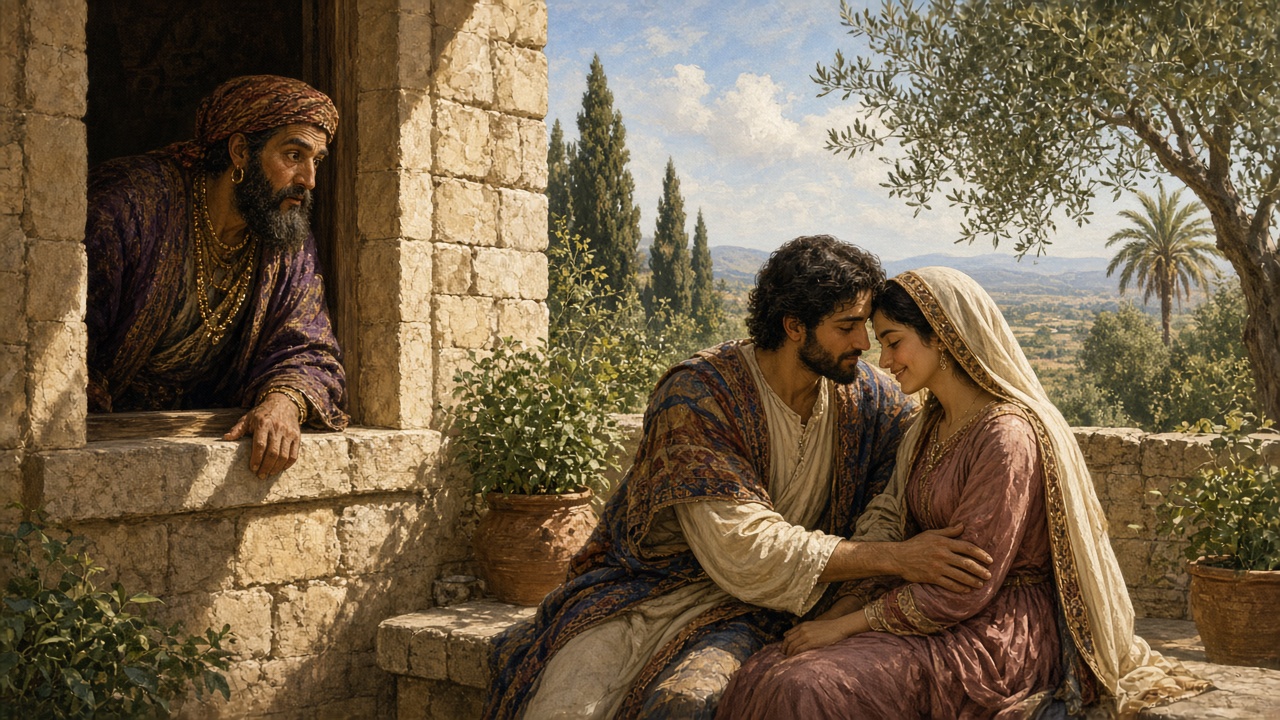
8Bo'tsse tsu tseni canse'fa. Tsa'ma fae a'ta Abimelec ventana'ñe caña'jen'ni Isaac tise pushe Rebecai'ccu cofe'je'choma atte. 9Tsa'caen attepa Isaacma ttu'seye mandapa tise jisi su:
—Tiseja ñoa'me que pushe tsu. Tsa'camanda, ¿jongoesie qui ‘tisu que'tte’ qquen afopoen?
Tsa'caen susi Isaacja su:
—Tisene ñama fi'tti'fasa'ne dyopa gi tsa'caen su.
10Tsa'ma Abimelecja tisema su:
—¿Ma'caen qui inginga tsa'caen tson'jen? Ti'tssecan'da tsu va canqque'su majan tsandie que pushei'ccu ccuiye'can. Tsa'caen tson'choecan'da queyi qui ingima egae tsincoeñe'can.
11Tsa'caen supa Abimelecja manda antte tise canqque'suma:
—Majan tsa tsandiema noñangiamba, tise pushema noñangian'ninda junde fi'ttiya'cho.
12Tsa canqque'fa Isaacja tseni jomba ñotsse tai Na'su Chiga tisema ñotsse tsonsi. 13Nane ricove dapa pa'cco osha'choma an'bian. 14Tsain'bi oveja, vaura, semasundeccuma'qque an'biansi filisteondeccuja tise'pa injama'choni se'pi'fa. 15Tsa'caen ganasi injamáchoni se'pipa filisteondeccuja Abraham cansuite Abrahambe semasundeccu dyan'dya'cho posoma andei'ccu ovi'fa. 16Tsa'caen tson'fasi Abimelecja Isaacma su:
—Va'ttie joqquitssipa jaja. Ingima ti'tsse joccapitssia ricove qui da.
17Tsa'caen susi Isaacja tsa canqque'ye sombopa Gerar'su sinjunccuni japa canse. 18Tsa'caen japa toe tise yaya'ye cansuite dyan'dya'fa'cho tsa'ccu posoma ccase dyan'dya. Nane tsa posoma tsu filisteondeccu Abraham pasi andei'ccu ovi'fa. Tsaveyi tsu ccase dyan'dyapa tise yaya'ye inisianqquia'caeñi inisian. 19Fae a'ta Isaacmbe semasundeccuja tsa sinjunccuni tsa'ccu posove dyandya'jepa tsa'ccu sombo'je'ttima atte'fa. 20Tsa'ma cca'i tsa sinjunccuni ovejama coirasundeccu Isaacmbe coirasundeccui'ccu tssetssecco'fa, tsa tsa'ccuja tise'pambe qquen supa. Tsa'caen tssetssecco'fasi Isaacja “Tssetssecco'cho” qquen tsa posoma inisian. 21Tsa'caen tsomba omboe tise'be semasundeccuja faesu posove dyan'dya'fa. Tsane'qque ccase iyicco'fasi Isaacja tsa posoma inisian “Iyicco'cho.”
22Tsa'caen tsincon'fasi Isaacja tse'ttie sombopa biani japa faesu posove dyan'dya. Tsa posonejan iyicco'fambisi “Se'piccombi'choa” qquen inisian. Tsa'caen inisiamba su: “Ja'ño tsu Na'su Chigaja antte ingi se'piccombe va andeni cansepa ti'tsse'tssia've daye.”
23Tse'tti can'jemba Isaacja Beersebani ja. 24Tsequi cose Na'su Chigaja tisenga attiamba su:
“Ña gi que yaya Abrahambe Chiga.
Dyombe can'jenjan. Ña gi quei'ccu can'jen.
Nane ñama shondo'su Abrahamma in'jamba gi quema'qque in'jamba ñotsse tsoña.
Toya'caen gi que omba'su dushundeccuve ti'tsse atapoeña.”
25Tsa'caen susi pañamba Isaacja Chiganga afeye oque'je'chove ñoñamba tsanga Na'su Chigama iñajan'jen. Tse'tti cansesi tisema shondosundeccuja faesu tsa'ccu posove dyan'dya'fa.
Isaac, Abimelec'qque injancco'fa
26Fae a'ta Abimelecja Gerarne ji Isaacma afaye. Tisei'ccu tsu ji'fa tise amigo Ahuzat, toya'caen Ficol, tise'be sundarondeccumbe capitán. 27Tsa'caen ji'fasi Isaacja su:
—Tisupa ñama chi'gapa que'i ande'ye joqquitssian'da, ¿jongoese qui ñama can'su ji'fa?
28Tsendeccuja su'fa:
—Atte'fa gi quei'ccu Na'su Chiga can'jen'choma. Tsa'cansi gi in'jan'fa quei'ccu fae'ngae injanccoye. Nane injanccoye in'jamba su'choja qquen tsu: 29Ingi quema noñangian'ma'caen queja ingima egae tsonjama. Nane ingija quema noñangian'ma ñotsse tsomba quema ñotsse afapa moe'fa. Tsa'ma ja'ñojan Na'su Chiga tsu quema ñotsse tson'jen.
30Tsa'caen su'fasi Isaacja rande fiestave tson. Nane amba cu'ipa 31ccaqui a'ta sinte jangipa ñoa'me su'choi'ccu ñotsse tsoña'chove injanccoye su'fa. Tsa'caen supa Isaacja “Chigái'ccu” qquen susi tsendeccu'qque tisu amigoma'caen chigambiamba ja'fa.
32Tsequi a'tayi Isaacmbe semasundeccu'qque jipa conda'fa tise'pa dyandya'je'cho'ye tsa'ccu sombo'choma. 33Isaacja tsama pañamba tsu posoma “Seba” qquen inisian. Tsa'cansi tsu tsa canqqueja ja'ño pán Beerseba qquen inisecho'cho.
34Esaúja cuarenta canqque'fave an'biamba Juditma pushe. Tsaja hitita a'i'su Beeri onque'nge. Toya'caen tsu faesu pushesu, Basematma pushe. Tsaja faesu hitita'su onque'nge, Elón qquen inisecho'cho. 35Tsa dos pushesundeccu tsu Isaac Rebecama'qque panshaen vanae'jen'fa.
Did you know?
Isaac in Gerar
- During a famine, Isaac sought refuge with Abimelech, king of Gerar, an ancient town and district on the southern border of Palestine. Easton's Bible Dictionary (1897) notes that Isaac acted toward his wife Rebekah much as his father Abraham had acted toward Sarah there: he said she was his sister. Abimelech later rebuked him when the deception was discovered.Sources: Abimelech (King of Gerar) · Gerar · the Bible text itself
- The names of wells in the Valley of Gerar recall the disputes over them. Esek means “quarrel,” because the herdsmen of Gerar claimed the water, and Sitnah means “strife.” Isaac also reopened wells that his father Abraham’s servants had dug and that the Philistines had stopped up, and he gave them the same names his father had given them.Sources: Esek · Sitnah · the Bible text itself
- Beersheba means “well of the oath” or “well of seven.” According to Easton's Bible Dictionary (1897), Abraham dug a well there and named it after a compact with Abimelech, and Isaac gave it the same name when he reopened it. The dictionary also identifies Phicol—“great”—as chief captain of Abimelech’s army, and says he took part in Abraham’s alliance over that well.Sources: Beersheba · Phichol · the Bible text itself
Notes written with AI assistance from open sources (Theographic Bible Metadata, CC BY-SA 4.0; Easton’s Bible Dictionary, public domain) and reviewed before publishing.
Places in this chapter
- Egypt · 30.129, 31.308 · verse 2
- Valley of Gerar · Today: about 3 km around Tel Haror · 31.382, 34.606 · verses 17, 19
Only places identified with high confidence are shown (90% or more according to the scholarly sources compiled by OpenBible). Period map: DARE (Digital Atlas of the Roman Empire), CC BY 4.0; modern map: © OpenStreetMap contributors; places: OpenBible.info (CC BY 4.0).
Credits and license for this translation
Chiga Tevaen'Jema Atesuja 1, Aisheve Caña'cho
New Testament and Genesis in Cofán (EC:con:Cofán)
copyright © 2012 Wycliffe Bible Translators, Inc.
Language: Cofán
Translation by: Wycliffe Bible Translators, Inc.
Cofán
con
Ecuador
Copyright Information
©Wycliffe Bible Translators, Inc. All rights reserved.
This translation text is made available to you under the
terms of the Creative Commons License: Attribution-Noncommercial-No Derivative Works.
( http://creativecommons.org/licenses/by-nc-nd/3.0/ )
In addition, you have permission to port the text to different file formats, as long as you
do not change any of the text or punctuation of the Bible.
You may share, copy, distribute, transmit, and extract portions
or quotations from this work, provided that you include the above copyright
information:
You must give Attribution to the work.
You do not sell this work for a profit.
You do not make any derivative works that change any of the actual words or punctuation of the Scriptures.
Permissions beyond the scope of this license may be
available if you contact
us with your request.
The New Testament
in Cofán
©Wycliffe Bible Translators, Inc. All rights reserved.
This translation is made available to you under the terms of the
Creative Commons Attribution-Noncommercial-No Derivatives license 4.0.
You may share and redistribute this Bible translation or extracts from it in any format, provided that:
You include the above copyright and source information.
You do not sell this work for a profit.
You do not change any of the words or punctuation of the Scriptures.
Pictures included with Scriptures and other documents on this site are licensed just for use with those Scriptures and documents.
For other uses, please contact the respective copyright owners.
2014-04-22
Source: http://ebible.org/conNTpo/ · eBible.org