Acts 27
Chiga Tevaen'Jema Atesuja 1, Aisheve Caña'cho · Tap a verse to see its cross-references.
Pabloma Romani moen'cho
1Tsomba tse'i na'suja asi'ttaemba in'jan Pabloma moeñe Italia andeni poi andembe na'sunga. (Ña Lucas'qque gi tisei'ccu jaye.) Na'suja tsa'caen in'jamba Pabloma, toya'caen faesu indiye'chondeccuma'qque, coiraye manda Na'su Agosto sundarondeccu'su capitáma. Tsambe iniseja Julio. 2Tsonsi gi fingian angaqque'su barconga otse'fa. Tsata tsu Adramitio canqque'su barco. Tsa barco Asia ande'su canqquengae jaye tson'jensi gi tsanga otse'fa. Toya'caen Macedonia'su a'i, Tesalónica canqque'su Aristarco, ingi'ccu fae'ngae jaye otse. 3Ccaqui a'ta gi Sidón canqqueni ccattufa'fa. Julioja Pabloma mende'yepa antte cuintsu tise amingo tsaoni japa can'jeñe. 4Sidóne sombopa gi Chipre anttepo'cho fingian mefaye ja'fa fingian'ñe jaye ega'osi. 5Tsomba Cilicia, Panfilia ande isevetsse marma isepa ccattufa'fa Mira canqquenga. Tsa tsu Licia ande'su canqque.
6Tse'ttima capitánjan faesu barcoma atte. Tsaja Alejandría canqque'su barco, Italia andeni jaya'cho. Tsanga ingima otsiansi gi 7boyi a'tangae vasui ja'fa. Tsa'caen vanamba gi Gnido canqqueni napi'fa. Tsa'ma toya fingian'ñe jaye ega'osi Creta anttepo'cho fingian mefaye ja'fa. Nane Salmón ccotta'cco isevetsse panshamba 8vanamba otafa'ye já napi'fa faesu mar catai'ccunga, Buenos Puertos qquen inisecho'chonga, Lasea canqque pporotsse.
9Tsain'bio a'tangae tseni napisi tayo sanfan ca'nisi marngae jaye ega'osi Pabloja poiyi'cconga condapa 10su:
—Tsandiendeccu, ñanda gi in'jan ja'ño jayeta tsu ega, osha'choma qqueñasa'ne. Nane andu'cho shavoma'qque qqueñamba ingi'qque pasa'ne.
11Tsa'ma Pablo tsa'caen su'ni'qque sundaro capitánjan tisema pañambipa ti'tsse tsu paña barco asittaen'suma, toya'caen barco na'suma'qque. 12Tsa mar catai'ccuja qque'ccosi sanfan pasa'tsse tseni barcoma dusiañe in'jan'fambi. Poiyi'cco tsa'caen in'jamba ccase marni jaye in'jan'fa osha'ta Feniceni napipa tseni sanfama pasaye. Tsa Creta ande'su mar catai'ccuja bove ñotsse tsu jin fingian ja'jembiquia'ni.
Quia'me fingiamba barcoma indi'cho
13Tsomba tse'i ñonia'ngae re'riccoe fingiansi tsu jaye ñotssi qquen in'jan'fa. Tsa'caen in'jamba barcoma indi dusian'jen'cho an'ccoma jangian'fa. Tsomba Creta ande otafa'ye pporotsse jayi'fa. 14Tsa'ma tsa'caen jayi'fa'ni faesu fingianjan andepane quia'me ji. Tsa fingiama tsu a'i atesupa inisian'fa Yoracorón. 15Tsa'caen jipa barcoma indisi asuccoe jaye oshambipa a'ningae ja'fa. Tsa'caen tsu fingianjan ingima anga. 16Tsonsi faesu chipiri anttepo'cho –Clauda qquen inisecho'chonga– fingian mefaye japa vanamba semamba ingi jayi'cho barconi duse'cho shavo chipirima indi'fa. 17Indipa ansundian'fa barconga. Tsomba cavoi'ccu barcoma findi'fa shave'panga dosa'ne. Toya'caen angasundeccuja dyo'fa mar sai'ccuccosi sisipandundunga injanga ja ejesa'ne. Tsa sisipandundunjan Sirte qquen inisecho'cho. Tsanga jasa'ne dyopa ja'je'cho sarupama andian'fa cuintsu fingian vasuitsse angaye. 18Ingija toya unjin, fingian, shave'pai'ccu quia'me angongoen'jensi ccaqui a'ta angasundeccuja barco'su andu'choma sombo'boen cati'tiye ashaen'fa. 19Tsomba ccaqui a'ta ingi tivei'ccu osha'cho barconi jincho'choma'qque ttovaccoen cati'fa. 20Tsain'bio a'ta gi coejechigama ni o'fema'qque atteye osha'fambi. Toya'caen unjinsi fingian'qque toya quia'me fingian'jensi gi ma'caen ccushaya'chove'qque atesu'fambi.
21Ingi tsa'caen bo'tsse ambe can'jensi Pabloja ccutsupa su:
—Tsandiendeccu, ñama qui pañamba Cretane shanda'choecan'da gi ja'ñojan vanambe ni osha'choma qqueñambe can'jen'faye'can. 22Tsa'ma ja'ño que'i injama'choma ñotsse ñoña'faja. Pa'faya'bi qui que'ija, ni fae'ccoyi'qque. Aqquia barcoyi tsu qqueya'cho. 23Ña gi Chiga Quitsama shondo'su. Tsaja ña na'su tsu. Nane ja'ño cose tsu Tisema sefani'su shondo'su ñanga catse ccutsupa 24su: “Dyojama, Pablo. Queja Na'su Césarni qui jaya'cho. Toya'caen Chigaja quema in'jamba tsu antte cuintsu quei'ccu barconga jacansundeccu'qque ccusha'faye.” 25Tsandiendeccu, tsa'cansi que'i injama'choma ñotsse ñoña'faja. Ñajan Chiga Quitsave gi in'jan. Tise suqquia'caen tsu tsoña. 26Tsa'ma majan anttepo'chonga gi já eje'faya.
27Tayo catorce cose tsa'caen angajipa, mar Adrianga anga dusiamba enttinge cose barcoma angasundeccuja tayo sa'anga catse ji qquen in'jan'fa. 28Tsomba simba'fai'ccu agattocamba in'jan'fa veinte yasa tsu tsosi'suja. Re'riccoe japa joccani ccase agattocamba in'jan'fa quince yasa tsu tsosi'suja. 29Tsomba patunga ccattufasa'ne dyopa cuatro indi dusian'jen'cho an'ccoma barco setsa'ye tandamba ttovamoen'fa cuintsu mar tsosini indiyepa barco jayi'choma indiye. Tsa'caen tsomba poiyi'cco dyopa ron'da'fa cuintsu junde a'taye. 30Tsa'ma barcoma angasundeccuja barco'ye sombopa jaye in'jamba tise'pa angacan'cho shavoma marnga andian'fa. Nane faesu indi dusian'jen'cho an'ccoma barco tsutone tandamba ttovamoen'faya qquen supa ñoa'me cati jaye tson'jen'fa. 31Tsa'ma Pabloja tise'pa in'jan'choma attepa sundaro capitánga, toya'caen tise sundarondeccuma'qque su:
—Vandeccu barcoma cati'ninda, ¿ma'caen qui ccusha'faya?
32Tsa'caen pañamba sundarondeccuja shavo tandan'fama chattumoen'fa cuintsu aijaye.
33A'taningae, Pabloja poiyi'ccoma su cuintsu re'riccoe an'faye. Qquen tsu su:
—Tayo tsu catorce a'ta que'i anambeyi can'jen'cho. Toya'caen qui ñotsse an'fambi. 34Tsa'camba gi que'inga su, an'faja, quiñañe. Ni fae'ccoyi'qque pa'faya'bi qui ni iñaca'faya'bi qui.
35Tsa'caen supa pa'o caña'jen'ni, Pabloja panma isupa Chigama iñajan. Iñajan nanimba panma doñamba añe ashaen. 36Tsonsi tise'pa injama'choma ñoñamba poiyi'cco an'fa. 37(Ñoa'me dosciento setenta y seis a'i tsu barconi can'jen'fa.) 38Tsomba poiyi'cco tisupa in'ja'en an tteppupa pa'cco barco'su andu'cho trigoma marnga catiti'fa cuintsu barco favaye.
Barco anttepo'chonga ca'ni eje'cho
39Tayo a'tasi atesumbi'choa andema atte'fa. Tsa'ma mar catai'ccuma'qque atte'fa, sisipandundun jinchoma. Tsa'caen attepa asi'ttaen'fa osha'ta tseni barcoma ccattufaeñe. 40Tsomba tsosine indi dusian'jen'cho an'ccoma chattu moemba asittaen'su chhochhofin'dima tandan'chomaqque ccupa'fa. Tsomba tsuto'su fingian angaqque'su sarupama jangian dusiansi sisipandundunga fingianjan tise'pama ccattufaeñe anga. 41Tsa'ma barco já mar sisipa saiccu'anga já ccui. Tsa'caen tsuto ta'etsse eje ccuisi mar shave'pa quia'me jipa barco setsama u'cca.
42Tsonsi sundarondeccuja poiyi'cco indiye'chondeccuma fi'ttiye in'jan'fa, cca'yapa ccuyayin ja'fasa'ne. 43Tsa'ma capitánjan, Pabloma ccushaeñe in'jamba sundaro in'jan'choma se'pi. Tsomba manda cuintsu majan cca'yaye osha'ta butto ca'nimba sania cca'ya iseye. 44Cca'yaye oshambi'choa'manda tsu manda cuintsu majanjan quini'cconga, majanjan barco do'chonga ottapa sania iseye. Tsa'caen susi poiyi'cco sania isesepa ccusha'fa.
Did you know?
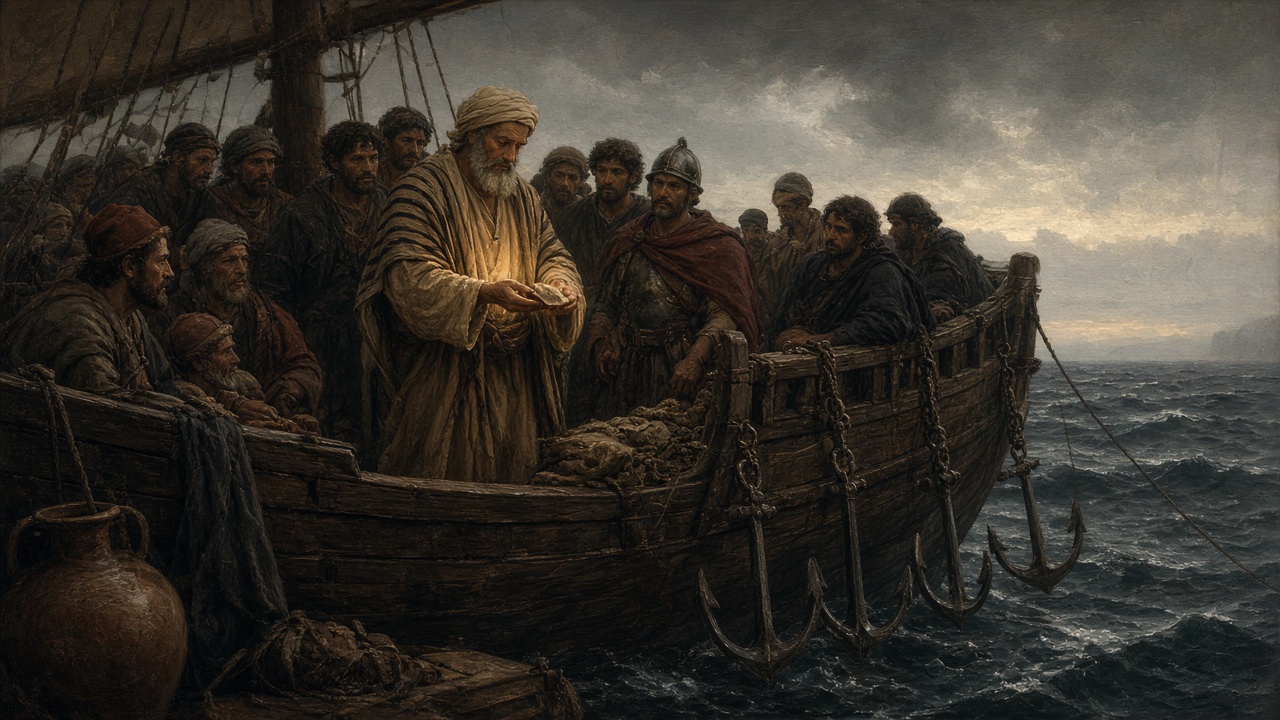
Storm and Shipwreck on the Way to Rome
- Paul and the other prisoners did not sail straight to Italy. At Caesarea they boarded a ship of Adramyttium, a city on the coast of Mysia in Asia Minor, bound for ports along the coast of Asia, a name Easton's Bible Dictionary takes in this verse as probably Asia Minor, and that ship carried them only as far as Myra in Lycia. There the centurion put them aboard an Alexandrian ship sailing for Italy; the dictionary notes that it was rare for a ship to sail from any port of Palestine direct to Italy.Sources: Adramyttium · Asia · the Bible text itself
- The prisoners were handed over to Julius, a centurion of the Imperial Regiment. Easton's Bible Dictionary identifies him as centurion of the Augustan cohort, or the emperor's body-guard, and describes his courteous regard for Paul. At Sidon, about twenty-five miles north of Tyre, he let Paul visit friends and receive care; later he blocked the soldiers' plan to kill the prisoners so that Paul's life would be spared.Sources: Julius · Sidon · the Bible text itself
- After Cnidus the ship worked along Crete, one of the largest islands in the Mediterranean, about 140 miles long and 35 broad, which Paul visited on this voyage to Rome. The account says the voyage had already become dangerous because it was after the Fast, and Fair Havens was unsuitable for wintering. One chronology dates the start of the journey to Rome to AD 56 and the shipwreck in the storm to AD 57.Sources: Crete · Journey to Rome begins · Paul is shipwrecked by a storm · the Bible text itself
Notes written with AI assistance from open sources (Theographic Bible Metadata, CC BY-SA 4.0; Easton’s Bible Dictionary, public domain) and reviewed before publishing.
Places in this chapter
- Italy · 41.892, 12.485 · verses 1, 6
- Adramyttium · Today: Oren · 39.501, 26.933 · verse 2
- Asia · 38.400, 28.300 · verse 2
- Thessalonica · Today: Thessaloniki · 40.638, 22.946 · verse 2
- Sidon · Today: Sandikli archaeological site in Sidon · 33.561, 35.372 · verse 3
- Cyprus · 35.000, 33.000 · verse 4
- Cilicia · 36.913, 34.892 · verse 5
- Lycia · 36.733, 29.900 · verse 5
- Myra · 36.259, 29.985 · verse 5
- Pamphylia · 37.000, 31.000 · verse 5
- Alexandria · 31.183, 29.896 · verse 6
- Cnidus · 36.686, 27.375 · verse 7
- Crete · 35.310, 24.893 · verses 7, 8, 12, 13, 14, 21
- Salmone · Today: Cape Sideros · 35.316, 26.312 · verse 7
- Fair Havens · Today: Kaloi Limenes · 34.930, 24.800 · verses 8, 12
- Lasea · Today: Lasaea · 34.941, 24.811 · verse 8
- Cauda · Today: Gavdos · 34.833, 24.083 · verse 16
- Syrtis · Today: Sidra · 31.500, 18.000 · verse 17
- Adriatic Sea · Today: Adriatic and Ionian Seas · 38.000, 19.000 · verse 27
Only places identified with high confidence are shown (90% or more according to the scholarly sources compiled by OpenBible). Period map: DARE (Digital Atlas of the Roman Empire), CC BY 4.0; modern map: © OpenStreetMap contributors; places: OpenBible.info (CC BY 4.0).
Credits and license for this translation
Chiga Tevaen'Jema Atesuja 1, Aisheve Caña'cho
New Testament and Genesis in Cofán (EC:con:Cofán)
copyright © 2012 Wycliffe Bible Translators, Inc.
Language: Cofán
Translation by: Wycliffe Bible Translators, Inc.
Cofán
con
Ecuador
Copyright Information
©Wycliffe Bible Translators, Inc. All rights reserved.
This translation text is made available to you under the
terms of the Creative Commons License: Attribution-Noncommercial-No Derivative Works.
( http://creativecommons.org/licenses/by-nc-nd/3.0/ )
In addition, you have permission to port the text to different file formats, as long as you
do not change any of the text or punctuation of the Bible.
You may share, copy, distribute, transmit, and extract portions
or quotations from this work, provided that you include the above copyright
information:
You must give Attribution to the work.
You do not sell this work for a profit.
You do not make any derivative works that change any of the actual words or punctuation of the Scriptures.
Permissions beyond the scope of this license may be
available if you contact
us with your request.
The New Testament
in Cofán
©Wycliffe Bible Translators, Inc. All rights reserved.
This translation is made available to you under the terms of the
Creative Commons Attribution-Noncommercial-No Derivatives license 4.0.
You may share and redistribute this Bible translation or extracts from it in any format, provided that:
You include the above copyright and source information.
You do not sell this work for a profit.
You do not change any of the words or punctuation of the Scriptures.
Pictures included with Scriptures and other documents on this site are licensed just for use with those Scriptures and documents.
For other uses, please contact the respective copyright owners.
2014-04-22
Source: http://ebible.org/conNTpo/ · eBible.org