2 Corinthians 8
Irineane tasorentsi oquenquetsatacotaqueri Avincatsarite Jesoquirishito · Tap a verse to see its cross-references.
Oshequi icavintsanti yora maseroniasati.
1Meeca, noyemisantaririnte, nocoaque noncamantempi oshequi ineshinoncajeitaqueri Tasorentsi maaroni yora ayemisantaririnte anta Maseroniaqui. 2Oshequi yoashinoncaajeivetacari ishanincapee, iro cantaincha oshequi iveshireimentajeitacari Tasorentsi. Aisati te irashitaarantasanoveteaji, iro cantaincha oshequi yapatojeitiniri quemisantatsiri quirequi, ipiriri. Iojeitaque yashinoncaajeitaca ayemisantaririnte anta Jerosarequi. 3Te capichaji imperi, oshequi ipaqueri. Te iriojeiteji intsaneempari iirequite. Tecatsi canterine: “Pincavintsayeri piyemisantaririnte”. Irisati iotashitacha icavintsairi. 4Icantasanotaquena: “Nocoaque namitacojeiteri noyemisantaririnte”. 5Ari niovetaca imperi quirequi, iro cantaincha imapocaquena icantajeitaquena: “Nanteneri Tasorentsi paitarica icoacaanari, aisati nantempiro paitarica pincantaquenari. Pincamantena paitarica icoacaaquenari Tasorentsi”. 6Ari chapinqui intanacaro Tito icantaquempi: “Pampatoteneri jerosaresati piirequite”. Ari cameetsa papatojeitaqueneri. Meeca nontiancajempiri aisati incantajempi pampatotasanojeiteneri aisati piirequite, pincavintsaasanojeiteri piyemisantaririnte.
Icantiri Pavoro corintosati: “Pintacoteari ashinoncaincari anta Jerosarequi”.
7Oshequi panaacojeitaqueri pashinipee piyemisantaririnte: panaacotaqueri piquemisantasanojeiti, piquenquetsatasanojeiti, piotasanojeiti, piquearioventasanotiniri Avincatsarite icoacaimpiri, aisati pinintasanojeitaquena. Meeca nocoaque panaacojeiteri pineshinoncatasanojeiteri ashinoncaincari. 8Te noncoyeji nomperanatempi pimpajeiteri ashinoncaincari, iro cantaincha ariorica pimpasanoteri, piotacaajeiteri itsipapee queario pinintasanojeitaqueri piyemisantaririnte. 9Tempa aisati oshequi ineshinoncajeitaquee Avincatsarite Jesoquirishito. Oshequi yashitaarantaca anta inquitequi, aisati oshequi catsini ipincatsaritini, iro cantaincha ipocantacari aca quipatsiqui, yojocanaquero maaroni cameetsayetatsiri. Yashinoncaavetapaaca: tecatsi timimotajerine, itseencajeitaqueri ishaninca, maaroni. Yashinoncaimentaquee arori, oncanteata cameetsa irisavicacaajeitajee anta inquitequi. 10Nocoaque pintacotasanoteari yora ashinoncaajeitachari anta Jerosarequi: tempa avirojeitaque intasanotacarori peerani. 11Picoajeitaque pintacoteari: meeca, intimerica piirequite pintacotanteariri, jentsite, pampatoteri pimpacantanteariri. 12Ocameetsati picoaque pincavintsayeri. Ari itimirica piirequite, tempa ari pimataquero avinti pimperi. Iro cantaincha terica intimeji piirequite, eiro nocantashitimpitsi pimperi. 13Te noninteji ompomerentsitimojeitempi, aisati eiro opomerentsitimojeitiritsi itsipapee. 14Timatsi pashitaarantajeitaca, meeca pincavintsayeri yora ashinoncaincari. Coajica ariorica irashitaarantaquea iriori, aisati ariorica pashinoncaajeitaquea avirori, impoijiquea impiatempi incavintsaajeitempi avirori. 15Tempa ocantini Sanquenarentsi: “Yora piotasanovetacarori mana, te ontimimotajeriji aisati timaarantajantsine. Irintiquea yora aatsiri capichaji, te irashinoncayeaji irinti. Aitaque, imoncaratavacaajeitaca maaroni”.
Intianqueri Tito irineajeri aisati corintosati.
16Ari iquempetaquena Tito, oshequi inintajeitaquempi, irootaque nopasonquitantacariri Tasorentsi. 17Nocantaqueri: “Pijatashitajeri aisati corintosati, pineeri”. Iro cantaincha te apaniro narori noncoacayeri, irisati coashitacha irineajempi aisati. 18Nontianquempiri itsipa ayemisantaririnte intsipatanaqueari. Oshequi iquenquetsatapinitiro irineane Tasorentsi, irootaque iojeitantacariri maaroni quemisantatsiri. Aisati avirori, piquemacojeitaqueri. 19Aisati itiancajeitaqueri ayemisantaririnte intsipatanaquena narori anta Jerosarequi, iramitacotena naanajeneri ashinoncaincari quirequi. Oshequi icavintsaajeitaqueri ayemisantaririnte, irootaque incantanteari jerosaresati: “Icameetsataque Tasorentsi”. Aisati iriojeitanaque oshequi acavintsaajeitaqueri. 20Ari icarataque oshequi quirequi pintianqueneriri, oshequi picavintsaajeitaqueri. Irootaque nocoantacari intime tsipatenaneri naanajeneri. Icanteetanacari: “Picoshitaqueri”. 21Te apaniro noncoaque irineacameetsatena Tasorentsi, aisati nocoaque irineacameetsajeitena ashanincapee. 22Aisati pineavajeri pashini ayemisantaririnte nontianqueri. Niotaqueri, iquearioventaquero iquemisantaque. Nocamantaqueri oshequi piquemisantajeitaque aisati oshequi picavintsantajeitaque, irootaque icoasanotantacari irijate irineempi. 23Yora Tito, quiso yoapinitaquena, yamitacotapinitaquena nintacojeitaquempi. Aisati yora intsipajeiteari irineempi, iriojeitaque itiancanepee ayemisantaririnte aca. Cameetsa inajeiti, quemisantasanotiriri Quirishito. 24Ari oshequi nocantapinijeitaqueri quemisantatsiri aca: “Icameetsajeitaque corintosati”. Ariorica pineavaqueri yoca, paacameetsatasanotavaqueri iriojeitanteari queario oca nocantaqueriri.
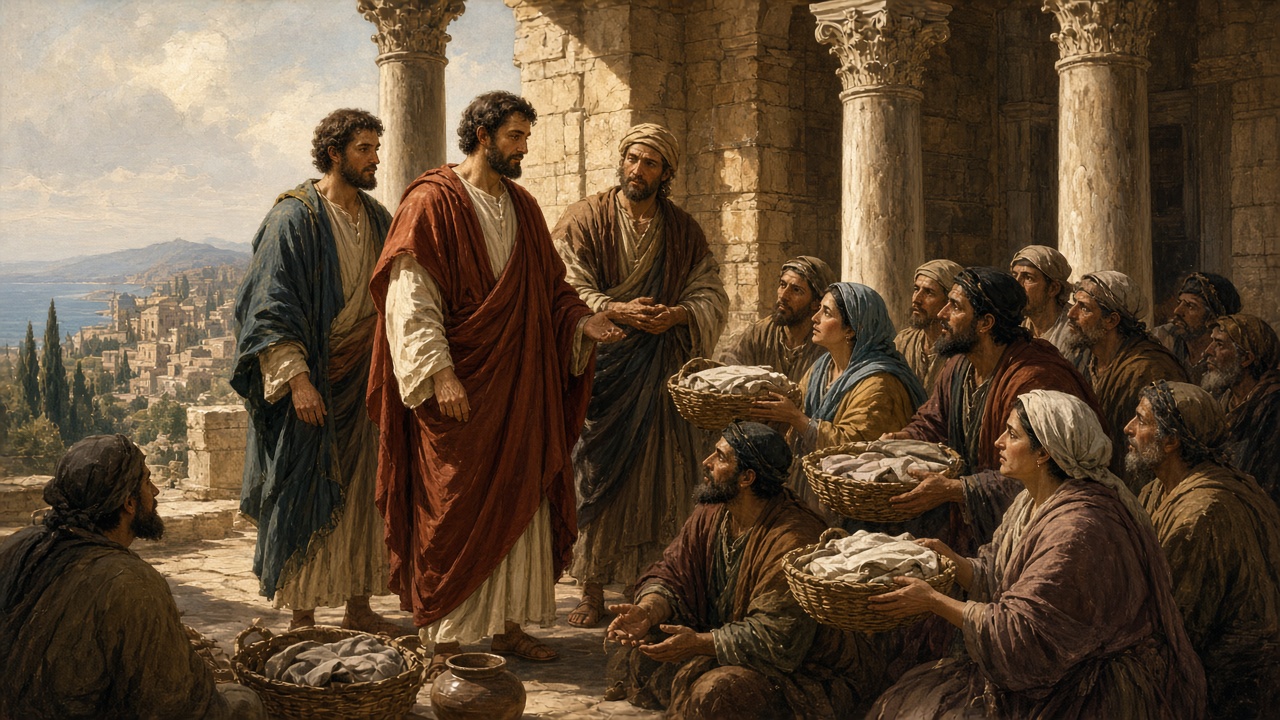
Did you know?
Generosity and the Jerusalem Collection
- In New Testament times Macedonia was a Roman province north of Greece. Paul was summoned by the vision of a man of Macedonia to preach the gospel there, and this chapter tells the Corinthians how those churches, in a terrible ordeal and deep poverty, gave joyfully and even beyond their ability.Sources: Macedonia · the Bible text itself
- Titus, whose name nowhere occurs in Acts, appears to have been a Gentile chiefly engaged in ministering to Gentiles. From Ephesus, Paul sent him to Corinth to forward the church's contributions for the poor saints at Jerusalem; in this chapter Paul urges him to complete that work, and Titus is coming eagerly of his own accord.Sources: Titus · the Bible text itself
- Along with Titus, Paul is sending a brother praised by all the churches for his work in the gospel and chosen by them to accompany the offering, and another brother whose earnestness has been proven many times and in many ways. He explains that this care is meant to avoid criticism of how the generous gift is administered, so that they do what is right not only in the eyes of the Lord but also in the eyes of other people.Sources: the Bible text itself
Notes written with AI assistance from open sources (Theographic Bible Metadata, CC BY-SA 4.0; Easton’s Bible Dictionary, public domain) and reviewed before publishing.
Places in this chapter
Only places identified with high confidence are shown (90% or more according to the scholarly sources compiled by OpenBible). Period map: DARE (Digital Atlas of the Roman Empire), CC BY 4.0; modern map: © OpenStreetMap contributors; places: OpenBible.info (CC BY 4.0).
Credits and license for this translation
Irineane tasorentsi oquenquetsatacotaqueri Avincatsarite Jesoquirishito
New Testament in Asháninka (PE:cni:Asháninka)
copyright © 2008 Wycliffe Bible Translators, Inc.
Language: Asháninka
Translation by: Wycliffe Bible Translators, Inc.
Asháninka [cni], Peru
Copyright Information
© 2008, Wycliffe Bible Translators, Inc. All rights reserved.
This translation text is made available to you under the
terms of the Creative Commons License: Attribution-Noncommercial-No Derivative Works.
( http://creativecommons.org/licenses/by-nc-nd/3.0/ )
In addition, you have permission to port the text to different file formats, as long as you
do not change any of the text or punctuation of the Bible.
You may share, copy, distribute, transmit, and extract portions
or quotations from this work, provided that you include the above copyright
information:
You must give Attribution to the work.
You do not sell this work for a profit.
You do not make any derivative works that change any of the actual words or punctuation of the Scriptures.
Permissions beyond the scope of this license may be
available if you contact
us with your request.
The New Testament
in Asháninka
© 2008, Wycliffe Bible Translators, Inc. All rights reserved.
This translation is made available to you under the terms of the
Creative Commons Attribution-Noncommercial-No Derivatives license 4.0.
You may share and redistribute this Bible translation or extracts from it in any format, provided that:
You include the above copyright and source information.
You do not sell this work for a profit.
You do not change any of the words or punctuation of the Scriptures.
Pictures included with Scriptures and other documents on this site are licensed just for use with those Scriptures and documents.
For other uses, please contact the respective copyright owners.
2014-04-21
Source: http://ebible.org/cniNT/ · eBible.org