Isaiah 5
世界中文圣经 · Tap a verse to see its cross-references.
1我要为我所亲爱的歌唱,
唱一首我爱的人论他葡萄园的歌。
我所亲爱的有一个葡萄园,
在极肥沃的山冈上。
2他翻挖园地,
清除石头,
栽上上等的葡萄树,
在园中建造一座塔,
又在其中凿出一个榨酒池。
他指望园子结出葡萄,
却结出了野葡萄。
3“现在,耶路撒冷的居民和犹大人哪,
请你们在我与我的葡萄园之间作判断。
4我为我的葡萄园,还能做什么,是我没有做的呢?
我指望它结出葡萄,为什么它却结出了野葡萄呢?
5现在我要告诉你们,我要怎样处置我的葡萄园。
我要撤去它的篱笆,使它被吞吃;
我要拆毁它的墙,使它被践踏。
6我要使它荒废。
它必不再被修剪,也不再被锄理,
却要长出荆棘和蒺藜。
我还要吩咐云,不降雨在它上面。”
7因为万军之耶和华的葡萄园就是以色列家,
犹大人就是祂所喜爱的栽种。
祂指望有公正,看哪,却有压迫;
指望有公义,看哪,却有哀号。
8那些房连着房、
田接着田,直到没有余地,
使你们独自住在地中的人有祸了!
9万军之耶和华在我耳中说:“许多房屋必定荒凉,
又大又美的房屋无人居住。
10因为十英亩葡萄园只产一罢特酒,
一贺梅珥种子只产一伊法。”
11那些清早起来追逐烈酒,
留连到深夜,直到酒使他们发热的人有祸了!
12他们的宴席上有琴、瑟、手鼓、笛子和酒;
他们却不尊重耶和华的作为,
也不思想祂手所做的。
13所以,我的百姓因缺乏知识而被掳。
他们的尊贵人饥饿,
他们的群众干渴。
14所以,阴间扩张它的欲望,
无限地张开它的口;
他们的荣耀、群众、喧闹,
以及在他们中间欢喜的人,都落入其中。
15因此,人被降为卑,
世人被降为低,
傲慢人的眼目也被降为低;
16但万军之耶和华因公正而被尊崇,
圣洁的上帝因公义而显为圣。
17那时,羊羔必像在自己的草场上吃草,
寄居的人必吃富人荒废之处所出的。
18那些用虚谎的绳索牵拉罪孽、
用车绳牵拉邪恶的人有祸了!
19他们说:“愿祂快快行动,愿祂催促祂的作为,使我们可以看见;
愿以色列圣者的旨意临近成就,
使我们可以知道!”
20那些称恶为善、称善为恶,
以黑暗为光明、
以光明为黑暗,
以苦为甜、
以甜为苦的人有祸了!
21那些自以为有智慧、
自看为明达的人有祸了!
22那些善于饮酒的勇士、
调烈酒的能手有祸了!
23他们因贿赂而开脱有罪的人,
却夺去无辜者的公义!
24因此,火舌怎样吞灭碎秸,
干草怎样陷入火焰,
他们的根也必朽烂,
他们的花必如尘土飞扬,
因为他们弃绝了万军之耶和华的律法,
藐视了以色列圣者的话。
25因此,耶和华的怒气向祂的百姓发作,
祂伸手攻击他们,击打他们。
山岭震动,
他们的尸首在街道中如同污物。
虽然如此,祂的怒气仍未转消,
祂的手仍然伸出。
26祂必向远方的列国竖立旗号,
从地极向他们发哨声。
看哪,他们必迅速快步而来。
27他们中间没有疲乏的,也没有绊跌的;
没有打盹的,也没有睡觉的;
他们腰间的带子不松开,
鞋上的带子也不断裂;
28他们的箭锋利,
他们的弓全都拉开。
他们马的蹄如同燧石,
他们的车轮如旋风。
29他们的吼叫像母狮;
他们咆哮像少壮狮子。
是的,他们必咆哮,
抓住猎物带走,
无人搭救。
30到那日,他们必向他们吼叫,像海的怒吼。
若有人望向这地,看哪,尽是黑暗和困苦。
光在它的云中变为黑暗。
Did you know?
The Song of the Vineyard and the Six Woes
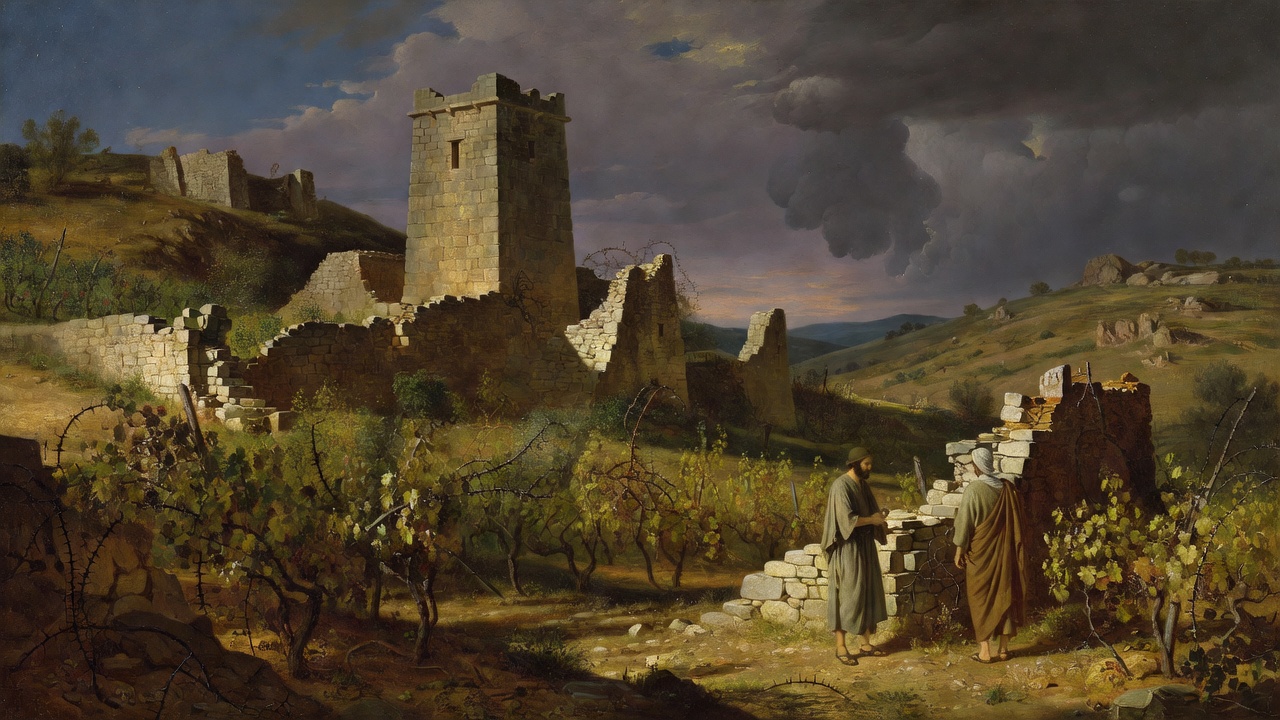
- The opening song in Isaiah 5 describes the elaborate labor of ancient Judean viticulture: clearing rocky hillsides of stones, building a protective stone watchtower, digging out a winepress in the bedrock, and planting prime vines surrounded by a protective hedge and wall. The poem turns into a legal parable where the vineyard represents the house of Israel and the people of Judah, from whom justice was expected instead of bloodshed.Sources: the Bible text itself
- The chapter delivers a series of six prophetic laments or woes, condemning specific social and moral abuses in Judah. These include wealthy landowners consolidating real estate by adding house to house and field to field, judges taking bribes to acquit the guilty while denying justice to the innocent, and leaders indulging in lavish feasting while ignoring divine instruction.Sources: the Bible text itself
- Isaiah's prophetic ministry in Jerusalem addressed the people of Judah over an extended period beginning in the mid-eighth century BC. The chapter concludes with a warning that the Lord would signal distant, disciplined foreign armies equipped with chariots, bows, and swift horses to execute judgment on the land.Sources: Jerusalem · Prophecies of Isaiah · the Bible text itself
Notes written with AI assistance from open sources (Theographic Bible Metadata, CC BY-SA 4.0; Easton’s Bible Dictionary, public domain) and reviewed before publishing.
Places in this chapter
Only places identified with high confidence are shown (90% or more according to the scholarly sources compiled by OpenBible). Period map: DARE (Digital Atlas of the Roman Empire), CC BY 4.0; modern map: © OpenStreetMap contributors; places: OpenBible.info (CC BY 4.0).
Credits and license for this translation
世界中文圣经
World Chinese Bible
Public Domain
Language: 中国语文 (Chinese, Mandarin)
Dialect: Mandarin
《世界中文圣经》为译本草稿。如果您发现任何需要改进之处,请发送电子邮件至 [email protected]。
2026-09-07
Source: http://ebible.org/cmnswcb/ · eBible.org