1 Kings 1
世界中文圣经 · Tap a verse to see its cross-references.

About this book
About 1 Kings
- Easton's Bible Dictionary (1897) treats the authorship of the books of Kings as uncertain. A tradition that Jeremiah wrote them is, in Easton's view, supported by passages almost identical with parts of Jeremiah and by events Jeremiah knew personally, yet Easton thinks it more probable that Ezra, after the Captivity, compiled the books from earlier documents, perhaps written by David, Solomon, Nathan, Gad, and Iddo. Easton dates the composition between 561 B.C., when Jehoiachin was released from captivity by Evil-merodach, and 538 B.C., the decree of Cyrus.Sources: Easton: Kings, The Books of
- Easton says these books contain the annals of the kingdom from Solomon's accession until Nebuchadnezzar and the Babylonians subdued it, a period he estimates at about 453 years. 1 Kings opens while David is dying: Adonijah, his fourth son, who had become heir-apparent to the throne after the deaths of Amnon and Absalom, has himself proclaimed king, but Nathan and Bathsheba persuade David to enthrone Solomon at once. Solomon, David's son by Bathsheba, whose history is recorded in 1 Kings 1-11, came to the throne, Easton suggests, at about sixteen or eighteen.Sources: Easton: Kings, The Books of · Adonijah · Solomon
- In the Hebrew Scriptures the two books of Kings originally formed one book; the Septuagint first divided them and, with the Vulgate, numbers them as the third and fourth books of Kings, the books of Samuel being the first and second. Easton notes that Chronicles gives greater prominence to the priestly or Levitical office, while Kings gives greater prominence to the royal office, and that in the threefold division of the Scriptures by the Jews these books are ranked among the Prophets. The narrative points to earlier sources: the book of the acts of Solomon and the chronicles of the kings of Judah and of Israel.Sources: Easton: Kings, The Books of
- After Solomon's death the ten tribes revolted and invited Jeroboam, son of Nebat, to be their king; Easton calls him the first king of those tribes and dates his reign from 976 to 945 B.C. He had fled to Egypt under the protection of Shishak I, and later moved his residence from Shechem, his first capital, to Tirzah, which remained the chief residence of Israel's kings until Omri bought the hill of Shomeron from Shemer for two talents of silver and built Samaria. The later narrative includes Ahab, Omri's son and the seventh king of Israel, whose wife was Jezebel: to the calf worship introduced by Jeroboam he added the worship of Baal, and he was severely admonished by the prophet Elijah.Sources: Jeroboam · Tirzah · Samaria · Ahab
Notes written with AI assistance from open sources (Theographic Bible Metadata, CC BY-SA 4.0; Easton’s Bible Dictionary, public domain) and reviewed before publishing.
1大卫王年纪老迈,年岁已高;人给他盖上衣被,他却不能暖和。 2于是他的臣仆对他说:“请为我主我王寻找一个年轻的童女,让她侍立在王面前,照料王;让她睡在你怀中,使我主我王得以暖和。” 3他们就在以色列全境寻找美貌的年轻女子,找到了书念女子亚比煞,就把她带到王那里。 4这年轻女子极其美貌;她照料王,服侍王,但王没有与她同房。
5那时,哈及的儿子亚多尼雅自高,说:“我要作王。”于是他为自己预备车辆、马兵,又派五十人在他前面奔跑。 6他父亲从来没有使他不悦,问他说:“你为什么这样做?”他也非常俊美,是押沙龙以后生的。 7他与洗鲁雅的儿子约押和祭司亚比亚他商议;他们就跟从亚多尼雅,帮助他。 8但是祭司撒督、耶何耶大的儿子比拿雅、先知拿单、示每、利以,以及属于大卫的勇士,都没有与亚多尼雅在一起。
9亚多尼雅在隐·罗结旁边的琐希列磐石那里宰了羊、牛和肥畜,邀请了他所有的兄弟,就是王的众子,以及所有作王臣仆的犹大人; 10但他没有邀请先知拿单、比拿雅、勇士们,以及他的兄弟所罗门。
11拿单对所罗门的母亲拔示巴说:“哈及的儿子亚多尼雅已经作王了,我们的主大卫却不知道,你没有听说吗? 12现在请来,让我给你出个主意,好救你自己的性命和你儿子所罗门的性命。 13你进去见大卫王,对他说:‘我主我王啊,你不是曾向你的婢女起誓说:“你儿子所罗门必接续我作王,坐在我的王位上”吗?那么,亚多尼雅为什么作王了呢?’ 14看哪,你还在那里与王说话的时候,我也会随后进去,证实你的话。”
15拔示巴进内室见王。王非常老迈;书念女子亚比煞正在服侍王。 16拔示巴向王屈身下拜,表示敬意。王说:“你要什么?”
17她对王说:“我主啊,你曾指着耶和华你的上帝向你的婢女起誓说:‘你儿子所罗门必接续我作王,坐在我的王位上。’ 18现在,看哪,亚多尼雅作王了;而你,我主我王,却不知道。 19他宰了许多牛、肥畜和羊,邀请了王的众子、祭司亚比亚他和军队的统帅约押;但他没有邀请你的仆人所罗门。 20至于你,我主我王,全以色列的眼目都仰望你,等你告诉他们,谁要在我主我王之后坐在他的王位上。 21否则,等我主我王与他列祖同睡的时候,我和我儿子所罗门就会被视为罪犯。”
22看哪,她还在与王说话的时候,先知拿单进来了。 23有人告诉王说:“看哪,先知拿单来了!”
他来到王面前,就俯伏在地,向王下拜。 24拿单说:“我主我王啊,你曾说过:‘亚多尼雅必接续我作王,坐在我的王位上’吗? 25因为他今天下去,宰了许多牛、肥畜和羊,邀请了王的众子、军队的众统帅和祭司亚比亚他。看哪,他们正在他面前吃喝,说:‘愿亚多尼雅王万岁!’ 26但他没有邀请我,就是你的仆人,也没有邀请祭司撒督、耶何耶大的儿子比拿雅,以及你的仆人所罗门。 27这事是出于我主我王吗?你却没有告诉你的仆人,谁应当在我主我王之后坐在他的王位上。”
28大卫王回答说:“叫拔示巴到我这里来。”她就来到王面前,站在王面前。 29王起誓说:“我指着那救赎我的性命脱离一切患难、永活的耶和华起誓, 30我既然指着耶和华——以色列的上帝——向你起誓说:‘你儿子所罗门必接续我作王,代替我坐在我的王位上’,我今天必定照这话而行。”
31于是拔示巴面伏于地,向王下拜,表示敬意,说:“愿我主大卫王万岁!”
32大卫王说:“把祭司撒督、先知拿单和耶何耶大的儿子比拿雅叫到我这里来。”他们就来到王面前。 33王对他们说:“带着你们主人的臣仆,使我儿子所罗门骑上我自己的骡子,带他下到基训。 34祭司撒督和先知拿单要在那里膏他作以色列的王。你们要吹号,说:‘愿所罗门王万岁!’ 35然后你们要跟随他上来,他要来坐在我的王位上;因为他要代替我作王。我已经立他作以色列和犹大的君王。”
36耶何耶大的儿子比拿雅回答王说:“阿们。愿耶和华,我主我王的上帝,也这样说。 37耶和华怎样与我主我王同在,愿祂也照样与所罗门同在,使他的王位比我主大卫王的王位更大。”
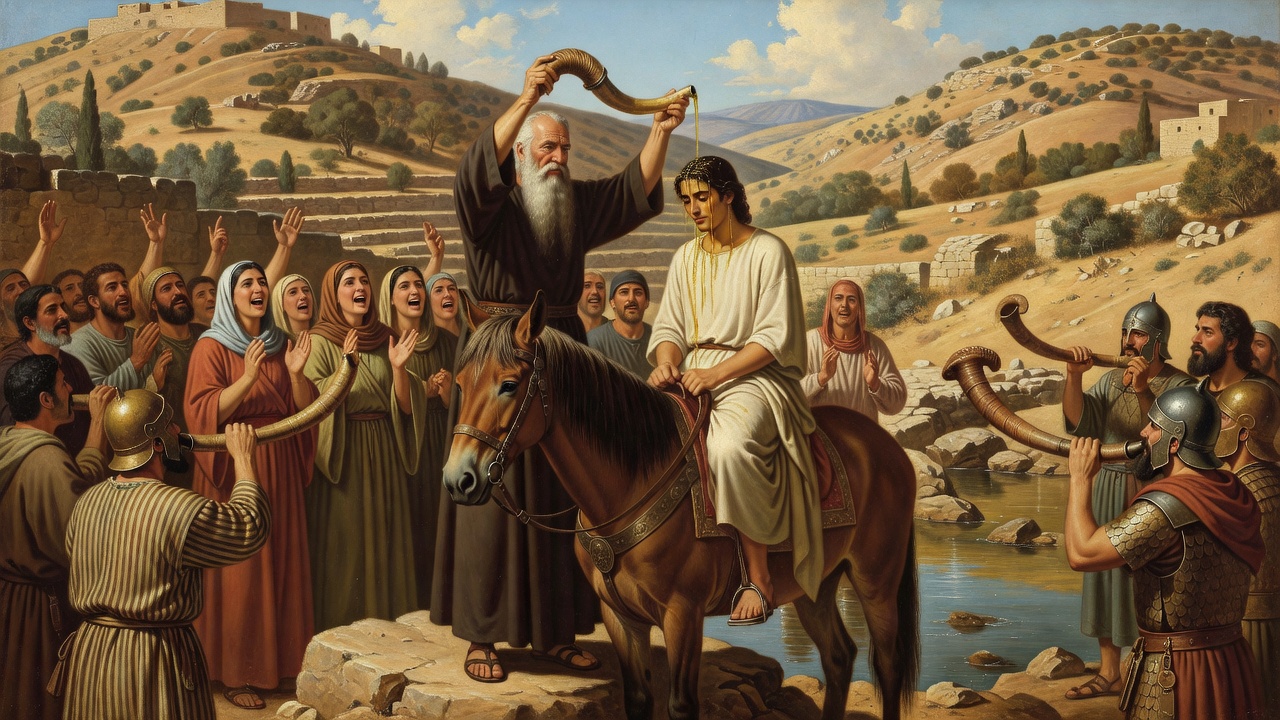
38于是祭司撒督、先知拿单、耶何耶大的儿子比拿雅,以及基利提人和比利提人,都下去,使所罗门骑上大卫王的骡子,把他带到基训。 39祭司撒督从帐幕中取了盛油的角,膏了所罗门。他们吹号,众民都说:“愿所罗门王万岁!”
40众民都跟随他上来,百姓吹笛,极其欢喜,以致地都因他们的声音震动。 41亚多尼雅和所有与他同在的宾客刚吃完,就听见了。约押听见号声,就说:“城里为什么有这样喧闹的声音?”
42他还在说话的时候,看哪,祭司亚比亚他的儿子约拿单来了;亚多尼雅说:“进来吧;因为你是个贤良的人,必带来好消息。”
43约拿单回答亚多尼雅说:“确实,我们的主大卫王已经立所罗门作王了。 44王派祭司撒督、先知拿单、耶何耶大的儿子比拿雅,以及基利提人和比利提人与他同去;他们使他骑上王的骡子。 45祭司撒督和先知拿单已经在基训膏他作王。他们从那里欢欢喜喜地上来,以致全城都回响。这就是你们所听见的声音。 46并且,所罗门已经坐在国位上。 47而且王的臣仆来祝福我们的主大卫王,说:‘愿你的上帝使所罗门的名比你的名更美,使他的王位比你的王位更大。’王就在床上屈身下拜。 48王还这样说:‘耶和华,以色列的上帝,是应当称颂的;祂今日赐下一人坐在我的王位上,甚至使我的眼睛亲眼看见了。’”
49亚多尼雅所有的宾客都惧怕,就起来,各人走自己的路去了。 50亚多尼雅因所罗门而惧怕,就起来,去抓住祭坛的角。 51有人告诉所罗门说:“看哪,亚多尼雅惧怕所罗门王;看哪,他正抓住祭坛的角,说:‘愿所罗门王先向我起誓,不用刀杀他的仆人。’”
52所罗门说:“他若显明自己是贤良的人,连他的一根头发也不会落在地上;但他若被发现有恶,就必死。”
53于是所罗门王派人把他从祭坛那里带下来。他来向所罗门王下拜;所罗门对他说:“回你家去吧。”
Did you know?
The Succession to David's Throne
- As David's oldest surviving son after the deaths of Amnon and Absalom, Adonijah claimed the royal succession, backed by the military commander Joab and the high priest Abiathar. However, David chose his younger son Solomon, who was supported by the prophet Nathan, the priest Zadok, and the royal bodyguard under Benaiah.Sources: Adonijah · Solomon · the Bible text itself
- Riding the king's own mule was a decisive public declaration of royal authority. By David's explicit instruction, Solomon was escorted down to the spring of Gihon, where Zadok anointed him king with oil taken from the tabernacle to the sound of ram's horns and popular celebration.Sources: Gihon · Zadok · the Bible text itself
- Upon hearing of Solomon's public coronation, Adonijah fled in terror and sought asylum by taking hold of the horns of the sacrificial altar. Solomon granted him conditional clemency, sparing his life so long as he proved himself a worthy man.Sources: Adonijah · the Bible text itself
Notes written with AI assistance from open sources (Theographic Bible Metadata, CC BY-SA 4.0; Easton’s Bible Dictionary, public domain) and reviewed before publishing.
Places in this chapter
- Shunem · Today: Sulam · 32.606, 35.334 · verse 3
- Serpent’s Stone · Today: within 100 m of Bir Ayub · 31.767, 35.236 · verse 9
- Gihon · Today: Gihon Spring · 31.773, 35.236 · verses 33, 38, 44, 45
- Jerusalem · 31.777, 35.234 · verse 40
Only places identified with high confidence are shown (90% or more according to the scholarly sources compiled by OpenBible). Period map: DARE (Digital Atlas of the Roman Empire), CC BY 4.0; modern map: © OpenStreetMap contributors; places: OpenBible.info (CC BY 4.0).
Credits and license for this translation
世界中文圣经
World Chinese Bible
Public Domain
Language: 中国语文 (Chinese, Mandarin)
Dialect: Mandarin
《世界中文圣经》为译本草稿。如果您发现任何需要改进之处,请发送电子邮件至 [email protected]。
2026-09-07
Source: http://ebible.org/cmnswcb/ · eBible.org