Psalms 1
Biblica® 聖經,當代譯本開放資源 · Tap a verse to see its cross-references.
About this book
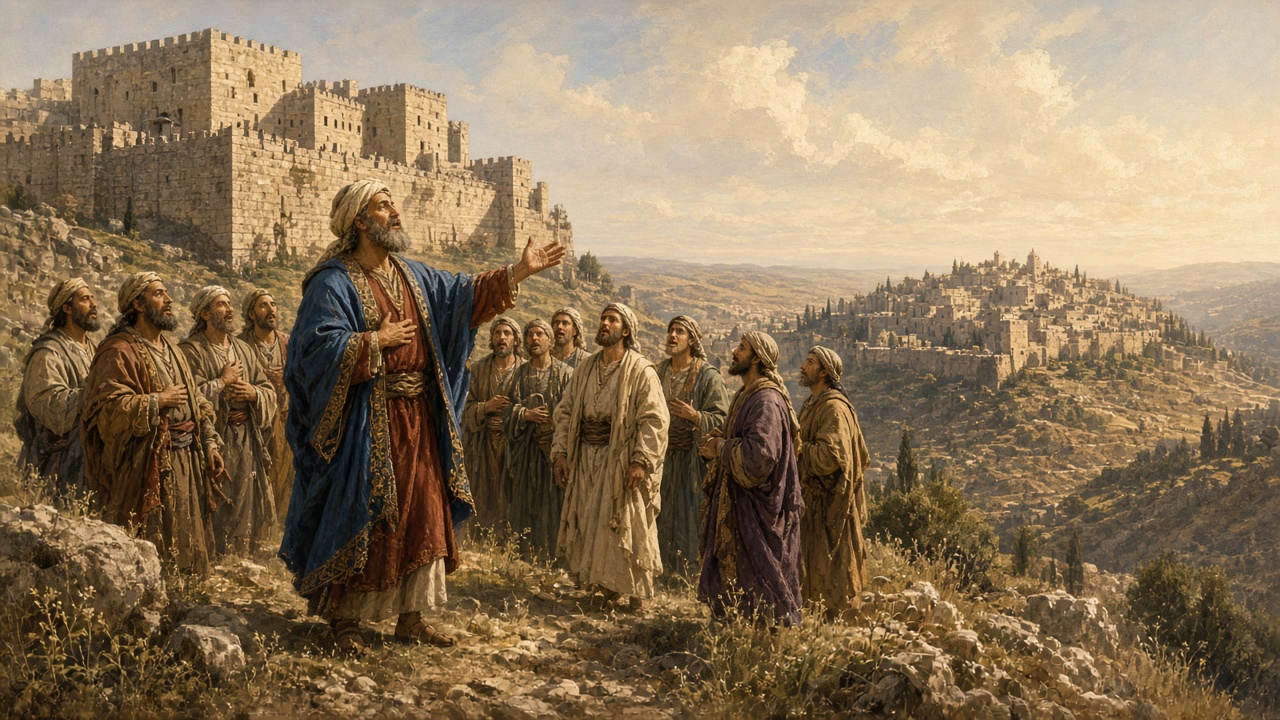
About Psalms
- Easton's Bible Dictionary (1897) presents the Psalms as the work of various authors, owed especially to David and his contemporaries, while poets of later generations added further songs. Easton remarks that, for this reason, the collection more completely reflects every phase of human emotion and circumstance than it otherwise could. The titles ascribe 73 psalms to David; Easton also notes that Peter and John (Acts 4:25) attribute the anonymous Psalm 2 to him, and that about two-thirds of the collection have been ascribed to David.Sources: Easton: Psalms
- Easton's Bible Dictionary (1897) holds that no psalm can be proved later than the time of Ezra and Nehemiah, so the collection spans about a thousand years. It records the presumption that the five smaller collections were made at times of high religious life: the first near the close of David's life, the second in the days of Solomon, the third by the singers of Jehoshaphat, the fourth by the men of Hezekiah, and the fifth in the days of Ezra.Sources: Easton: Psalms
- Like the Pentateuch, the Psalter is divided into five books, each closing with a doxology or benediction: Psalms 1-41, 42-72, 73-89, 90-106, and the remaining 44. Easton reports many ascriptions to David, to Solomon in Psalms 72 and 127, to Moses in Psalm 90, to Heman the Ezrahite in Psalm 88, and to Ethan the Ezrahite in Psalm 89, while many other psalms are anonymous.Sources: Easton: Psalms
- Some titles connect psalms with singers of worship. Psalms 50 and 73-83 are addressed to Asaph, a Levite and one of the leaders of David's choir, skilled in music and called a seer; the Asaph entry says the sons of Asaph were his descendants or, more probably, a class of poets or singers who recognized him as their master. The sons of Korah, a leading part of the Kohathite singers, were entrusted with arranging and singing Psalms 42, 44-49, 84, 85, 87, and 88, and Psalms 39, 62, and 77 are addressed to Jeduthun, to be sung after his manner or in his choir.Sources: Easton: Psalms · Asaph (Levite)
- Psalm 136 is generally called the great hallel, though the Talmud also includes Psalms 120-135. Psalms 113-118 form the hallel recited at the three great feasts, at the new moon, and on the eight days of the feast of dedication. Easton counts 116 direct quotations from the Psalter in the New Testament, and notes that in Luke 24:44 the word psalms means the Hagiographa, the holy writings, one of the sections into which the Jews divided the Old Testament.Sources: Easton: Psalms
Notes written with AI assistance from open sources (Theographic Bible Metadata, CC BY-SA 4.0; Easton’s Bible Dictionary, public domain) and reviewed before publishing.
卷一:詩篇1—41
1不從惡人的計謀,
不與罪人為伍,
不和嘲諷者同坐,
只喜愛耶和華的律法,
晝夜默誦,
這樣的人有福了!
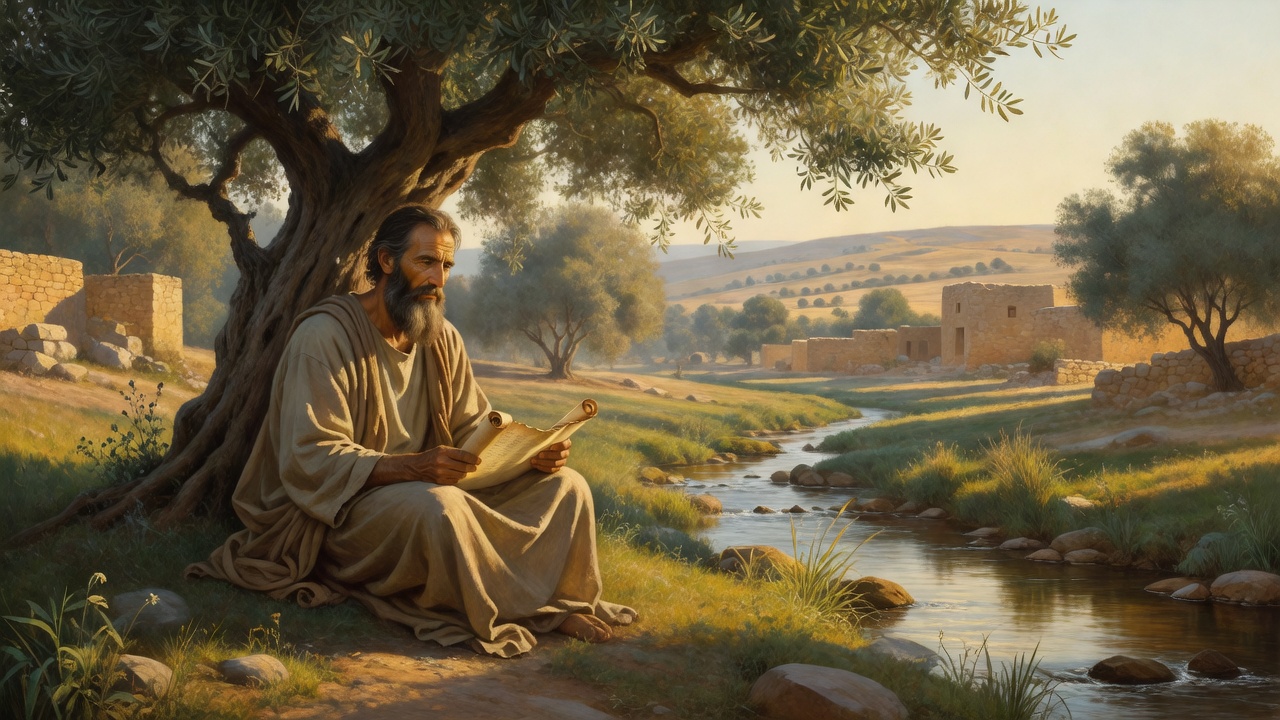
3他就像栽在溪畔的樹木,
按時結果子,
葉子也不凋零。
他必凡事亨通。
4惡人的光景卻截然不同!
他們就像被風吹散的糠秕。
5因此,惡人在審判之日必無法站立,
罪人在義人的會眾中必無法立足。
6因為耶和華看顧義人的路,
惡人的路必通向滅亡。
Did you know?
The Two Paths
- Psalm 1 contrasts two ways of living through vivid agricultural imagery: the righteous person is compared to a fruitful tree nourished beside streams of water, while the wicked are likened to light chaff easily blown away by the wind.Sources: the Bible text itself
- The opening verses describe a clear progression away from evil—refusing to walk in the counsel of the wicked, stand in the path of sinners, or sit among mockers—and turning instead to constant meditation on the Law of the LORD.Sources: the Bible text itself
Notes written with AI assistance from open sources (Theographic Bible Metadata, CC BY-SA 4.0; Easton’s Bible Dictionary, public domain) and reviewed before publishing.
Credits and license for this translation
Biblica® 聖經,當代譯本開放資源
Chinese, Mandarin: Biblica® 聖經,當代譯本開放資源 Open Contemporary Bible, Traditional Script
copyright © 1979,2005,2007,2012,2023 Biblica, Inc.
Language: 中文 (Mandarin Chinese)
Dialect: Traditional
Contributor: Biblica, Inc.
Biblica® 聖經,當代譯本™開放資源
版權所有©1979, 2005, 2007, 2012, 2023 Biblica, Inc.
Biblica® Open Chinese Contemporary Bible™ (Traditional Script)
Copyright © 1979, 2005, 2007, 2012, 2023 by Biblica, Inc.
“Biblica” 是國際聖經協會在美國專利和商標局注冊的商標。獲得授權使用。
“Biblica” is a trademark registered in the United States Patent and Trademark Office by Biblica, Inc. Used with permission.
――――――
Creative Commons License
本《聖經/新約/音頻》或“作品”是按照知識共享協議-同樣分享4.0國際許可證(CC BY-SA)提供的。許可證詳情,請訪問 https://creativecommons.org/licenses/by-sa/4.0 ,或發郵件到Creative Commons, PO Box 1866, Mountain View, CA 94042, USA.
“Biblica”是國際聖經協會注冊的商標。若使用Biblica®商標,必須先獲得國際聖經協會的書面許可。只要保持內容不變,包括“Biblica®”商標,就可以獲准拷貝和分發本作品。改變或翻譯本作品將産生衍生作品,生産方需要刪除Biblica®商標。若出版衍生作品,則必須在可查閱的地方,如網站列出修改內容。也必須提供原作品的來源:原作品屬于國際聖經協會,“在 www.biblica.com and open.bible 可以免費使用.”
無論是保持本作品原貌,還是創造了衍生作品,必須在作品書名頁或版權頁寫上如下版權聲明:
Biblica® 聖經,當代譯本™開放資源
版權所有©1979, 2005, 2007, 2012, 2023 Biblica, Inc.
Biblica® Open Chinese Contemporary Bible™ (Traditional Script)
Copyright © 1979, 2005, 2007, 2012, 2023 by Biblica, Inc.
“Biblica” 是國際聖經協會在美國專利和商標局注冊的商標。獲得授權使用。
“Biblica” is a trademark registered in the United States Patent and Trademark Office by Biblica, Inc. Used with permission.
必須同意按照同樣的許可證(CC BY-SA)和規則提供您的衍生作品。
如果想通知國際聖經協會有關您對本作品的翻譯,請通過 https://open.bible/#feedback 聯系我們。
――――――
This work is made available under the Creative Commons Attribution-ShareAlike 4.0 International License (CC BY-SA). To view a copy of this license, visit https://creativecommons.org/licenses/by-sa/4.0 or send a letter to Creative Commons, PO Box 1866, Mountain View, CA 94042, USA.
Biblica® is a trademark registered by Biblica, Inc., and use of the Biblica® trademark requires the written permission of Biblica, Inc. Under the terms of the CC BY-SA license, you may copy and redistribute this unmodified work as long as you keep the Biblica® trademark intact. If you modify a copy or translate this work, thereby creating a derivative work, you must remove the Biblica® trademark. On the derivative work, you must indicate what changes you have made and attribute the work as follows: “The original work by Biblica, Inc. is available for free at www.biblica.com and open.bible .”
Notice of copyright must appear on the title or copyright page of the work as follows:
Biblica® 聖經,當代譯本™開放資源
版權所有©1979, 2005, 2007, 2012, 2023 Biblica, Inc.
Biblica® Open Chinese Contemporary Bible™ (Traditional Script)
Copyright © 1979, 2005, 2007, 2012, 2023 by Biblica, Inc.
“Biblica” 是國際聖經協會在美國專利和商標局注冊的商標。獲得授權使用。
“Biblica” is a trademark registered in the United States Patent and Trademark Office by Biblica, Inc. Used with permission.
You must also make your derivative work available under the same license (CC BY-SA).
If you would like to notify Biblica, Inc. regarding your translation of this work, please contact us at https://open.bible/#feedback .
This translation is made available to you under the terms of the
Creative Commons Attribution Share-Alike license 4.0.
You have permission to share and redistribute this Bible translation in any format and to make reasonable revisions and adaptations of this translation, provided that:
You include the above copyright and source information.
If you make any changes to the text, you must indicate that you did so in a way that makes it clear that the original licensor is not necessarily endorsing your changes.
If you redistribute this text, you must distribute your contributions under the same license as the original.
Pictures included with Scriptures and other documents on this site are licensed just for use with those Scriptures and documents.
For other uses, please contact the respective copyright owners.
Note that in addition to the rules above, revising and adapting God's Word involves a great responsibility to be true to God's Word. See Revelation 22:18-19.
2025-04-30
Source: http://ebible.org/cmncbt/ · eBible.org