Psalms 1
Biblica® 圣经当代译本开放资源 · Tap a verse to see its cross-references.
About this book
About Psalms
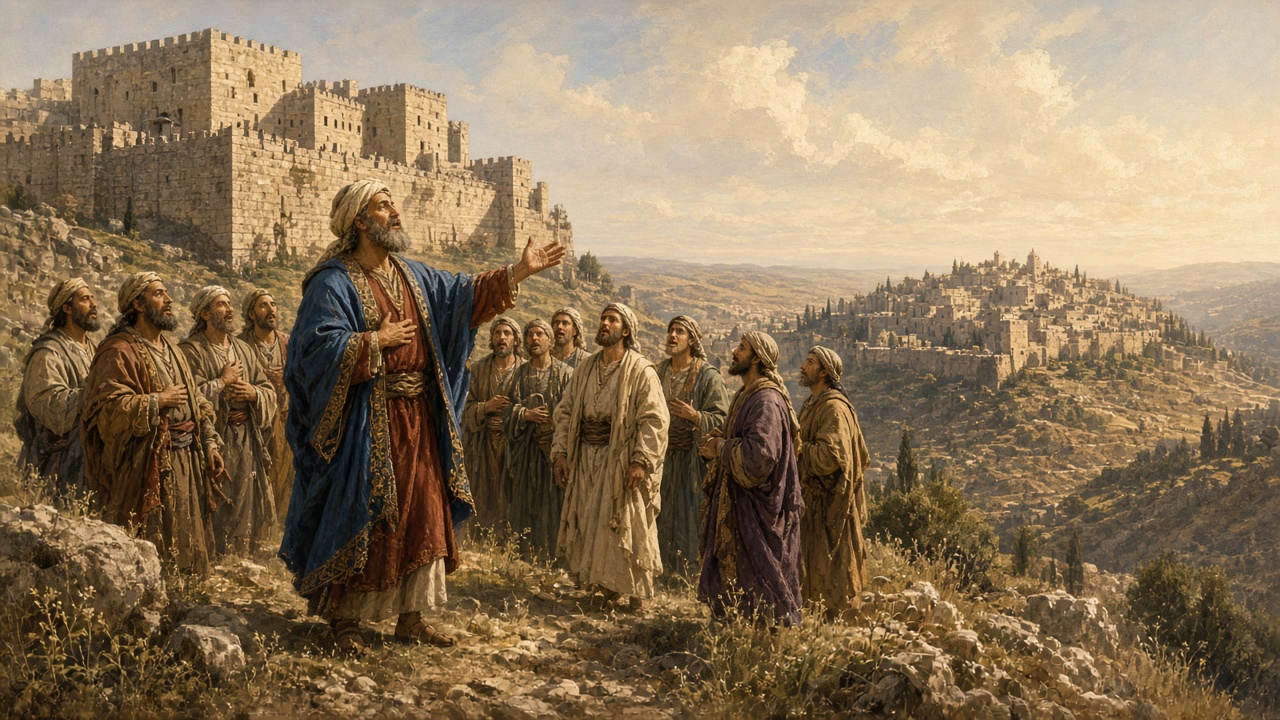
- Easton's Bible Dictionary (1897) presents the Psalms as the work of various authors, owed especially to David and his contemporaries, while poets of later generations added further songs. Easton remarks that, for this reason, the collection more completely reflects every phase of human emotion and circumstance than it otherwise could. The titles ascribe 73 psalms to David; Easton also notes that Peter and John (Acts 4:25) attribute the anonymous Psalm 2 to him, and that about two-thirds of the collection have been ascribed to David.Sources: Easton: Psalms
- Easton's Bible Dictionary (1897) holds that no psalm can be proved later than the time of Ezra and Nehemiah, so the collection spans about a thousand years. It records the presumption that the five smaller collections were made at times of high religious life: the first near the close of David's life, the second in the days of Solomon, the third by the singers of Jehoshaphat, the fourth by the men of Hezekiah, and the fifth in the days of Ezra.Sources: Easton: Psalms
- Like the Pentateuch, the Psalter is divided into five books, each closing with a doxology or benediction: Psalms 1-41, 42-72, 73-89, 90-106, and the remaining 44. Easton reports many ascriptions to David, to Solomon in Psalms 72 and 127, to Moses in Psalm 90, to Heman the Ezrahite in Psalm 88, and to Ethan the Ezrahite in Psalm 89, while many other psalms are anonymous.Sources: Easton: Psalms
- Some titles connect psalms with singers of worship. Psalms 50 and 73-83 are addressed to Asaph, a Levite and one of the leaders of David's choir, skilled in music and called a seer; the Asaph entry says the sons of Asaph were his descendants or, more probably, a class of poets or singers who recognized him as their master. The sons of Korah, a leading part of the Kohathite singers, were entrusted with arranging and singing Psalms 42, 44-49, 84, 85, 87, and 88, and Psalms 39, 62, and 77 are addressed to Jeduthun, to be sung after his manner or in his choir.Sources: Easton: Psalms · Asaph (Levite)
- Psalm 136 is generally called the great hallel, though the Talmud also includes Psalms 120-135. Psalms 113-118 form the hallel recited at the three great feasts, at the new moon, and on the eight days of the feast of dedication. Easton counts 116 direct quotations from the Psalter in the New Testament, and notes that in Luke 24:44 the word psalms means the Hagiographa, the holy writings, one of the sections into which the Jews divided the Old Testament.Sources: Easton: Psalms
Notes written with AI assistance from open sources (Theographic Bible Metadata, CC BY-SA 4.0; Easton’s Bible Dictionary, public domain) and reviewed before publishing.
卷一:诗篇1—41
1不从恶人的计谋,
不与罪人为伍,
不和嘲讽者同坐,
只喜爱耶和华的律法,
昼夜默诵,
这样的人有福了!
3他就像栽在溪畔的树木,
按时结果子,
叶子也不凋零。
他必凡事亨通。
4恶人的光景却截然不同!
他们就像被风吹散的糠秕。
5因此,恶人在审判之日必无法站立,
罪人在义人的会众中必无法立足。
6因为耶和华看顾义人的路,
恶人的路必通向灭亡。
Did you know?
The Two Paths
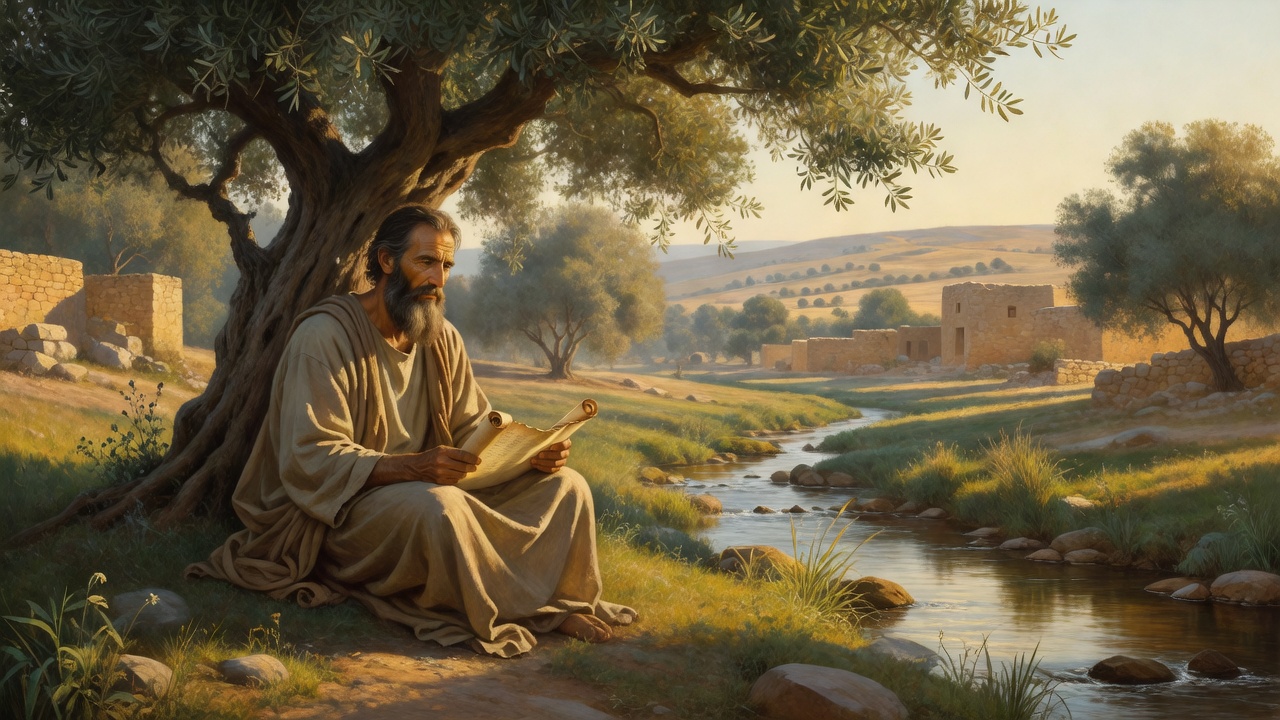
- Psalm 1 contrasts two ways of living through vivid agricultural imagery: the righteous person is compared to a fruitful tree nourished beside streams of water, while the wicked are likened to light chaff easily blown away by the wind.Sources: the Bible text itself
- The opening verses describe a clear progression away from evil—refusing to walk in the counsel of the wicked, stand in the path of sinners, or sit among mockers—and turning instead to constant meditation on the Law of the LORD.Sources: the Bible text itself
Notes written with AI assistance from open sources (Theographic Bible Metadata, CC BY-SA 4.0; Easton’s Bible Dictionary, public domain) and reviewed before publishing.
Credits and license for this translation
Biblica® 圣经当代译本开放资源
Chinese, Mandarin: Biblica® 圣经当代译本开放资源 Open Contemporary Bible, simplified scrip
copyright © 1979,2005,2007,2011,2022 Biblica, Inc.
Language: 中文 (Mandarin Chinese)
Dialect: Simplified
Contributor: Biblica, Inc.
Biblica® 圣经当代译本™开放资源
版权所有©1979, 2005, 2007, 2011, 2022 Biblica, Inc.
Biblica® Open Chinese Contemporary Bible™ (Simplified Script)
Copyright © 1979, 2005, 2007, 2011, 2022 by Biblica, Inc.
“Biblica”是国际圣经协会在美国专利和商标局注册的商标。获得授权使用。
“Biblica” is a trademark registered in the United States Patent and Trademark Office by Biblica, Inc. Used with permission.
――――――
Creative Commons License
本《圣经/新约/音频》或“作品”是按照知识共享协议-同样分享4.0国际许可证(CC BY-SA)提供的。许可证详情,请访问 https://creativecommons.org/licenses/by-sa/4.0 ,或发邮件到Creative Commons, PO Box 1866, Mountain View, CA 94042, USA.
“Biblica”是国际圣经协会注册的商标。若使用Biblica®商标,必须先获得国际圣经协会的书面许可。只要保持内容不变,包括“Biblica®”商标,就可以获准拷贝和分发本作品。改变或翻译本作品将产生衍生作品,生产方需要删除Biblica®商标。若出版衍生作品,则必须在可查阅的地方,如网站列出修改内容。也必须提供原作品的来源:原作品属于国际圣经协会,“在 www.biblica.com and open.bible 可以免费使用.”
无论是保持本作品原貌,还是创造了衍生作品,必须在作品书名页或版权页写上如下版权声明:
Biblica® 圣经当代译本™开放资源
版权所有©1979, 2005, 2007, 2011, 2022 Biblica, Inc.
Biblica® Open Chinese Contemporary Bible™ (Simplified Script)
Copyright © 1979, 2005, 2007, 2011, 2022 by Biblica, Inc.
“Biblica”是国际圣经协会在美国专利和商标局注册的商标。获得授权使用。
“Biblica” is a trademark registered in the United States Patent and Trademark Office by Biblica, Inc. Used with permission.
必须同意按照同样的许可证(CC BY-SA)和规则提供您的衍生作品。
如果想通知国际圣经协会有关您对本作品的翻译,请通过 https://open.bible/#feedback 联系我们。
――――――
This work is made available under the Creative Commons Attribution-ShareAlike 4.0 International License (CC BY-SA). To view a copy of this license, visit https://creativecommons.org/licenses/by-sa/4.0 or send a letter to Creative Commons, PO Box 1866, Mountain View, CA 94042, USA.
Biblica® is a trademark registered by Biblica, Inc., and use of the Biblica® trademark requires the written permission of Biblica, Inc. Under the terms of the CC BY-SA license, you may copy and redistribute this unmodified work as long as you keep the Biblica® trademark intact. If you modify a copy or translate this work, thereby creating a derivative work, you must remove the Biblica® trademark. On the derivative work, you must indicate what changes you have made and attribute the work as follows: “The original work by Biblica, Inc. is available for free at www.biblica.com and open.bible .”
Notice of copyright must appear on the title or copyright page of the work as follows:
Biblica® 圣经当代译本™开放资源
版权所有©1979, 2005, 2007, 2011, 2022 Biblica, Inc.
Biblica® Open Chinese Contemporary Bible™ (Simplified Script)
Copyright © 1979, 2005, 2007, 2011, 2022 by Biblica, Inc.
“Biblica”是国际圣经协会在美国专利和商标局注册的商标。获得授权使用。
“Biblica” is a trademark registered in the United States Patent and Trademark Office by Biblica, Inc. Used with permission.
You must also make your derivative work available under the same license (CC BY-SA).
If you would like to notify Biblica, Inc. regarding your translation of this work, please contact us at https://open.bible/#feedback .
“Biblica” is a trademark registered in the United States Patent and Trademark Office by Biblica, Inc. Used with permission.
This translation is made available to you under the terms of the
Creative Commons Attribution Share-Alike license 4.0.
You have permission to share and redistribute this Bible translation in any format and to make reasonable revisions and adaptations of this translation, provided that:
You include the above copyright and source information.
If you make any changes to the text, you must indicate that you did so in a way that makes it clear that the original licensor is not necessarily endorsing your changes.
If you redistribute this text, you must distribute your contributions under the same license as the original.
Pictures included with Scriptures and other documents on this site are licensed just for use with those Scriptures and documents.
For other uses, please contact the respective copyright owners.
Note that in addition to the rules above, revising and adapting God's Word involves a great responsibility to be true to God's Word. See Revelation 22:18-19.
2025-05-01
Source: http://ebible.org/cmncbs/ · eBible.org