Leviticus 1
新標點和合本 · Tap a verse to see its cross-references.
About this book
About Leviticus
- Easton's Bible Dictionary (1897) presents Leviticus as the third book of the Pentateuch and as the third book of Moses. The name, used in the Vulgate following the LXX, reflects the book's chief concern: the Levitical service.Sources: Easton: Leviticus
- Easton states that every ordinance in the book was delivered within one month, the first month of the second year after the Exodus. His entry on Sinai, also called Horeb, says the Hebrews reached that mountain district in the third month after the Exodus and remained encamped for about a whole year, and that the whole of Leviticus records what occurred there.Sources: Easton: Leviticus · Mount Sinai
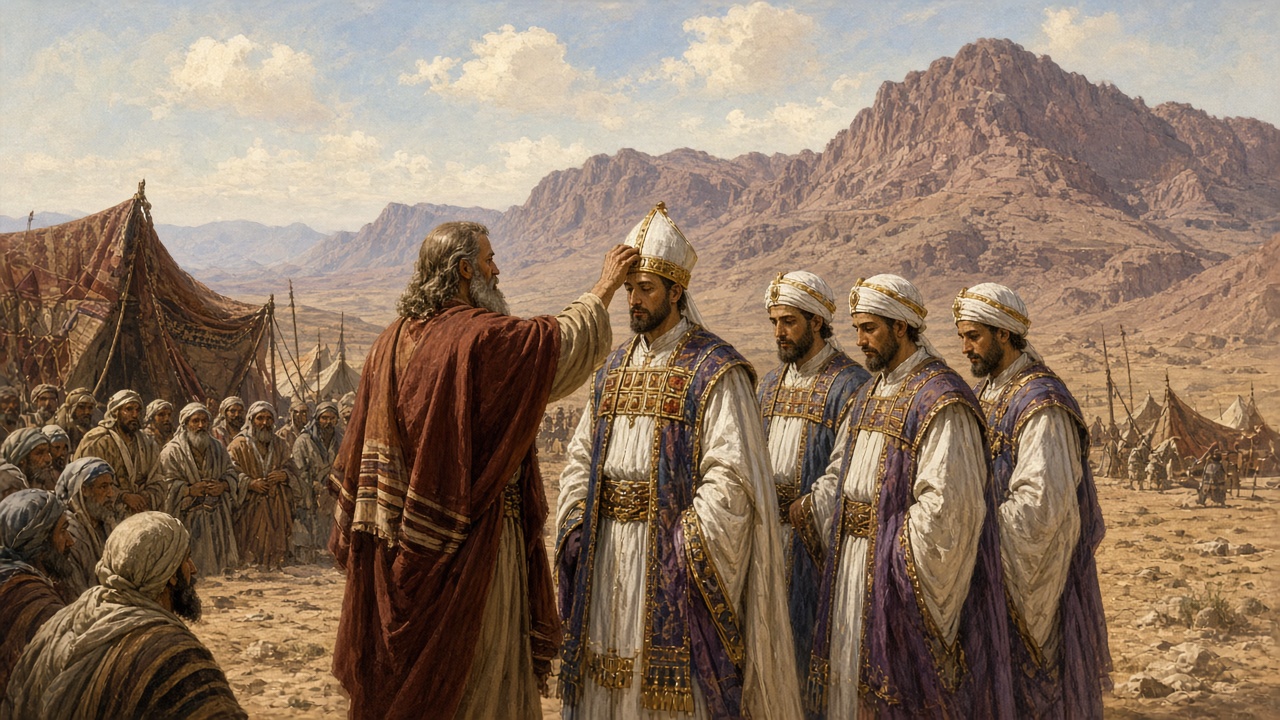
- Chapters 1–7 give laws for burnt offerings, meat offerings, and thank offerings, then for sin offerings and trespass offerings, and for the priests' duties in offering sacrifice. Chapters 8–10 recount the consecration of Aaron and his sons, Aaron's first offering for himself and the people, and the death of Nadab and Abihu, who were struck dead and buried outside the camp after offering strange, or common, fire not taken from the great brazen altar. Chapters 11–16 concern purity and the sacrifices and ordinances for putting impurity away.Sources: Easton: Leviticus · Nadab · Abihu
- Easton describes chapters 17–20 as laws marking the separation between Israel and other peoples. Further laws concern the priests' personal purity and their eating of holy things, offerings without blemish, and the due celebration of the great festivals in chapters 23 and 25. Promises and warnings about obedience follow, the book closes with a section on vows, and Easton notes that God is the direct speaker through almost the whole of it.Sources: Easton: Leviticus
- In the rites of chapter 16, one goat is associated with Azazel, which the Authorized Version renders scapegoat and the Revised Version leaves as Azazel. Easton reports that some Jewish interpreters take it as a place in the wilderness about twelve miles east of Jerusalem, while others take it as an evil spirit or even Satan, and he also notes a root meaning of separation.Sources: Azazel
Notes written with AI assistance from open sources (Theographic Bible Metadata, CC BY-SA 4.0; Easton’s Bible Dictionary, public domain) and reviewed before publishing.
燔祭的條例
1耶和華從會幕中呼叫 摩西,對他說: 2「你曉諭 以色列人說:你們中間若有人獻供物給耶和華,要從牛群羊群中獻牲畜為供物。
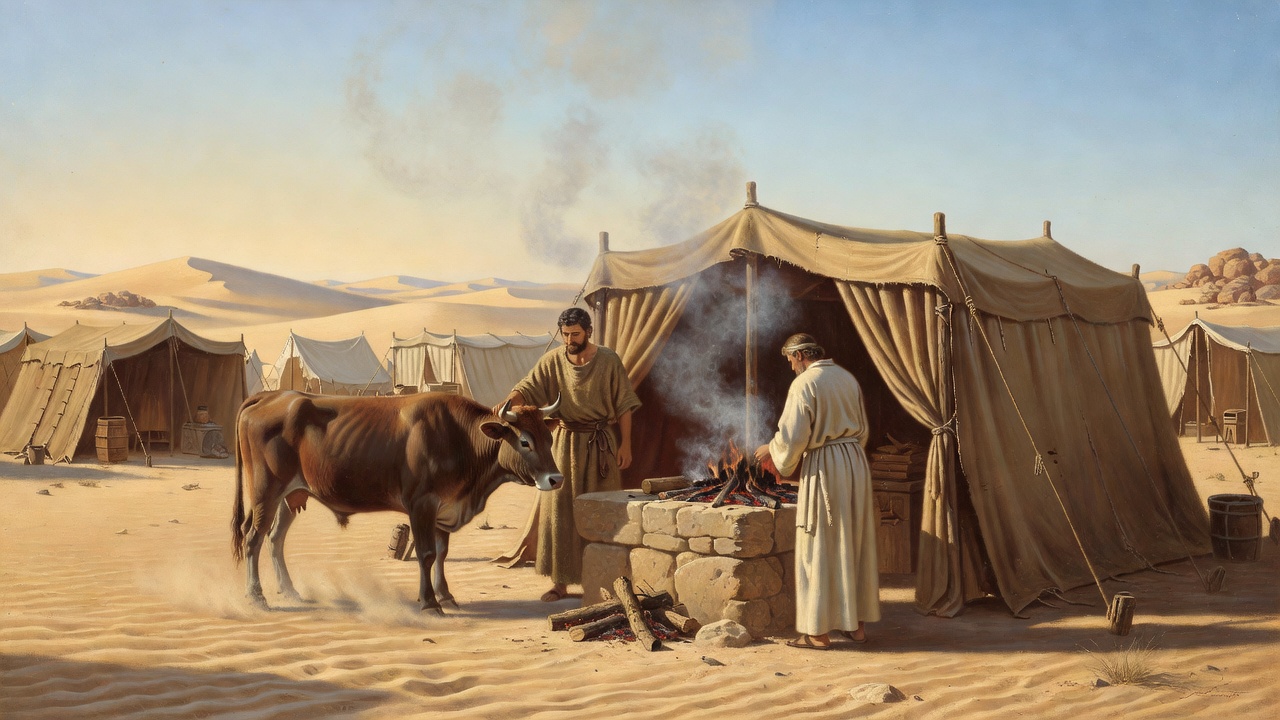
3「他的供物若以牛為燔祭,就要在會幕門口獻一隻沒有殘疾的公牛,可以在耶和華面前蒙悅納。 4他要按手在燔祭牲的頭上,燔祭便蒙悅納,為他贖罪。 5他要在耶和華面前宰公牛; 亞倫子孫作祭司的,要奉上血,把血灑在會幕門口、壇的周圍。 6那人要剝去燔祭牲的皮,把燔祭牲切成塊子。 7祭司 亞倫的子孫要把火放在壇上,把柴擺在火上。 8亞倫子孫作祭司的,要把肉塊和頭並脂油擺在壇上火的柴上。 9但燔祭的臟腑與腿要用水洗。祭司就要把一切全燒在壇上,當作燔祭,獻與耶和華為馨香的火祭。
10「人的供物若以綿羊或山羊為燔祭,就要獻上沒有殘疾的公羊。 11要把羊宰於壇的北邊,在耶和華面前; 亞倫子孫作祭司的,要把羊血灑在壇的周圍。 12要把燔祭牲切成塊子,連頭和脂油,祭司就要擺在壇上火的柴上; 13但臟腑與腿要用水洗,祭司就要全然奉獻,燒在壇上。這是燔祭,是獻與耶和華為馨香的火祭。
14「人奉給耶和華的供物,若以鳥為燔祭,就要獻斑鳩或是雛鴿為供物。 15祭司要把鳥拿到壇前,揪下頭來,把鳥燒在壇上;鳥的血要流在壇的旁邊; 16又要把鳥的嗉子和髒物除掉,丟在壇的東邊 倒灰的地方。 17要拿着鳥的兩個翅膀,把鳥撕開,只是不可撕斷;祭司要在壇上、在火的柴上焚燒。這是燔祭,是獻與耶和華為馨香的火祭。」
Did you know?
The Burnt Offering
- The instructions for the burnt offering accommodate different economic means by allowing offerings from the herd, the flock (sheep or goats), or birds (turtledoves or young pigeons). For livestock, the animal was required to be a male without blemish.Sources: the Bible text itself
- The ritual required a clear division of roles between the worshiper and the priests. The worshiper brought the animal, laid a hand on its head for atonement, slaughtered it, skinned it, and washed its inner parts, while the sons of Aaron sprinkled the blood and burned the entire offering on the altar.Sources: the Bible text itself · Aaron
Notes written with AI assistance from open sources (Theographic Bible Metadata, CC BY-SA 4.0; Easton’s Bible Dictionary, public domain) and reviewed before publishing.
Credits and license for this translation
新標點和合本
Chinese Union Version (traditional)
Public Domain
Language: 中國語文 (Chinese)
Dialect: Mandarin, traditional script
2024-12-30
Source: http://ebible.org/cmn-cu89t/ · eBible.org