Job 2
新標點和合本 · Tap a verse to see its cross-references.
撒但再試探約伯
1又有一天,上帝的眾子來侍立在耶和華面前,撒但也來在其中。 2耶和華問撒但說:「你從哪裏來?」撒但回答說:「我從地上走來走去,往返而來。」 3耶和華問撒但說:「你曾用心察看我的僕人 約伯沒有?地上再沒有人像他完全正直,敬畏上帝,遠離惡事。你雖激動我攻擊他,無故地毀滅他,他仍然持守他的純正。」 4撒但回答耶和華說:「人以皮代皮,情願捨去一切所有的,保全性命。 5你且伸手傷他的骨頭和他的肉,他必當面棄掉你。」 6耶和華對撒但說:「他在你手中,只要存留他的性命。」
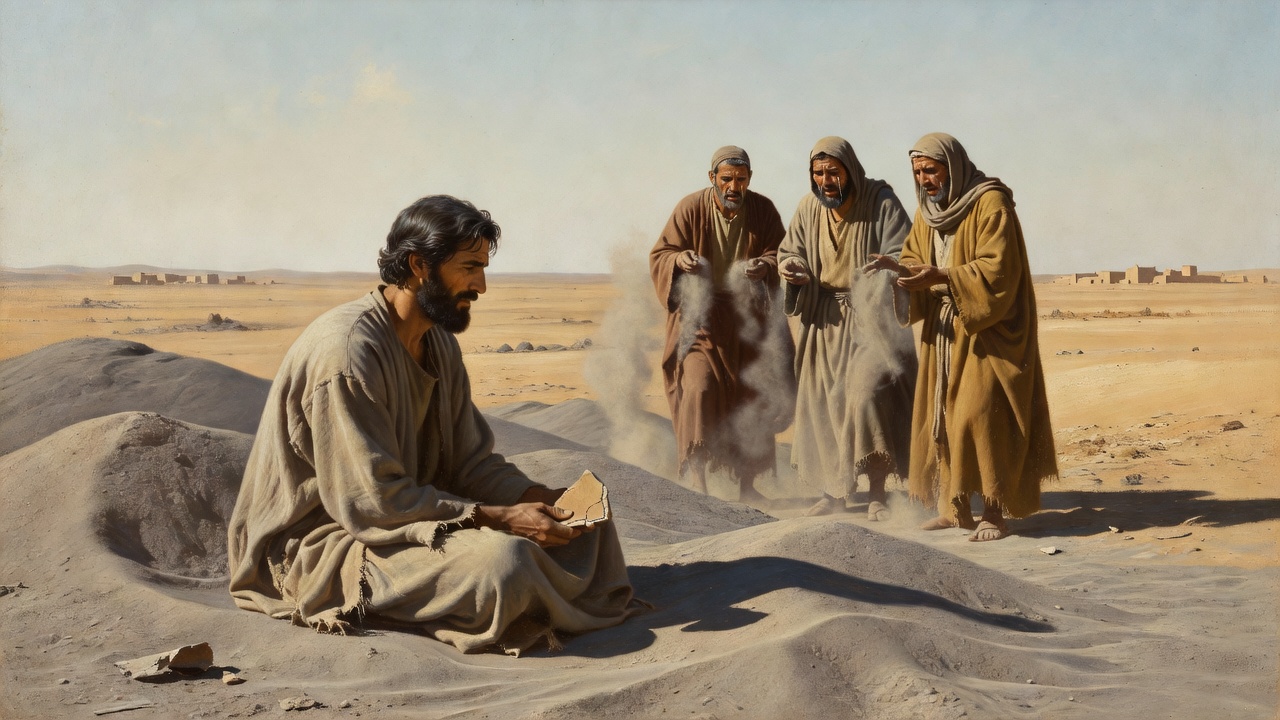
7於是撒但從耶和華面前退去,擊打 約伯,使他從腳掌到頭頂長毒瘡。 8約伯就坐在爐灰中,拿瓦片刮身體。
9他的妻子對他說:「你仍然持守你的純正嗎?你棄掉上帝,死了吧!」 10約伯卻對她說:「你說話像愚頑的婦人一樣。噯!難道我們從上帝手裏得福,不也受禍嗎?」在這一切的事上 約伯並不以口犯罪。
三個朋友來安慰約伯
11約伯的三個朋友- 提幔人 以利法、 書亞人 比勒達、 拿瑪人 瑣法-聽說有這一切的災禍臨到他身上,各人就從本處約會同來,為他悲傷,安慰他。 12他們遠遠地舉目觀看,認不出他來,就放聲大哭。各人撕裂外袍,把塵土向天揚起來,落在自己的頭上。 13他們就同他七天七夜坐在地上,一個人也不向他說句話,因為他極其痛苦。
Did you know?
Job’s Affliction and the Arrival of His Friends
- In the Hebrew text of Job, the term translated as Satan appears with the definite article as the adversary or accuser. In this second heavenly council, the adversary argues that while Job endured the loss of his wealth and family, striking his physical flesh and bones would cause him to abandon his integrity.Sources: Satan · the Bible text itself
- Job’s companions—Eliphaz the Temanite, Bildad the Shuhite, and Zophar the Naamathite—came from distant regions associated with Arabia. Bildad's background is linked to Shuah, a son of Abraham by Keturah, while the ancient Greek Septuagint translation connects Zophar to the Mineans of southern Arabia.Sources: Bildad · Zophar · the Bible text itself
- Upon seeing Job's severe suffering, his three friends tore their garments, threw dust into the air over their heads, and sat with him on the ground in complete silence for seven days and seven nights. This shared vigil reflected ancient customs of deep mourning when sorrow was too profound for words.Sources: the Bible text itself
Notes written with AI assistance from open sources (Theographic Bible Metadata, CC BY-SA 4.0; Easton’s Bible Dictionary, public domain) and reviewed before publishing.
Credits and license for this translation
新標點和合本
Chinese Union Version (traditional)
Public Domain
Language: 中國語文 (Chinese)
Dialect: Mandarin, traditional script
2024-12-30
Source: http://ebible.org/cmn-cu89t/ · eBible.org