Song of Songs 6
Paipel · Tap a verse to see its cross-references.
1Ia ätewe mi wor tongan me reöm a feila ie,
en mi liöch seni fefin meinisin?
Ia a feila ie,
pwe aipwe etuk le kütta?
2Ätewe mi wor tongan me rei a feila ren tanipin we
ia ekewe irän nofitin mongö ra mär ie.
Ikenan epwe foleni nöün pwiin sip
o fichifich kiop.
3Aüküki me ren, ngang nöün, nge aükükün me rei, i nei.
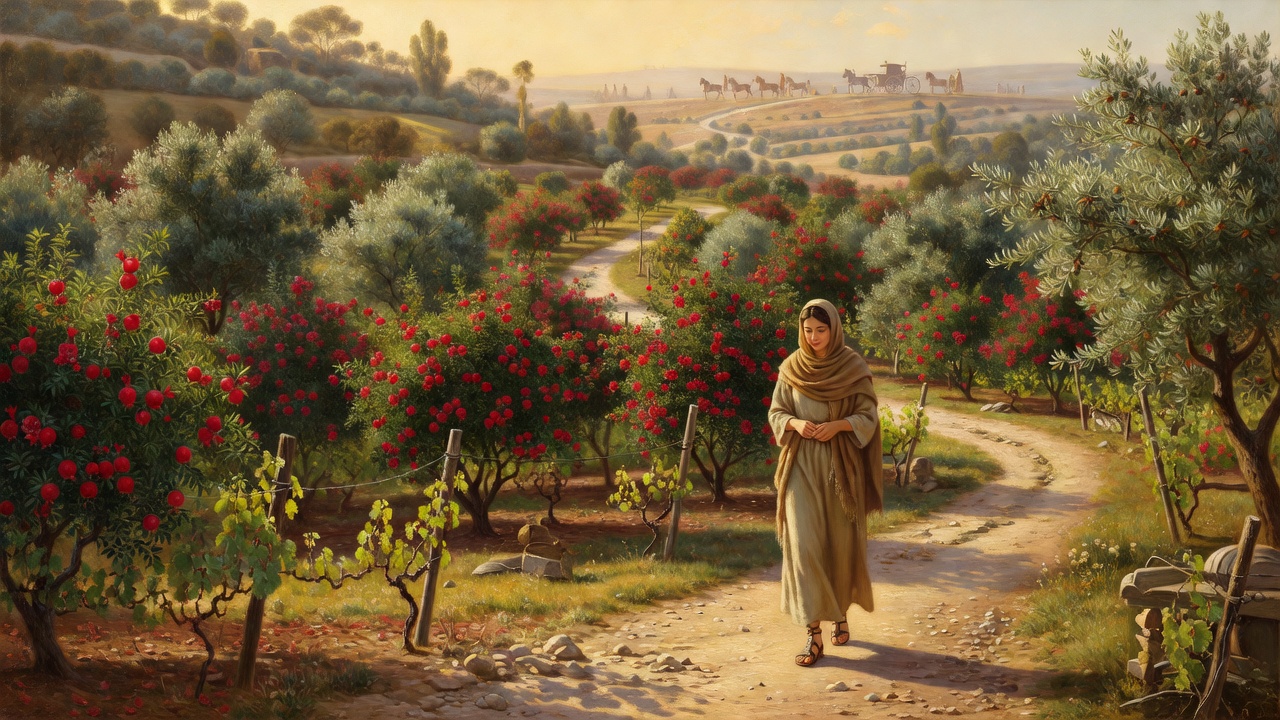
A foleni nöün pwiin sip lein ekewe kiop.
Ewe mwän apwüpwülü söfö a mwareiti ewe fin apwüpwülü söfö
4En mi wor tongom me rei,
ka liöch usun ekewe telinimw Tirsa me Jerusalem,
nge ka pwal eniwokus usun eu mwichen sounfiu fän ar filäik.
5Kopwe akulu mesom seniei,
pun üa tiperukoruk rer.
Meten mökürom a usun chök epwi pwiin kuuch
ra tötiu me won ekewe chukun Kiliat.
6Ngiim ra pwech usun chök epwi pwiin sip
ra liwinto seni ar lenien tütü.
Ir meinisin a wor nöür lippwe,
esap wor eman me leir a aemanüla.
7Sapom ra woparapar fän pwölüpwölün won mesom usun chök pekin apel.
8A wor wone kiwinnen ewe king me walik ülüpwülüan,
pwal föpwül resap lea.
9Nge ngang üa chök tongei eman,
neminewe mi liöch usun eman lisom.
I chök eman won inan,
a pwal lieson me won.
Lupwen ekewe föpwül ra küna, ra apasa pwe a feiöch,
nge kiwinnen ewe king me ülüpwülüan meinisin ra mwareiti.
10Iö we a ling usun chök mallen rän,
a tinöch usun maram o saramaram usun akkar,
nge a pwal eniwokus usun eu mwichen sounfiu fän ar filäik?
11Üa feitiu ren ewe tanipin almont,
pwe üpwe nengeni ekewe irä mi pwüküfö lon ewe lemol,
pun üa mochen silei ika ekewe irän wain ra sawit,
ika ekewe apel ra ua.
12Iwe, üse mörüei mwo, nge ai mochen a nukieila
won wän nei aramas woken, pwe üpwe ar samol.
13Kopwe liwinto, kopwe liwinto, en föpwülün Sulam,
kopwe liwinto, kopwe liwinto pwe aipwe tongeni atolok.
Pwota oua mochen katol ewe föpwülün Sulam,
lupwen a pwörük lefilen ruu telin chon katol?
Did you know?
Beauty and Royal Splendor
- The poem praises the woman's beauty by comparing her to Tirzah and Jerusalem, two prominent royal centers. Tirzah was an ancient Canaanite city celebrated for its charm that later served as an early capital of the northern kingdom of Israel, while Jerusalem stood as the mountain capital of Judah.Sources: Tirzah · Jerusalem · the Bible text itself
- The description of hair streaming down like a flock of goats from Gilead evokes the rugged, mountainous territory east of the Jordan River, where herds grazed along the steep slopes.Sources: Gilead · the Bible text itself
Notes written with AI assistance from open sources (Theographic Bible Metadata, CC BY-SA 4.0; Easton’s Bible Dictionary, public domain) and reviewed before publishing.
Places in this chapter
Only places identified with high confidence are shown (90% or more according to the scholarly sources compiled by OpenBible). Period map: DARE (Digital Atlas of the Roman Empire), CC BY 4.0; modern map: © OpenStreetMap contributors; places: OpenBible.info (CC BY 4.0).
Credits and license for this translation
Paipel
The Holy Bible in the Chuukese language of the Federated States of Micronesia
copyright © 1984, 1989, 1991, 2001 Liebenzel Mission
Language: Chuukese
Translation by: Liebenzell Mission
Old Testament © 1989, 2001 Liebenzel Mission
New Testament © 1984, 1991 Liebenzel Mission
This translation is made available to you under the terms of the
Creative Commons Attribution-No Derivatives license 4.0.
You may share and redistribute this Bible translation or extracts from it in any format, provided that:
You include the above copyright and source information.
You do not make any derivative works that change any of the actual words or punctuation of the Scriptures.
Pictures included with Scriptures and other documents on this site are licensed just for use with those Scriptures and documents.
For other uses, please contact the respective copyright owners.
2024-01-24
Source: http://ebible.org/chk/ · eBible.org