Song of Songs 4
Paipel · Tap a verse to see its cross-references.
1Nengeni, ka fokun liöch, en mi wor tongom me rei,
nengeni, ka wesewesen liöch.
Föün mesom fän pwölüpwölün won mesom ra usun chök ekewe lisom,
nge meten mökürom a wewe ngeni epwi pwiin kuuch
ra tötiu me won ekewe chukun Kiliat.
2Ngiim ra pwech usun chök epwi pwiin sip ra wes me fich,
ra feitä seni ar lenien tütü.
Ir meinisin a wor nöür lippwe,
esap wor eman me leir a aemanüla.
3Tinawom a wewe ngeni efoch riri mi parapar,
nge awom a fokun öch.
Sapom ra woparapar fän pwölüpwölün won mesom,
usun chök pekin apel.
4Üom a wewe ngeni ewe imw tekia imwen Tafit,
a kukumos o motoutou,
fän üom a wor epa mwärämwär mi wewe ngeni engeröü tittin maun ra itiuetä won.
5Oupwum kewe ra usun chök apanen chia lippwe
mi mongö lein ekewe kiop.
6Üpwe feitä won ewe chukun säfei mi aüchea itan mör,
pwal won ewe chukun apach mi pwokus,
o nonom ie tori epwe ränila
o lerochen mettoch repwe morola.
7En mi wor tongom me rei, ka wesewesen liöch,
esap fokun wor och terum.
8Kofoti, kopwe etiei le feitiu me won Lepanon,
kopwe etiei le feitiu me won Lepanon.
Kopwe feitiu me won ungen ewe chuk Amana,
pwal me won ungen Senir me Hermon,
seni ekewe lenien laion me lepart.
9Kofoti, en mi wor tongom me rei, ka fokun liapeni lelukei.
Ka fokun liapeni lelukei ren nennen mesom ngeniei,
pwal ren mwärum fän üom.
10Kofoti, en mi wor tongom me rei,
om tong a arar ngeniei,
a mürina seni wain,
nge om lö a pwokus seni ekewe lö me nofitin mongö meinisin.
11Kofoti, tinawom a sup ren chönün ächi,
nge chönün chunen me milik ra nonom fän chönawom.
Iwe, pwonnen üfom a wewe ngeni pwonnen Lepanon.
12Kofoti, en mi wor tongom me rei, ka usun chök eu tanipi mi köpüng,
ewer, eu tanipi mi köpüng pwal eu puächen koluk mi tittila.
13Om kewe irä mi märitä lon ra wewe ngeni eu tanipin apel
ra uäni sokun uän irä mi mürina.
Ra pwal mär lon ekewe irä mi pwokus iter henna me nart,
14ekewe irä äfän, säpük me sinamon,
pwal sokun irän apach mi pwokus meinisin,
ekewe irä mi pwokus iter mör me aloes
me nofitin mongö mi anö.
15En ka usun chök eu puächen koluk mi achöchönü ewe tanipi,
pwal usun chök eu chönüttu mi ur ren koluk mi manau.
Ka pwal wewe ngeni ekewe chanpupu mi puputiu seni ewe chuk Lepanon.
16Kopwe pwätä asepwälin efeng, etto asepwälin ör.
Oupwe eniti tanipii we pwe pwoöchün epwe pwopwonfeil.
Amwo ätewe mi wor tongan me rei epwe feito ren tanipin we
o mongö seni uän ekewe irä mi mürina.
Did you know?
The Bride's Beauty and the Garden of Spices
- The poem calls the bride down from the dramatic northern mountain ranges of Lebanon, including Amana, Senir, and Mount Hermon. Mount Hermon is the highest peak in the Anti-Lebanon range, and biblical sources note that Senir was the Amorite name for Hermon.Sources: the Bible text itself · Hermon · Senir · Lebanon
- The beloved's hair is compared to a flock of goats descending Mount Gilead, a fertile and mountainous region located east of the Jordan River.Sources: the Bible text itself · Gilead
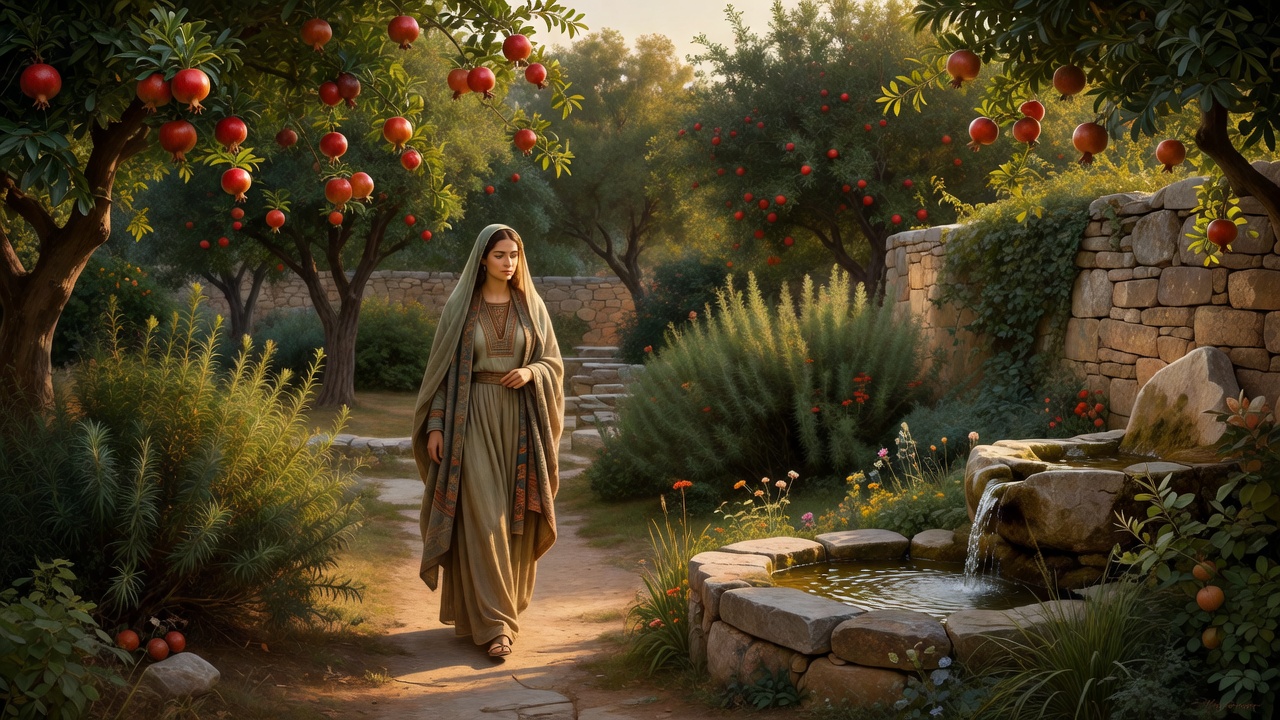
- The bride is portrayed as an enclosed garden, a sealed fountain, and an orchard laden with precious spices such as nard, saffron, cinnamon, and frankincense, evoking exclusivity, refreshment, and fragrance.Sources: the Bible text itself
Notes written with AI assistance from open sources (Theographic Bible Metadata, CC BY-SA 4.0; Easton’s Bible Dictionary, public domain) and reviewed before publishing.
Places in this chapter
- Gilead · Today: Gilead 1 · 32.187, 35.692 · verse 1
- Lebanon · 33.540, 35.584 · verses 8, 11, 15
- Mount Hermon · 33.400, 35.850 · verse 8
- Senir · Today: Mount Hermon · 33.400, 35.850 · verse 8
Only places identified with high confidence are shown (90% or more according to the scholarly sources compiled by OpenBible). Period map: DARE (Digital Atlas of the Roman Empire), CC BY 4.0; modern map: © OpenStreetMap contributors; places: OpenBible.info (CC BY 4.0).
Credits and license for this translation
Paipel
The Holy Bible in the Chuukese language of the Federated States of Micronesia
copyright © 1984, 1989, 1991, 2001 Liebenzel Mission
Language: Chuukese
Translation by: Liebenzell Mission
Old Testament © 1989, 2001 Liebenzel Mission
New Testament © 1984, 1991 Liebenzel Mission
This translation is made available to you under the terms of the
Creative Commons Attribution-No Derivatives license 4.0.
You may share and redistribute this Bible translation or extracts from it in any format, provided that:
You include the above copyright and source information.
You do not make any derivative works that change any of the actual words or punctuation of the Scriptures.
Pictures included with Scriptures and other documents on this site are licensed just for use with those Scriptures and documents.
For other uses, please contact the respective copyright owners.
2024-01-24
Source: http://ebible.org/chk/ · eBible.org