Psalms 99
Paipel · Tap a verse to see its cross-references.
Än Kot allükülük ngeni chon Israel
1Ewe Samol mi Lapalap a nemenem. Chon ekewe mwü ra chechech.
A mot won an lenien motun king asen ekewe kerop.
Fanüfan a chechech.
2Ewe Samol mi Lapalap a tekia me lon Sion,
a fokun tekia seni chon ekewe mwü meinisin.
3Aramas meinisin repwe mwareiti itan mi tekia o eniwokus.
Kot a pin.
4En king mi manaman, ka efich pwüng.
Ka anüküchara mine a wenechar,
ka föri mine a pwüng me wenechar lon Israel.
5Oupwe ingeiti ewe Samol mi Lapalap ach Kot,
oupwe fel ngeni me mwen alongolongun pechen.
I a pin.
6Iwe, Moses me Aaron ra nom lein nöün kewe souasor,
pwal Samuel a nom lein chokewe mi köri itan.
Ra iotek ngeni ewe Samol mi Lapalap, nge i a pälüeniir.
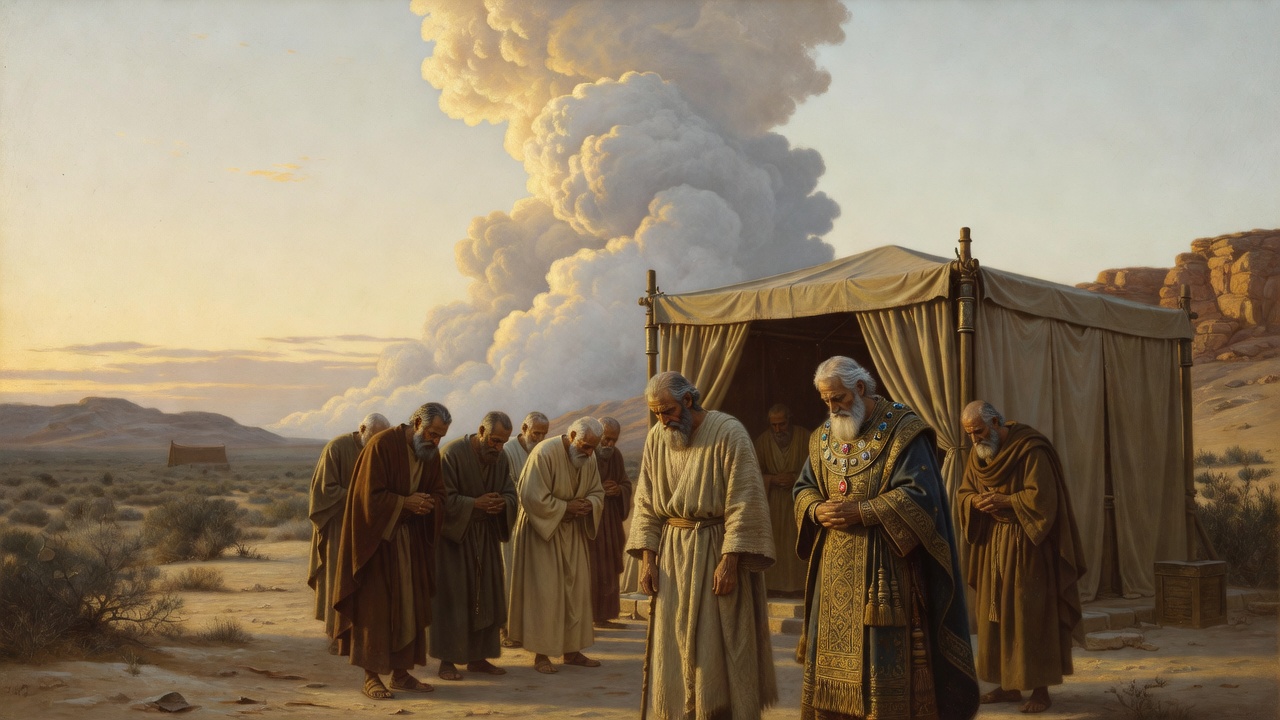
7A kapas ngeniir seni lon ewe ürekuchu.
Ra aleasochisi an kewe kapasen pwärätä me ekewe allük i a ngeniir.
8Ai Samol mi Lapalap äm we Kot, en ka pälüeni än noum aramas iotek.
En eman Kot mi amusala ar tipis,
inamwo ika ka apwüngüür ren ar föför mi mwäl.
9Oupwe ingeiti ewe Samol mi Lapalap ach we Kot
o fel ngeni me arun chukun we mi pin,
pun ewe Samol mi Lapalap ach Kot a pin.
Did you know?
The Holy King and His Intercessors
- Psalm 99 is structured around a recurring threefold declaration of God's holiness (verses 3, 5, and 9). It depicts the Lord as a sovereign king enthroned above the cherubim, reigning with justice and equity from Mount Zion.Sources: the Bible text itself · Zion
- The psalm highlights Moses, Aaron, and Samuel as exemplary intercessors who called upon God and kept His statutes. It recalls how God answered their cries and communicated from the pillar of cloud, offering forgiveness while maintaining divine justice.Sources: the Bible text itself · Moses · Aaron · Samuel
Notes written with AI assistance from open sources (Theographic Bible Metadata, CC BY-SA 4.0; Easton’s Bible Dictionary, public domain) and reviewed before publishing.
Places in this chapter
Only places identified with high confidence are shown (90% or more according to the scholarly sources compiled by OpenBible). Period map: DARE (Digital Atlas of the Roman Empire), CC BY 4.0; modern map: © OpenStreetMap contributors; places: OpenBible.info (CC BY 4.0).
Credits and license for this translation
Paipel
The Holy Bible in the Chuukese language of the Federated States of Micronesia
copyright © 1984, 1989, 1991, 2001 Liebenzel Mission
Language: Chuukese
Translation by: Liebenzell Mission
Old Testament © 1989, 2001 Liebenzel Mission
New Testament © 1984, 1991 Liebenzel Mission
This translation is made available to you under the terms of the
Creative Commons Attribution-No Derivatives license 4.0.
You may share and redistribute this Bible translation or extracts from it in any format, provided that:
You include the above copyright and source information.
You do not make any derivative works that change any of the actual words or punctuation of the Scriptures.
Pictures included with Scriptures and other documents on this site are licensed just for use with those Scriptures and documents.
For other uses, please contact the respective copyright owners.
2024-01-24
Source: http://ebible.org/chk/ · eBible.org