Psalms 74
Paipel · Tap a verse to see its cross-references.
Eu tüngor ngeni Kot pwe epwe ü ngeni chon oput nöün kana
Echö än Asaf kölün kait.
1Ai Samol mi Lapalap, pwota ka pöütikeemila tori feilfeilachök?
Pwota ka chök sosong ngeni noum kewe aramas?
2Kopwe chechemeni noum we mwichen aramas, ka filiir me lomlom,
chokewe ka angaseer pwe repwe chon om ainang.
Kopwe pwal chechemeni ewe chuk Sion, ia ka nonom ie me lom.
3Kopwe fetal ngeni ekewe lemol imw mi tala seni me lomlom.
Ekewe chon oputom ra ataela meinisin mine a nom lon ewe imwenfel.
4Chon palüenuk ra akürang lon leniom mi pin.
Ra aürätä ar filäik pwe asisilen ar win.
5Ra wewe ngeni chon pöküpök irä
mi pökü irä lein wöllap ren ar kouk.
6Ra äsätätiu ellingen won ekewe ettip mi rup meinisin
ren kouk mi watte me kükün.
7Ra ataela imwom imwenfel o kenala,
ra apiningaua ewe leni ia aramas ra fel ngonuk ie.
8Ra kapasfengen lefiler, “Sipwe aroserela meinisin.”
Iwe, ra kenala ekewe leni meinisin ia aramas ra fel ngeni Kot ie
me lon ewe fanü.
9Ach kewe asisil mi pin meinisin rese chüen nom,
ese chüen wor eman soufos,
nge esap wor eman me leich a silei inet epwe ükütiu ei lapalap.
10Ai Kot, ifa ükükün fansoun än ekewe chon oputakem repwe esitok?
Ifa usun, repwe turunufasei itom tori feilfeilachök?
11Pwota kosap mochen alisikem?
Pwota ka uwala poum lükisökürum?
12Nge ai Kot, en ai king seni me lomlom,
ka amanaua aramas won unusen fanüfan.
13En ka kinifeseni ewe matau ren om manaman,
ka amökkü möküren ekewe trakon mi nom lematau.
14Ka atatakisi ekewe möküren ewe man itan Lefiatan ,
ka pwal aochocha fitukan ngeni ekewe mönün lon fanüapö.
15Ka amichätä puächen koluk me öüwö.
Nge ka apwasatä ekewe chanpupu mi pufochofoch.
16En ka föri rän me pwin.
Ka anomu lon lenier maram me akkar.
17Ka föri kiännin fanüfan,
ka pwal föri fansoun pwichikar me fansoun patapat.
18Ai Samol mi Lapalap, kopwe chechemeni usun ekewe chon oputom ra esitok,
usun ekewe aramas mi umwes ra turunufasei itom.
19Kosap likitala noum kewe aramas mi apwangapwang ngeni ekewe chon oputer mi fokun ingau,
kosap pwal manlükala noum aramas mi nom lon riaföü tori feilfeilachök.
20Kopwe chechemeni om we pwon ka eäni ngenikem.
Pun föförün mwäneson a chök fifis lon ekewe leni mi kiroch me lon ewe fanü.
21Kosap mwütätä pwe ekewe mi riaföü repwe säw.
Nge ekewe mi wöüngau me osupwang repwe mwareituk.
22Ai Kot, kopwe ütä, kopwe püsin kapas fän itom,
kopwe chechemeni än ekewe aramas mi umwes esitok iteiten rän.
23Kosap manlükala pupuchörün ekewe chon oputom
me akürangen ekewe chon ü ngonuk mi chök fifis ngonuk.
Did you know?
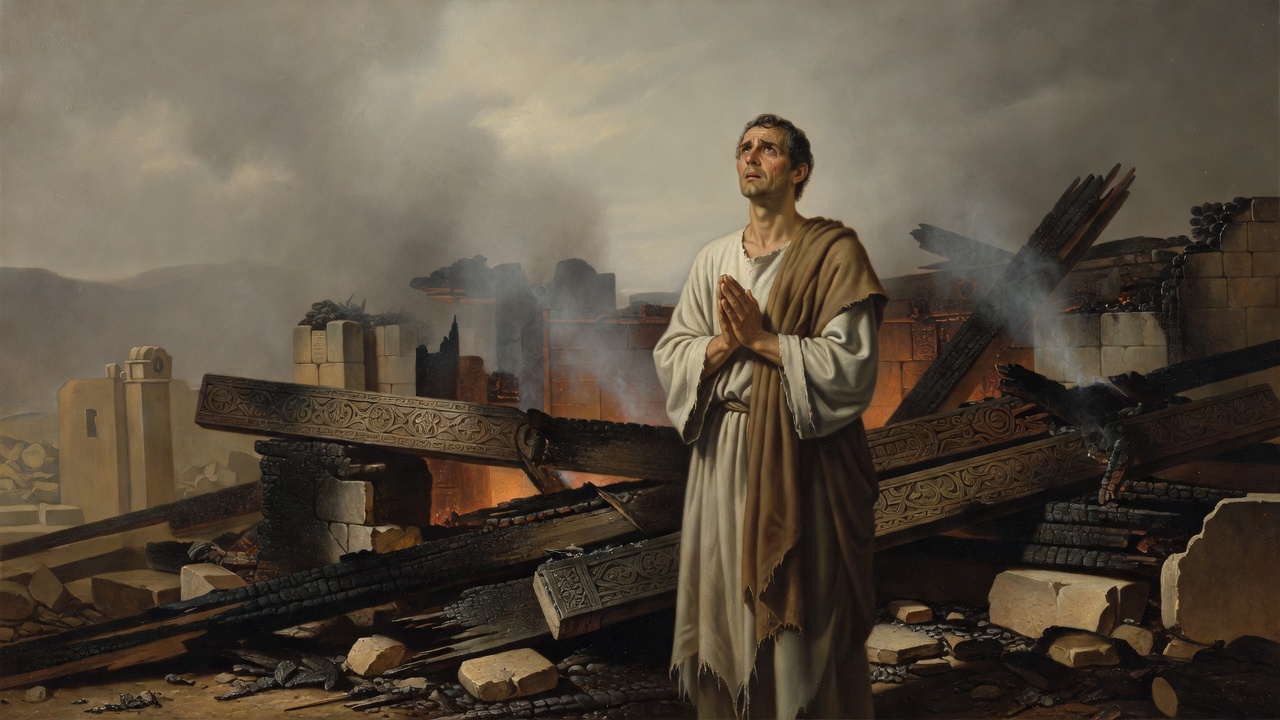
Lament over the Destroyed Sanctuary
- Psalms 73 through 83 are attributed to Asaph, a Levite musician and leader of David's choir. Because Psalm 74 laments the burning and total destruction of the sanctuary, many scholars connect it with the later "sons of Asaph," a guild of poets and singers who preserved his tradition.Sources: Asaph (Levite) · the Bible text itself
- The psalm appeals to God to remember Mount Zion, a prominent hill in Jerusalem where David established his citadel and where the sanctuary stood as the dwelling place of God's name.Sources: Mount Zion · the Bible text itself
- The destruction of the sanctuary is vividly described using the metaphor of woodcutters felling trees, as invaders smashed the intricate carved woodwork with axes and picks before burning the holy place to the ground.Sources: the Bible text itself
Notes written with AI assistance from open sources (Theographic Bible Metadata, CC BY-SA 4.0; Easton’s Bible Dictionary, public domain) and reviewed before publishing.
Places in this chapter
- Mount Zion · 31.772, 35.229 · verse 2
Only places identified with high confidence are shown (90% or more according to the scholarly sources compiled by OpenBible). Period map: DARE (Digital Atlas of the Roman Empire), CC BY 4.0; modern map: © OpenStreetMap contributors; places: OpenBible.info (CC BY 4.0).
Credits and license for this translation
Paipel
The Holy Bible in the Chuukese language of the Federated States of Micronesia
copyright © 1984, 1989, 1991, 2001 Liebenzel Mission
Language: Chuukese
Translation by: Liebenzell Mission
Old Testament © 1989, 2001 Liebenzel Mission
New Testament © 1984, 1991 Liebenzel Mission
This translation is made available to you under the terms of the
Creative Commons Attribution-No Derivatives license 4.0.
You may share and redistribute this Bible translation or extracts from it in any format, provided that:
You include the above copyright and source information.
You do not make any derivative works that change any of the actual words or punctuation of the Scriptures.
Pictures included with Scriptures and other documents on this site are licensed just for use with those Scriptures and documents.
For other uses, please contact the respective copyright owners.
2024-01-24
Source: http://ebible.org/chk/ · eBible.org