Psalms 53
Paipel · Tap a verse to see its cross-references.
Än ekewe aramas umwes me föföringau
Ngeni ewe mi emweni chon köl: Ei köl usun ngingin ewe sokun köl mi mang. Echö än Tafit kölün kait.
1Ekewe mi umwes ra ekieki lon leluker, “Esap wor Kot.”
Ir ra fokun ngau,
ra föri sokun föför mi anioput,
esap wor eman a föri mine a pwüng.
2Kot a nennetiu seni läng won aramas meinisin,
pwe epwe küna ika a wor eman mi mirit,
ika eman mi kütta Kot.
3Nge ir meinisin ra tokola,
ir meinisin ra ingauepök.
Esap wor eman a föri mine a pwüng,
esap fokun wor eman.
4Ewe Samol mi Lapalap a ais,
“Ifa usun, esap wor än ekewe chon föföringau mirit?
Ir chokewe mi manau seni mine ra soläni seni nei aramas,
nge resap iotek ngeniei.”
5Mürin a toriir niuokus watte,
eu niuokus watte esamwo toriir me mwan.
Pun Kot epwe atoropasafeili chün chokewe mi oput nöün aramas.
Chon Israel repwe fokun akufuur,
pun Kot a fen pöütirela.
6Amwo eman epwe feito seni Sion
o amanaua chon Israel.
Ekewe chon Israel repwe fokun pwapwa,
lupwen Kot epwe aliwini ngeniir wöür.
Did you know?
A Reflection on Folly and Deliverance
- The psalm depicts God observing humanity from heaven to see if any seek Him, observing that all have turned aside and become corrupt.Sources: the Bible text itself
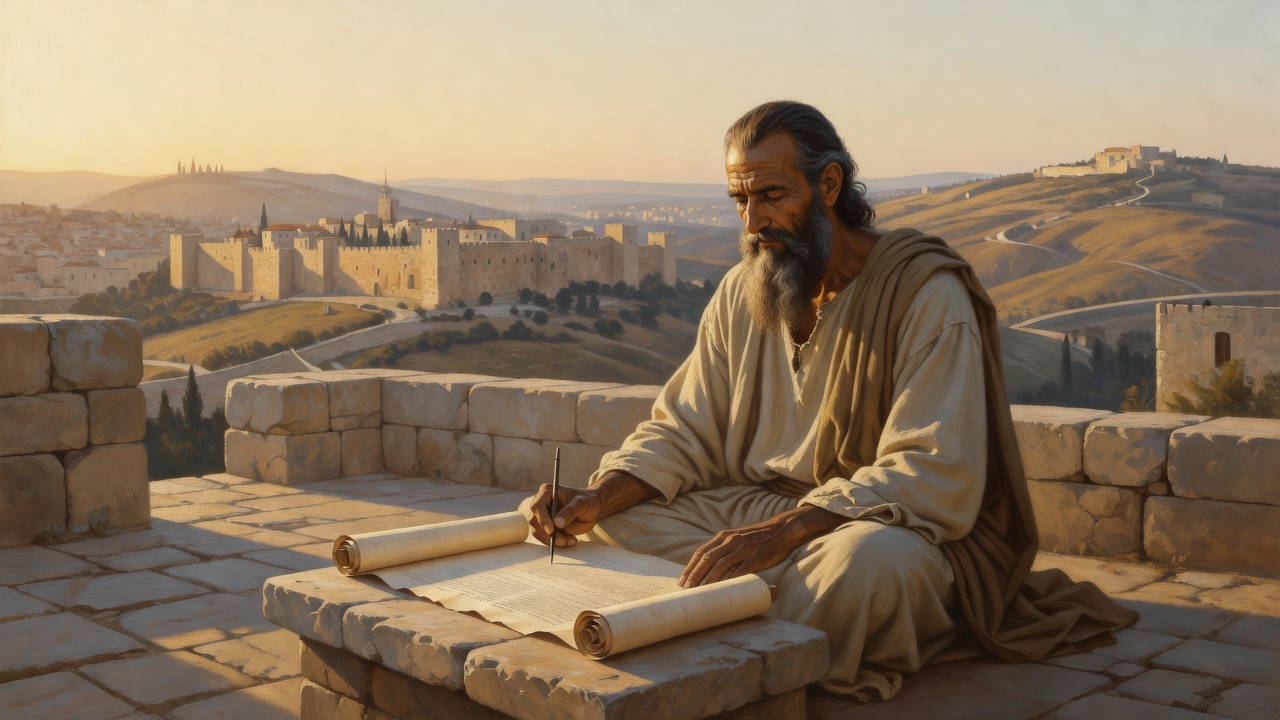
- The closing verse calls for salvation to come from Zion, the south-eastern hill of Jerusalem where David established his citadel and palace after capturing it from the Jebusites.Sources: the Bible text itself · Zion
- The poem concludes by pairing the names Jacob and Israel in a call for rejoicing, recalling the patriarch Jacob, the son of Isaac, who also bore the name Israel.Sources: the Bible text itself · Jacob (Israel)
Notes written with AI assistance from open sources (Theographic Bible Metadata, CC BY-SA 4.0; Easton’s Bible Dictionary, public domain) and reviewed before publishing.
Places in this chapter
- Zion · Today: Jerusalem · 31.777, 35.234 · verse 6
Only places identified with high confidence are shown (90% or more according to the scholarly sources compiled by OpenBible). Period map: DARE (Digital Atlas of the Roman Empire), CC BY 4.0; modern map: © OpenStreetMap contributors; places: OpenBible.info (CC BY 4.0).
Credits and license for this translation
Paipel
The Holy Bible in the Chuukese language of the Federated States of Micronesia
copyright © 1984, 1989, 1991, 2001 Liebenzel Mission
Language: Chuukese
Translation by: Liebenzell Mission
Old Testament © 1989, 2001 Liebenzel Mission
New Testament © 1984, 1991 Liebenzel Mission
This translation is made available to you under the terms of the
Creative Commons Attribution-No Derivatives license 4.0.
You may share and redistribute this Bible translation or extracts from it in any format, provided that:
You include the above copyright and source information.
You do not make any derivative works that change any of the actual words or punctuation of the Scriptures.
Pictures included with Scriptures and other documents on this site are licensed just for use with those Scriptures and documents.
For other uses, please contact the respective copyright owners.
2024-01-24
Source: http://ebible.org/chk/ · eBible.org