Psalms 22
Paipel · Tap a verse to see its cross-references.
Siön lon riaföü me kölün mwareiti Kot
Ngeni ewe mi emweni chon köl: Ei köl usun ngingin ewe köl itan ‘Ewe chian wünümweerän.’ Echö än Tafit köl.
1Ai Kot, ai Kot, pwota ka likitieila?
Pwota ka fokun toau seniei fän om alilis,
pwal seni ai siöngau?
2Ai Kot, üa siö ngonuk lerän, nge kosap pälüeniei,
üa siö ngonuk lepwin,
nge üsap tongeni asösö.
3Nge en ka pin. Ka mot won om lenien motun king,
en ewe chon Israel ra kölün mwareiti.
4Äm kewe lewo ra anomu ar apilükülük womw.
Ra apilükülükuk, nge en ka angaserela.
5Ra siö ngonuk, nge en ka amanaueer,
ra apilükülukuk, nge resap lichipüng.
6Nge ngang eman moso, sap eman aramas,
üa küna esit me koput me ren aramas.
7Meinisin mi künaei ra turunufaseei,
ra akopea awer o alifechefechi mökürer ngeniei.
8Ra apasa, “A anomu an apilükülük won ewe Samol mi Lapalap,
i epwe angasa,
i epwe amanaua, pun a pwapwa ren.”
9Nge en ewe mi atoeiwu seni lon letipen inei,
ka tümwünüöchüei, lupwen üa eman mönükol.
10Seni leuputiuei üa apilükülükuk,
seni ewe fansoun inei a nöünieitiu en ai Kot.
11Kosap toau seniei, pun osukosuk a arap ngeniei,
nge esap wor eman a alisiei.
12Chomong chon oputaei ra pwelifeiliei usun epwi pwin ätemwänin kow,
ra nom ünüki usun ätemwänin kow
mi pöchökül seni Pasan.
13Ra amassaw ngeniei usun eman laion mi mwacho a wörüwör
o atatakisi liapan.
14Üa usun chök koluk mi niitiu,
lekeilen chüi meinisin ra ruwofesen,
lelukei a usun kiris,
a telila me leupwei.
15Lon awei a pwasapwas usun pwül moromor,
nge chönawei a pacheetä fän fongochi.
Ka likitieila lon pwül moromor
usun eman mi mäla.
16Eu mwichen aramasangau a pwelifeiliei,
ra rongeeila usun epwi pwiin kolak.
Ra posu pei me pechei.
17Üa tongeni aleani chüi meinisin.
Chon oputaei ra änefotaei o takiriei.
18Ra üttüt won üfei kewe
o ineti lefiler.
19Nge en, ai Samol mi Lapalap, kosap toau seniei!
En ai chon alilis, kopwe müttir feito o alisiei.
20Kopwe angasaei seni afeiengauen ketilas,
kopwe angasa manauei seni ekei kolak mi pöchökül.
21Kopwe amanauaei seni ekewe laion,
kopwe amanaua inisi seni mächän ekewe ätemwänin kow mi mwacho.
22Üpwe apworausa ngeni pwii kewe mine ka föri,
üpwe mwareituk lein ewe mwichen aramas.
23Ämi mi niuokusiti ewe Samol mi Lapalap, oupwe mwareiti i,
ämi mwirimwirin Jakop meinisin oupwe alinga i,
ämi chon Israel meinisin oupwe fokun meniniti i.
24Pun Kot esap aliwini eman mi mwelele ika oput eman mi nom lon riaföü.
Esap amona mesan seni,
nge a pälüeni, lupwen a siö ngeni.
25En popun ai mwareituk me lon ewe mwich mi lap.
Üpwe eäni ekewe asor me fän mesen chokewe mi niuokusituk,
ekewe asor üa pwon ngonuk.
26Chokewe mi wöüngau repwe mongö o möt.
Chokewe mi feito ren ewe Samol mi Lapalap repwe mwareiti i.
Amwo repwe feiöch tori feilfeilachök.
27Chon fanüfan meinisin repwe chechemeni ewe Samol mi Lapalap
o kuliti i.
Chon ekewe ainang seni ekewe mwü meinisin repwe fel ngeni.
28Pun ewe Samol mi Lapalap i king,
i a nemeni ekewe mwü.
29Ewer, ekewe chon lamalamtekia meinisin me won fanüfan repwe chapetiu mwan,
chokewe meinisin mi feil ngeni mäla repwe fotopwäsuk me mwan, pwal chokewe resap tongeni püsin amwöchü manauer.
30Mwirimwirich repwe angang ngeni i.
Aramas repwe apworausa ngeni ewe täppin aramas epwe feito usun ewe Samol,
31repwe asilefeili ngeni ekewe aramas resamwo uputiu,
“Ewe Samol mi Lapalap a amanaua nöün aramas.”
Did you know?
Lament, Deliverance, and Global Praise
- The superscription of Psalm 22 directs the psalm to be sung to the tune of 'The Doe of the Dawn.' The poem begins with an agonizing cry of abandonment, yet transitions dramatically into a joyous public thanksgiving before the worshipping community.Sources: the Bible text itself
- The psalmist compares fierce adversaries to 'strong bulls of Bashan.' Bashan was a fertile region stretching from Gilead in the south to Mount Hermon in the north, given to the half-tribe of Manasseh and known for its robust livestock.Sources: the Bible text itself · Bashan
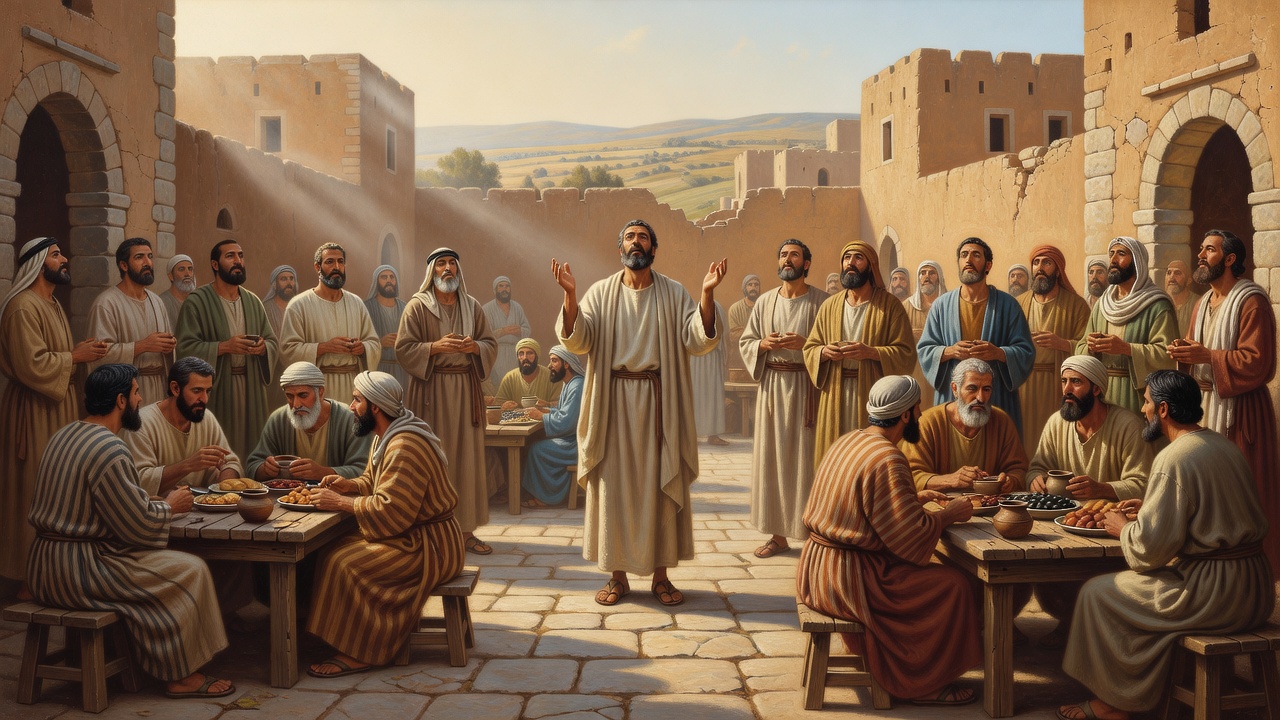
- The second half of the psalm depicts the fulfillment of vows in the 'great assembly,' where a communal meal is shared so that the poor may eat and be satisfied, and God's righteous deeds are proclaimed to unborn generations.Sources: the Bible text itself
Notes written with AI assistance from open sources (Theographic Bible Metadata, CC BY-SA 4.0; Easton’s Bible Dictionary, public domain) and reviewed before publishing.
Places in this chapter
- Bashan · 32.781, 35.935 · verse 12
Only places identified with high confidence are shown (90% or more according to the scholarly sources compiled by OpenBible). Period map: DARE (Digital Atlas of the Roman Empire), CC BY 4.0; modern map: © OpenStreetMap contributors; places: OpenBible.info (CC BY 4.0).
Credits and license for this translation
Paipel
The Holy Bible in the Chuukese language of the Federated States of Micronesia
copyright © 1984, 1989, 1991, 2001 Liebenzel Mission
Language: Chuukese
Translation by: Liebenzell Mission
Old Testament © 1989, 2001 Liebenzel Mission
New Testament © 1984, 1991 Liebenzel Mission
This translation is made available to you under the terms of the
Creative Commons Attribution-No Derivatives license 4.0.
You may share and redistribute this Bible translation or extracts from it in any format, provided that:
You include the above copyright and source information.
You do not make any derivative works that change any of the actual words or punctuation of the Scriptures.
Pictures included with Scriptures and other documents on this site are licensed just for use with those Scriptures and documents.
For other uses, please contact the respective copyright owners.
2024-01-24
Source: http://ebible.org/chk/ · eBible.org