Psalms 132
Paipel · Tap a verse to see its cross-references.
Eu iotekin tüngor feiöch won ewe imwenfel
Eu iotekin tüngor feiöch won ewe imwenfel
Echö kölün feitä.
1Ai Samol mi Lapalap, kopwe chechemeni Tafit
me an kewe riaföü meinisin a eäni.
2Kopwe chechemeni usun an pwon fän akapel ngonuk
me an pwon ngonuk, en Ewe mi Unusen Tekia, än Jakop we Kot.
3“Üsap tolong lon imwei ika konola lon kiei.
4Üsap mochen aiesum ika annut
5tori ai üpwe küna eu leni fän iten ewe Samol mi Lapalap,
eu imw fän iten Ewe mi Unusen Tekia, än Jakop we Kot.”
6Sa rongorong usun ewe pworofel me lon Petleem,
sa küna me lon ekewe mälämälen Jearim.
7Sa apasa, “Ousipwe feila ren imwen ewe Samol mi Lapalap
o fel ngeni me arun lenien puun pechen.”
8Ai Samol mi Lapalap, kopwe feito o tolong lon ewe imwenfel,
en me ewe pworofel
asisilen om manaman.
9Noum kewe souasor repwe föri mine a pwüng fansoun meinisin,
nge noum kewe chon pin repwe mweireir fän pwapwa.
10Pokiten Tafit noum we chon angang
kosap aliwini noum we mi kepit.
11Ewe Samol mi Lapalap a akapel ngeni Tafit eu pwon mi let,
nge esap atai,
“Üpwe awisa eman me lein noum kewe mwän
epwe siwiliik lon wisom wisen king.
12Are noum kewe mwän repwe tümwünü ai we pwon
me ai kewe allük üa aiti ngeniir,
nöür kewe mwän repwe pwal siwiliik lon wisom wisen king tori feilfeilachök.”
13Pun ewe Samol mi Lapalap a fen filätä Sion.
I a mochen pwe epwe lenien imwan,
14“Iei ewe leni üpwe nonom lon tori feilfeilachök,
iei ai we lenien nemenem, pun iei ai mochen.
15Üpwe afeiöchü Sion ren chomong wöü,
üpwe awora enen ekewe chon wöüngau.
16Üpwe ngeni ekewe souasor seni Sion manau,
nge nöün chon pin kana repwe mweireir fän pwapwa.
17Ikenan üpwe awora eman mwirimwirin Tafit mi pöchökül epwe king,
üpwe föri pwe nei we mi kepit epwe chök nemenem.
18Iwe, üpwe awora säw ngeni chon oputan,
nge won möküren ewe mi kepit epwe wor epa mwärämwär mi ling.”
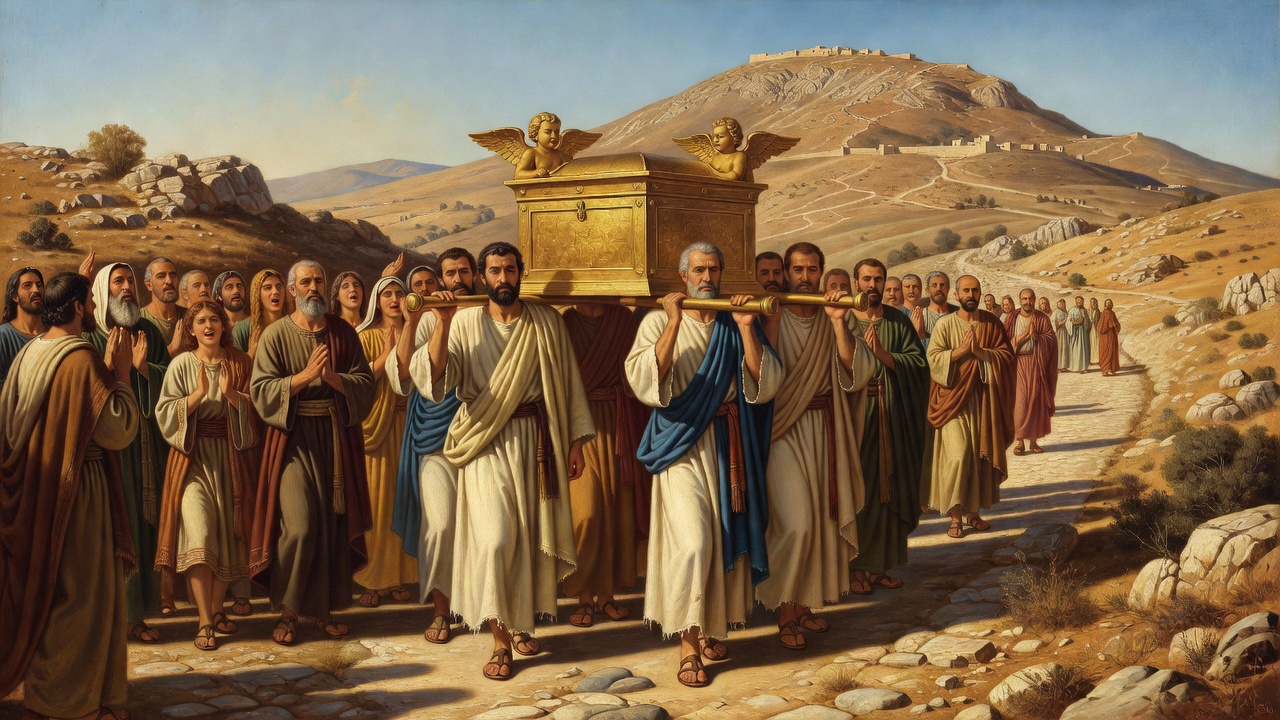
Did you know?
David, the Ark, and Zion
- Ephrathah is the ancient name of Bethlehem in Judah, the region where David spent his youth tending sheep before later seeking out the Ark of the Covenant.Sources: Ephrathah · David · the Bible text itself
- Mount Zion, a southeastern hill of Jerusalem captured by David from the Jebusites to become the City of David, is celebrated in the psalm as God's chosen dwelling place and the seat of David's dynasty.Sources: Zion · the Bible text itself
Notes written with AI assistance from open sources (Theographic Bible Metadata, CC BY-SA 4.0; Easton’s Bible Dictionary, public domain) and reviewed before publishing.
Places in this chapter
- Jerusalem · 31.777, 35.234 · verse 1
- Ephrathah · Today: Bethlehem · 31.704, 35.208 · verse 6
- Zion · Today: Jerusalem · 31.777, 35.234 · verse 13
Only places identified with high confidence are shown (90% or more according to the scholarly sources compiled by OpenBible). Period map: DARE (Digital Atlas of the Roman Empire), CC BY 4.0; modern map: © OpenStreetMap contributors; places: OpenBible.info (CC BY 4.0).
Credits and license for this translation
Paipel
The Holy Bible in the Chuukese language of the Federated States of Micronesia
copyright © 1984, 1989, 1991, 2001 Liebenzel Mission
Language: Chuukese
Translation by: Liebenzell Mission
Old Testament © 1989, 2001 Liebenzel Mission
New Testament © 1984, 1991 Liebenzel Mission
This translation is made available to you under the terms of the
Creative Commons Attribution-No Derivatives license 4.0.
You may share and redistribute this Bible translation or extracts from it in any format, provided that:
You include the above copyright and source information.
You do not make any derivative works that change any of the actual words or punctuation of the Scriptures.
Pictures included with Scriptures and other documents on this site are licensed just for use with those Scriptures and documents.
For other uses, please contact the respective copyright owners.
2024-01-24
Source: http://ebible.org/chk/ · eBible.org