Proverbs 24
Paipel · Tap a verse to see its cross-references.
1Kosap lolowoiti aramas mi ngau ika älälei om mochen chiechi ngeniir, 2pun ra chök ekiekietä usun föförün mwänewüs, kapasen awer a afisätä osukosuk.
-20-
3Eu imw a kaütä ren tipachem o nükünük ren mirit, 4nge ia a wor silelap ie, ekewe rumwen lon ra ur ren sokopaten pisek mi aüchea me mürina.
-21-
5Eman aramas mi tipachem a wor an manaman, nge eman aramas mi silelap a fokun wor an pöchökül. 6Kopwe akomwen föri om akot me mwen om kopwe feila ngeni maun, nge ia a wor chomong chon öüröür ie, a wor win.
-22-
7Kapasen tipachem ra kon tekia ngeni eman chon tiparoch, esap wor och mine a tongeni apasa lon mwichen pwüngüpwüng.
-23-
8Eman mi ekiekietä mine a ngau epwe iteni chon afisätä rawangau. 9Mine eman chon tiparoch a ekiekietä iei tipis, nge aramas ra oput eman mi turunufasei chon arun.
-24-
10Are ka apilükingau lon fansoun riaföü, om pöchökül a kisikis.
-25-
11Kopwe amanaua chokewe ra nukunuk ngeni mäla. Kopwe amwöchü chokewe mi äpäp ngeni ar repwe ninnila. 12Are ka apasa pwe kosap silei usun ei lapalap, ifa usun, ewe mi atittina leluken aramas esap küna? Ifa usun, ewe mi mamasok esap silei? I epwe liwini ngeni eman me eman aramas ükükün liwinin an föför.
-26-
13Nei, kopwe ün chönün chunen, pun a annö. Nge usun supun ewe fasen chunen a arar ngonuk, 14iei usun kopwe silei pwe tipachem epwe mürina ngonuk. Are ka küna tipachem, epwe wor om apilüköch ngeni ewe fansoun mwom, nge kosap lichipüng lon om apilükülüköch.
-27-
15Kosap operi imwen ewe chon pwüng usun eman aramasangau, kosap pwal tolong lon o angei pisekin fän pöchökül. 16Pun inamwo ika eman chon pwüng a turula fän fisu, a chök pwätäsefäl. Nge feiengau epwe tori ekewe aramasangau.
-28-
17Kosap meseik ren chon oputom, lupwen a tolong lon feiengau, kosap pwal pwapwa, lupwen a chepetek. 18Pun ewe Samol mi Lapalap epwe küna o oput ei lapalap, epwe pwal asepa an song seni ätewe.
-29-
19Kosap öürek pokiten ekewe chon föföringau, kosap pwal lolowo ngeni ekewe aramasangau. 20Pun ekewe chon föföringau esap wor ar apilüköch ngeni ewe fansoun mwer, nge manauen ekewe aramasangau epwe müchüla.
-30-
21Nei kopwe niuokusiti ewe Samol mi Lapalap o asamolu ewe king, nge kosap chiechi ngeni chokewe mi ü ngeniir. 22Pun feiengau epwe müttir toriir. Nge iö a tongeni silei ewe mäfeiengau epwe feito seni Kot me ewe king?
23Ikkei pwal ekoch mwiitun seni ekewe mi tipachem: A ngau ngeni eman soukapwüng an epwe lifilifil aramas lon kapwüng. 24Are a apasa ngeni ewe chon tipis pwe esap wor an tipis, ekewe aramas meinisin repwe otteki o oputa. 25Nge ekewe soukapwüng mi apwüngü ekewe chon tipis repwe fefeitä o iteüöch. 26Eman mi pälüeni chienan fän wenechar, iei asisilen ar pwipwiöchfengen fän let.
27Kopwe akomwen amolätä o fotuki om kewe tanipi, pwe epwe wor mine kopwe manau seni, mürin na kopwap aüetä imwom o popuetä eu famili.
28Kosap pwärätä mettoch mi ngau usun chon arum nge esap wor popun, kosap pwal apasa kapas atuputup usun. 29Kosap apasa, “Ngang üpwe föri ngeni ewe aramas usun mine a föri ngeniei. Üpwe liwini ngeni won ükükün mine a föri ngeniei.”
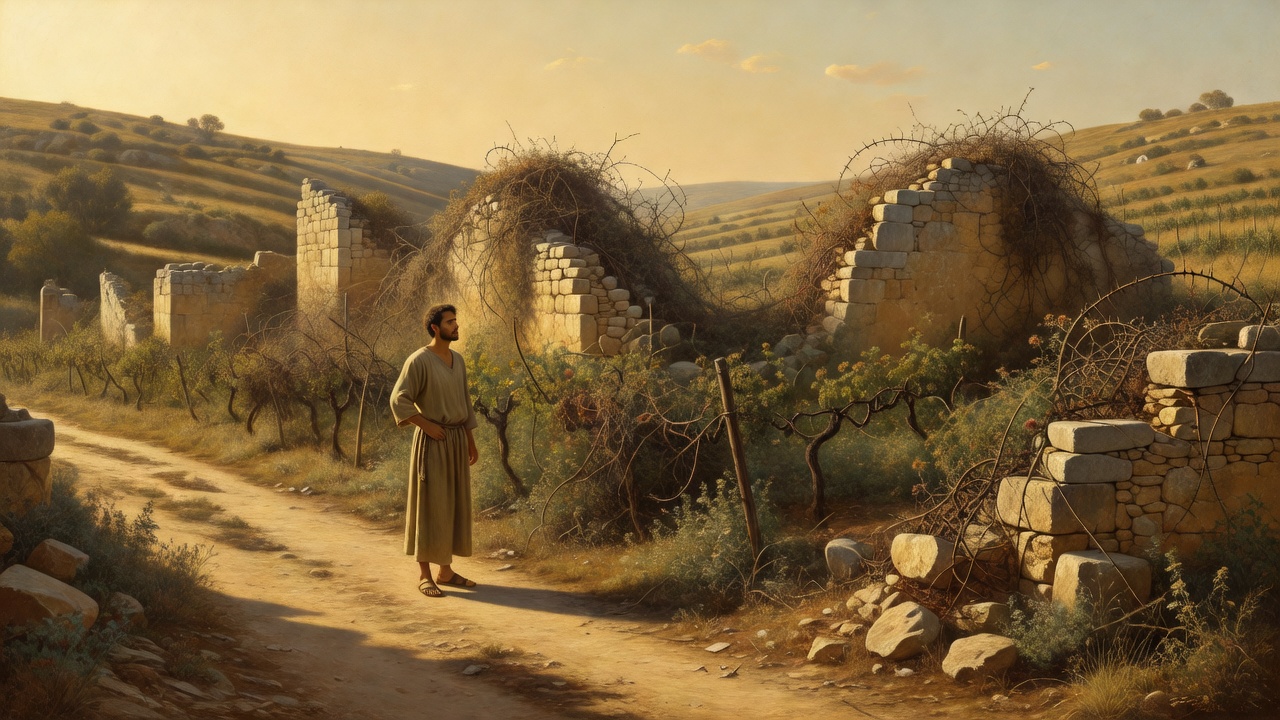
30Üa fetal ünükün än eman chon chipwang tanipi, üa fetal ünükün eu tanipin wain än eman aramas esap wor an mirit. 31Iwe, üa küna pwe ewe tanipi a kula ren iräfölüföl, ewe pwül a pwölüla ren pötöwölingau, nge tittin we tittin fau a sönüla. 32Lupwen üa nenengeni ei, üa ekieki usun o kaiö eu lesen seni: 33Ekis möür, ekis ächikichik, ekis kumwuchufengeni pau o asösö. 34Nge lupwen ka möür, wöüngau me osupwang repwe toruk usun eman chon solä a feito fän an pisekin afeiengau.
Did you know?
Wisdom for Daily Life, Justice, and Diligence
- Proverbs 24:27 reflects the priorities of ancient agrarian life by advising that one should first prepare fields and secure an agricultural livelihood before building a house. Securing reliable food production had to take precedence over investing resources into domestic shelter.Sources: the Bible text itself
- The chapter challenges passive bystander apathy, asserting that claiming ignorance will not excuse failing to rescue those facing unjust peril or death. It similarly warns against judicial partiality in civic assemblies, strongly condemning those who exonerate the guilty.Sources: the Bible text itself
- The vivid portrait of a slacker's vineyard highlights the rapid physical decay of untended land, marked by overgrown thistles and broken stone walls. In the hill country of ancient Israel, maintaining stone terrace walls was essential for preventing soil erosion and protecting crops.Sources: the Bible text itself
Notes written with AI assistance from open sources (Theographic Bible Metadata, CC BY-SA 4.0; Easton’s Bible Dictionary, public domain) and reviewed before publishing.
Credits and license for this translation
Paipel
The Holy Bible in the Chuukese language of the Federated States of Micronesia
copyright © 1984, 1989, 1991, 2001 Liebenzel Mission
Language: Chuukese
Translation by: Liebenzell Mission
Old Testament © 1989, 2001 Liebenzel Mission
New Testament © 1984, 1991 Liebenzel Mission
This translation is made available to you under the terms of the
Creative Commons Attribution-No Derivatives license 4.0.
You may share and redistribute this Bible translation or extracts from it in any format, provided that:
You include the above copyright and source information.
You do not make any derivative works that change any of the actual words or punctuation of the Scriptures.
Pictures included with Scriptures and other documents on this site are licensed just for use with those Scriptures and documents.
For other uses, please contact the respective copyright owners.
2024-01-24
Source: http://ebible.org/chk/ · eBible.org