Proverbs 11
Paipel · Tap a verse to see its cross-references.
1Ewe Samol mi Lapalap a oput aramas mi aea eu kilo esepwüng, nge a pwapwa ngeni eman mi aea eu kilo mi pwüng. 2Aramas mi lamalamtekia repwe müttir küna itengau, nge ir mi tipetekison ra eäni tipachem. 3Wenechar a emweni chokewe mi wenechar, nge chokewe resap allükülük ra feiengau ren ar tunorikirik. 4Än eman aramas wöümong esap alisi lon ewe ränin apwüng, nge pwüng a angasala eman seni mäla. 5Ekewe esap wor ar tipis ra fetal won efoch al mi sonosonöch pokiten ar pwüng, nge ekewe aramasangau ra feiengau ren püsin ar föför mi ngau. 6Chokewe mi wenechar ra küna ngas pokiten ar pwüng, nge chokewe resap allükülük ra tup ren püsin ar mochenia. 7Lupwen eman aramasangau a mäla, an apilükülüköch a pwal wesila, nge mine eman chon pwüngingau a witiwiti, esap fis. 8Eman chon pwüng a küna ngas seni osukosuk, nge eman aramasangau a chök tolong lon osukosuk. 9Eman chon pwüngingau a afeiengaua chon arun ren kapasen awan, nge ekewe chon pwüng ra ngasala ren ar silelap. 10Chon eu telinimw ra pwapwa, lupwen ekewe chon pwüng ra feiöch, nge lupwen ekewe aramasangau ra mäla, mi wor mweireiren pwapwa. 11Lupwen ekewe chon wenechar ra afeiöchü eu telinimw, a fefeitä, nge ren än ekewe aramasangau kapas ewe telinimw a tala. 12Eman mi tiparoch a aitengaua chon arun, nge eman mi mirit a fanafanala. 13Eman mi kukuloufeil o luapas a apworausa mine a monomon, nge ätewe mi allükülük a amonomona. 14Eu mwü epwe tala ika esap wor souemwen lon, nge anaie a wor ie chomong chon öüröür, a wor kinamwe. 15Eman mi pwon pwe epwe mönätiu än eman chon ekis liwinimang epwe fokun osupwang, nge ätewe mi oput ei sokun föför a feiöch. 16Eman fefin mi eäni kirikiröch aramas ra meniniti, nge ekewe mwän mi pwora ra chök pisekisekila. 17Eman mwän mi eäni kirikiröch a püsin feiöch ren, nge eman mi ariaföüü aramas a püsin feiengau ren. 18Eman aramasangau a angei winnen an angang nge esor iammürin, nge eman mi föri föför mi pwüng epwe angei liwinin mi nonomola. 19Eman mi chök föföri föför mi pwüng epwe manau, nge ätewe mi chök föri mine a ngau epwe mäla. 20Ewe Samol mi Lapalap a oput aramas mi rikirik leluker, nge a pwapwa ren chokewe mi föri mine a pwüng. 21A fokun let pwe eman aramasangau epwe wesewesen angei liwinin an föföringau, nge chokewe mi föri mine a pwüng repwe küna ngas. 22Eman fefin mi liöch, nge esap mirit, a usun chök efoch ring seni kolt lon pwötün eman piik. 23Än ekewe chon pwüng mochen a sopolong lon mine a mürina, nge mine ekewe aramasangau ra apilükülüküni a sopolong lon kapwüng. 24Mi wor aramas ra fangafangöch, nge ra chök pisekisekila. Mi pwal wor aramas ra fangangau, nge ra chök wöüngauala. 25Eman aramas mi kichiöch epwe pisekisekila, nge eman mi alisi aramas, aramas repwe pwal alisi. 26Aramas ra otteki ätewe mi amwöchü seniir wiich pokiten an mochen awattela liwinin, nge ra afeiöchü ätewe mi amömöla ngeniir wiich. 27Eman mi achocho le föri mine a mürina a kütta chenin me ren Kot, nge ätewe mi kütta mine a ngau epwe küna mine a ngau. 28Aramas mi apilükülükü püsin wöür repwe turula usun chök chön irä ra turutiu mürin leres, nge ekewe chon pwüng repwe manauöch usun chök chön irä mi arauarau. 29Eman mi tümwününgau ngeni chon leimwan esap wor mine epwe angei lesopolan, nge eman mi tiparoch epwe chon angang ngeni eman mi mirit. 30Pwüng a aworato manau, nge pwüngingau a angeala manau. 31Ekewe chon pwüng repwe angei liwinin ar föför won fanüfan, nge ekewe aramasangau me chon tipis repwe pwal fokun angei liwinin ar föför.
Did you know?
Integrity, Wealth, and the Community
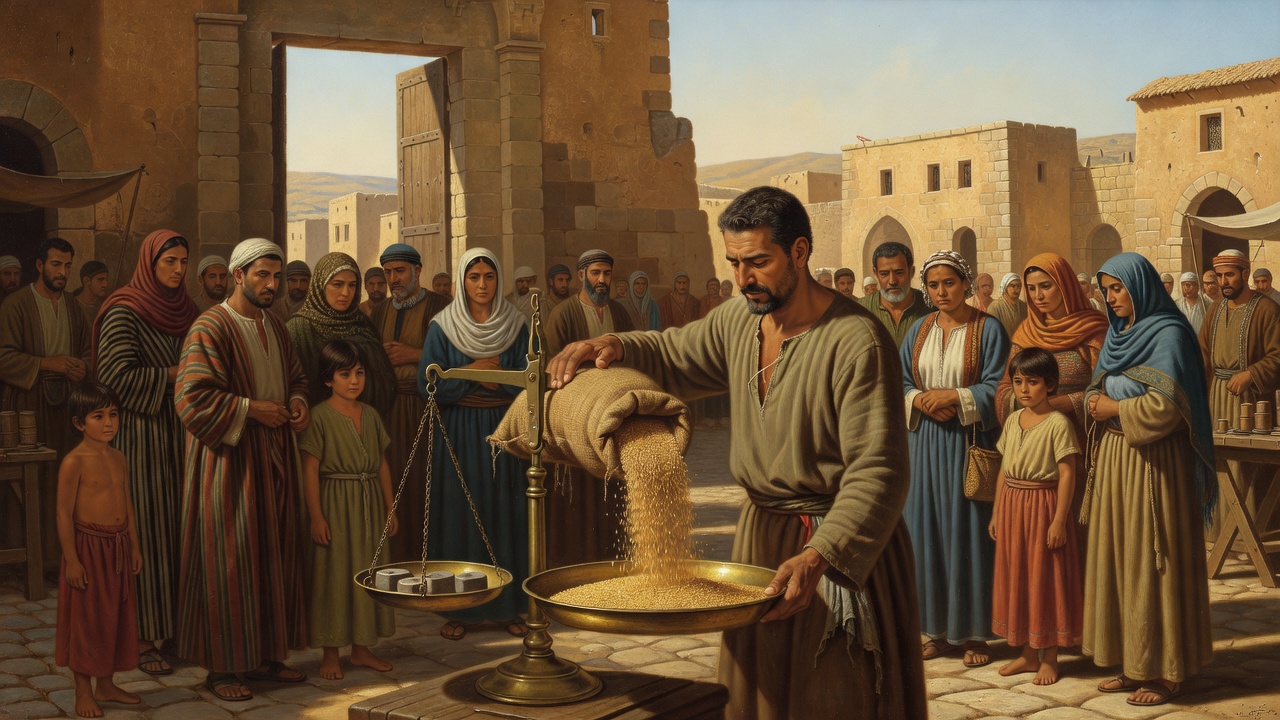
- Ancient commerce relied heavily on balance scales with stone weights to measure precious metals and goods. The chapter opens by condemning dishonest scales and praising accurate weights, emphasizing that honesty in everyday marketplace transactions reflects a person's standing before God.Sources: the Bible text itself
- Proverbs 11 highlights the civic impact of individual behavior, noting that a city's stability and joy depend on the integrity of its upright citizens, wise counselors, and fair leaders rather than the words and actions of the wicked.Sources: the Bible text itself
- In agricultural societies, withholding grain during shortages to drive up prices caused widespread suffering. The chapter contrasts the hoarder of grain, who earns the community's curse, with the merchant who readily sells food to sustain his neighbors.Sources: the Bible text itself
Notes written with AI assistance from open sources (Theographic Bible Metadata, CC BY-SA 4.0; Easton’s Bible Dictionary, public domain) and reviewed before publishing.
Credits and license for this translation
Paipel
The Holy Bible in the Chuukese language of the Federated States of Micronesia
copyright © 1984, 1989, 1991, 2001 Liebenzel Mission
Language: Chuukese
Translation by: Liebenzell Mission
Old Testament © 1989, 2001 Liebenzel Mission
New Testament © 1984, 1991 Liebenzel Mission
This translation is made available to you under the terms of the
Creative Commons Attribution-No Derivatives license 4.0.
You may share and redistribute this Bible translation or extracts from it in any format, provided that:
You include the above copyright and source information.
You do not make any derivative works that change any of the actual words or punctuation of the Scriptures.
Pictures included with Scriptures and other documents on this site are licensed just for use with those Scriptures and documents.
For other uses, please contact the respective copyright owners.
2024-01-24
Source: http://ebible.org/chk/ · eBible.org