Micah 6
Paipel · Tap a verse to see its cross-references.
Än Kot kapasen änini ngeni chon Israel
1Oupwe aüseling ngeni mine ewe Samol mi Lapalap a apasa. Oupwe ütä o pwärätä ämi osukosuk me mwen ekewe chuk, nge ekewe chukutekison repwe rongorong mweliemi. 2Ämi ekewe chuk me en longolongun fanüfan mi nükünük, oupwe rongorong än ewe Samol mi Lapalap kapasen änini, pun a änini ngeni nöün kewe aramas, epwe atipisi chon Israel. 3A apasa, “Ämi nei aramas, met üa föri ngenikemi? Ren met üa aweiresikemi? Oupwe pälüeniei. 4Üa emwenikemiiwu seni ewe fanü Isip o angasakemi seni ewe fanü ia ra nöünikemi amanau ie. Üa tinala Moses, Aaron me Miriam pwe repwe akom mwemi. 5Ämi nei aramas, oupwe pwal chechemeni mine Palak ewe kingen Moap a eäni rawangau ngenikemi, pwal mine Palam nöün Peor we mwän a eäni pälüen ngeni. Oupwe pwal chechemeni mine a fis, lupwen oua sai seni Sitim tori Kilkal, pwe oupwe silei mine Ngang ewe Samol mi Lapalap üa föri pwe üpwe amanauakemi.”
Mine Kot a mochen pwe aramas repwe föri
6Met üpwe uwato ren ewe Samol mi Lapalap, lupwen üa feito o fel ngeni ewe Koten läng? Ifa usun, üpwe feito ren fän asoren kek me nienifön kow eu ierir? 7Ifa usun, ewe Samol mi Lapalap epwe pwapwa ren ngeröün ätemwänin sip me pumongun apüra seni olif? Ifa usun, üpwe eäni asor nei mwänichi fän iten ai pupungau ika nei kana fän iten ai tipis? 8En aramas, ewe Samol mi Lapalap a aiti ngonuk mine a mürina. Met a mochen pwe kopwe föri? A mochen pwe kopwe föri mine a pwüng o eäni kirikiröch, kopwe pwal tipetekison fän mesen om we Kot.
9Mwelien ewe Samol mi Lapalap a kökkö ngeni ewe telinimw, nge iö a niuokusiti i a tipachem, “Oupwe rongorong, ämi aramas mi mwichefengen lon ewe telinimw. 10Lon imwen ekewe aramasangau a wor pisek aüchea ra angei fän rikirik. Ra aea kilo mi solä, eu föför üa oput. 11Ifa usun, üpwe amusafatei eman aramas mi nöünöü eu kilo mi solä, eman mi eäni föün kilo mi atuputup? 12Ekewe aramas mi pisekisek lon ewe telinimw ra föri chomong angangen mwänewüs, ekewe aramasen lon ra eäni kapas chofana me atuputup. 13Iei mine üa popuetä le nikemi o ataela fanüemi pokiten ämi kewe tipis. 14Oupwe mongö, nge ousap möt, oupwe chök mefi fion. Oupwe iseis mettoch, nge resap mwöch, nge mine a nom remi üpwe ataala ren maun. 15Oupwe fofot, nge ousap kinikin. Oupwe üchüch föün olif, nge ousap epitikemi noppukun. Oupwe puri föün irän wain, nge ousap ün wain seni. 16Ei epwe fis, pokiten oua apirü än Omri me chon leimwen Ahap föför mi ngau. Oua pwal sopwela le eäni örünier kewe. Iei mine üpwe ataala fanüemi, nge ekewe aramasen lon repwe och minen turunufas. Oupwe mwärelong fän itengau me ren chon ekewe mwü.”
Did you know?
The Lord's Lawsuit and True Requirements
- The chapter opens as a legal covenant dispute where God calls the mountains and foundations of the earth to stand as witnesses against Israel. God reminds the people of his faithfulness in delivering them from Egypt under Moses, Aaron, and Miriam, and protecting them from Balak of Moab through Balaam during their journey from Shittim to Gilgal.Sources: the Bible text itself · Miriam · Balak · Balaam
- The text contrasts extreme outward sacrifices—such as offering thousands of rams, torrents of olive oil, or even child sacrifice—with what God genuinely requires. True devotion is defined simply as acting justly, loving mercy, and walking humbly with God.Sources: the Bible text itself
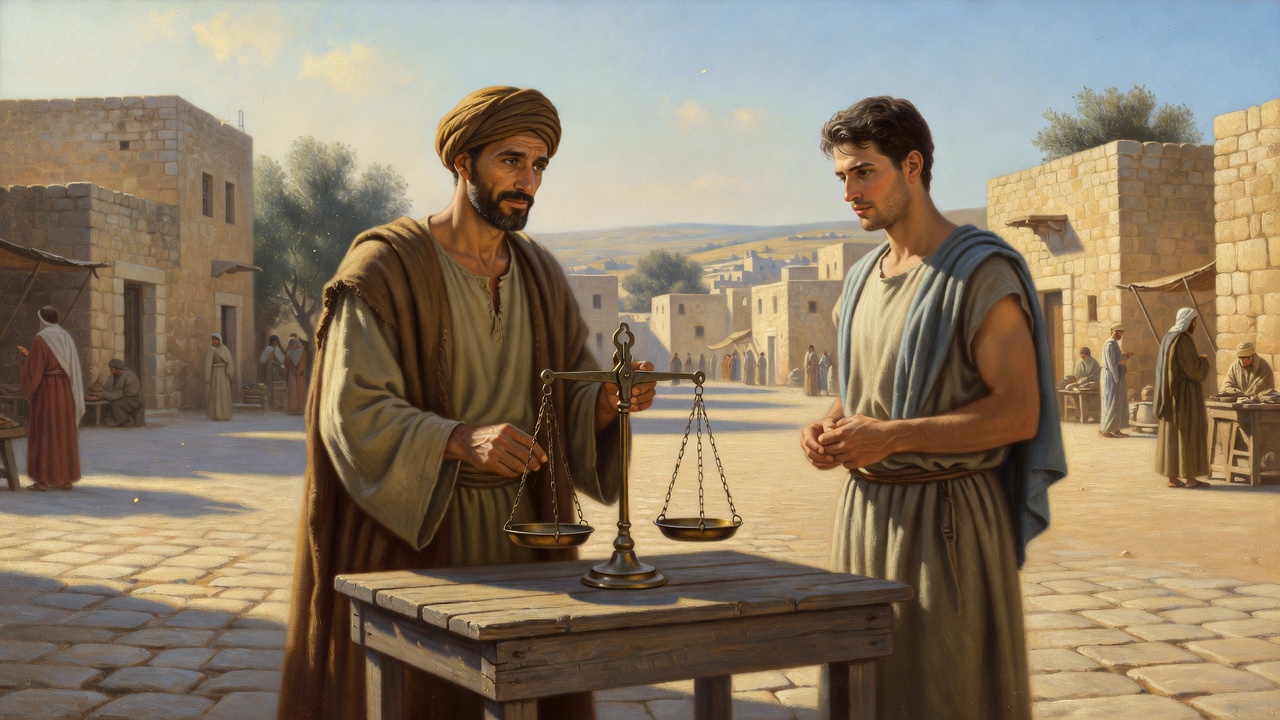
- Micah denounces urban economic injustice, explicitly condemning dishonest merchants who used false weights, deceptive scales, and short ephahs. He warns that following the corrupt statutes and practices associated with northern kings Omri and Ahab will bring devastation and public contempt.Sources: the Bible text itself · Omri · Ahab
Notes written with AI assistance from open sources (Theographic Bible Metadata, CC BY-SA 4.0; Easton’s Bible Dictionary, public domain) and reviewed before publishing.
Places in this chapter
- Egypt · 30.129, 31.308 · verse 4
- Moab · Today: Moab 1 · 31.181, 35.701 · verse 5
- Jerusalem · 31.777, 35.234 · verse 9
Only places identified with high confidence are shown (90% or more according to the scholarly sources compiled by OpenBible). Period map: DARE (Digital Atlas of the Roman Empire), CC BY 4.0; modern map: © OpenStreetMap contributors; places: OpenBible.info (CC BY 4.0).
Credits and license for this translation
Paipel
The Holy Bible in the Chuukese language of the Federated States of Micronesia
copyright © 1984, 1989, 1991, 2001 Liebenzel Mission
Language: Chuukese
Translation by: Liebenzell Mission
Old Testament © 1989, 2001 Liebenzel Mission
New Testament © 1984, 1991 Liebenzel Mission
This translation is made available to you under the terms of the
Creative Commons Attribution-No Derivatives license 4.0.
You may share and redistribute this Bible translation or extracts from it in any format, provided that:
You include the above copyright and source information.
You do not make any derivative works that change any of the actual words or punctuation of the Scriptures.
Pictures included with Scriptures and other documents on this site are licensed just for use with those Scriptures and documents.
For other uses, please contact the respective copyright owners.
2024-01-24
Source: http://ebible.org/chk/ · eBible.org