Luke 3
Paipel · Tap a verse to see its cross-references.
Än Johannes Soupapatais Afalafal
1Iwe, lon engol me limuen ierin mwün Sisar Tiperius, lupwen Pontius Pilatus a kepinan Juta, Herotes a samolun Kalilea, pwiin we Filip a samolun Iturea me Trakonitis me Lisanias a samolun Apilene, 2nge Anas me Kaifas ir ekewe Souasor mi Lap lon ena fansoun, alon Kot a tori Johannes nöün Sakarias we mwän me lon fanüapö. 3Iei mine Johannes a feila lemenen unusen ewe fanü ünükün ewe chanpupu Jortan o afalafal, “Oupwe kul seni ämi tipis o papatais, iwe, Kot epwe amusala ämi tipis.” 4Pun iei usun mine a mak lon ewe puk makkeen ewe soufos Aisea,
“Eman a kökkö fän leüömong lon fanüapö:
‘Oupwe amolätä efoch al fän iten ewe Samol,
oupwe awenecharala ewe al
epwe fetal won.
5Lemolun chuk meinisin repwe irela,
ekewe chuk meinisin repwe tekisonola.
Ekewe al mi pwor repwe awenewen,
ekewe al mi pukopuk repwe sonosonöchüla.
6Iwe, aramas meinisin repwe küna
än Kot angangen amanau.’”
7Iwe, eu mwichen aramas mi chomong ra feila pwe repwe papatais ren Johannes. Nge a üreniir, “Ämi nöün serepenit. Iö a ürenikemi pwe oupwe sü seni än Kot we song epwe awarato womi? 8Oupwe föri sokun föför epwe pwärätä pwe oua aier seni ämi tipis, nge ousap popuetä le apasa lefilemi, ‘Äm mwirimwirin Apraham.’ Pun ngang üpwe ürenikemi, pwe Kot a tongeni angei ekei fau o föri seniir pwe repwe mwirimwirin Apraham. 9Ewe kouk a fen molotä pwe epwe pöküela ekewe irä seni warer. Iteiten irä esap uani ua mi öch epwe pöküpök o koturolong lon ekkei.”
10Iwe, ekewe aramas ra aisini Johannes, “Nge äm, met äm aipwe föri?” 11Johannes a pölüeniir, “Iö a eäni ruu söch epwe angei echö o ngeni ewe eman esap wor an, nge eman mi wor anan mongö epwe pwal föri iei usun.” 12Iwe, ekoch chon ioni takises ra feito pwe repwe papatais. Ra aisini, “Sense, met äm aipwe föri?” 13Johannes a pölüeniir, “Oupwe chök ioni takises lon ükükün met mi afat lon allük.” 14Ekoch sounfiu ra pwal aisini, “Nge äm, met äm aipwe föri?” Johannes a pölüeniir, “Ousap achomau lon ämi angei moni seni aramas, ousap atipisimwäli eman, nge oupwe menemenöch ren liwinin ämi angang.”
15Iwe, ekewe aramas ra witiwit fän apilükülüköch o ra popuetä le ekieki lon leluker pwe Johannes eli epwe fen ewe Kraist. 16Iei mine Johannes a üreniir, “Ngang üa papataisikemi ren koluk, nge eman mi lap seniei epwe feito, ngang üsap fich ngeni ai üpwe mwo nge apichi ririn ipwan sus, ätewe epwe papataisikemi ren Ngünmifel me ekkei. 17A kamwöch an söföl mi keang pwe epwe aea le aimwüfeseni ekewe föün wiich seni pöön me won an lenien wichiwich umwun wiich. Iwe, epwe ionifengeni ekewe föün wiich o uwalong lon an lenien iseis, nge ekewe pöön epwe keniirela lon ekkei esap kunula.”
18Iwe, lon chomong sokopaten kapas Johannes a aea le afalafala ewe Pworaus Allim ngeni ekewe aramas o fönöör, pwe repwe siwili manauer. 19Nge Johannes a apwüngü ewe samol Herotes pokiten an pwülüeni Herotias pwülüen pwiin we, pwal pokiten an kewe föför mi ngau meinisin a föri. 20Mürin Herotes a föri och föför mi fokun ngau ren an aturalong Johannes lon imwen fötek.
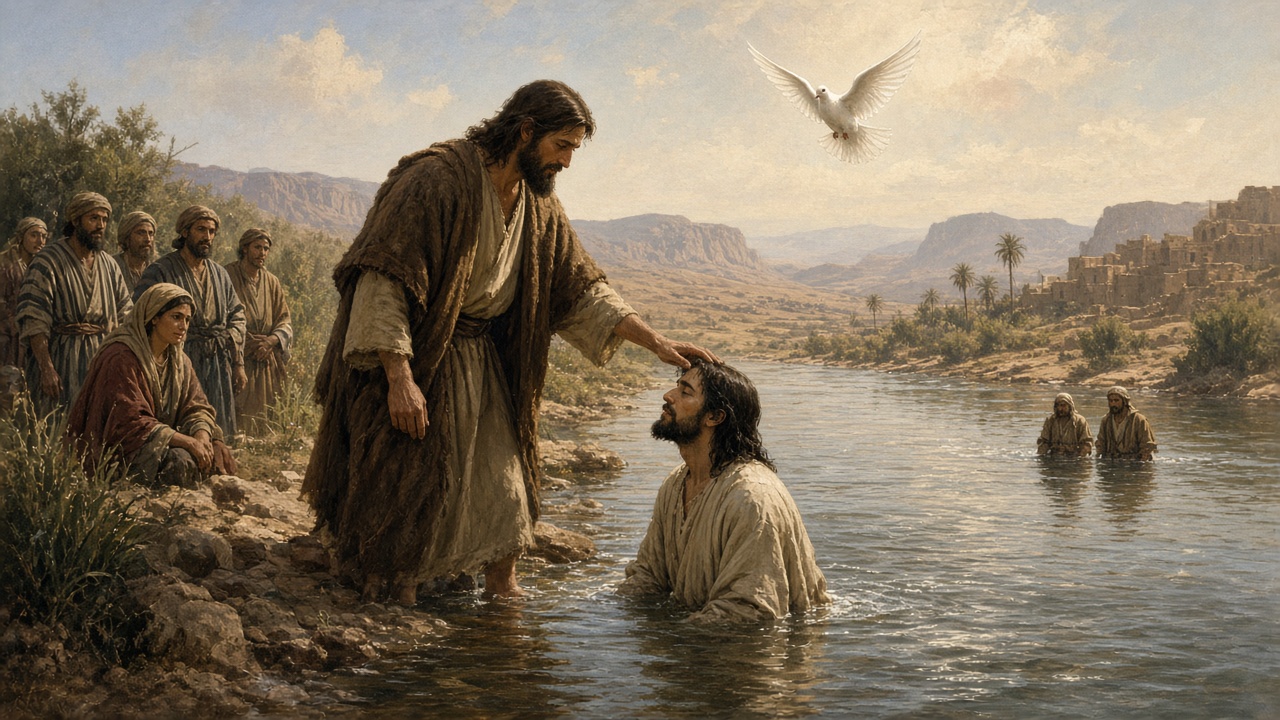
Jesus a papatais
21Iwe, lupwen ekewe aramas meinisin ra papatais, Jesus a pwal papatais. Nge lupwen Jesus a iotek, läng a sukula 22o ewe Ngünmifel a feitiu won usun lapalapen eman lisom. Iwe, eu möngüngü a feitiu seni läng a apasa, “En nei mi fokun achengicheng, üa unusen pwapwa reöm.”
Än Jesus kewe lewo
23Iwe, lupwen Jesus a popuetä an angang a ierini ina epwe ilik ier. Iei usun än aramas ekiek pwe Jesus nöün Josef, nge Josef nöün Eli, 24Eli nöün Matat, Matat nöün Lefi, Lefi nöün Melki, Melki nöün Jannai, nge Jannai nöün Josef, 25Josef nöün Matitia, Matitia nöün Amos, Amos nöün Nahum, Nahum nöün Esli, nge Esli nöün Nakkai, 26Nakkai nöün Mahat, Mahat nöün Matatias, Matatias nöün Simei, Simei nöün Josek, nge Josek nöün Jota, 27Jota nöün Johanan, Johanan nöün Resa, Resa nöün Serupapel, Serupapel nöün Sealtiel, nge Sealtiel nöün Neri, 28Neri nöün Melki, Melki nöün Atti, Atti nöün Kosam, Kosam nöün Elmatam, nge Elmatam nöün Er, 29Er nöün Josua, Josua nöün Elieser, Elieser nöün Jorim, Jorim nöün Matat, nge Matat nöün Lefi, 30Lefi nöün Simeon, Simeon nöün Juta, Juta nöün Josef, Josef nöün Jonam, nge Jonam nöün Eliakim, 31Eliakim nöün Melea, Melea nöün Menna, Menna nöün Matata, Matata nöün Natan, nge Natan nöün Tafit, 32Tafit nöün Jesi, Jesi nöün Opet, Opet nöün Poas, Poas nöün Salmon, nge Salmon nöün Nason, 33Nason nöün Aminatap, Aminatap nöün Atmin, Atmin nöün Arni, Arni nöün Hesron, Hesron nöün Peres, nge Peres nöün Juta, 34Juta nöün Isaak, Isaak nöün Apraham, Apraham nöün Tara, nge Tara nöün Nahor, 35Nahor nöün Seruk, Seruk nöün Reu, Reu nöün Pelek, Pelek nöün Eper, nge Eper nöün Shela, 36Shela nöün Kainan, Kainan nöün Arpaksat, Arpaksat nöün Säm, Säm nöün Noa, nge Noa nöün Lamek, 37Lamek nöün Metusala, Metusala nöün Enok, Enok nöün Jaret, Jaret nöün Mahalalel, nge Mahalalel nöün Kenan, 38Kenan nöün Enos, Enos nöün Set, Set nöün Atam, nge Atam nöün Kot.
Did you know?
John the Baptist prepares the way
- Luke sets John's preaching in the fifteenth year of Tiberius Caesar, the stepson of Augustus, who succeeded him in A.D. 14 and died in A.D. 37. Easton's Bible Dictionary (1897) notes that John began his public ministry in that year, and that Pontius Pilate, the sixth Roman procurator of Judea from A.D. 26 to 36, kept his headquarters at Caesarea during a term that covered the ministries of John and Jesus. Herod Antipas, a son of Herod, was then tetrarch of Galilee.Sources: the Bible text itself · Tiberius · Pontius Pilate · Herod Antipas
- The chapter dates these events during the high priesthood of both Annas and Caiaphas. Easton's Bible Dictionary (1897) records that Annas was high priest from A.D. 7 to 14 and was deposed by the Roman procurator, and that Caiaphas, who had married Annas's daughter, was raised to that office in A.D. 25. The same entry suggests that the Jews may still have regarded Annas as the lawful high priest, since Mosaic law held the office for life, and that he probably served with Caiaphas as president of the Sanhedrin or as the high priest's deputy.Sources: the Bible text itself · Annas
- John, son of Zechariah, was of priestly descent: his father was a priest of the course of Abia, and his mother, Elizabeth, belonged to the daughters of Aaron. Easton's Bible Dictionary (1897) notes that his mission was the subject of prophecy, including Isaiah's voice crying in the wilderness, and that his birth came six months before the birth of Jesus. In this chapter he preaches a baptism of repentance throughout the region around the Jordan, and Herod the tetrarch later imprisons him after John rebukes him over Herodias.Sources: the Bible text itself · John the Baptist
Notes written with AI assistance from open sources (Theographic Bible Metadata, CC BY-SA 4.0; Easton’s Bible Dictionary, public domain) and reviewed before publishing.
Places in this chapter
- Abilene · 33.627, 36.106 · verse 1
- Galilee · 32.760, 35.527 · verses 1, 19
- Ituraea · 33.400, 35.850 · verse 1
- Judea · Today: Judea 1 · 31.777, 35.234 · verse 1
- Trachonitis · Today: Lajat · 32.969, 36.455 · verse 1
- Jordan · Today: Jordan River · 31.761, 35.558 · verse 3
Only places identified with high confidence are shown (90% or more according to the scholarly sources compiled by OpenBible). Period map: DARE (Digital Atlas of the Roman Empire), CC BY 4.0; modern map: © OpenStreetMap contributors; places: OpenBible.info (CC BY 4.0).
Credits and license for this translation
Paipel
The Holy Bible in the Chuukese language of the Federated States of Micronesia
copyright © 1984, 1989, 1991, 2001 Liebenzel Mission
Language: Chuukese
Translation by: Liebenzell Mission
Old Testament © 1989, 2001 Liebenzel Mission
New Testament © 1984, 1991 Liebenzel Mission
This translation is made available to you under the terms of the
Creative Commons Attribution-No Derivatives license 4.0.
You may share and redistribute this Bible translation or extracts from it in any format, provided that:
You include the above copyright and source information.
You do not make any derivative works that change any of the actual words or punctuation of the Scriptures.
Pictures included with Scriptures and other documents on this site are licensed just for use with those Scriptures and documents.
For other uses, please contact the respective copyright owners.
2024-01-24
Source: http://ebible.org/chk/ · eBible.org