Luke 11
Paipel · Tap a verse to see its cross-references.
Jesus a afalafal usun iotek
1Lon eu rän Jesus a iotek lon eu leni. Lupwen a wes le iotek, eman lein nöün kewe chon kaiö a üreni, “Äm Samol, kopwe aiti ngenikem iotek usun Johannes a aiti ngeni nöün kewe chon kaiö.” 2Iwe, Jesus a üreniir, “Lupwen oupwe iotek, iei usun mine oupwe apasa,
‘Semem, itom epwe pin,
Mwum epwe war.
3Kopwe ngenikem anem mongö iteiten rän,
4Kopwe amusala äm kewe tipis
pun äm aia amusala chokewe
meinisin mi tipis ngenikem.
Kosap atolongakem lon sosot.’”
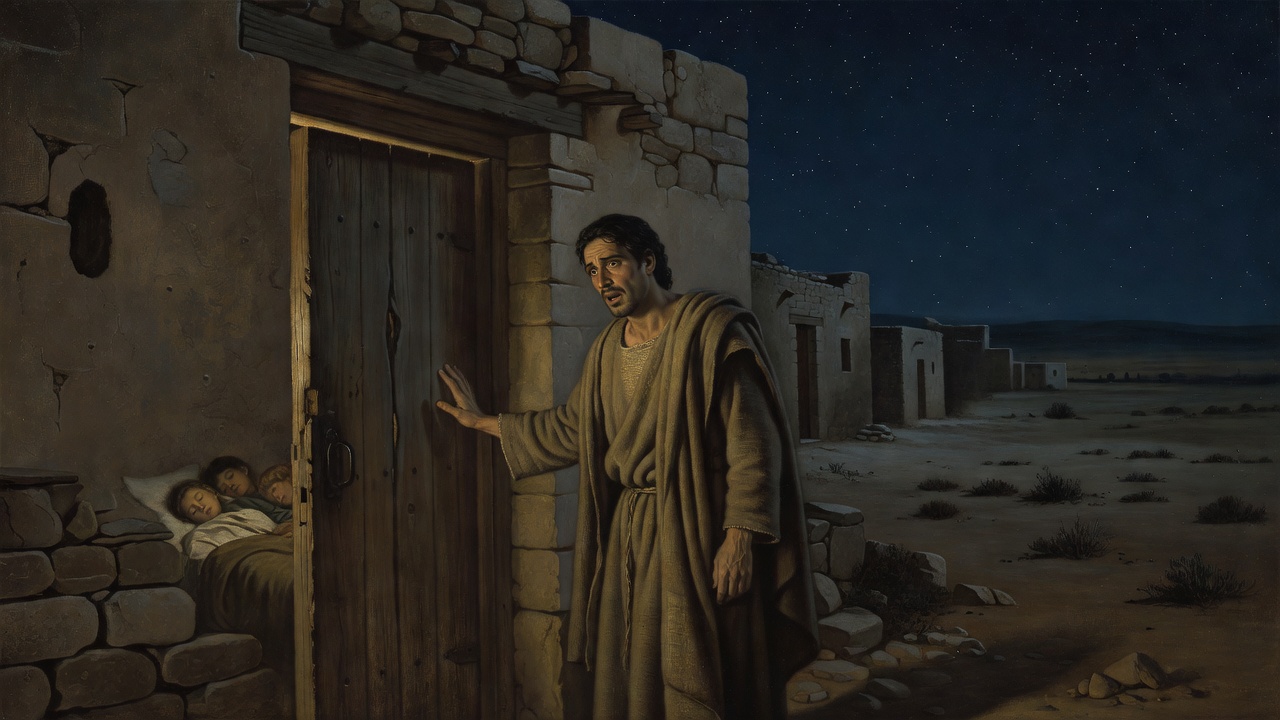
5Iwe, Jesus a üreni nöün kewe chon kaiö, “Epwe ifa are eman leimi epwe feila lon imwen chiechian lukenipwin o üreni, ‘Pwii, kose mochen üpwe liwinimang reöm ülüföü föün pilawa. 6Eman chienei e war me sai ekärän chök tori imwei, nge esap wor anei mongö üpwe etiwa ngeni.’ 7Iwe, epwe ifa ika chienom we a pölüenawu me lon ewe imw, ‘Kosap osukosukaei. Asamen imwei a fen kapüng, nge ngang me nei kei aia möür. Ngang üsap tongeni pwätä pwe üpwe ngonuk och.’ 8Iwe, üpwe ürenikemi, pwe ikamwo ätewe esap pwätä pwe epwe ngonuk ewe pilawa pokiten en chiechian, nge epwe fen pwätä o ngonuk meinisin mine ka osupwang ren, pun kosap säw le tütüngormau ngeni.
9“Iei mine üpwe ürenikemi: Oupwe tütüngor, iwe, oupwe angei, oupwe küküt, iwe, oupwe künakün, oupwe fichifich, iwe, epwe wor asam mi suk ngenikemi. 10Pun iö a tütüngor epwe angei och, iö a küküt epwe wor künaan, nge iö a fichifich epwe wor asam mi suk ngeni. 11Iö leimi kana sam nöün epwe tüngorei eman ik, nge epwe ngeni eman serepenit? 12Nge are epwe tüngor eföü sokul, epwe ngeni eman mönükam? 13Iwe, are mwo ämi aramas mi ngau oua silei ämi oupwe fang ngeni nöümi lifang mi mürina, epwe fen ifa me watten än Sememi lon läng fangela Ngünmifel ngeni chokewe mi tüngorei!”
Jesus me Pelsepul
14Iwe, Jesus a asüela eman anün rochopwak mi nom won eman mwän esap tongeni kapas pokiten ewe anü. Lupwen ewe anün rochopwak a towu seni, ewe mwän a tongeni kapas. Iwe, ekewe aramas ra mwar ren. 15Nge ekoch me leir ra apasa, “Ewe anü Pelsepul, ewe samolun anün rochopwak a ngeni ewe manaman pwe epwe asüela ekewe anün rochopwak.”
16Pwal ekoch ra ekiekin ar repwe sotuni Jesus, iei mine ra tüngor ngeni pwe epwe föri eu manaman, pwe epwe pwä pwe Kot a tipeeu ngeni. 17Nge Jesus a silei monomonen ar ekiek, iei mine a üreniir, “Are eu mwü a kinikinfesen o fiufengen, ei mwü esap tongeni nonomola. Are eu famili a kinikinfesen o fiufengen, ei famili epwe parasfesen. 18Nge are mwün Satan a kinikinfesen o fiufengen, ifa usun, mwün epwe tongeni nonomola? Pun ämi oua apasa, pwe üa asüela ekewe anün rochopwak ren Pelsepul. 19Iwe, are iei usun pwe üa asüela ekewe anün rochopwak ren Pelsepul, met chiechiemi kewe ra asürela ren? Iei mine ir repwe alletätä pwe oua mwäl. 20Nge are üa asüela ekewe anün rochopwak ren än Kot manaman, mürin Mwün Kot a fen torikemi.
21“Iwe, are eman mwän mi pöchökül a mamasa püsin imwan fän an pisekin fiu, pisekin meinisin repwe tümwünöch. 22Nge are eman mi pöchökül seni epwe fiu ngeni o akufu, epwe angei seni an kewe pisekin fiu meinisin a anomu an apilükülük won, epwe pwal ineti mine a soläni. 23Iwe, are eman esap etiei, i eman chon ü ngeniei, nge are eman esap alisiei le ikioi, i eman chon kütifeseni.
Liwinton eman ngününgau won eman aramas
24“Are eman ngününgau a towu seni eman aramas, a saifetal won fanü mi pwasapwas o kütta eu leni pwe epwe asösö lon. Are esap küna eu leni, epwe apasa, ‘Üpwe liwinsefäliti imwei we üa towu seni.’ 25Iwe, lupwen epwe tori ewe imw, epwe küna pwe a limöch o kotöch. 26Mürin epwe feila o panato pwal füman ngün mi ngau seni i. Iwe, repwe feito o nonom lon. Iwe, manauen ewe aramas epwe fokun ngau seni me mwan.”
Feiöch enlet
27Iwe, lupwen Jesus a apasa ekei kapas, eman fefin me lon ewe mwich a kötä o üreni, “Feiöchün ewe fefin mi nöünuk o oupwuk!” 28Nge Jesus a pölüeni, “Ewer, nge ra feiöch chokewe mi rong kapasen Kot o aleasochis ngeni.”
Aramas ra mochen küna eu asisil
29Lupwen ekewe aramas ra mwichfengen ren Jesus, a sopwela le kapas ngeniir, “A ifa me ngauen ei täppin aramas ikenai. Ra tüngor eu asisil, nge esor asisil epwe toriir, pwe ewe chök asisil mi fis ngeni Sona. 30Pun usun Sona a eu asisil ngeni ekewe aramasen Ninifa, iei usun Nöün Aramas epwe pwal eu asisil ngeni ei täppin aramas. 31Lon ewe ränin kapwüng ewe kiwinen Sepa epwe ütä o atipisi ei täppin aramas. Pun neminei a saito seni fanüan mi toau, pwe epwe rongorong än king Salomon kapasen tipachem. Iwe, üpwe ürenikemi, pwe eman mi lap seni Salomon a nom ikei. 32Lon ewe ränin kapwüng ekewe chon Ninifa repwe ütä o atipisi ei täppin aramas, pun ra aier ren än Sona afalafal. Nge üpwe ürenikemi, pwe eman mi lap seni Sona a nom ikei.
Saramen inisich
33“Iwe, esap wor eman a keni eu lamp, nge mürin a aopala ika anomu fän eu sepi. Nge epwe fen isetä ewe lamp won lenian, pwe aramas mi tolong lon ewe imw repwe küna ewe saram. 34Mesom ra usun chök eu lamp fän iten inisum. Are mesom ra fat, unusen inisum a saram. Nge are mesom a fatangau, unusen inisum epwe rochopwak. 35Iei mine kopwe tümwünüöchuk, pwe ewe saram mi nom lomw esap rochopwak. 36Are unusen inisum a saram, nge esap wor eu kinikin a rochopwak, unusen inisum epwe saram usun chök eu lamp mi tinöch a asaramok.”
Jesus a atipisi ekewe Farisi me ekewe Sensen Allük
37Iwe, lupwen Jesus a wes le kapas, eman Farisi a köri pwe epwe mongö ren. Iei mine Jesus a feila lon imwan o a mot ngeni mongö. 38Iwe, ewe Farisi a weitifengeni lupwen a küna, pwe Jesus esap talü pöün mwen an epwe mongö. 39Iei mine ewe Samol a kapas ngeni, “Ämi kana Farisi, oua limeti lükün ämi kewe kap me sepi, nge lon letipemi a uren mochenia me föföringau. 40Ämi mi umwes! Ifa usun, Kot ewe mi föri lükün esap pwal föri lon? 41Nge oupwe fang ngeni ekewe mi wöüngau mine a nom lon ämi kewe kap me sepi, mürin mettoch meinisin repwe limöch me remi.
42“Feiengauemi, ämi Farisi! Oua ngeni Kot leengolun ämi nofitin mongö usun chök mint me warung me sokopaten chön irä, nge oua tümwününgau ngeni pwüngüöch me ämi echeni Kot. Oupwe föri ekewe, nge oupwe pwal tümwünüöchü ekei. 43Feiengauemi, ämi Farisi! Pun oua sani le mot won ekewe lenien mot än ekewe mi lap lon ekewe imwen felikis, pwal än ekewe aramas kapong ngenikemi fän suföl me lon ekewe lenien amömö. 44Feiengauemi! Pun oua usun chök ekewe peias esap wor eman a küna, aramas ra fetal won, nge resap silei.”
45Iwe, eman lein ekewe Sensen Allük a üreni Jesus, “Sense, lupwen ka kapas usun ekei mettoch, ka pwal aitengauakem.” 46Jesus a pölüeni, “Feiengauemi, pwal ämi kewe Sensen Allük! Pun oua isetä mettoch mi chou won ekewe aramas, a fokun weires ar repwe mwärei, nge ämi ousap mwo nge pwisi ngeni efoch aütumi ekewe mettoch mi chou. 47Feiengauemi! Ämi oua alinga peiasen ekewe soufos ämi kewe lewo ra niela. 48Ren ei oua pwärätä pwe oua tipeeu ngeni mine ämi kewe lewo ra föri. Ir ra niela ekewe soufos, nge ämi oua alinga peiaser kewe. 49Iei popun Tipachemen Kot a apasa, ‘Üpwe tinala rer soufos me soukünö. Repwe niela ekoch me leir, nge ekoch repwe ariaföüür.’ 50Iei mine ei täppin aramas repwe küna kapwüng fän iten ninnilan ekewe soufos meinisin seni lepopun fanüfan tori iei, 51seni ewe fansoun ninnilan Epel tori ninnilan Sekaraia mi mäla lefilen ewe rongen asor me ewe Imw mi Pin. Ewer, üpwe ürenikemi, ei täppin aramas repwe küna kapwüng fänäsengesiir meinisin. 52Feiengauemi, ämi Sensen Allük! Pun oua amwöchü kien asamen silei (mettochun mwün läng). Püsin ämi ousap tolong lon, nge oua epeti chokewe mi mochen tolong lon.” 53Iwe, lupwen Jesus a towu seni ewe imw, ekewe Sensen Allük me ekewe Farisi ra popuetä le fokun esita o ais ngeni chomong kapas ais usun chomong mettoch. 54Ra opoperi, pun ra mochen aöi ika epwe apasa och kapas mi mwäl.
Did you know?
Prayer, Signs, and Woes
- Jesus speaks of the blood of all the prophets, from the blood of Abel to the blood of Zechariah, who was killed between the altar and the sanctuary. Abel was the second son of Adam and Eve and was killed by his brother Cain. Easton's Bible Dictionary (1897) identifies this Zechariah as the son or grandson of the high priest Jehoiada, stoned at the king's command in the court of the house of the Lord after he condemned the king and the people, and notes that Jesus alludes to that murder in this chapter.Sources: the Bible text itself · Abel · Zacharias
- Jesus says this generation will be given no sign except the sign of Jonah: as Jonah was a sign to the Ninevites, so the Son of Man will be a sign to this generation, and the men of Nineveh, who repented at his preaching, will condemn it at the judgment, because someone greater than Jonah is here. Easton's Bible Dictionary (1897) describes Jonah, son of Amittai of Gath-hepher, as a prophet of Israel and a missionary to Nineveh, and calls him a type of the Son of Man. It describes Nineveh as a great and populous city, the flourishing capital of the Assyrian empire.Sources: the Bible text itself · Jonah · Nineveh
- After Jesus drives out a demon that was mute, some say he does it by Beelzebul, the prince of the demons. Easton's Bible Dictionary (1897) explains the name Satan as adversary or accuser, says the New Testament uses it interchangeably with the devil, and lists Beelzebub among his titles. Jesus answers that every kingdom divided against itself will be laid waste, and asks how Satan's kingdom can stand if Satan is divided against himself.Sources: the Bible text itself · Satan
Notes written with AI assistance from open sources (Theographic Bible Metadata, CC BY-SA 4.0; Easton’s Bible Dictionary, public domain) and reviewed before publishing.
Places in this chapter
Only places identified with high confidence are shown (90% or more according to the scholarly sources compiled by OpenBible). Period map: DARE (Digital Atlas of the Roman Empire), CC BY 4.0; modern map: © OpenStreetMap contributors; places: OpenBible.info (CC BY 4.0).
Credits and license for this translation
Paipel
The Holy Bible in the Chuukese language of the Federated States of Micronesia
copyright © 1984, 1989, 1991, 2001 Liebenzel Mission
Language: Chuukese
Translation by: Liebenzell Mission
Old Testament © 1989, 2001 Liebenzel Mission
New Testament © 1984, 1991 Liebenzel Mission
This translation is made available to you under the terms of the
Creative Commons Attribution-No Derivatives license 4.0.
You may share and redistribute this Bible translation or extracts from it in any format, provided that:
You include the above copyright and source information.
You do not make any derivative works that change any of the actual words or punctuation of the Scriptures.
Pictures included with Scriptures and other documents on this site are licensed just for use with those Scriptures and documents.
For other uses, please contact the respective copyright owners.
2024-01-24
Source: http://ebible.org/chk/ · eBible.org