Joshua 14
Paipel · Tap a verse to see its cross-references.
Ewe fanü Kanaan a ainet ren üttüt
1Iei pworausen inetin ewe fanü Kanaan mi nom lotoun ewe chanpupu Jortan ngeni ekewe aramasen Israel. Ewe souasor Eleasar me Josua nöün Nun we mwän, pwal souemwenin än semer kewe cho seni ekewe ainangen Israel ra aineti ewe fanü ngeniir. 2Iwe, ra angei fanüer ren üttüt, usun ewe Samol mi Lapalap a fen allük fän iten ekewe tiu esop ainang. 3Pun Moses a fen ngeni ekewe ruu esop ainang fanüer ötiuen ewe chanpupu Jortan. 4Pun ekewe mwirimwirin Josef ra ruu ainang, ekewe ainangen Manasa me Efraim. Nge chon ewe ainangen Lefi resap angei eu kinikin me lon ewe fanü, pwe ra chök angei telinimw pwe repwe imweimw lon fiti ekewe fanü ünükür fän iten nöür man. 5Iwe, ekewe aramasen Israel ra aineti ewe fanü ren üttüt, usun mine ewe Samol mi Lapalap a allük ngeni Moses.
Josua a ngeni Kalep ewe telinimw Hepron
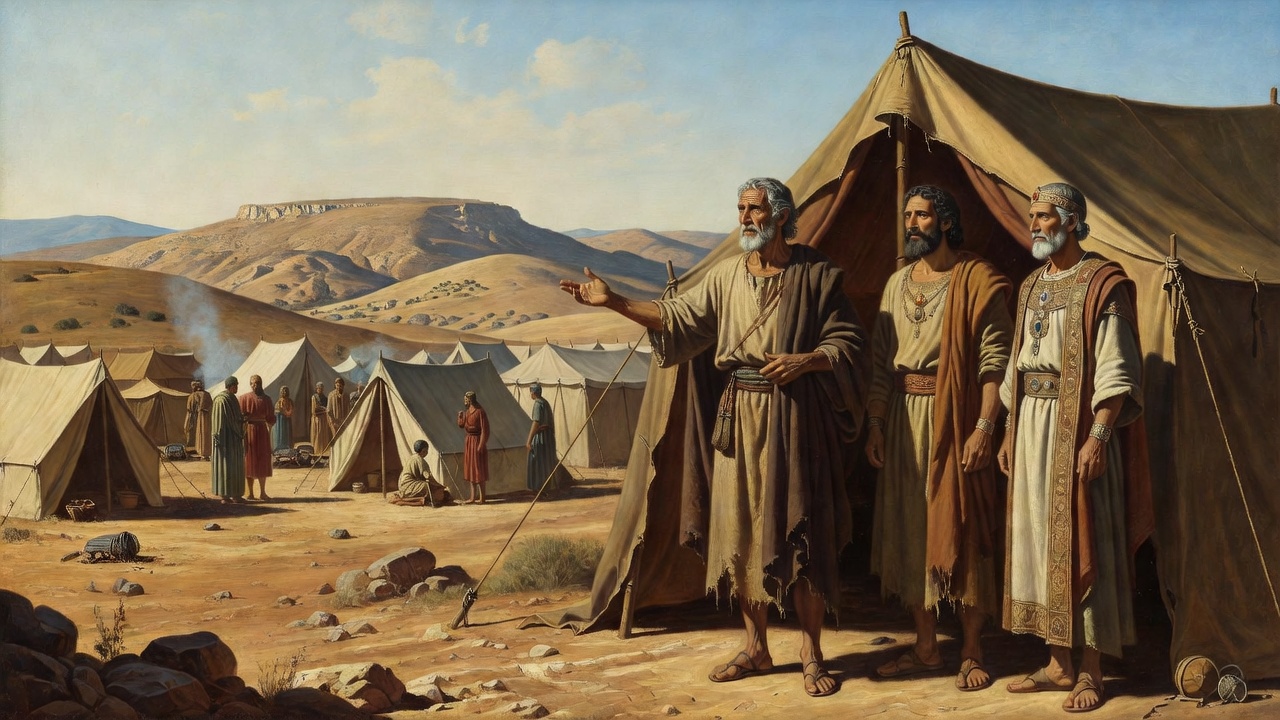
6Lon eu rän ekoch re Juta ra feito ren Josua lon Kilkal. Iwe, eman me leir itan Kalep nöün Jefune we mwän, ewe re Kenis, a üreni Josua, “En ka silei mine ewe Samol mi Lapalap a üreni Moses ewe aramasen Kot me lon Kates-parnea usun en me ngang.
7Ngang üa ierini faik lupwen Moses nöün ewe Samol mi Lapalap we chon angang a tinieila seni Kates-parnea pwe üpwe operi ewe fanü. Iwe, üa uwato ren eu pworaus usun mefien lelukei. 8Nge pwii kewe mi etiei le feila ra akisikisala leluken ekewe aramas. Nge ngang üa fokun apwönüetä letipen ewe Samol mi Lapalap ai we Kot. 9Iwe, lon ewe ränin Moses a pwon fän akapel ngeniei o apasa, ‘Ellet, ewe fanü ka fen ipwetiu won epwe fanüom me noum kana tori feilfeilachök, pokiten ka apwönüetä letipen ewe Samol mi Lapalap ai we Kot.’ 10Nengeni, iei ewe Samol mi Lapalap a amanauaei usun a apasa. Iei a faik me limu ier seni ewe fansoun ewe Samol mi Lapalap a eäni ei kapas ngeni Moses, lupwen chon Israel ra fetalfeil lon ewe fanüapö. Ikenai üa ierini walik me limu. 11Ngang üa chüen pöchökül tori ikenai, usun pöchökülei lon ewe fansoun Moses a tinieila. Ikenai üa chüen pöchökül le feila maun usun chök lepöchökülei me lom. 12Iei mine kopwe ngeniei ewe fanü mi chukuchukutä, ewe Samol mi Lapalap a fen pwon ngeniei lon ewe ränin. Ka pwal rong lon ewe fansoun pwe ekewe mwirimwirin Anak ra nom ikenan, nge ar kewe telinimw ra watte o pöchökül tittir. Eli ewe Samol mi Lapalap epwe etiei pwe üpwe asürela, usun a fen apasa.”
13Iwe, Josua a afeiöchü Kalep. A ngeni Kalep nöün Jefune we mwän ewe telinimw Hepron pwe epwe telinimweni. 14Iei mine ekewe mwirimwirin Kalep nöün Jefune we mwän, ewe re Kenis, ra telinimweni Hepron tori ikenai, pun Kalep a fokun apwönüetä letipen ewe Samol mi Lapalap ewe Koten Israel. 15Iwe, iten Hepron me lom telinimwen Arpa. Nge Arpa eman mwän mi iteföüla me lein mwirimwirin Anak. Iwe, ewe fanü a kinamwe, pun esap chüen wor maun.
Did you know?
Caleb's Inheritance and the Division of Canaan
- The distribution of land west of the Jordan was led by the high priest Eleazar, Joshua, and tribal heads using lots for nine and a half tribes. The tribe of Levi received no territorial territory, receiving only cities with pasturelands, while Joseph's sons, Ephraim and Manasseh, formed two distinct tribal inheritances.Sources: the Bible text itself · Eleazar · Joseph (son of Jacob)
- At eighty-five years of age, Caleb approached Joshua at the camp in Gilgal to request the fortified hill country of Hebron, recalling the promise Moses made forty-five years earlier at Kadesh-barnea. The city of Hebron was previously known as Kiriath-arba, named after Arba, the greatest man among the Anakim.Sources: the Bible text itself · Caleb · Hebron · Kadesh-barnea
Notes written with AI assistance from open sources (Theographic Bible Metadata, CC BY-SA 4.0; Easton’s Bible Dictionary, public domain) and reviewed before publishing.
Places in this chapter
- Canaan · 32.767, 35.333 · verses 1, 7, 9
- Jordan · Today: Jordan River · 31.761, 35.558 · verse 3
- Hebron · Today: Tel Rumeida · 31.525, 35.102 · verses 13, 14, 15
Only places identified with high confidence are shown (90% or more according to the scholarly sources compiled by OpenBible). Period map: DARE (Digital Atlas of the Roman Empire), CC BY 4.0; modern map: © OpenStreetMap contributors; places: OpenBible.info (CC BY 4.0).
Credits and license for this translation
Paipel
The Holy Bible in the Chuukese language of the Federated States of Micronesia
copyright © 1984, 1989, 1991, 2001 Liebenzel Mission
Language: Chuukese
Translation by: Liebenzell Mission
Old Testament © 1989, 2001 Liebenzel Mission
New Testament © 1984, 1991 Liebenzel Mission
This translation is made available to you under the terms of the
Creative Commons Attribution-No Derivatives license 4.0.
You may share and redistribute this Bible translation or extracts from it in any format, provided that:
You include the above copyright and source information.
You do not make any derivative works that change any of the actual words or punctuation of the Scriptures.
Pictures included with Scriptures and other documents on this site are licensed just for use with those Scriptures and documents.
For other uses, please contact the respective copyright owners.
2024-01-24
Source: http://ebible.org/chk/ · eBible.org