Joshua 1
Paipel · Tap a verse to see its cross-references.
About this book
About Joshua
- Easton's Bible Dictionary (1897) explains Joshua's name as "Jehovah is his help" or "Jehovah the Saviour." He was the son of Nun, of the tribe of Ephraim, born in Egypt, and Moses' successor as leader of Israel; the wars of conquest he carried on are recorded in the book that bears his name. That entry does not name the book's author or give a date for its writing.Sources: Easton: Joshua · Joshua
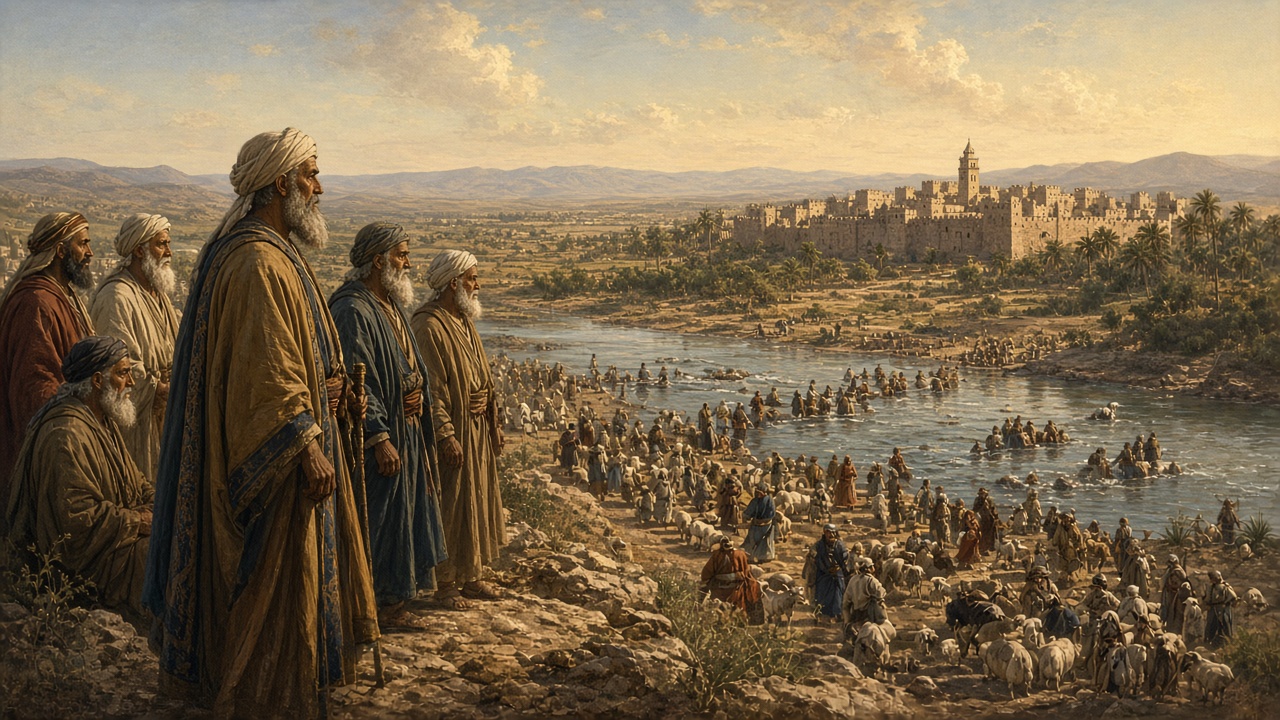
- When Joshua took command, the people were encamped at Shittim. They crossed the Jordan and camped at Gilgal, where, Easton says, he circumcised the people and kept the Passover. Jericho, a fortified city among palm trees about five miles west of the Jordan, is described as Canaan's strongest fortress and the key to western Palestine; Ai, east of Bethel, was the second Canaanite city taken, after an initial defeat.Sources: Easton: Joshua · Jericho · Ai
- Easton's Bible Dictionary (1897) says Joshua conquered six nations and thirty-one kings, then divided the land among the tribes, with Timnath-serah in Mount Ephraim assigned to himself. East of the Jordan, Gilead is described as a mountainous region held by the tribes of Gad and Reuben and the southern part of Manasseh.Sources: Easton: Joshua · Gilead
- Quoting Edersheim, the dictionary says Joshua's name was changed from Oshea, "help," to Jehoshua, "Jehovah is help," and notes that he is called Jesus in Acts 7:45 and Hebrews 4:8. It states that he died at the age of one hundred and ten, twenty-five years after crossing the Jordan, and was buried in his own city of Timnath-serah; of his father Nun, nothing more is recorded than that he was Joshua's father.Sources: Easton: Joshua · Joshua · Nun
- Before leading the conquest, Joshua commanded Israel's host against the Amalekites at Rephidim, served as Moses' minister, and was one of twelve sent to explore Canaan; only he and Caleb brought back an encouraging report. As Easton sketches the book, it runs from the crossing of the Jordan and the taking of Jericho through years of war to the division of the land and Joshua's last address.Sources: Easton: Joshua
Notes written with AI assistance from open sources (Theographic Bible Metadata, CC BY-SA 4.0; Easton’s Bible Dictionary, public domain) and reviewed before publishing.
Chon Israel ra amolätä ar repwe maun ngeni chon Kanaan
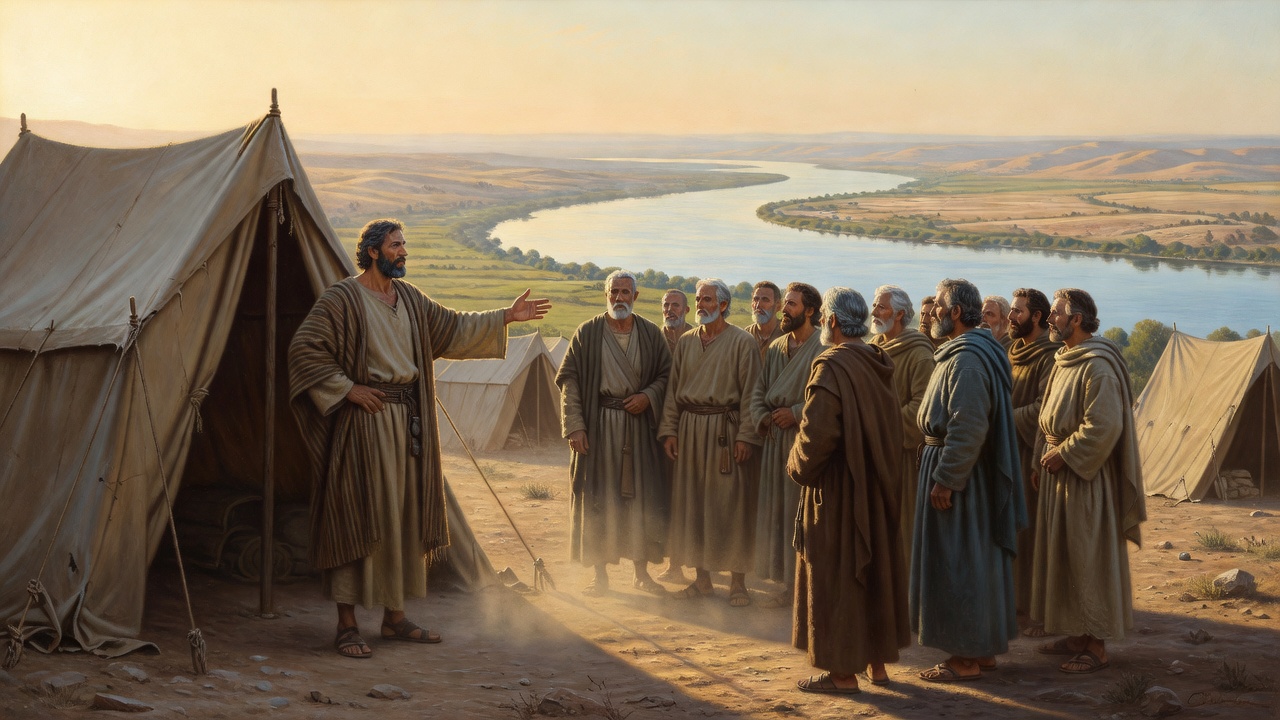
1Iwe, mürin än Moses nöün ewe Samol mi Lapalap chon angang mäla, ewe Samol mi Lapalap a üreni Josua nöün Nun we mwän, ätewe mi angang ngeni Moses, 2“Nei chon angang Moses a mäla. Iei mine kopwe ütä iei o feila pekilan ei chanpupu Jortan, ämi me ekei aramas meinisin, pwe oupwe feila lon ewe fanü üpwe ngeni ekewe aramasen Israel. 3Ekewe leni meinisin ia oupwe ipwelong ie üa ngenikemi, usun üa fen pwon ngeni Moses. 4Kiän fanüemi epwe seni ewe fanüapö mi nom ör tori ewe chuk Lepanon mi nom efeng, seni ewe chanpupu watte itan Oifrat mi nom ötiu, unusen ewe fanüen chon Hit tori ewe matau watte mi nom lotou. 5Esap wor eman epwe tongeni ü ngonuk lon ränin manauom meinisin. Usun üa eti Moses, iei usun üpwe pwal etuk. Üsap tümwününgau ngonuk, üsap pwal likituk. 6Kopwe apöchökülok o tipepwora. Pun en kopwe afanüa ekei aramas ngeni ewe fanü üa pwon fän akapel ngeni ar kewe lewo pwe üpwe ngeniir. 7Kopwe chök apöchökülok o tipepwora, kopwe pwal tümwünüöchü om kopwe apwönüetä ekewe allük meinisin Moses nei we chon angang a allük ngonuk. Kosap fokun aleasolap ngeniir, pwe kopwe fefeitä lon meinisin mine kopwe föri. 8Kosap ükütiu le apworausa masouen ei puken allük, kopwe ekieki usun lerän me lepwin, pwe kopwe tümwünüöchü om kopwe apwönüetä meinisin mine a mak lon. Mürin kopwe feiöch o fefeitä lon meinisin mine kopwe föri. 9Ifa usun, üsap allük ngonuk pwe kopwe apöchökülok o tipepwora? Kosap niuokus, kosap pwal rükö, pun ngang ewe Samol mi Lapalap om Kot üpwe etuk ekis meinisin ia kopwe feila ie.”
10Mürin Josua a allük ngeni ekewe meilapen ekewe aramas, 11pwe repwe pwerefetal lemenen ewe leni ia ekewe aramas ra nonom ie, o allük ngeniir, “Oupwe amolätä amötümi. Pun mürin ülüngat rän oupwe pwerela pekilan ewe chanpupu Jortan o pwerelong lon ewe fanü ewe Samol mi Lapalap a ngenikemi pwe oupwe fanüeni.”
12Nge Josua a üreni chon ekewe ainangen Rupen me Kat pwal esopun ewe ainangen Manasa, 13“Oupwe chechemeni ekewe kapas Moses nöün ewe Samol mi Lapalap we chon angang a ürenikemi, pwe ewe Samol mi Lapalap ämi we Kot epwe amolätä eu lenien asösö fän itemi o ngenikemi ei fanü. 14Pwülüemi, nöümi semirit me nöümi pwiin man repwe chök nonom lon ei fanü Moses a ngenikemi ötiuen ewe chanpupu Jortan. Nge ekewe sounfiu meinisin me leimi repwe akomwola mwen pwimi fän pisekin maun o alisiir, 15tori ewe Samol mi Lapalap epwe asösöü pwimi usun chök ämi. Iwe, repwe fanüeni ewe fanü ewe Samol mi Lapalap ämi we Kot a ngeniir. Mürin oupwe liwiniti ewe fanü pwe oupwe fanüeni, ewe fanü Moses nöün ewe Samol mi Lapalap we chon angang a fen ngenikemi me ötiuen ewe chanpupu Jortan.” 16Iwe, ra üreni Josua, “Meinisin mine ka allük ngenikem aipwe föri, nge ia ka tinikeemila ie aipwe feila. 17Äm aipwe aleasochisiik usun chök äm aia aleasochisi Moses lon mettoch meinisin. Eu chök, amwo ewe Samol mi Lapalap epwe etuk usun an eti Moses. 18Nge iö a ü ngeni om allük o aleasolap ngeni alom, ese lifilifil met ka allük ngeni, ätewe epwe ninnila. Kopwe chök apöchökülok o tipepwora.”
Did you know?
Joshua Assumes Leadership
- Joshua, the son of Nun from the tribe of Ephraim, served as Moses' assistant and military commander before being commissioned to succeed him as leader of Israel. His name means "Jehovah is his help" or "Jehovah the Saviour."Sources: Joshua · the Bible text itself
- The territory outlined in God's commission to Joshua stretches from the southern wilderness and the Lebanon mountain range in the north to the Euphrates (called "the great river") in the east and the Mediterranean ("the Great Sea") to the west.Sources: the Bible text itself · Lebanon · Euphrates · Great Sea
- The tribes of Reuben, Gad, and the half-tribe of Manasseh had already received territory east of the Jordan River under Moses. However, their armed warriors were required to cross over ahead of the other tribes to assist them until the entire land was secured.Sources: the Bible text itself · Manasseh (son of Joseph)
Notes written with AI assistance from open sources (Theographic Bible Metadata, CC BY-SA 4.0; Easton’s Bible Dictionary, public domain) and reviewed before publishing.
Places in this chapter
- Jordan · Today: Jordan River · 31.761, 35.558 · verses 2, 11, 14, 15
- Euphrates · Today: Euphrates River · 31.004, 47.442 · verse 4
- Great Sea · Today: Mediterranean Sea · 31.805, 34.170 · verse 4
- Lebanon · 33.540, 35.584 · verse 4
- Negeb · 31.245, 34.841 · verse 4
- Syria · Today: Aram · 33.511, 36.306 · verse 4
Only places identified with high confidence are shown (90% or more according to the scholarly sources compiled by OpenBible). Period map: DARE (Digital Atlas of the Roman Empire), CC BY 4.0; modern map: © OpenStreetMap contributors; places: OpenBible.info (CC BY 4.0).
Credits and license for this translation
Paipel
The Holy Bible in the Chuukese language of the Federated States of Micronesia
copyright © 1984, 1989, 1991, 2001 Liebenzel Mission
Language: Chuukese
Translation by: Liebenzell Mission
Old Testament © 1989, 2001 Liebenzel Mission
New Testament © 1984, 1991 Liebenzel Mission
This translation is made available to you under the terms of the
Creative Commons Attribution-No Derivatives license 4.0.
You may share and redistribute this Bible translation or extracts from it in any format, provided that:
You include the above copyright and source information.
You do not make any derivative works that change any of the actual words or punctuation of the Scriptures.
Pictures included with Scriptures and other documents on this site are licensed just for use with those Scriptures and documents.
For other uses, please contact the respective copyright owners.
2024-01-24
Source: http://ebible.org/chk/ · eBible.org