Job 8
Paipel · Tap a verse to see its cross-references.
Piltat a alleta än Kot pwüng
1Mürin, Piltat ewe re Su a pälüeni Hiop,
2“Ifa ükükün fansoun om kopwe eäni ekei sokun kapas?
Om kewe kapas ra wewe ngeni asepwäl watte.
3Ifa usun, Kot a atoka pwüngün kapwüng?
Ifa usun, Ewe mi Unusen Manaman a atoka pwüngüöch?
4Are noum kana ra tipis ngeni Kot,
i a asechirelong fän liwinin tipisin ar pupungau.
5Nge are kopwe kütta Kot o tüngor chenum seni Ewe mi Unusen Manaman,
6are ka limöch o wenechar lon manauom, ellet,
i epwe tümwünüöchuk
o ngenisefäliik wesewesen leniom pwe liwinum.
7Inamwo ika om feiöch a kükün me lepoputan,
nge lesopolan epwe fokun watte.
8Üa tüngor ngonuk pwe kopwe ais me ren ekewe täppin aramasen lom
o ekieki usun mine semelaper kewe ra kaiö,
9pun kich sia aramasen näneu chök, sisap silei och,
nge ränin manauach won fanüfan ra usun chök eu nür.
10Ifa usun, resap öüröürok
o pwäri ngonuk ar kewe kapasen tipachem seni lon leluker?
11Ifa usun, ekewe chia ra tongeni mär anaie esap wor pwakak ie?
Ifa usun, ekewe wowo ra tongeni mär anaie esap wor koluk ie?
12Lupwen ra chüen fasar, nge resamwo pöküpök,
ra müttir aiolol mwen ekewe fetil, are esap wor koluk.
13Iei usun mine epwe fis ngeni chokewe meinisin mi manlükala Kot.
Än eman chon pwüngingau apilükülük epwe morola.
14An apilükülük epwe tala, nge mine a anomu an apilükülük won
epwe wewe ngeni eu türün ninnä.
15A ünnü ngeni an türün ninnä, nge esap nükünük,
a kamwöchüla won, nge esap mwöch.
16A wewe ngeni fetil mi märöch fän tinen akkar
o pwüküfetal lon ewe tanipi.
17Waran ra fittitä won eu ioien fau
o amwöchü iteiten eföü me eföü fau.
18Nge are a wiitä seni lenian,
mürin esap wor eman epwe silei pwe a nom lon ewe leni.
19Ellet, iei müchülan manauen eman chon pwüngingau.
Nge ekoch aramas repwe feito o siwili lon lenian.
20Ellet, Kot esap pöütala eman aramas mi pwüng,
ika alisi eman chon föföringau.
21Kot epwe apwapwook pwe kopwe mweireir fän pwapwa.
22Nge chokewe mi oputok repwe fokun säw
o imwen ekewe aramasangau resap chüen nom.”
Did you know?
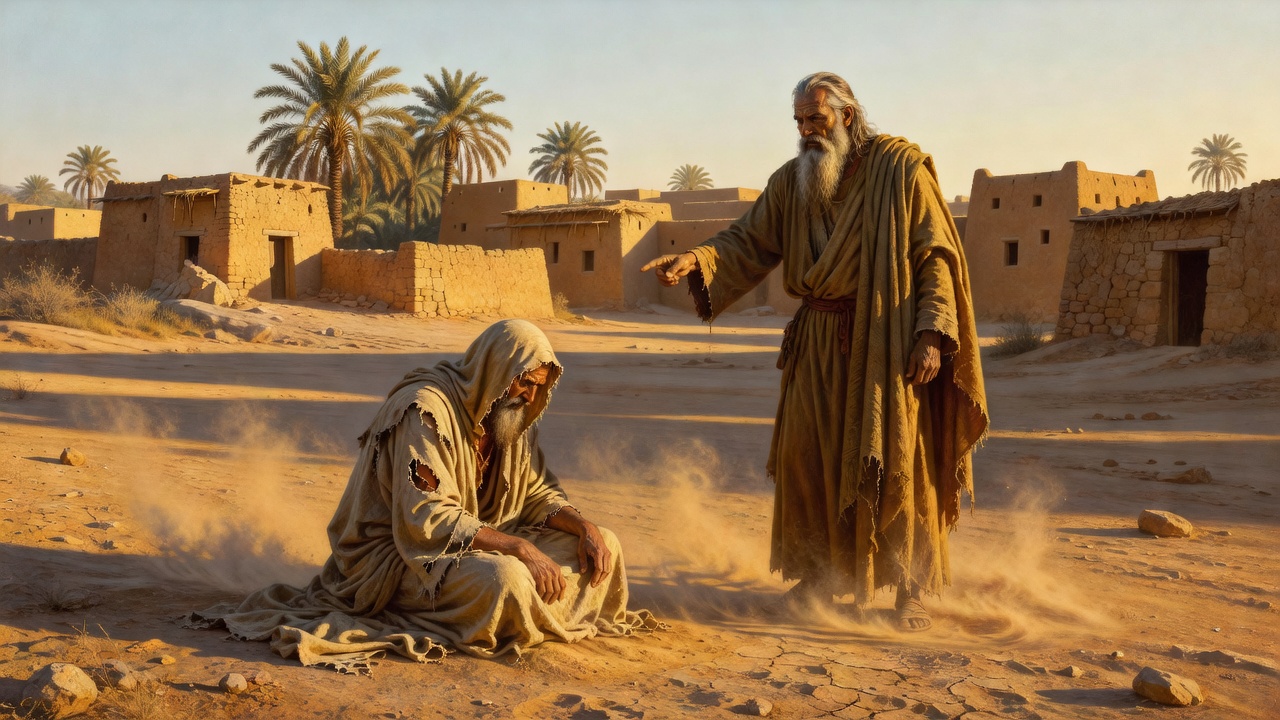
Bildad’s Appeal to Ancient Wisdom
- Bildad is identified as a Shuhite, which likely associates him with Shuah, an Arabian region settled by the descendants of Abraham and Keturah. In this chapter, he delivers the first of his three stern speeches to Job, maintaining that divine justice is absolute and unwavering.Sources: Bildad · the Bible text itself
- Rather than relying on personal experience, Bildad appeals to the accumulated knowledge of ancestral generations, describing human life as brief as a shadow. To argue that the wicked inevitably fall, he uses natural metaphors of marsh reeds withering without water and the fragility of a spider's web.Sources: the Bible text itself
Notes written with AI assistance from open sources (Theographic Bible Metadata, CC BY-SA 4.0; Easton’s Bible Dictionary, public domain) and reviewed before publishing.
Credits and license for this translation
Paipel
The Holy Bible in the Chuukese language of the Federated States of Micronesia
copyright © 1984, 1989, 1991, 2001 Liebenzel Mission
Language: Chuukese
Translation by: Liebenzell Mission
Old Testament © 1989, 2001 Liebenzel Mission
New Testament © 1984, 1991 Liebenzel Mission
This translation is made available to you under the terms of the
Creative Commons Attribution-No Derivatives license 4.0.
You may share and redistribute this Bible translation or extracts from it in any format, provided that:
You include the above copyright and source information.
You do not make any derivative works that change any of the actual words or punctuation of the Scriptures.
Pictures included with Scriptures and other documents on this site are licensed just for use with those Scriptures and documents.
For other uses, please contact the respective copyright owners.
2024-01-24
Source: http://ebible.org/chk/ · eBible.org