Job 6
Paipel · Tap a verse to see its cross-references.
Hiop a apwüngü chiechian kewe
1Mürin, Hiop a pälüeni,
2“Ika ai kewe riaföü repwe kilo, nge ai kewe feiengau meinisin repwe aükük,
3ellet repwe fokun chou seni pien aroset.
Iei mine ai kewe kapas ra pöchökül.
4Pun wokun Ewe mi Unusen Manaman föün esefich ra fotolong loi,
nge poisonur a tolong leuti.
Än Kot eniweniw ra tettelila mwei usun eu telin sounfiu, pwe repwe fiu ngeniei.
5Ifa usun, eman aas mi mwacho a wörüwör lupwen a mongö fetil,
ika eman ätemwänin kow a wörüwör lupwen a wor anan?
6Nge ifa usun, aramas ra tongeni mongö mine a nepatapat, nge esap wor salt lon?
Ifa usun, ewe pwechen lon eföü sokuul a anö?
7Üsap fokun mochen mongö ena sokun mongö,
pun a kuuto woi.
8Amwo Kot epwe ngeniei mine üa tüngor,
epwe mwütätä mine üa apilükülükü.
9Amwo Kot epwe niei, amwo epwe aitiewu pöün o ärieila.
10Ei epwe afisätä ai chip,
üpwe pwal mwetemwet fän pwapwa,
inamwo ika a watte ai cheuch,
pun üsap amamäsini än Ewe mi Pin kewe kapas.
11Met sokun pöchökül üa eäni pwe epwe wor ai apilükülük?
Met sopolan manauei pwe üpwe mosonotam?
12Ifa usun, ai pöchökül a usun chök pöchökülen ekewe fau, ika inisi a usun chök piras?
13Ellet, esap fokun wor ai tufich,
mine üa apilükülüküni a sü seniei.
14Eman mi apilükingau chienan kewe repwe kirikiröch ngeni,
inamwo ika a likitala an niueiti Ewe mi Unusen Manaman.
15Nge chiechiei kewe ra alichipüngüei usun chök ekewe öüwö mi pumong,
ra morola, lupwen esap püng üt,
16usun chök ekewe öüwö mi urela ren ais me sno,
17nge lupwen fansoun pwichikar ra pwasala
o morola me lon lenier.
18Ekewe chon sai ir chon amömö ra malechela seni aler,
lupwen ra kütta ünümer koluk, ra pwerelong lon fanüapö o mäla.
19Ekewe chon sai ir chon amömö seni Tema me Sepa ra kütta ekewe öüwö mi pumong,
20nge lupwen ra tori ekewe öüwö, ra lichipüng o apilükingau.
Ra apilüköch pwe repwe künökün koluk, nge esap wor.
21Iei usumi ngeniei.
Oua küna ai feiengau o niuokus ren.
22Ifa usun, üa tüngor ngenikemi pwe oupwe ngeniei eu lifang,
ika oupwe fangala ngeni eman och seni wöümi, pwe eu lifangen amichimich fän itei?
23Ifa usun, üa pwal tüngor ngenikemi pwe oupwe angasaeila seni ekewe chon oputaei,
ika mönisefäliei seni ekewe chon mwänewüs?
24Oupwe asukuulaei, nge ngang üpwe fanafanala o aüseling,
oupwe aiti ngeniei mine üa mwäl won.
25Kapas wenechar a fokun manaman.
Nge met ämi kapasen apwüng ra mochen alletä?
26Ifa usun, oua ekiekin apwüngü mine üa apasa?
Oua ekieki pwe alon eman mi apilükülükingau a usun chök asepwäl?
27Ämi oua fen tongeni üttüt won eman mi mäsen,
iö epwe nöüni amanau, o amömöla chiechiemi.
28Nge iei ouse mochen oupwe nenengeniei, pun ngang üsap chofana ngenikemi.
29Üa tüngor ngenikemi pwe oupwe ekieksefäl, ousap föri och mi pwüngingau.
Oupwe ekieksefäl iei chök, pwe epwe pwä pwe ngang üa pwüng.
30Ifa usun, üa eäni kapas esepwüng,
ika üsap sile alefila lefilen pwüng me pwüngingau?”
Did you know?
Job's Anguish and Unreliable Friends
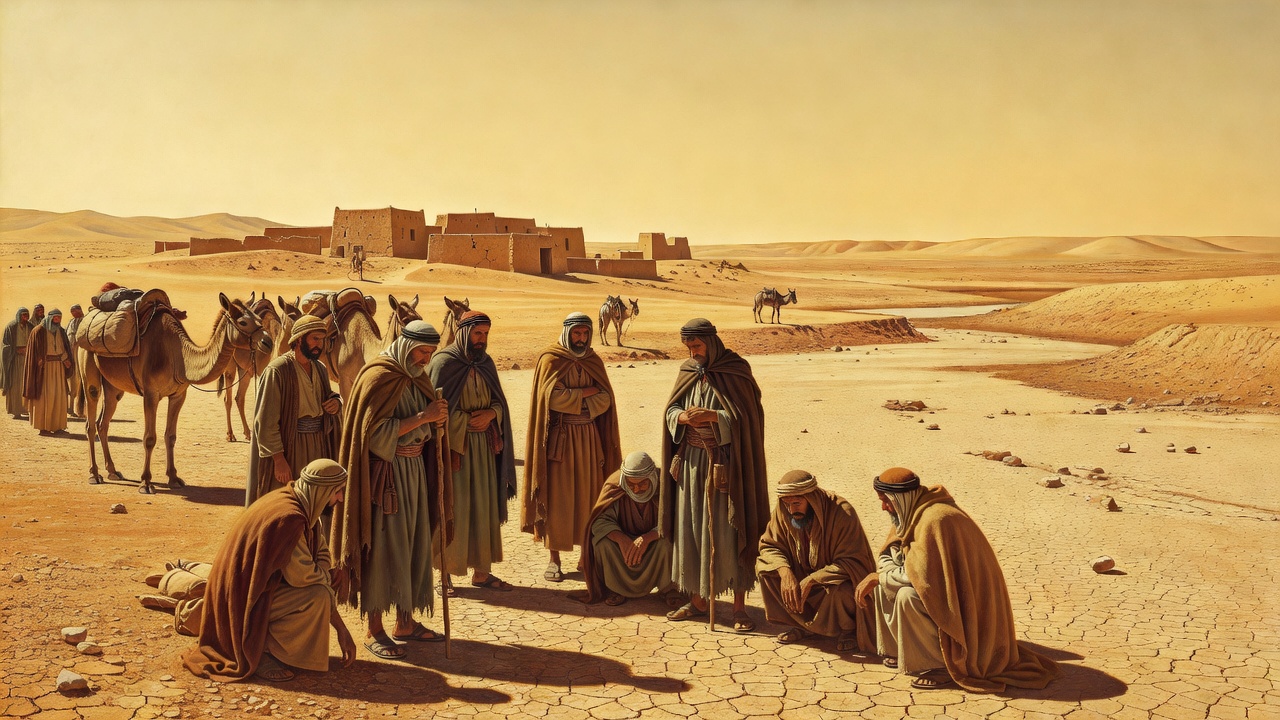
- Job compares his unsupportive companions to seasonal desert streams that overflow with melted ice and snow during cold weather, but completely vanish during the heat of the dry season when water is needed most.Sources: the Bible text itself
- The passage references merchant caravans from Tema in northern Arabia and travelers from Sheba in southern Arabia. Job describes these desert traders searching hopefully for water in seasonal streambeds, only to suffer bitter disappointment when the channels are dry.Sources: the Bible text itself · Tema · Sheba
Notes written with AI assistance from open sources (Theographic Bible Metadata, CC BY-SA 4.0; Easton’s Bible Dictionary, public domain) and reviewed before publishing.
Places in this chapter
Only places identified with high confidence are shown (90% or more according to the scholarly sources compiled by OpenBible). Period map: DARE (Digital Atlas of the Roman Empire), CC BY 4.0; modern map: © OpenStreetMap contributors; places: OpenBible.info (CC BY 4.0).
Credits and license for this translation
Paipel
The Holy Bible in the Chuukese language of the Federated States of Micronesia
copyright © 1984, 1989, 1991, 2001 Liebenzel Mission
Language: Chuukese
Translation by: Liebenzell Mission
Old Testament © 1989, 2001 Liebenzel Mission
New Testament © 1984, 1991 Liebenzel Mission
This translation is made available to you under the terms of the
Creative Commons Attribution-No Derivatives license 4.0.
You may share and redistribute this Bible translation or extracts from it in any format, provided that:
You include the above copyright and source information.
You do not make any derivative works that change any of the actual words or punctuation of the Scriptures.
Pictures included with Scriptures and other documents on this site are licensed just for use with those Scriptures and documents.
For other uses, please contact the respective copyright owners.
2024-01-24
Source: http://ebible.org/chk/ · eBible.org