Job 21
Paipel · Tap a verse to see its cross-references.
Hiop a apwüngü pwe ekewe aramasangau ra feiöch
1Mürin, Hiop a üreni chiechian kewe,
2“Oupwe aüselingafichi ai kei kapas.
Ren ei oupwe achipaei.
3Oupwe mwüt ngeniei pwe üpwe kapas.
Nge wesin ai kapas oua tongeni sopwela le turunufaseei.
4Ifa usun, üa siö ngeni aramas?
Pwota üpwe chök engila?
5Oupwe nenengeniei o mairü,
oupwe pwölüela awemi ren pöümi.
6Lupwen üa ekieki usun mine a fis ngeniei,
üa rükö, chechech a toriei.
7Pwota ekewe aramasangau ra manau o tori chinlap,
nge ar nemenem a wattela?
8Nöür kewe me nöün nöür kewe ra nonomöch me fän meser.
9A wor kinamwe lon imwer kewe, nge esap wor niuokus lor.
Kot esap awarato wor feiengau.
10Nöür ätemwänin kow ra tufichin apwopwofochofoch,
nöür kewe kow ra nöünöütiu, nge esap mwetela nöür.
11Ra tinawu nöür semirit pwe repwe urumwotfeil usun chök epwi pwin sip.
12Ra köl fiti pisekin kaktai me ükülele,
ra mweireir ren tikin aangün.
13Ra pisekisek lon ränin manauer meinisin,
ra mäla o feitiu lon ewe lenien sotup fän kinamwe.
14Ra üreni Kot, ‘Kopwe feila senikem.
Äm aisap mochen silei letipom fän iten manauem.
15Iö Ewe mi Unusen Manaman pwe sipwe angang ngeni?
Met feiöchüch are sia iotek ngeni?’
16Nge ar feiöch esap nom lon püsin pöür.
Iei mine ngang üpwe atoauala seniei än ekewe aramasangau öüröür.
17Ifa usun, fän fitu a fis pwe än ekewe aramasangau lamp a kunula?
Ifa usun, fän fitu a toriir feiengau?
Ifa usun, Kot a apwüngüür lon an song?
18Ifa usun, ra wewe ngeni fetilipwas mi ässila ren asepwäl,
ika ngeni ekewe pön wiich mi ässila ren mölümöl?
19Ämi oua apasa, ‘Kot a anomu liwinin tipisin eman aramas won nöün kana.’
Apwi, epwe ngeni püsin liwinin an föför,
pwe epwe silei pwe iei liwinin an tipis.
20Eman chon tipsis epwe püsin küna an feiengau,
epwe püsin ün seni ewe kapen lingeringer än Ewe mi Unusen Manaman.
21Ifa usun, epwe ekieki usun chon leimwan mi manau me mürin,
lupwen manauan a wesila?
22Ifa usun, mi wor eman epwe tongeni aiti ngeni Kot silelap,
ngeni ewe Kot mi apwüngü chokewe mi nom pekitä lon läng?
23Eman a mäla lon an fokun pöchökül,
a fokun kinamwe o nonomöch.
24Inisin a fokun kitinup,
nge minen lon chün esap pwasapwas.
25Nge pwal eman a mäla fän weiresin letipan,
esap fokun küna feiöch.
26Ir me ruoman repwe konopök fän pwül,
nge moso repwe pwölürela.
27Üa fokun silei ämi ekiekingau,
pwe oua ekiekin föri ngeniei mine esepwüng.
28Pun oua ais, ‘Ia a nom ie imwen ewe samol?
Ia a nom ie imwen ekewe aramasangau?’
29Ifa usun, ousap aisini mwo ekewe chon sai?
Ifa usun, ousap aüseling ngeni mine ra apworausa,
30pwe ewe aramasangau esap feiengau lon ewe ränin feiengau,
pwe a ngasala lon ewe ränin än Kot song?
31Iö a tongeni atipisi ewe aramasangau nge newenewen ngeni?
Iö a tongeni liwini ngeni an föför?
32Lupwen ra uwei ngeni ewe lenien peias,
chon mas ra mamasa.
33Chomong aramas ra tapwela mürin,
nge chokewe mi akom mwan resap lea.
Epwe peias lon eu lemol a sani lupwen a manau.
34Pwota oua mochen achipaei ren kapas lomotongau?
Esap chüen wor och lusun ämi kapas pälüen, nge kapas chofana chök.”
Did you know?
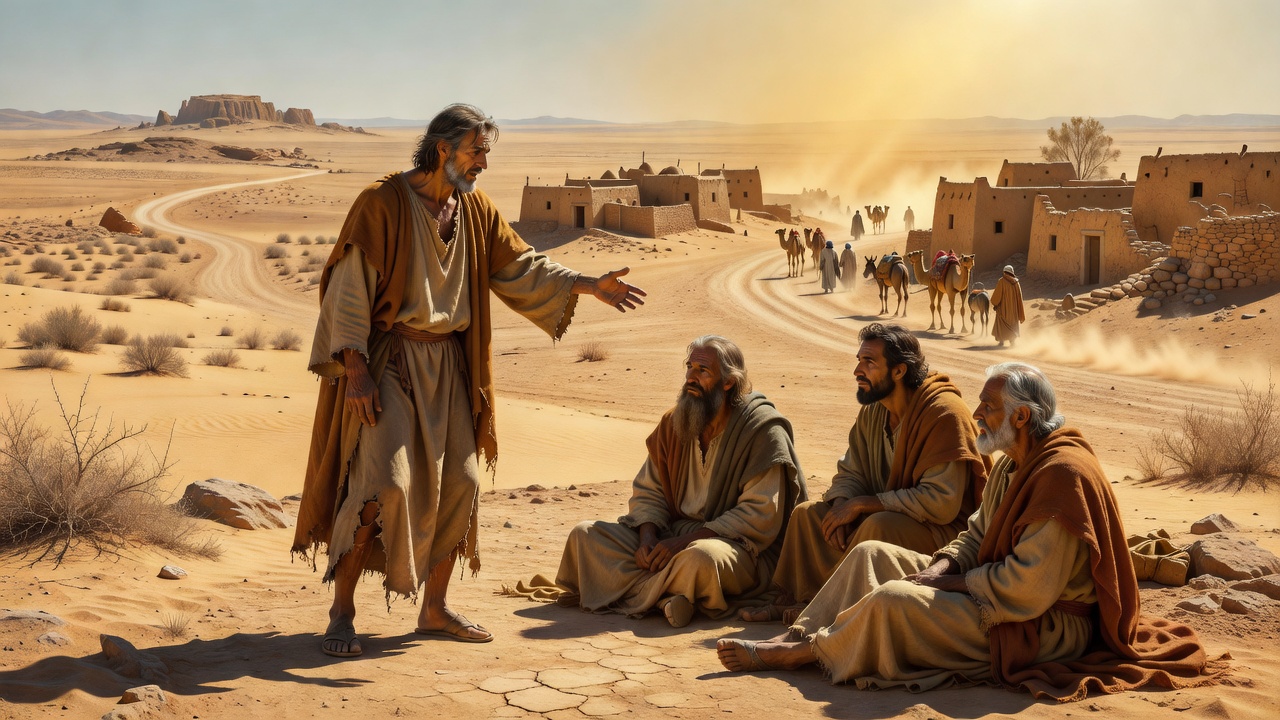
The Prosperity of the Wicked
- Job challenges his friends' belief that the wicked always suffer in this life. He points out that many ungodly people grow old, increase in power, see their children flourish to the sound of lyres and flutes, and die in peaceful ease.Sources: the Bible text itself
- Confronting the idea that God reserves punishment for a person's children, Job argues that true accountability requires wrongdoers to experience retribution personally and taste the wrath of the Almighty during their own lives.Sources: the Bible text itself
- Job urges his companions to ask road travelers about common observations. He notes that whether an individual lives in vigorous prosperity or dies in bitter poverty, both ultimately share the same earthly end when they lie down together in the dust.Sources: the Bible text itself
Notes written with AI assistance from open sources (Theographic Bible Metadata, CC BY-SA 4.0; Easton’s Bible Dictionary, public domain) and reviewed before publishing.
Credits and license for this translation
Paipel
The Holy Bible in the Chuukese language of the Federated States of Micronesia
copyright © 1984, 1989, 1991, 2001 Liebenzel Mission
Language: Chuukese
Translation by: Liebenzell Mission
Old Testament © 1989, 2001 Liebenzel Mission
New Testament © 1984, 1991 Liebenzel Mission
This translation is made available to you under the terms of the
Creative Commons Attribution-No Derivatives license 4.0.
You may share and redistribute this Bible translation or extracts from it in any format, provided that:
You include the above copyright and source information.
You do not make any derivative works that change any of the actual words or punctuation of the Scriptures.
Pictures included with Scriptures and other documents on this site are licensed just for use with those Scriptures and documents.
For other uses, please contact the respective copyright owners.
2024-01-24
Source: http://ebible.org/chk/ · eBible.org