Job 18
Paipel · Tap a verse to see its cross-references.
Piltat a afata mine epwe fis ngeni ekewe aramasangau
1Mürin, Piltat ewe re Shu a pälüeni Hiop,
2“Inet kopwe ükütiu le eäni ei sokun kapas?
Kopwe akomwen ekiek, mürin sipwe fos.
3Pwota aipwe wewe ngeni man?
Pwota äm aia tiparoch me reöm?
4Hiop, ka püsin atatakisiik lon om song.
Ifa usun, fanüfan epwe pöla pokitom,
ika ewe achau epwe mwökütüwu seni lenian?
5Ewer, än ewe aramasangau saram a kunula,
nge ngetengeten an ekkei esap ükütiu.
6Ewe saram lon imwan imw mangaku a rochopwakala,
nge an lamp mi nom asan a kunula.
7Sääpöchökülen pechen a kisikisila,
a turula ren püsin an rawangau.
8A püsin fetalelong lon eu cheew,
a ipwetä won eu lenien likatup mi wor pwang fan.
9Eu foren likapich a forei apilipilin pechen,
a fif lon eu lenien likatup.
10Efoch säl a monola lepwül fän itan,
pwal eu likapich a wor lon alan.
11Eniweniw a aniuokusu ekis meinisin
o tapweri ia a ipwela ie.
12Feiengau a echik o moneiti ewe aramasangau,
feiengau a molotä fän itan, lupwen epwe turutiu.
13Samau a enala ünüchan,
samaun mäla a enala kifetin kewe.
14A angeawu ewe aramasangau seni imwan imw mangaku ia a nom ie fän kinamwe,
o emwenala ren ewe king itan eniweniw.
15Mine a eäni me lom esap chüen nom lon imwan,
nge pirimiston a toropasfeil won lenian.
16Waran kewe mi nom fan ra mäla,
nge palan kewe ra pwasala.
17Esap chüen wor eman a chechemeni i me won ewe fanü,
esap chüen föü itan me won lenian.
18Aramas ra cheela seni saram ngeni rochopwak
o asüela seni won fanüfan.
19Esap wor nöün ika mwirimwirin me lein aramasan,
esap pwal wor eman mi chüen manau lon ewe leni ia a nom ie me lom.
20Ekewe aramas mi nom lotou me ötiu ra mairü o chechech fän niuokus,
lupwen ra rongorong usun an feiengau.
21Ellet, iei usun mine a fis ngeni ekewe chon föföringau, iei feiengauen chokewe resap silei Kot.”
Did you know?
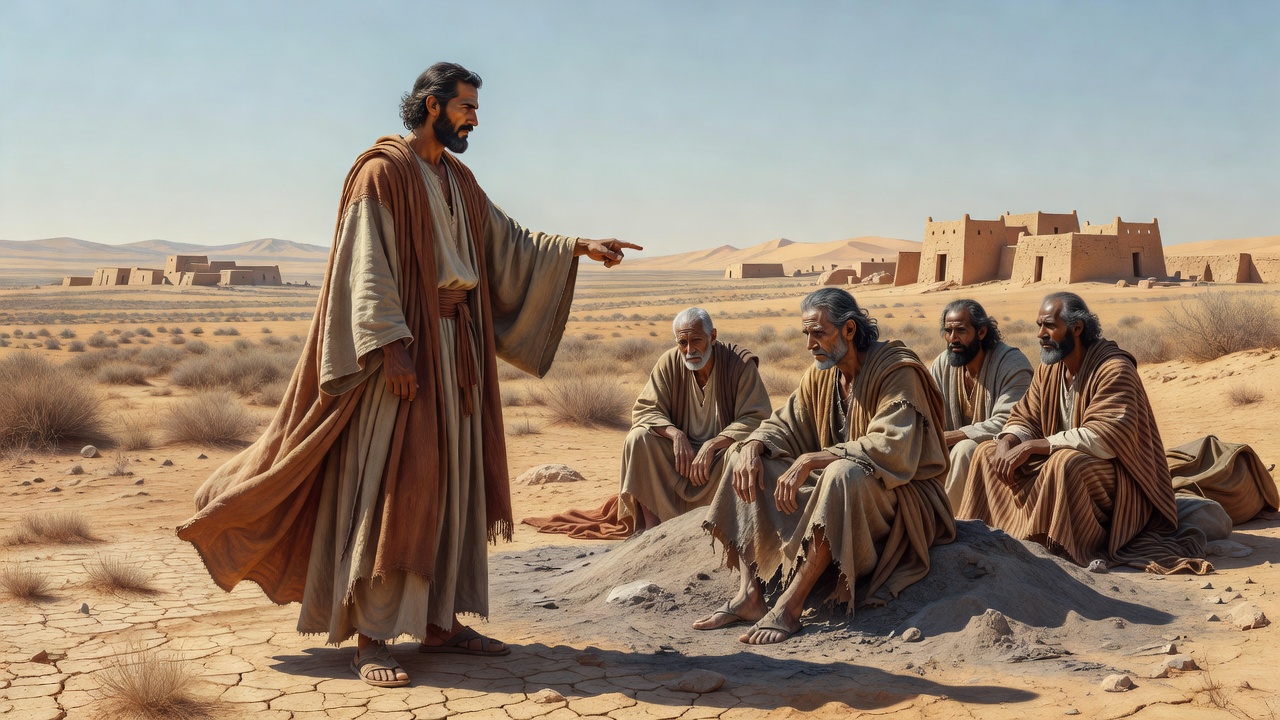
Bildad's Second Speech on the Fate of the Wicked
- Bildad is identified as a Shuhite, a designation traditionally linked to Shuah, a region in Arabia associated with the descendants of Abraham and Keturah. In this second speech to Job, Bildad maintains a stern and severe tone as he rebukes Job and insists on the certain doom of the ungodly.Sources: Bildad · the Bible text itself
- To describe the destruction awaiting the wicked, Bildad draws heavily on ancient hunting imagery. He depicts their downfall through metaphors of hidden nooses, concealed ground snares, and sweeping nets that trap the wanderer.Sources: the Bible text itself
Notes written with AI assistance from open sources (Theographic Bible Metadata, CC BY-SA 4.0; Easton’s Bible Dictionary, public domain) and reviewed before publishing.
Credits and license for this translation
Paipel
The Holy Bible in the Chuukese language of the Federated States of Micronesia
copyright © 1984, 1989, 1991, 2001 Liebenzel Mission
Language: Chuukese
Translation by: Liebenzell Mission
Old Testament © 1989, 2001 Liebenzel Mission
New Testament © 1984, 1991 Liebenzel Mission
This translation is made available to you under the terms of the
Creative Commons Attribution-No Derivatives license 4.0.
You may share and redistribute this Bible translation or extracts from it in any format, provided that:
You include the above copyright and source information.
You do not make any derivative works that change any of the actual words or punctuation of the Scriptures.
Pictures included with Scriptures and other documents on this site are licensed just for use with those Scriptures and documents.
For other uses, please contact the respective copyright owners.
2024-01-24
Source: http://ebible.org/chk/ · eBible.org