Job 15
Paipel · Tap a verse to see its cross-references.
Elifas a apwüngü Hiop
1Mürin, Elifas ewe re Teman a pälüeni Hiop,
2“Ifa usun, eman mwän mi tipachem epwe eäni kapasen pälüen mi pöön chök
o püsin aura ren asepwälin ötiu?
3Ifa usun, epwe anini won kapas esap wor lomotan,
ika won fos resap alisi eman?
4Nge en ka pinei än ekewe aramas repwe niuokusiti Kot
o apeti ar iotek ngeni.
5Pun om föföringau a pwä ren mine ka apasa,
ka filätä kapasen atuputup.
6Kapasen awom a atipisuk, sap ngang,
püsin om kapas a pwärätä pwe ka tipis.
7Ifa usun, en aemanün aramas mi uputiu?
Ika ka fen nom, lupwen Kot a föri ekewe chuk?
8Ifa usun, ka nom lon än Kot mwichen pwüngüwüng o aüselinga mine ra pwüngüpwüng won?
Ifa usun, en echök ka eäni tipachem?
9Ifa usun, met en ka silei, nge äm aisap silei?
Ifa usun, met en ka weweiti, nge esap fat ngenikem?
10Äm aia kaiö seni ekewe mwän mi pwech mökürer me ekewe chinlap,
ir ra uputiu mwen semom.
11Ifa usun, kosap menemen ren än Kot kewe kapasen achipachip,
ika ren ekewe kapas pwetete äm aia ürenuk?
12Met a kupeti lelukom? Nge pwota mesom a afochofoch ngenikem?
13Ka song ngeni Kot o tipimwäl ngeni ren ena sokun kapas?
14Ifa usun, eman aramas a tongeni limöch?
Ika eman mi uputiu seni eman fefin a tongeni pwüng?
15Ika Kot esap lükü nöün kewe mi pin,
nge ekewe läng resap limöch me fän mesan,
16epwe fen ifan eman aramas mi kon anioput o fokun ingau,
a ünümi föföringau usun an ünümi koluk?
17Hiop, kopwe aüseling mine üpwe ürenuk,
üpwe pwäri ngonuk mine üa küna.
18Üpwe ürenuk mine chon tipachem ra apworausa,
nge resap aopala och mine semelaper kewe ra aiti ngeniir.
19(Ir echök ra fanüeni ewe fanü,
nge esap wor eman chon ekis a nom lefiler.)
20Eman aramasangau mi ariaföüü aramas epwe chök riaföü fochofoch lon unusen ränin manauan.
21A rongorong sokopaten ngingi mi fokun aniuokus,
nge lon fansoun kinamwe ewe chon kata epwe feitiu won.
22Esap wor an apilüköch pwe epwe tongeni sü seni rochopwak,
a chök sousou ngeni an epwe mäla ren ketilas.
23A fetalfeil pwe epwe kütta anan mongö o ais, ‘Ia a nom ie enei mongö?’
A silei pwe ewe ränin rochopwak a arapoto.
24Riaföü me eniweniw ra aniuokusu ewe aramasangau,
ra pworaiti usun eman king mi amol ngeni maun,
25pun a aitietä pöün o pälüeni Kot,
a ü ngeni Ewe mi Unusen Manaman
26o säpuropur ngeni fän an tittin maun mi malül.
27A kinupunup won mesan o kitinup won wänükün.
28Nge epwe imweimw lon telinimw mi tala
o nom lon imw esap wor eman epwe asoi,
pun repwe wiliti ioien mettoch mi tala.
29Ätei esap nonomotam lon an pisekisek,
wöün esap nonomola,
esap pwal mwo nge chüen wor ngünüwan won fanüfan.
30Esap tongeni süla seni rochopwak.
A wewe ngeni efoch irä ekkei a kenala palan,
nge asepwäl a amorätiu sawitin.
31Amwo esap püsin atupu i ren an anomu an lükülük won mine a lomotongau.
Pun mine a lomotongau epwe ina liwinin.
32Epwe angei unusen liwinin me mwen epwe tori an fansoun.
Palan kewe resap manau.
33Epwe wewe ngeni efoch irän wain mi amorätiu föün resamwo nup,
pwal ngeni efoch irä olif mi amorätiu sawitin.
34Esap wor mwirimwirin ewe mwichen chon resap aleasochisi Kot,
imwer kewe ra aüetä ren lifangen amichimich repwe karala.
35Ir ekewe aramas mi chök ekiekietä mine esepwüng o föri föför mi ngau,
leluker a uren atuputup.”
Did you know?
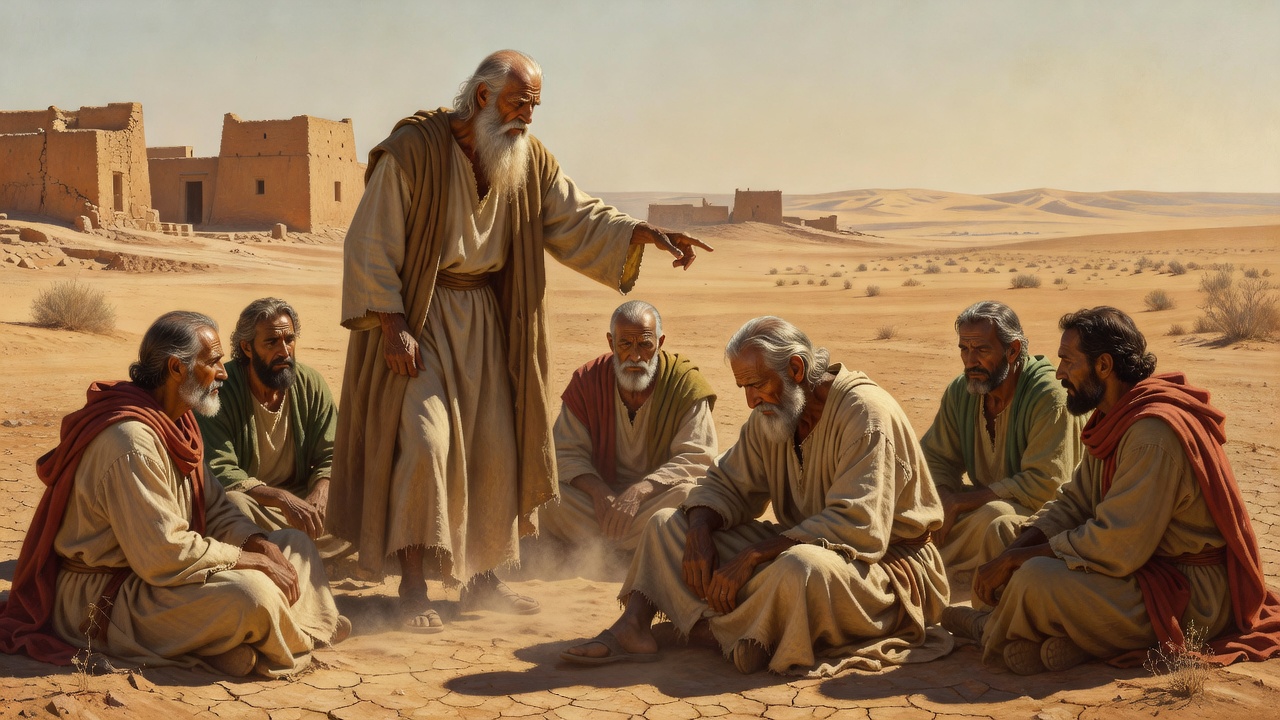
Eliphaz's Second Speech and Ancestral Wisdom
- Eliphaz accuses Job of filling his belly with the hot east wind, invoking a familiar ancient Near Eastern metaphor for the dry, scorching desert wind that blights vegetation and brings destruction instead of sustenance.Sources: the Bible text itself
- To validate his view that the wicked inevitably suffer ruin, Eliphaz appeals to the authority of ancient, gray-haired sages and traditional lore handed down from a time before foreign influences entered the land.Sources: the Bible text itself · Eliphaz
Notes written with AI assistance from open sources (Theographic Bible Metadata, CC BY-SA 4.0; Easton’s Bible Dictionary, public domain) and reviewed before publishing.
Credits and license for this translation
Paipel
The Holy Bible in the Chuukese language of the Federated States of Micronesia
copyright © 1984, 1989, 1991, 2001 Liebenzel Mission
Language: Chuukese
Translation by: Liebenzell Mission
Old Testament © 1989, 2001 Liebenzel Mission
New Testament © 1984, 1991 Liebenzel Mission
This translation is made available to you under the terms of the
Creative Commons Attribution-No Derivatives license 4.0.
You may share and redistribute this Bible translation or extracts from it in any format, provided that:
You include the above copyright and source information.
You do not make any derivative works that change any of the actual words or punctuation of the Scriptures.
Pictures included with Scriptures and other documents on this site are licensed just for use with those Scriptures and documents.
For other uses, please contact the respective copyright owners.
2024-01-24
Source: http://ebible.org/chk/ · eBible.org