John 3
Paipel · Tap a verse to see its cross-references.
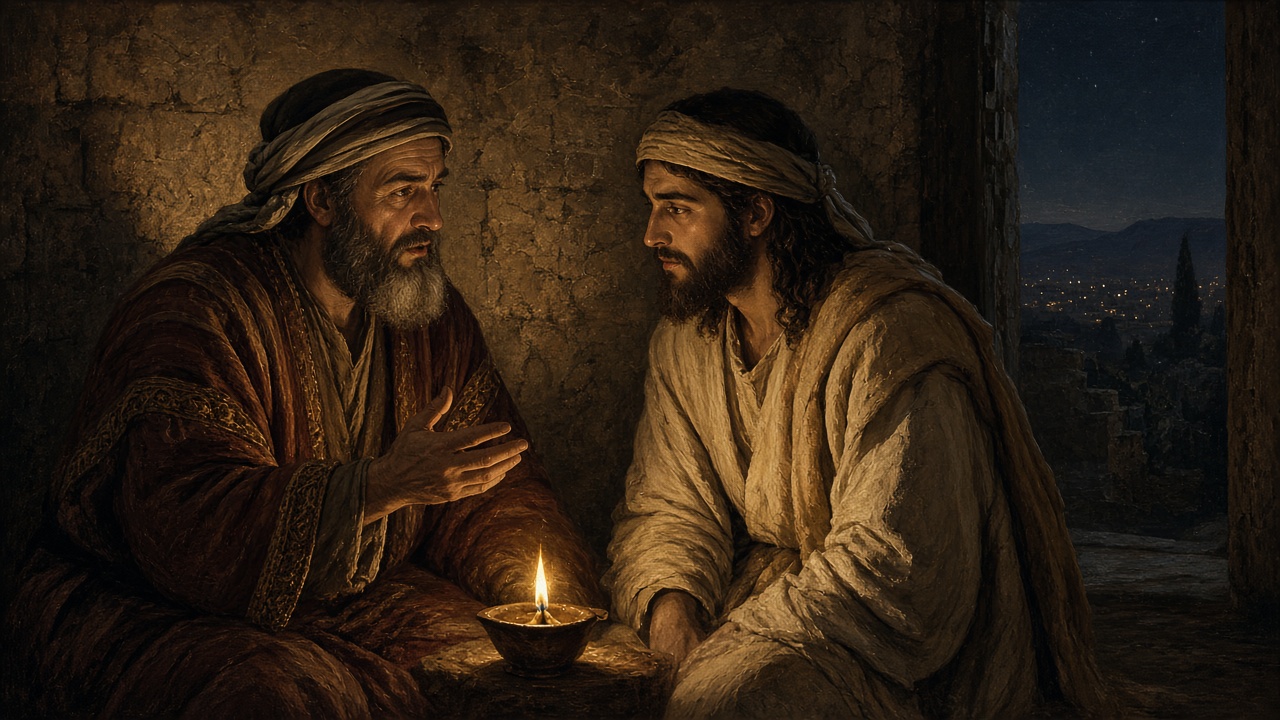
Jesus me Nikotemus
1Iwe, a wor eman mwän seni ewe mwichen Farisi itan Nikotemus, i eman me lein ekewe souemwenin ekewe chon Juta. 2Lon eu pwin ätei a feila ren Jesus o üreni, “Rabbi, äm aia silei pwe en eman sense Kot a tinato. Pun esap wor eman a tongeni föri ekei sokun manaman en ka föri are Kot esap eti.” 3Jesus a üreni, “Enlet, üpwe wesewesen ürenuk: Esap wor eman a tongeni küna Mwün Kot are esap upsefäl.” 4Nikotemus a aisini, “Epwe ifa usun än eman aramas epwe tongeni upsefäl lupwen a chinlap? Enlet, esap tongeni tolongsefäl lon upwen inan o uputiu fän aruuan.” 5Iwe, Jesus a üreni, “Enlet, üpwe wesewesen ürenuk: Esap wor eman a tongeni tolong lon Mwün Kot are esap up ren koluk me Ngün. 6Eman aramas a upu seni saman me inan, nge manauen ngün a up ren Ngünün Kot. 7Kosap weitifengeniik ren mine üa ürenuk: Oupwe fokun upsefäl. 8Asepwäl a enien ia a mochen enila ie. Ka fen rong ngüngün, nge kosap silei ia a enito me ie, ika ia a enila ie. Ina usun chök ren chokewe mi up seni Ngünmifel.” 9Iwe, Nikotemus a aisini, “Epwe ifa usun an epwe tongeni fis ei?” 10Jesus a pölüeni, “En eman sense mi lap lon Israel, nge kosap weweiti usun ei? 11Enlet, üpwe wesewesen ürenuk: Äm aia kapas usun mine aia silei o pwärätä mine aia küna, nge esap wor eman leimi a mochen etiwa mine aia eäni afalafal. 12Ämi ousap lüküei lupwen üa kapas ngenikemi usun mettochun ei fanüfan. Ifa usun ämi oupwe lüküei lupwen üa kapas ngenikemi usun mettochun läng? 13Esap wor eman a feitä läng pwe Nöün Aramas chök, ewe mi feitiu seni läng.
14“Usun Moses a atekiatä ewe serepenit seni piras lon ewe fanüapö, iei usun Nöün Aramas epwe tekiatä, 15pwe meinisin mi lükü i repwe eäni manau esemüch. 16Pun iei usun Kot a echeni chon fanüfan, pwe a fangala Nöün Aleman, pwe meinisin mi lükü i resap pöütmwälila, pwe repwe eäni manau esemüch. 17Pun Kot esap tinato Nöün won fanüfan pwe epwe apwüngü fanüfan, nge a tinato pwe epwe amanaua chon fanüfan. 18Iö a lükü ewe Nau esap küna feiengauen apwüng, nge iö esap lükü i a fen küna feiengauen apwüng, pun esap lükü Nöün Kot Aleman. 19Iei usun pwüngün ewe apwüng: Ewe saram a tolong lon fanüfan, nge aramas ra efich rochopwak lap seni saram, pun ar föför a ngau. 20Iö a föri mine a ngau a oput saram, esap mochen tolong lon saram, pun a niuokus pwe an kewe föför repwe pwäla. 21Nge iö a föri mine a let a tolong lon saram, pwe ewe saram epwe pwärätä pwe mine a föri a föri lon an aleasochisi Kot.”
Jesus me Johannes
22Mürin ei pworaus, Jesus me nöün kewe chon kaiö ra feila lon ewe fanü Jutea. Ikenan a nonom rer eu fansoun o papataisi aramas. 23Nge Johannes a pwal papataisi aramas lon Änon arap ngeni Salim, pun a wor chomong koluk ikenan. Iwe, aramas ra feito ren o a papataisiir. 24(Ei a fis me mwen än Johannes tolong lon fötek.) 25Iwe, ekoch nöün Johannes kewe chon kaiö ra popuetä le anini ngeni eman re Juta usun ar limeti inisiir me mettochur lon pwüngün ar lamalam. 26Iwe, ra feila ren Johannes o üreni, “Sense, ka chechemeni ewe mwän a nom reöm ötiuen ewe chanpupu Jortan, ätewe ka kapas ngenikem usun? Iei a papataisi aramas o aramas meinisin ra feila ren.” 27Johannes a pölüeni, “Esap wor eman a tongeni angei och are Kot esap ngeni. 28Püsin ämi oua tongeni pwärätä pwe ngang üa apasa, ‘Sap ngang ewe Kraist, nge Kot a tinieito me mwan.’ 29Ewe mwän apwüpwülü söfö i pwülüen ewe fin apwüpwülü söfö. Nge chiechien ewe mwän apwüpwülü söfö mi ü ünükün o aüseling a pwapwa lupwen a rongorong mwelien ewe mwän apwüpwülü söfö. Iei usun ai pwapwa a unusöchüla. 30I epwe fokun tekiatä, nge ngang üpwe fefeitiu.”
Ätewe mi feito seni Läng
31Iwe, ätewe mi feito seni läng, i a lap seni meinisin. Ätewe mi pop seni fanüfan, i chon fanüfan, a pwal kapas usun mettochun fanüfan. Nge ätewe mi feito seni läng a tekia seni meinisin. 32Iwe, a pwärätä usun mine a fen küna o rongorong, nge esap wor eman a etiwa an kapas. 33Nge are eman epwe etiwa an kapas, a aletätä pwe Kot a let. 34Iwe, ewe eman Kot a tinato a apasatä än Kot kewe kapas, pun Kot a aunusa ngeni Ngünün. 35Ewe Sam a echeni Nöün o atolonga mettoch meinisin fän nemeneman. 36Iö a lükü ewe Nau a eäni manau esemüch. Iö a lükümach ngeni ewe Nau esap eäni ewe manau, pwe än Kot song a nonom won.
Did you know?
New birth and John's witness
- Nicodemus, whose name means "the people is victor," was a Pharisee and a member of the Sanhedrin. He came to Jesus at night to learn more of his teaching, and the Gospel calls him a leader of the Jews; Jesus addresses him as Israel's teacher.Sources: Nicodemus · the Bible text itself
- After this conversation, Jesus and his disciples went into the Judean countryside, under the Romans the southernmost of the three divisions of Palestine. John was also baptizing at Aenon near Salim, because water was plentiful there; Salim, whose name means "peaceful," lay west of the Jordan. Aenon means "springs," and Easton's Bible Dictionary (1897) places it probably near the upper source of the Wady Far'ah, an open valley full of springs running from Mount Ebal to the Jordan.Sources: the Bible text itself · Judea · Aenon · Salim
- In this chapter John tells his disciples that he is not the Christ but was sent ahead of him, and the narrative notes that he had not yet been thrown into prison. Easton's Bible Dictionary (1897) describes him as the forerunner of Jesus, of priestly descent, and says that his mission was the subject of prophecy.Sources: the Bible text itself · John the Baptist
Notes written with AI assistance from open sources (Theographic Bible Metadata, CC BY-SA 4.0; Easton’s Bible Dictionary, public domain) and reviewed before publishing.
Places in this chapter
- Jerusalem · 31.777, 35.234 · verse 22
- Judea · Today: Judea 1 · 31.777, 35.234 · verse 22
- Jordan · Today: Jordan River · 31.761, 35.558 · verse 26
Only places identified with high confidence are shown (90% or more according to the scholarly sources compiled by OpenBible). Period map: DARE (Digital Atlas of the Roman Empire), CC BY 4.0; modern map: © OpenStreetMap contributors; places: OpenBible.info (CC BY 4.0).
Credits and license for this translation
Paipel
The Holy Bible in the Chuukese language of the Federated States of Micronesia
copyright © 1984, 1989, 1991, 2001 Liebenzel Mission
Language: Chuukese
Translation by: Liebenzell Mission
Old Testament © 1989, 2001 Liebenzel Mission
New Testament © 1984, 1991 Liebenzel Mission
This translation is made available to you under the terms of the
Creative Commons Attribution-No Derivatives license 4.0.
You may share and redistribute this Bible translation or extracts from it in any format, provided that:
You include the above copyright and source information.
You do not make any derivative works that change any of the actual words or punctuation of the Scriptures.
Pictures included with Scriptures and other documents on this site are licensed just for use with those Scriptures and documents.
For other uses, please contact the respective copyright owners.
2024-01-24
Source: http://ebible.org/chk/ · eBible.org