Jeremiah 46
Paipel · Tap a verse to see its cross-references.
Kapasen osuni fänäsengesin Isip
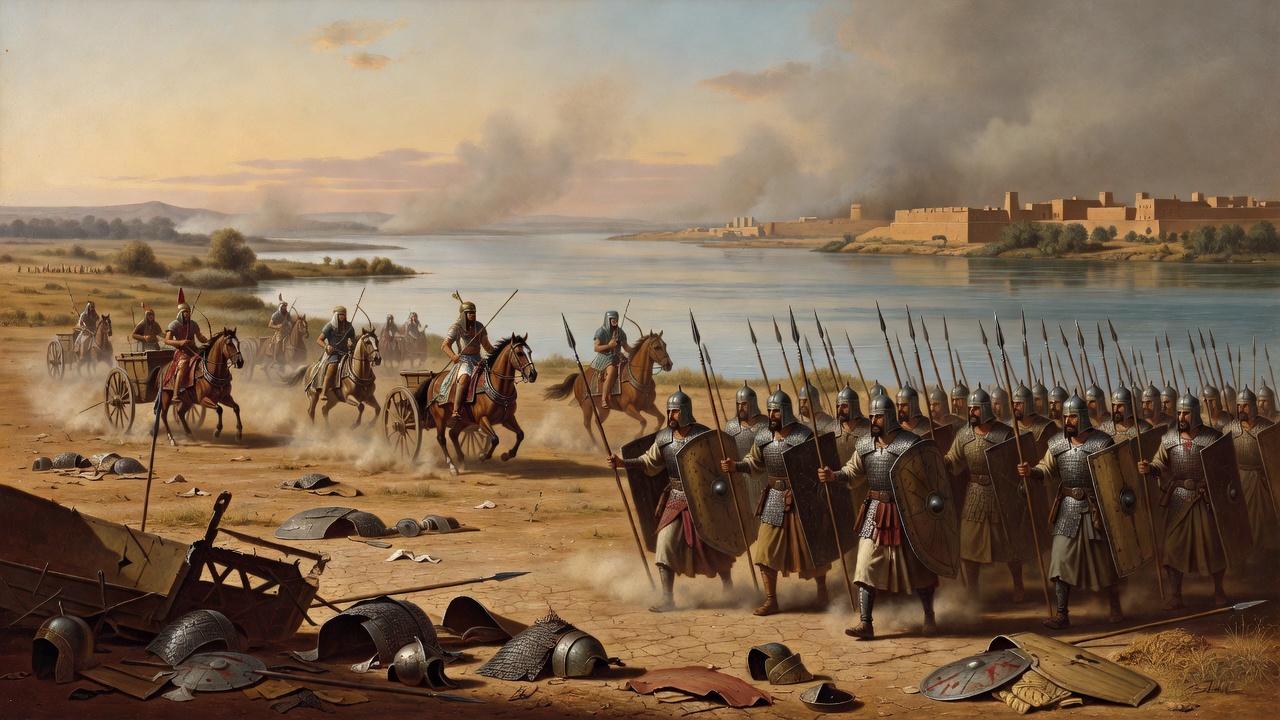
1Iwe, ewe Samol mi Lapalap a kapas ngeni ewe soufos Jeremaia fänäsengesin chon ekewe mwü, 2poputä me won Isip. Iei usun mine a apasa fän äsengesin nöün Farao Neko ewe kingen Isip mwichen sounfiu, Nepukatnesar ewe kingen Papilon a akufu me lon Karkemis arun ewe chanpupu Oifrat lon arüanün ierin mwün Jehoiakim ewe kingen Juta nöün Josia we mwän,
3“Oupwe amolätä ämi tittin maun mi watte me kükün
o feila ngeni maun.
4Oupwe amolätä nöümi kewe oris o tötä wor, ämi chon wawa oris.
Oupwe atettelikemi fän imwemi akau,
oupwe amisi wokumi
o üföüf üfemi sekitin maun.
5Nge met üa küna?
Ra rükö o kulsefäl.
Ekewe sounfiu ra kuf o müttir le sü.
Resap nenesökür,
niuokus watte a nom ünükür meinisin.”
Iei alon ewe Samol mi Lapalap.
6“Chokewe mi müttir resap tongeni sü,
nge ekewe sounfiu resap tongeni süla.
Ra chepetek o turula
lon ewe fanü efeng arun ewe chanpupu Oifrat.
7Iö ei mi wattela usun ewe chanpupu Nil,
usun ekewe chanpupu mi säsewu.
8Isip a wattela usun ewe chanpupu Nil,
pwal usun ekewe chanpupu mi säsewu.
A apasa, ‘Üpwe wattela o pwölüela fanüfan.
Üpwe ataela telinimw o niela ekewe aramas mi imweimw lor.’
9Oupwe allük ngeni ekewe oris pwe repwe sä,
oupwe säpuropur, ämi chon wawa woken.
Oupwe karisila, ämi sounfiu,
ämi re Itiopia me Put mi uwei tittin maun,
pwal ämi re Lut mi föüen le esefich.
10Ei rän iei ewe ränin Kot ewe Samol mi Unusen Manaman,
eu ränin an epwe ngeni chon oputan chappen ar föför,
eu ränin an epwe apwüngüür.
Ewe ketilas epwe mongö tori an epwe möt,
epwe ün cha tori an epwe ku.
Pun Kot ewe Samol mi Unusen Manaman a föri eu asor
me lon ewe fanü efeng arun ewe chanpupu Oifrat.
11Ämi aramasen Isip, oupwe feila Kiliat
o angei säfei.
Esap wor lomoten ämi oupwe eäni chomong säfei,
pun ousap pöchökül ren.
12Chon ekewe mwü ra rongorong usun ämi itengau,
aramas meinisin ra rongorong ämi siö.
Eman sounfiu a chepetek won eman,
ra turupöküla.”
13Iei ewe kapas ewe Samol mi Lapalap a apworausa ngeni ewe soufos Jeremaia fänäsengesin waren Nepukatnesar ewe kingen Papilon, pwe epwe atai ewe fanü Isip,
14“Oupwe asilefeili lon Isip
o arongafeili lon Miktol, Memfis me Tapanes ekei kapas,
‘Oupwe ütä o amolakemiitä,
pun pisekimi meinisin epwe tala lon maun.’
15Pwota ämi kot mi pöchökül itan Apis a turula?
Esap tongeni ütä, pun ewe Samol mi Lapalap a aturätiu.
16Nöümi kewe sounfiu ra chepetek o turula.
Ra ürafengen lefiler,
‘Ousipwe ütä o liwiniti aramasach me poputän fanüach.
Sipwe sü seni nöün ewe chon ariaföüükich ketilas.’
17Oupwe aita ngeni Farao ewe kingen Isip eu it mi fö,
‘Akürang watte. A mwüt ngeni an fansoun fich pwe epwe feil seni.’
18Ngang ewe King itei ewe Samol mi Unusen Manaman üa apasa,
‘Mwo manauei, eman epwe fokun feito,
epwe tekia usun ewe chuk Tapor me lein ekewe chuk,
pwal usun ewe chuk Karmel mi nom aroset.
19Ämi chon Isip, oupwe amolätä pisekimi,
pun oupwe oola.
Memfis epwe wiliti eu fanüapö,
eu leni mi tatakis esap so.’
20Isip a wewe ngeni eman kow mi fokun mürina,
nge eman sokun kilisoon kow mi kükkük a feito won seni efeng.
21Iwe, nöün kewe sounfiu a möniir
ra usun chök nienifön kow mi öümanau.
Nge pwal ir ra kul o süpöküla,
resap üppos.
Pun ränin ar feiengau a feitiu wor,
ewe fansoun ar küna apwüng a war.
22Isip epwe sü, nge isiis usun isiisin eman serepenit mi sü,
lupwen chon oputan kewe ra karisito fän pöchökül.
Repwe maun ngeni fän nöür kouk usun
chon pöküpök irä.
23Repwe pöküela an we wöllap,
inamwo ika a fokun malül.
Ra fokun chomong seni lifichimas,
rese tongeni lea.
24Ekewe chon Isip repwe säw,
repwe oolong lepöün ekewe aramas seni efeng.
Ngang ewe Samol mi Lapalap üa kapas.”
25Iwe, ewe Samol mi Unusen Manaman, ewe Koten Israel a üra, “Üpwe awarato apwüng won Amon ewe koten Tepes, won Isip me an kewe kot me nöün kewe king, pwal won Farao me chokewe meinisin mi anomu ar apilükülük won. 26Üpwe asechirelong lepöün chokewe mi mochen nirela, lepöün Nepukatnesar ewe kingen Papilon me nöün kewe meilapen sounfiu. Nge ekoch fansoun mürin, Isip epwe sosefäl usun lon ekewe fansoun lom. Ngang ewe Samol mi Lapalap üa kapas.
27Nge ämi mwirimwirin Jakop nei we chon angang, ousap niuokus,
ämi chon Israel, ousap rükö.
Üpwe amanauakemi seni lon ewe fanü toau.
Üpwe amanaua mwirimwirimi kana seni ewe ia ra oola ie.
Än Jakop cho epwe liwinto o nonomöch fän kinamwe,
nge esap wor eman epwe aniuokusuur.
28Ämi mwirimwirin Jakop nei we chon angang,
ousap niuokus, pun ngang üpwe etikemi.
Üpwe arosala chon ekewe mwü
ia üa asükemiila ie,
nge ämi üsap arosakemiila.
Üsap tongeni likiti ai üpwe etikemi.
Üpwe apwüngükemi fän aüküköch.
Ngang ewe Samol mi Lapalap üa kapas.”
Did you know?
Judgment on Egypt and the Battle of Carchemish
- Jeremiah dates this prophecy to the fourth year of King Jehoiakim of Judah, when Nebuchadnezzar of Babylon defeated Pharaoh Neco of Egypt at Carchemish on the Euphrates River. This decisive confrontation marked a major shift in power across the region, ending Egyptian dominion over the surrounding lands.Sources: the Bible text itself · Carchemish · Jehoiakim
- The chapter uses the annual overflowing of the Nile River as an image of Egypt's proud military surge across the earth. It also warns prominent Egyptian cities like Memphis (referred to as Noph in Hebrew), the ancient capital of Lower Egypt, of coming devastation and exile.Sources: the Bible text itself · Nile · Memphis
- The prophecy foretells a direct Babylonian invasion of Egypt led by Nebuchadnezzar. The divine judgment was directed not only against Pharaoh and his forces, but also against Amon, the chief deity of Thebes, and the other gods of Egypt.Sources: the Bible text itself · Nebuchadnezzar
Notes written with AI assistance from open sources (Theographic Bible Metadata, CC BY-SA 4.0; Easton’s Bible Dictionary, public domain) and reviewed before publishing.
Places in this chapter
- Babylon · 32.543, 44.422 · verses 2, 13, 18, 26
- Egypt · 30.129, 31.308 · verses 2, 8, 9, 11, 13, 14, 17, 18, 19, 20, 21, 22, 23, 24, 25, 26
- Euphrates · Today: Euphrates River · 31.004, 47.442 · verses 2, 6, 10
- Nile · Today: Nile River · 31.465, 30.367 · verses 7, 8
- Cush · Today: Cush 1 · 16.935, 33.751 · verse 9
- Gilead · Today: Gilead 1 · 32.187, 35.692 · verse 11
- Memphis · 29.849, 31.253 · verses 14, 19
- Tahpanhes · Today: Tell Defenneh · 30.861, 32.171 · verse 14
- Mount Carmel · 32.672, 35.023 · verse 18
- Mount Tabor · Today: Jebel et Tur · 32.686, 35.393 · verse 18
- Thebes · 25.721, 32.610 · verse 25
Only places identified with high confidence are shown (90% or more according to the scholarly sources compiled by OpenBible). Period map: DARE (Digital Atlas of the Roman Empire), CC BY 4.0; modern map: © OpenStreetMap contributors; places: OpenBible.info (CC BY 4.0).
Credits and license for this translation
Paipel
The Holy Bible in the Chuukese language of the Federated States of Micronesia
copyright © 1984, 1989, 1991, 2001 Liebenzel Mission
Language: Chuukese
Translation by: Liebenzell Mission
Old Testament © 1989, 2001 Liebenzel Mission
New Testament © 1984, 1991 Liebenzel Mission
This translation is made available to you under the terms of the
Creative Commons Attribution-No Derivatives license 4.0.
You may share and redistribute this Bible translation or extracts from it in any format, provided that:
You include the above copyright and source information.
You do not make any derivative works that change any of the actual words or punctuation of the Scriptures.
Pictures included with Scriptures and other documents on this site are licensed just for use with those Scriptures and documents.
For other uses, please contact the respective copyright owners.
2024-01-24
Source: http://ebible.org/chk/ · eBible.org