Isaiah 45
Paipel · Tap a verse to see its cross-references.
Kot a akünöü Sirus
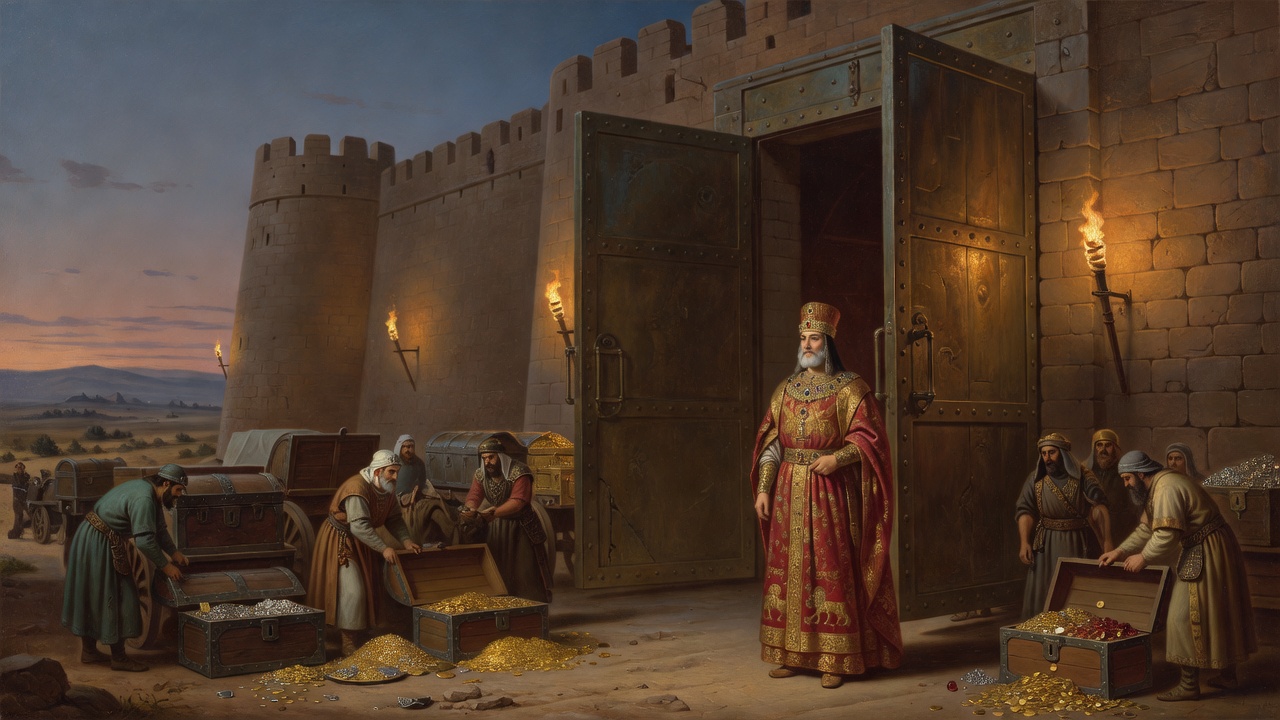
1Iei alon ewe Samol mi Lapalap ngeni Sirus nöün we mi kepit,
a pwal awisa pwe epwe akufu ekewe mwü mi nonom mwan
o akisikisätiu nemenemen ekewe king,
epwe pwal suki asamen ekewe telinimw mi nom mwan pwe resap chüen kapüngüla,
2“Üpwe akom mwom o atekisonätiu chuk kana.
Üpwe ataetiu ekewe asam piras
o atatakisi lokkur.
3Üpwe fang ngonuk wöü mi iseis lon rochopwak,
pwal pisek mi aüchea mi nom lon leni mi monomon,
pwe kopwe silei pwe ngang ewe Samol mi Lapalap ewe Koten Israel,
ewe a köri ngonuk itom.
4Fän iten nei chon angang Israel,
nei we üa afili,
üa köri ngonuk itom,
üa pwal aita ngonuk eu it mi iteüöch,
inamwo are kosap sileei.
5Ngang ewe Samol mi Lapalap, esap wor eman lüki,
esap pwal wor eman Kot lüki.
Üpwe atufichuk, inamwo are kosap sileei.
6Üa föri ei
pwe aramas seni ötiu tori lotou repwe mefi
o silei pwe esap fokun wor eman Kot lüki.
Ngang ewe Samol mi Lapalap, esap wor eman lüki.
7Ngang üa förätä saram, üa pwal förätä rochopwak.
Ngang üa awarato feiöch me feiengau.
Ngang ewe Samol mi Lapalap, üa föri ekei mettoch meinisin.”
Kot ewe mi föri mettoch meinisin
8“Ämi läng me ämi kuchu kana, oupwe apüngätiu pwüng,
nge fanüfan epwe sukula,
pwe manau me pwüng repwe pwükütä o märfengen.
Ngang ewe Samol mi Lapalap üa föri ei.
9Feiengauen eman a anini ngeni ewe chon föri.
Ifa usun, eu sepi seni pwül epwe anini ngeni ewe mi föri?
Ifa usun, ewe pwül epwe aisini ewe mi angang won, ‘Met ka föri?’
Ifa usun, epwe apasa, ‘Föriom sepi esap lapalapöch?’
10Feiengauen eman a aisini saman me inan,
‘Pwota oua afisiei lon ei sokun lapalap?’”
11Iei alon ewe Samol mi Lapalap, Ewe mi Pin lon Israel,
pwal ewe mi föri Israel,
“Ifa usun, oua esitaei won mine epwe fis
ngeni nei kewe lon kan fansoun repwe feito,
ika oua allük ngeniei usun mine üpwe föri?
12Ngang üa föri fanüfan,
üa pwal föri aramasen won.
Iwe, ren ai manaman üa ameresala läng,
üa pwal nemeni akkar, maram me fü kana.
13Ngang üa köri Sirus fän pwüng,
üpwe pwal awenechara an al kana meinisin.
Iwe, epwe aüetä ai telinimw Jerusalem
o angasa nei chon oola,
nge üsap ngeni och liwinin ika lifangen amichimich.”
Iei alon ewe Samol mi Unusen Manaman.
14Iei alon ewe Samol mi Lapalap ngeni Israel,
“Wöün Isip me pisekin Itiopia repwe om,
nge ekewe chon Sepa mi mwänöch repwe feito reöm pwe kopwe nöüniir amanau.
Iwe, repwe tapwela murum fän fööföör selimächä o chapetiu mwom.
Repwe tütüngor ngonuk o apasa,
‘Ellet Kot a etuk, esap fokun wor eman Kot lükün.’”
15Ellet, en eman Kot mi monomon,
en Koten Israel, ewe Chon Amanau.
16Ir meinisin mi ü ngonuk repwe küna säw o itengau,
nge chokewe mi falei uluulun anümwäl repwe lichipüng.
17Nge chon Israel ra küna manau esemüch ren ewe Samol mi Lapalap.
Resap küna säw are itengau tori feilfeilachök.
18Iwe, ewe Samol mi Lapalap a föri läng,
i ewe Kot a pwal föri fanüfan
o anüküchara.
Esap föri pwe epwe kotongau,
nge a föri pwe lenien aramas.
Iwe, a apasa, “Ngang ewe Samol mi Lapalap,
esap wor eman Kot lüki.
19Üsap fos lemonomon
are lon eu leni mi rochopwak.
Üsap apasa ngeni ekewe mwirimwirin Jakop
pwe repwe resin küttaei, nge resap künaei.
Ngang ewe Samol mi Lapalap, üa apasa mine a let,
üa pwärätä mine a pwüng.”
Kot a tekia seni än chon Papilon kewe uluulun anümwäl
20Ewe Samol mi Lapalap a apasa,
“Oupwe feito o mwichefengen, oupwe arapeto,
ämi mi chüen manau me lein chon ekewe mwü.
Esap wor miritin chokewe ra feilfetal
fän ar uluulun anümwäl mi fal
o ikiotek ngeni eman kot esap tongeni amanaueer.
21Oupwe feito o fos.
Aramas repwe pwüngüpwüng lefiler.
Iö a apworausa ei lon ewe fansoun a la? Iö a pwärätä ei me lomlom?
Ifa usun, sap ngang, ewe Samol mi Lapalap?
Esap wor eman Kot lüki,
esap wor eman Kot mi pwüng are eman Chon Amanau,
esap fokun wor eman lüki.
22Oupwe kulitiei, ämi aramasen fanüfan meinisin,
pwe oupwe küna manau.
Pun ngang Kot, esap pwal wor eman lüki.
23Iwe, üa püsin akapelüei, nge kapasen awei a let, esap pwal siwil,
‘Aramas meinisin repwe feito o fotopwäsuk ngeniei,
nge ir meinisin repwe pwon fän akapel,
pwe repwe allükülük ngeniei.’
24Iwe, repwe apasa usi, ‘Ren ewe Samol mi Lapalap chök
a wor pwüng me pöchökül.’
Iwe, chokewe meinisin mi pälüeni Kot fän song repwe feito ren o küna säw.
25Nge ren ewe Samol mi Lapalap ekewe mwirimwirin Israel meinisin repwe küna pwüng,
repwe pwal mwänek.”
Did you know?
The Commission of Cyrus and God's Sovereignty
- Isaiah 45 explicitly names Cyrus, the Persian ruler who conquered Babylon in 538 BC. Although Cyrus was a foreign monarch, the text refers to him as God's anointed whose mission includes subduing nations and setting the exiles free without payment or reward.Sources: the Bible text itself · Cyrus
- The chapter employs the metaphor of a potter and clay to address those who question God's methods and sovereignty. The passage emphasizes that just as clay cannot dispute the work of the artisan's hands, creation cannot question the Creator's governance.Sources: the Bible text itself
- The chapter also references the goods and merchandise of Egypt and Cush submitting and acknowledging the God of Israel. In biblical geography, Cush referred to the regions located south of Egypt.Sources: the Bible text itself · Cush · Egypt
Notes written with AI assistance from open sources (Theographic Bible Metadata, CC BY-SA 4.0; Easton’s Bible Dictionary, public domain) and reviewed before publishing.
Places in this chapter
Only places identified with high confidence are shown (90% or more according to the scholarly sources compiled by OpenBible). Period map: DARE (Digital Atlas of the Roman Empire), CC BY 4.0; modern map: © OpenStreetMap contributors; places: OpenBible.info (CC BY 4.0).
Credits and license for this translation
Paipel
The Holy Bible in the Chuukese language of the Federated States of Micronesia
copyright © 1984, 1989, 1991, 2001 Liebenzel Mission
Language: Chuukese
Translation by: Liebenzell Mission
Old Testament © 1989, 2001 Liebenzel Mission
New Testament © 1984, 1991 Liebenzel Mission
This translation is made available to you under the terms of the
Creative Commons Attribution-No Derivatives license 4.0.
You may share and redistribute this Bible translation or extracts from it in any format, provided that:
You include the above copyright and source information.
You do not make any derivative works that change any of the actual words or punctuation of the Scriptures.
Pictures included with Scriptures and other documents on this site are licensed just for use with those Scriptures and documents.
For other uses, please contact the respective copyright owners.
2024-01-24
Source: http://ebible.org/chk/ · eBible.org