Isaiah 34
Paipel · Tap a verse to see its cross-references.
Kot epwe apwüngü chon ekewe mwün fanüfan me chon Etom
1Oupwe arapoto, ämi chon ekewe mwün fanüfan, pwe oupwe rongorong. Oupwe aüseling, ämi mwichen aramas. Fanüfan epwe aüseling, pwal aramasen won meinisin. 2Iwe, ewe Samol mi Lapalap a song ngeni chon ekewe mwün fanüfan, a pwal lingeringeriti nöür kewe mwichen sounfiu meinisin. Iwe, a apwüngala pwe repwe ninnila. 3Ar kewe somä resap peias, inisir epwe ponfeil, nge ekewe chuk repwe parapar ren char. 4Iwe, akkar me maram me fü kana repwe telila, läng epwe numufengen usun echö toropwe, nge minen läng meinisin repwe turutiu usun chön irän wain ika chön irä fiik ra mworotiu.
5Iwe, ewe Samol mi Lapalap a amolätä nöün ketilas lon läng. Nengeni, iei epwe feitiu won Etom pwe epwe apwüngü ekewe aramas, a fen apwüngala pwe epwe afeiengaueer. 6Iwe, nöün ketilas a kuula ren cha me kiris, ren chan ekewe nienifön sip me kuuch, pwal ren kirisin föün lon ekewe ätemwänin sip. Pun ewe Samol mi Lapalap a eäni eu asor lon ewe telinimw Posra, a afisätä eu nimanau mi watte lon ewe fanü Etom. 7Ekewe kow mi mwacho repwe etiir le turutiu, pwal ekewe nienifön kow me ekewe ätemwänin kow mi pöchökül repwe ninnippöküla. Iwe, fanüer epwe kuula ren cha, nge ewe pwül epwe mürina ren kiris.
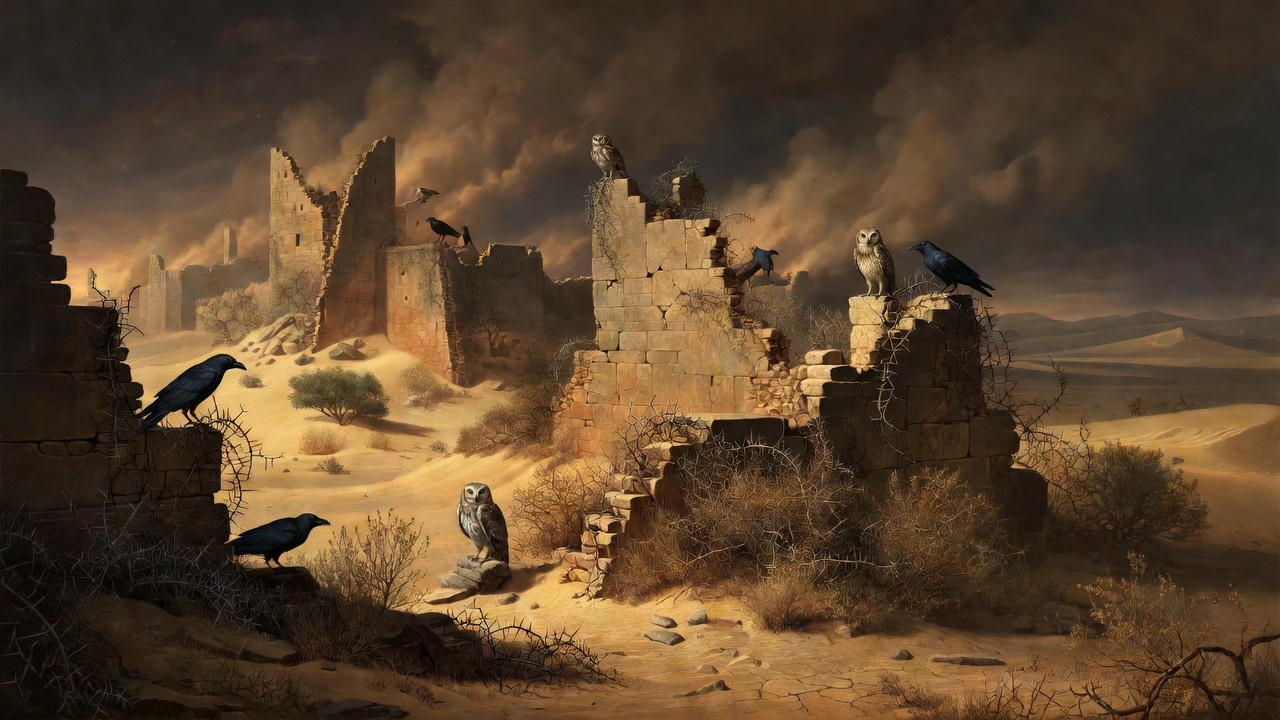
8Pun iei fansoun än ewe Samol mi Lapalap epwe amanaua Sion o ngeni chon oputan chappen ar föför. 9Iwe, ekewe chanpupun Etom repwe wiliti asaruto, pwülün mi moromor epwe wiliti primston, nge unusen ewe fanü epwe wiliti asaruto mi kar. 10Iwe, ewe ekkei esap kunula lepwin me lerän, nge ötüötün epwe ötütä feilfeilachök. Ewe fanü Etom epwe tala seni eu täppin aramas tori eu täppin, nge esap wor eman epwe saifetal won. 11Iwe, fukuro me ängä repwe nonom lon ewe fanü. Iwe, Kot epwe föri pwe ewe fanü Etom epwe fokun pönüla, pwe epwe usun chök mwen än Kot föri fanüfan. 12Ekewe aramas tekia seni Etom esap wor och rer pwe repwe eu mwü. Iwe, an kewe samol meinisin resap chüen nom.
13Iwe, iräfölüföl repwe mämäritä won ekewe imwen king, pwal pötöwölingau lon ekewe imwen maun. Iwe, ewe fanü epwe wiliti eu lenien foks me fukuro. 14Sokun mönün lon fanüapö repwe chufengen me wolif, nge anüngau repwe ngüngü ngeni chiener. Ewer, ekewe anün rochopwak repwe so o asösö won.
15Iwe, fukuro repwe fas ikenan, repwe pwal amökkü sokuler o achufengeni apaner kana fän pöükässir. Ewer, ikenan ekewe machang iter wolcher repwe chufengen me chiener. 16Oupwe küttafichi o aleani seni än ewe Samol mi Lapalap we puk: Meinisin ekei man repwe nom, iteiten eman me eman epwe wor pwülüan. Pun ewe Samol mi Lapalap a allük pwe epwe iei usun, püsin i epwe achufengeniir. 17Iwe, epwe ineti ewe fanü o ngeni eman me eman kinikinin. Repwe lenieni ekewe leni tori feilfeilachök o nonom lon seni eu täppin aramas tori eu täppin.
Did you know?
Judgment on the Nations and Edom
- Bozrah was a prominent city associated with the early Edomite kings and is identified with modern el-Busseireh, situated in the mountainous region of Petra about 20 miles southeast of the Dead Sea. In Isaiah 34, it is singled out as the symbolic site of a great divine sacrifice representing the judgment on Edom.Sources: Bozrah · the Bible text itself
- The judgment proclaimed upon Edom is framed as a time of vindication and recompense for the cause of Zion, the southeastern hill of Jerusalem originally fortified by David as the City of David.Sources: Zion · the Bible text itself
- The prophetic ministry of Isaiah is traditionally placed over several decades in the eighth century BC, addressing both Judah and the surrounding ancient nations.Sources: Prophecies of Isaiah
Notes written with AI assistance from open sources (Theographic Bible Metadata, CC BY-SA 4.0; Easton’s Bible Dictionary, public domain) and reviewed before publishing.
Places in this chapter
Only places identified with high confidence are shown (90% or more according to the scholarly sources compiled by OpenBible). Period map: DARE (Digital Atlas of the Roman Empire), CC BY 4.0; modern map: © OpenStreetMap contributors; places: OpenBible.info (CC BY 4.0).
Credits and license for this translation
Paipel
The Holy Bible in the Chuukese language of the Federated States of Micronesia
copyright © 1984, 1989, 1991, 2001 Liebenzel Mission
Language: Chuukese
Translation by: Liebenzell Mission
Old Testament © 1989, 2001 Liebenzel Mission
New Testament © 1984, 1991 Liebenzel Mission
This translation is made available to you under the terms of the
Creative Commons Attribution-No Derivatives license 4.0.
You may share and redistribute this Bible translation or extracts from it in any format, provided that:
You include the above copyright and source information.
You do not make any derivative works that change any of the actual words or punctuation of the Scriptures.
Pictures included with Scriptures and other documents on this site are licensed just for use with those Scriptures and documents.
For other uses, please contact the respective copyright owners.
2024-01-24
Source: http://ebible.org/chk/ · eBible.org