Isaiah 27
Paipel · Tap a verse to see its cross-references.
Chon Israel ra ngasala o chufengensefäl
1Lon ena fansoun ewe Samol mi Lapalap epwe apwüngü Lefiatan ewe serepenit mi süla, epwe apwüngü Lefiatan ewe serepenit mi tö rikirik ren nöün ketilas mi ken me pöchökül me manaman. Iwe, epwe pwal niela ewe trakon a nom leset.
2Lon ena fansoun Kot epwe apasa, “Oupwe kölü ewe tanipin wain mi mürina. 3Ngang ewe Samol mi Lapalap üa tümwünü, üa pwal achöchönü iteiten fansoun. Iwe, üa mamasa lepwin me lerän, pwe esap wor eman epwe atai. 4Üsap chüen song ngeni ewe tanipin wain. Are iräfölüföl me pötöwölingau repwe mär, üpwe äteriir o kenirela meinisin. 5Nge are chon oputa nei aramas ra mochen eäniei lenien op, repwe akomwen afisätä kinamwe ngeniei. Ewer, repwe fokun afisätä kinamwe ngeniei.
6Lon fansoun epwe feito, ekewe chon Israel, ir ekewe mwirimwirin Jakop, repwe apwükü warer usun efoch irä, repwe fasar me sot, repwe pwal amasoua unusen fanüfan ren uar.
7Ifa usun, ewe Samol mi Lapalap a afeiengaua chon Israel usun an afeiengaua chokewe mi afeiengaueer? Ika ifa usun, a niela chon Israel usun an niela chokewe mi nirela? 8Ewe Samol mi Lapalap a apwüngü nöün aramas ren an mwüt ngeniir pwe repwe oola. A asürela ren an asepwäl mi pöchökül a enito seni ötiu. 9Nge än chon Israel tipis epwe chök musala, are ra atai ekewe rongen uluulun anümwäl, pwe föür repwe wiliti pwül moromor, are ra pwal ataela ekewe uluulun ewe anüfefin Astarot, pwal ekewe rongen asoren ötüöt, pwe resap chüen nom. 10Iwe, ewe telinimw mi pöchökül tittin a tala, a eu leni esap chüen so usun chök fanüapö. Ikenan kow ra kütta ener, ra kon o mongö fetilin ewe leni. 11Ekewe aramas ra wewe ngeni palen ekewe irä mi pwas, ra kuputiu. Iwe, fefin repwe feito o rusifengeniir pwe repwe eäniir amüch. Pun ir eu mwichen aramas resap mirit. Iei mine Kot ewe mi föriir esap tongeäsiniir, esap pwal ümöümöch ngeniir. 12Lon ena fansoun ewe Samol mi Lapalap epwe achufengeni nöün aramas eman ngeni eman seni ewe chanpupu Oifrat tori ewe öüwön Isip, usun eman a achufengeni föün wiich mürin an aimwüfeseni seni pön. 13Iwe, lon ena fansoun efoch rappwa epwe pu pwe epwe köri chokewe mi oola lon ewe fanü Asiria me ewe fanü Isip, pwe repwe liwinsefäl. Repwe feito o fel ngeni ewe Samol mi Lapalap won ewe chuk mi pin lon Jerusalem.
Did you know?
The Fruitful Vineyard and the Return of the Exiles
- In Isaiah 27, Israel is portrayed as a fruitful vineyard carefully guarded and continually watered by the Lord so that it will take root and fill the world with fruit. This picture of divine protection and flourishing stands in contrast to the earlier depiction of an unfruitful vineyard in the book.Sources: the Bible text itself
- The prophecy describes the gathering of Israelites between the flowing Euphrates River and the Brook of Egypt. In biblical tradition, these two geographical landmarks defined the expansive borders of the land promised to Abraham's descendants.Sources: the Bible text itself · Euphrates · Brook of Egypt
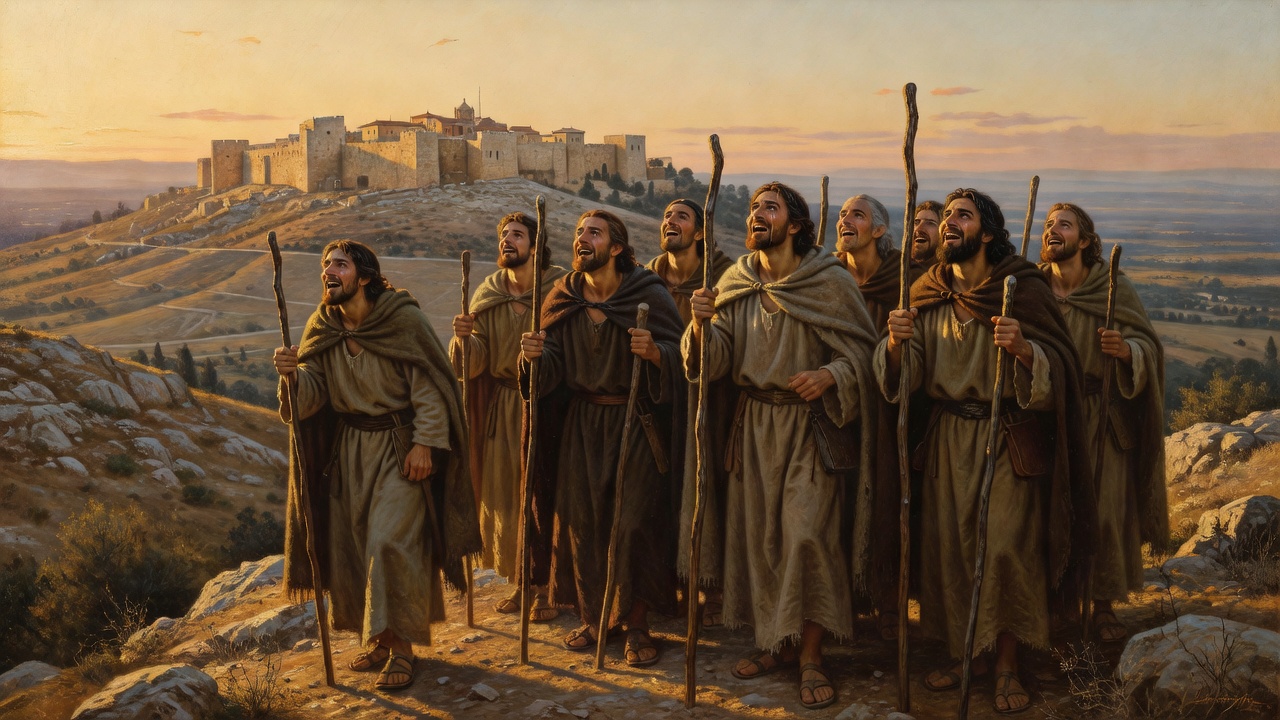
- The sounding of a great ram's horn is foretold to call back exiles who were dispersed in the powerful empires of Assyria and Egypt. The returning survivors are summoned to worship the Lord together upon the holy mountain in Jerusalem.Sources: the Bible text itself · Assyria · Egypt · Jerusalem
Notes written with AI assistance from open sources (Theographic Bible Metadata, CC BY-SA 4.0; Easton’s Bible Dictionary, public domain) and reviewed before publishing.
Places in this chapter
- Euphrates · Today: Euphrates River · 31.004, 47.442 · verse 12
- Assyria · 36.359, 43.153 · verse 13
- Egypt · 30.129, 31.308 · verse 13
- Jerusalem · 31.777, 35.234 · verse 13
Only places identified with high confidence are shown (90% or more according to the scholarly sources compiled by OpenBible). Period map: DARE (Digital Atlas of the Roman Empire), CC BY 4.0; modern map: © OpenStreetMap contributors; places: OpenBible.info (CC BY 4.0).
Credits and license for this translation
Paipel
The Holy Bible in the Chuukese language of the Federated States of Micronesia
copyright © 1984, 1989, 1991, 2001 Liebenzel Mission
Language: Chuukese
Translation by: Liebenzell Mission
Old Testament © 1989, 2001 Liebenzel Mission
New Testament © 1984, 1991 Liebenzel Mission
This translation is made available to you under the terms of the
Creative Commons Attribution-No Derivatives license 4.0.
You may share and redistribute this Bible translation or extracts from it in any format, provided that:
You include the above copyright and source information.
You do not make any derivative works that change any of the actual words or punctuation of the Scriptures.
Pictures included with Scriptures and other documents on this site are licensed just for use with those Scriptures and documents.
For other uses, please contact the respective copyright owners.
2024-01-24
Source: http://ebible.org/chk/ · eBible.org