Isaiah 21
Paipel · Tap a verse to see its cross-references.
Kapasen osuni usun Papilon
1Iei än Kot kapas usun Papilon: Usun eu ewiniär a äs seni ewe fanü Nekep, iei usun feiengau epwe feito seni ewe fanüapö, eu fanü mi eniwokus. 2A wor künaei mi fokun amairü. Ewe chon solä a solä, nge ewe chon kata a atai. Ämi sounfiun Elam, oupwe maun, ämi sounfiun Metia, oupwe pwelifeili ekewe telinimw fän pisekin maun. Pun Kot epwe aükätiu ekewe riaföü meinisin ra pop seni Papilon. 3Ren ei inisi a fokun metek, och cheuch a cheriei usun cheuchen fam a cheri eman fefin. Üa fokun niuokus ren mine üa rongorong, üa rükö ren mine üa küna. 4A püngüpüng fän mwäri, inisi a chechech ren watten ai niuokus. Üa ösüküsükü lekuniol, nge lupwen üa tori, üa chök niuokus. 5Iwe, lon künaei we üa küna pwe eu chepel a molotä, ekewe kieki ra meresila pwe aramas repwe mot won. Ra mongö o ün. Ämi meilapen sounfiu, oupwe ütä o amisi ämi tittin maun.
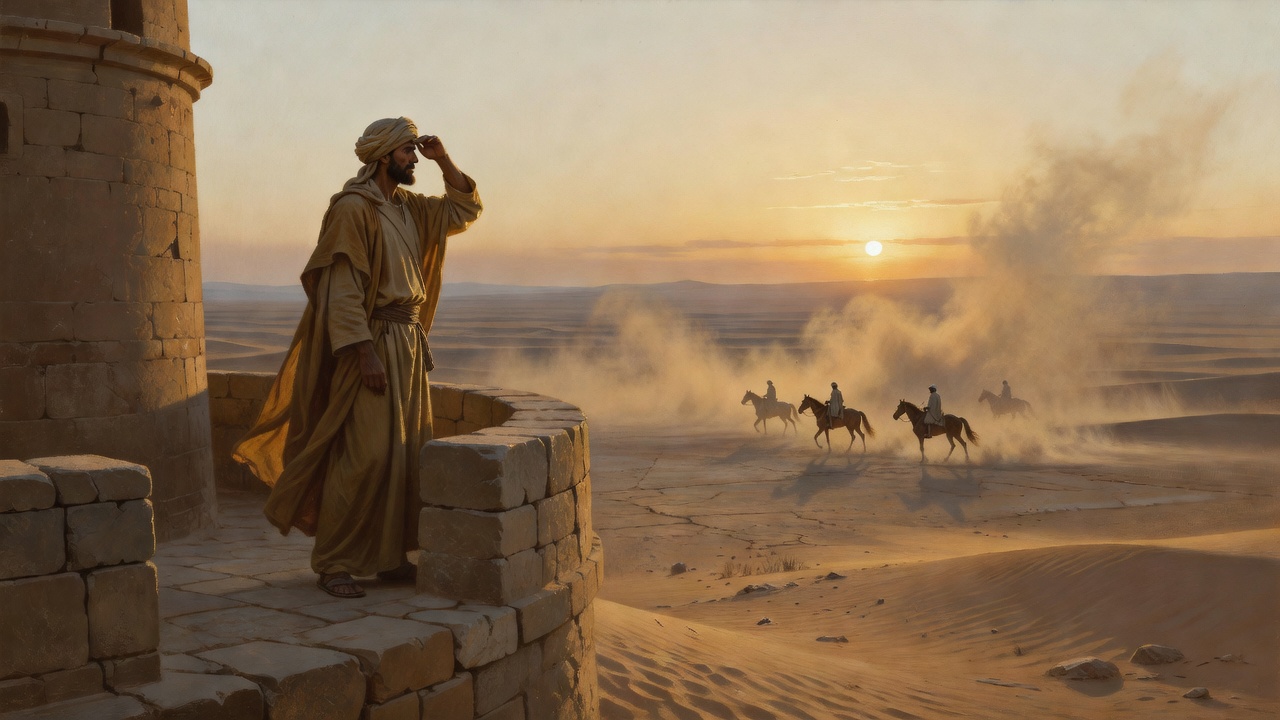
6Mürin, ewe Samol a üreniei, “Kopwe feila o awisa eman chon mas, pwe epwe mamasa ewe leni o asile ngonuk mine a küna. 7Iwe, lupwen epwe küna ruu telin chon wawa oris ika chon wawa aas me kamel, epwe fokun nenengenifichi.” 8Iwe, ewe chon mas a leüömong le kökkö, “Ai samol, üa chök ükütä won ai lenien mamas lerän me lepwin.” 9Mürin chök ekewe chon wawa oris ra war. Iwe, ewe chon mas a apasa, “A tur, a tur Papilon, ar kewe uluulun anümwäl ra mökküla o parasala le pwül.” 10Ämi nei aramasen Israel, chon oputakemi ra purikemi usun wiich. Iei üa asile ngenikemi mine üa rongorong seni ewe Samol mi Unusen Manaman, ewe Koten Israel.
Kapasen osuni usun Etom
11Iei än Kot kapas usun Etom: Eman a kökkö ngeniei seni Etom, “Chon mas, ifa usun, a tori wilingäch? Ifa usun, esamwo ränila?” 12Iwe, üa pälüeni, “A fen tori wilingäch, nge epwe pwal pwinsefäl. Are oua mochen ais, oupwe chök liwinsefäl o ais.”
Kapasen osuni usun Arapia
13Iei än Kot kapas usun Arapia: Ämi chon Tetan mi wawa kamel le sai o möür lein pötöwölün Arapia, 14oupwe aünü ekewe chon kaka koluk. Ämi chon Tema, oupwe amongöü ekewe choisä. 15Pun ir ra sü seni ekewe ketilas mi molotä ngeni ar repwe niela aramas, ra sü seni ekewe likapich mi mei, pwal seni feiengauen maun. 16Iwe, ewe Samol a kapas ngeniei, “Mürin eu ier, iei ükükün fansoun än eman chon angang pwon, lingen chon ekewe ainangen Ketar meinisin epwe wesila. 17Nge ekewe chon Ketar mi chüen manau, ir chon likapich me chon pwora, repwe chokükün. Ngang ewe Samol mi Lapalap, ewe Koten Israel, üa kapas.”
Did you know?
Visions of Babylon and the Desert Nations
- Isaiah 21 begins with an ominous vision calling upon Elam and Media to attack, culminating in the declaration that Babylon has fallen and its carved images are shattered. Elam and Media were mountainous regions situated to the east of Babylonia.Sources: the Bible text itself · Elam · Media
- The oracle against Arabia mentions Kedar, a name associated with nomadic Arabian tribes dwelling in northwest Arabia. The prophecy depicts desert caravans fleeing from war and warns that Kedar's renowned archers and warriors will dwindle within a single year.Sources: the Bible text itself · Kedar · Kedar
- The chapter is framed by the motif of a vigilant lookout standing on a watchtower day and night. This sentry watches for approaching riders and responds to anxious questions calling out from Seir about how much of the night remains.Sources: the Bible text itself
Notes written with AI assistance from open sources (Theographic Bible Metadata, CC BY-SA 4.0; Easton’s Bible Dictionary, public domain) and reviewed before publishing.
Places in this chapter
- Babylon · 32.543, 44.422 · verses 1, 2, 9
- Negeb · 31.245, 34.841 · verse 1
- Elam · 32.189, 48.258 · verse 2
- Media · 34.806, 48.516 · verse 2
- Arabia · Today: Arabian Peninsula · 23.000, 46.000 · verse 13
- Tema · Today: Tayma · 27.630, 38.552 · verse 14
- Kedar · 29.811, 39.868 · verses 16, 17
Only places identified with high confidence are shown (90% or more according to the scholarly sources compiled by OpenBible). Period map: DARE (Digital Atlas of the Roman Empire), CC BY 4.0; modern map: © OpenStreetMap contributors; places: OpenBible.info (CC BY 4.0).
Credits and license for this translation
Paipel
The Holy Bible in the Chuukese language of the Federated States of Micronesia
copyright © 1984, 1989, 1991, 2001 Liebenzel Mission
Language: Chuukese
Translation by: Liebenzell Mission
Old Testament © 1989, 2001 Liebenzel Mission
New Testament © 1984, 1991 Liebenzel Mission
This translation is made available to you under the terms of the
Creative Commons Attribution-No Derivatives license 4.0.
You may share and redistribute this Bible translation or extracts from it in any format, provided that:
You include the above copyright and source information.
You do not make any derivative works that change any of the actual words or punctuation of the Scriptures.
Pictures included with Scriptures and other documents on this site are licensed just for use with those Scriptures and documents.
For other uses, please contact the respective copyright owners.
2024-01-24
Source: http://ebible.org/chk/ · eBible.org