Hosea 4
Paipel · Tap a verse to see its cross-references.
Kot a atipisi chon Israel
1Ämi chon Israel, oupwe rongorong än ewe Samol mi Lapalap kapas. Pun iei an kapasen atipisi chon ewe fanü: Esap wor allükülük ika tong me lon ewe fanü, esap pwal wor ar silei pwe ngang ar Kot. 2Ra chök ottek, chofana, ninni, solä o föri angangen lisowu. Angangen mwänewüs a wattela, nimanawei aramas a chök likatatap mürin eu. 3Iei mine ewe fanü a pwasapwas, nge meinisin mi nonom won ra mäla fiti ekewe mönün lemäl me ekewe machang. Pwal ekewe ikenen leset ra mäla.
4Esap wor eman epwe chüen anini ngeni eman ika apwüngü eman. Pun ren ämi föri ekei föför oua usun chök chokewe mi anini ngeni eman souasor. 5Iwe, ämi me ekewe soufos oua chepetek lerän me lepwin. Iei mine üpwe niela inemi we, wewen üpwe ataela mwümi mwün Israel. 6Nei aramas ra feiengau, pun resap wesewesen sileei. Pokiten oua oput ämi oupwe sileei, ngang üpwe pwal oput ämi oupwe nei souasor. Pokiten oua manlükala ewe allük än ämi we Kot, ngang üpwe pwal manlükala nöümi kewe.
7Lupwen ekewe souasor ra chomongola, ar tipis ngeniei a pwal chomongola. Ngang üpwe awili ar iteüöch ngeni itengau. 8Ra pisekisekila ren ekewe tipis nei aramas ra föri, iei mine ra mochen pwe repwe alapala ar föföringau. 9Iwe, mine epwe fis ngeni ekewe aramas epwe pwal fis ngeni ekewe souasor. Üpwe apwüngüpöküür o ngenipöküür liwinin ar föför mi ngau. 10Repwe mongö, nge resap möt. Repwe föri angangen lisowu, nge resap chomongola, pokiten ra likitieila ngang ewe Samol mi Lapalap, pwe repwe fangala inisir ngeni angangen lisowu.
11Wainin lom me wain mi fö ra angeala mirit. 12Nei aramas ra angei öüröürer seni esop mwüch, nge wokur a üreniir mine ra mochen silei. Ra likitieila, pun ra fangala inisir ngeni pwal ekoch kot, usun eman fefin a fangala inisin fän iten lisowu. 13Ra asor won ungen ekewe chuk o keni apach mi pwokus won ekewe chukutekison, pwal fän ekewe irä mi tekia o mwuresires, pun nürür a mürina. Iei mine nöümi kewe föpwül ra fangala inisir fän iten lisowu, nge pwülüen nöümi kewe mwän ra lisowu. 14Nge ngang üsap apwüngü nöümi kewe föpwül ika pwülüen nöümi kewe mwän, lupwen ra föri ekei föför. Pun püsin ämi mwän oua rik ngeni ekewe fin lisowu o asorpök me chokewe mi fangala inisir fän iten lisowu lon imwenfel. Iwe, ekewe aramas esap wor ar mirit repwe feiengau.
15Inamwo are ämi chon Israel oua föri angangen lisowu, nge amwo chon Juta resap pwal föri ei sokun tipis. Ousap feila pwe oupwe fel lon Kilkal ika lon Pet-awen , ousap pwal eäni ei akapel, “Mwo manauen ewe Samol mi Lapalap.” 16Chon Israel ra ülöförea usun eman nienifön kow mi ülöförea. Ifa usun, ngang ewe Samol mi Lapalap üpwe tongeni amongöör usun ai amongöü apanen sip lon eu maasies? 17Chon Israel ra oo ren ekewe uluulun anümwäl. Oupwe chök likitirela. 18Ir eu mwichen chon pulas, ra fangala inisir fän iten lisowu, ra efich itengau lap seni iteüöch. 19Eu ewiniär epwe ässirela, nge repwe säw pokiten ar asor ngeni ekewe uluulun anümwäl.
Did you know?
God's Case Against Israel
- Hosea refers to the northern sanctuary of Bethel as Beth-aven, meaning house of nothingness or house of idols. This derogatory wordplay stood in contrast to Bethel's original meaning, house of God, highlighting the site's transformation into a center for calf worship.Sources: Beth-aven · the Bible text itself
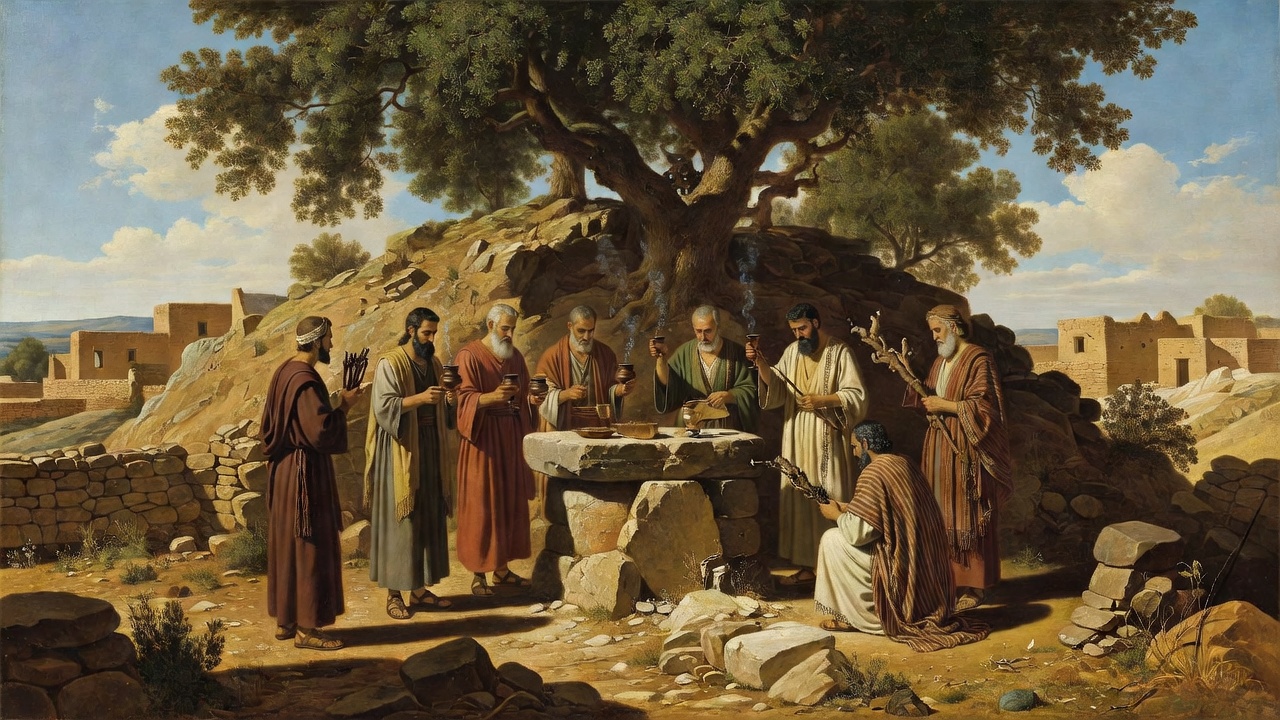
- The chapter highlights how religious practices took place on mountaintops and beneath the shade of oak, poplar, and terebinth trees. People combined these open-air sacrificial rituals with divination using wooden rods and idols.Sources: the Bible text itself
Notes written with AI assistance from open sources (Theographic Bible Metadata, CC BY-SA 4.0; Easton’s Bible Dictionary, public domain) and reviewed before publishing.
Places in this chapter
- Beth-aven · Today: Beitin · 31.923, 35.241 · verse 15
Only places identified with high confidence are shown (90% or more according to the scholarly sources compiled by OpenBible). Period map: DARE (Digital Atlas of the Roman Empire), CC BY 4.0; modern map: © OpenStreetMap contributors; places: OpenBible.info (CC BY 4.0).
Credits and license for this translation
Paipel
The Holy Bible in the Chuukese language of the Federated States of Micronesia
copyright © 1984, 1989, 1991, 2001 Liebenzel Mission
Language: Chuukese
Translation by: Liebenzell Mission
Old Testament © 1989, 2001 Liebenzel Mission
New Testament © 1984, 1991 Liebenzel Mission
This translation is made available to you under the terms of the
Creative Commons Attribution-No Derivatives license 4.0.
You may share and redistribute this Bible translation or extracts from it in any format, provided that:
You include the above copyright and source information.
You do not make any derivative works that change any of the actual words or punctuation of the Scriptures.
Pictures included with Scriptures and other documents on this site are licensed just for use with those Scriptures and documents.
For other uses, please contact the respective copyright owners.
2024-01-24
Source: http://ebible.org/chk/ · eBible.org