Hosea 13
Paipel · Tap a verse to see its cross-references.
Kapasen osuni usun än Israel unusen tala
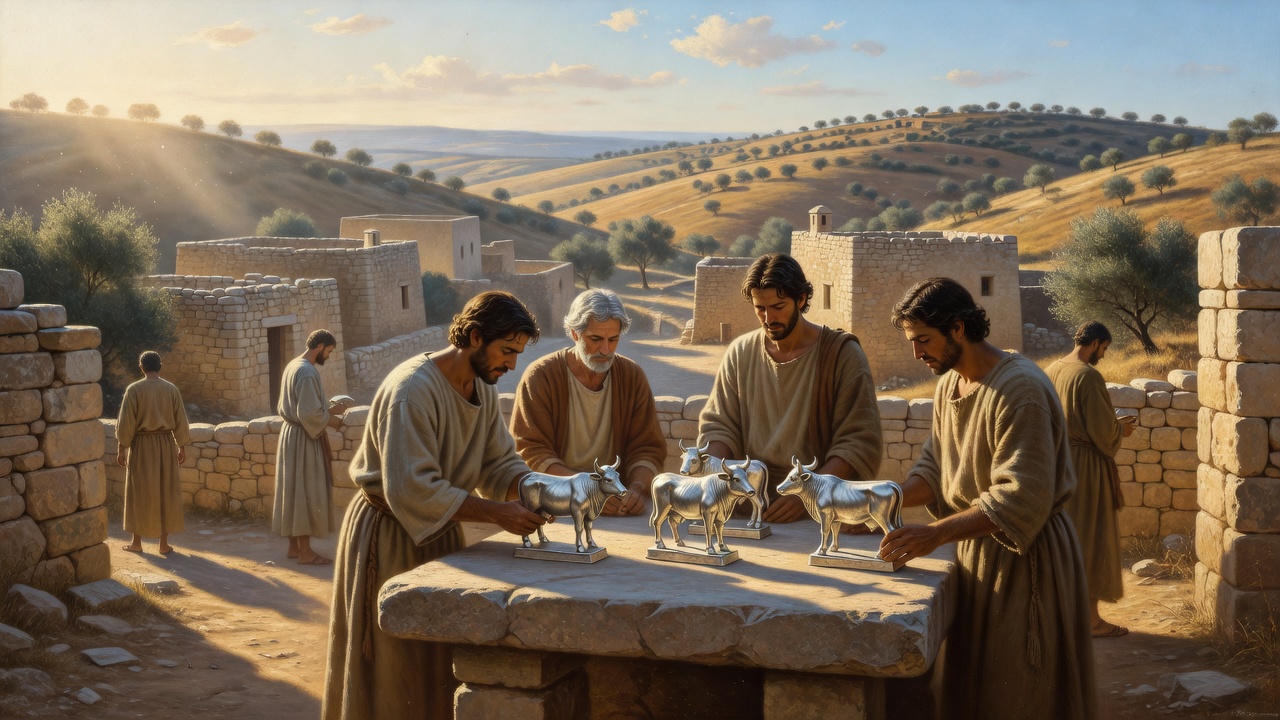
1Me lom, lupwen chon ewe ainangen Efraim ra kapas, chon ekewe lusun ainang ra niuokus, pun chon ewe ainangen Efraim ra fokun tekia me lon Israel. Nge ra tipis ren ar fel ngeni ewe anü Paal, iei mine repwe mäla. 2Iwe, iei ra chök alapala ar tipis o föri fän iter uluulun anümwäl seni mächä, uluulun anümwäl seni ar silifer, meinisin förien ekewe souangang mi sipeöch. Mürin ra apasa, “Oupwe asor ngeni ekei uluulun anümwäl.” Pwota aramas ra tongeni mitiri ekewe uluulun nienifön kow? 3Iei mine repwe müttir morola usun toputopun lesosor ika amurenipwin. Repwe pwal wewe ngeni pön wiich asepwäl a ässala seni ewe lenien wichiwich umwun wiich, ika usun ötüöt mi ötüwu seni eu asammwacho.
4Iwe, ewe Samol mi Lapalap a apasa, “Ngang ewe Samol mi Lapalap ämi we Kot mi emwenikemiiwu seni ewe fanü Isip. Ousap silei eman Kot lüki, ngang echök ämi Chon Amanau. 5Ngang ewe mi tümwünükemi lon ewe fanüapö, lon ewe fanü mi pwasapwas. 6Nge lupwen oua tolong lon ewe fanü mi mürina, oua momongö o mötüla. Nge lupwen oua mötüla, oua lamalamtekia o manlükieila. 7Iei mine üpwe mweterikemi usun eman laion, üpwe operikemi ünükün alemi kewe usun ewe man itan lepart. 8Üpwe fiu ngenikemi o atatakisikemi usun mine eman pear a föri, lupwen aramas ra angei seni apanan kana. Ikenan üpwe oromikemiila usun eman laion a oromala liapan, üpwe atatakisikemi usun eman manmwacho a atatakisi liapan.
9Üpwe afeiengauakemi, ämi chon Israel, pun oua ü ngeniei ngang ewe chon alisikemi. 10Ifa i ämi we king epwe amanauakemi? Ikafa ir nöümi kewe souemwen lon ämi kewe telinimw, chokewe oua tüngor pwe repwe nöümi king me samol? 11Ngang üa ngenikemi eman king fän ai song, nge üa angeesefäli fän ai lingeringer.
12Än Israel föföringau me tipis a makeetiu lon toropwe o iseisela. 13Israel a tongeni manau, nge a fokun tiparoch, pun esap mochen angei ewe manau. A wewe ngeni eman mönükol mi tori fansoun an epwe towu seni letipen inan, nge esap mochen. 14Üpwe fokun amanaueer seni ewe lenien sotup. Üpwe angaseer seni ewe manamanen mäla. En mäla, ifa om kewe mätter? En lenien sotup, ifa om afeiengau?
Usap chüen tongei ekei aramas. 15Inamwo ika Israel epwe mämäritä usun ekewe wowo, üpwe tinato eu asepwälin ötiu, epwe enito seni ewe fanüapö. Epwe amorätä an kewe puächen koluk me an kewe chönüttu. Aramas repwe angei fän pöchökül an kewe pisek aüchea meinisin seni an we lenien iseis. 16Ekewe aramasen Samaria repwe angei liwinin ar kewe tipis, pun ra ü ngeniei. Repwe mäla lon maun, nöür kewe semirit repwe tatakis, nge ekewe fefin mi pwopwo epwe tiletil luker.”
Did you know?
The Fall of Ephraim and Samaria
- Hosea 13 opens by recounting that Ephraim, once exalted in Israel, brought about its own ruin through the worship of Baal. Baal was the principal male deity of the Phoenicians, and his cult had long influenced the northern tribes.Sources: the Bible text itself · Baal
- The chapter recalls that God had been Israel's God ever since the land of Egypt and had known them in the arid wilderness. However, once the people had pasture and were satisfied, their hearts grew proud and they forgot their helper.Sources: the Bible text itself · Egypt
- The prophecy ends with an announcement of judgment on Samaria, the capital city established by King Omri on the hill of Shomeron. Hosea declares that Samaria will bear her guilt and suffer violent destruction for rebelling against God.Sources: the Bible text itself · Samaria
Notes written with AI assistance from open sources (Theographic Bible Metadata, CC BY-SA 4.0; Easton’s Bible Dictionary, public domain) and reviewed before publishing.
Places in this chapter
Only places identified with high confidence are shown (90% or more according to the scholarly sources compiled by OpenBible). Period map: DARE (Digital Atlas of the Roman Empire), CC BY 4.0; modern map: © OpenStreetMap contributors; places: OpenBible.info (CC BY 4.0).
Credits and license for this translation
Paipel
The Holy Bible in the Chuukese language of the Federated States of Micronesia
copyright © 1984, 1989, 1991, 2001 Liebenzel Mission
Language: Chuukese
Translation by: Liebenzell Mission
Old Testament © 1989, 2001 Liebenzel Mission
New Testament © 1984, 1991 Liebenzel Mission
This translation is made available to you under the terms of the
Creative Commons Attribution-No Derivatives license 4.0.
You may share and redistribute this Bible translation or extracts from it in any format, provided that:
You include the above copyright and source information.
You do not make any derivative works that change any of the actual words or punctuation of the Scriptures.
Pictures included with Scriptures and other documents on this site are licensed just for use with those Scriptures and documents.
For other uses, please contact the respective copyright owners.
2024-01-24
Source: http://ebible.org/chk/ · eBible.org