Ezekiel 39
Paipel · Tap a verse to see its cross-references.
1“Iwe, nöün aramas, kopwe pwal osuni usun än Kok epwe feiengau. Kopwe apasa pwe iei aloi ngang Kot ewe Samol mi Lapalap: Üpwe ü ngonuk Kok, en samollapen Ros, Mesek me Tupal. 2Üpwe akünok o panukoto seni efengin fanüfan, üpwe emwenuketo ngeni ekewe chukun Israel, pwe kopwe maun ngeniir. 3Ikenan üpwe pöni poum pwe om likapich epwe turutiu seni pöüimöngum, nge om föün likapich epwe turutiu seni pöüifichum. 4Iwe, kopwe mäla won ekewe chukun Israel, en me noum mwichen sounfiu meinisin, pwal ekewe mwicheichen aramasen chomong mwü mi etuk. Inisum üpwe ngeni ekewe machang mi mwacho me ekewe manmwachon lemäl, pwe repwe ocheek. 5Kopwe mäla won ekewe leni mi amassawa, pun ngang Kot ewe Samol mi Lapalap üa kapas. 6Üpwe tinala ekkei won ewe fanü Makok, pwal won chokewe mi nonom fän kinamwe lon ekewe fanüen aroset. Mürin, aramas meinisin repwe silei pwe ngang ewe Samol mi Lapalap.
7Iwe, üpwe pwärala itei mi pin lein nei aramasen Israel, nge üpwe tümwünü pwe itei mi pin esap chüen küna turunufas. Mürin, chon ekewe mwü repwe silei pwe ngang ewe Samol mi Lapalap, Ewe mi Pin lon Israel. 8Nengeni, iei ewe rän üa kapas usun, epwe fokun fis o pwönüetä,” iei alon Kot ewe Samol mi Lapalap.
9“Mürin, chon ekewe telinimwen Israel repwe towu o ionifengeni ekewe pisekin maun pwe repwe eäniir amwüch. Ekewe tittin maun mi watte me kükün, ekewe likapich me föür kewe, ekewe nifötüföt me siles repwe eäniir amwüch lon ükükün fisu ier. 10Iwe, resap chüen kütta amwüch lemal ika pöküpök irä lein ekewe wöllap, pun repwe chök eäni amwüch ekewe pisekin maun. Repwe angei fän pöchökül pisekin chokewe ra angei ar pisek fän pöchökül me lom,” iei alon Kot ewe Samol mi Lapalap.
11“Lon ena rän üpwe ngeni Kok eu lenien peias lon Israel lon ewe lemol itan Lemolun chon Sai mi nom ötiuen ewe Setin Mäla. Iwe, chon sai resap chüen tongeni fetal lon, pun Kok me nöün mwicheichen sounfiu repwe peias ikenan. Iei mine ewe lemol epwe iteni ‘Lemolun nöün Kok mwicheichen sounfiu.’ 12Lon ükükün fisu maram ekewe chon Israel repwe peiaseni ekewe somä, pwe ewe fanü epwe limöchsefäl. 13Aramasen ewe fanü meinisin repwe alilisfengen le peiaseniir. Iwe, repwe iteüöch ren ar föri ei lon ewe rän üpwe pwärala ai ling. Ngang Kot ewe Samol mi Lapalap üa kapas. 14Iwe, wesin ekewe fisu maram repwe filätä mwän, pwe repwe fetalfeil lon ewe fanü o kütta ekewe somä mi chüen nom won. Repwe ireerela, pwe ewe fanü epwe limöch. 15Iwe, lupwen ekewe mwän mi fetalfeil won ewe fanü repwe küna chün eman aramas, repwe asisila ewe leni tori ekewe chon tuw peias repwe feito o ireerela lon ewe Lemolun nöün Kok mwicheichen sounfiu. 16(Iwe, epwe pwal wor eu telinimw itan Hamona ikenan.) Iei usun repwe limeti ewe fanü.”
17Iei alon Kot ewe Samol mi Lapalap, “Nöün aramas, kopwe köri sokopaten machang me manmwacho meinisin, ‘Oupwe feito seni ekis meinisin o mwich, pun üpwe amolätä fän itemi eu asor mi watte won ekewe chukun Israel. Ikenan oupwe ochoch fituk o ün cha. 18Oupwe ochei fituken ekewe chon pwora o ünümi chan ekewe samolun fanüfan. Ir meinisin ra ninnila usun chök ätemwänin sip, nienifön sip, kuuch me ätemwänin kow mi öümanau seni Pasan. 19Iwe, lon ewe chulapen asor üpwe amolätä fän itemi oupwe ochoch kiris tori oupwe möt, oupwe pwal ün cha tori oupwe pulas. 20Üpwe amötükemi me won ai chepel ren oris me chon wäniir, pwal ren chon pwora me sounfiu mi chomong.’ Ngang Kot ewe Samol mi Lapalap üa kapas.
21Iwe, üpwe pwärala ai ling lein ekewe mwü, nge aramasen ekewe mwü meinisin repwe küna ai üpwe apwüngüür, pwal ai üpwe afeiengaueer ren ai manaman. 22Iwe, seni ewe rän tori feilfeilachök ekewe aramasen Israel repwe silei pwe ngang ewe Samol mi Lapalap ar we Kot. 23Nge aramasen ekewe mwü repwe silei pwe ekewe chon Israel ra oola pokiten ar tipis, pun ra kirikiringau ngeniei fän ekisolä. Iei mine üa amona mesei seniir o asechirelong lepöün chon oputeer, pwe repwe mäla lon maun. 24Iwe, üa liwini ngeniir ükükün ar limengau me ar pupungau o amona mesei seniir.”
25Iwe, Kot ewe Samol mi Lapalap a apasa: “Iei üpwe aliwinala ekewe mwirimwirin Jakop mi oola, üpwe pwal eäni tong ngeni ekewe chon Israel meinisin o tümwünü pwe itei mi pin epwe iteüöch. 26Iwe, lupwen repwe nonom lon fanüer fän kinamwe, pun esap chüen wor eman epwe eniwokusuur, repwe manlükala ar itengau pokiten ar kirikiringau ngeniei. 27Iwe, lupwen üpwe aliwinato nei aramas seni fanüen chon oputeer meinisin, itei mi pin epwe iteüöchsefäl rer me mwen chomong mwü. 28Mürin repwe silei pwe ngang ewe Samol mi Lapalap ar we Kot. Inamwo ika üa tinirela pwe repwe oola lein chon ekewe mwü, üpwe pwal aliwinireto pwe repwe chufengen lon poputän fanüer, nge üsap likitala eman leir lon ekewe mwü. 29Üsap pwal chüen amona mesei seniir, pun üpwe tinato Ngüni won ekewe chon Israel. Ngang Kot ewe Samol mi Lapalap üa kapas.”
Did you know?
The Defeat of Gog and Restoration of Israel
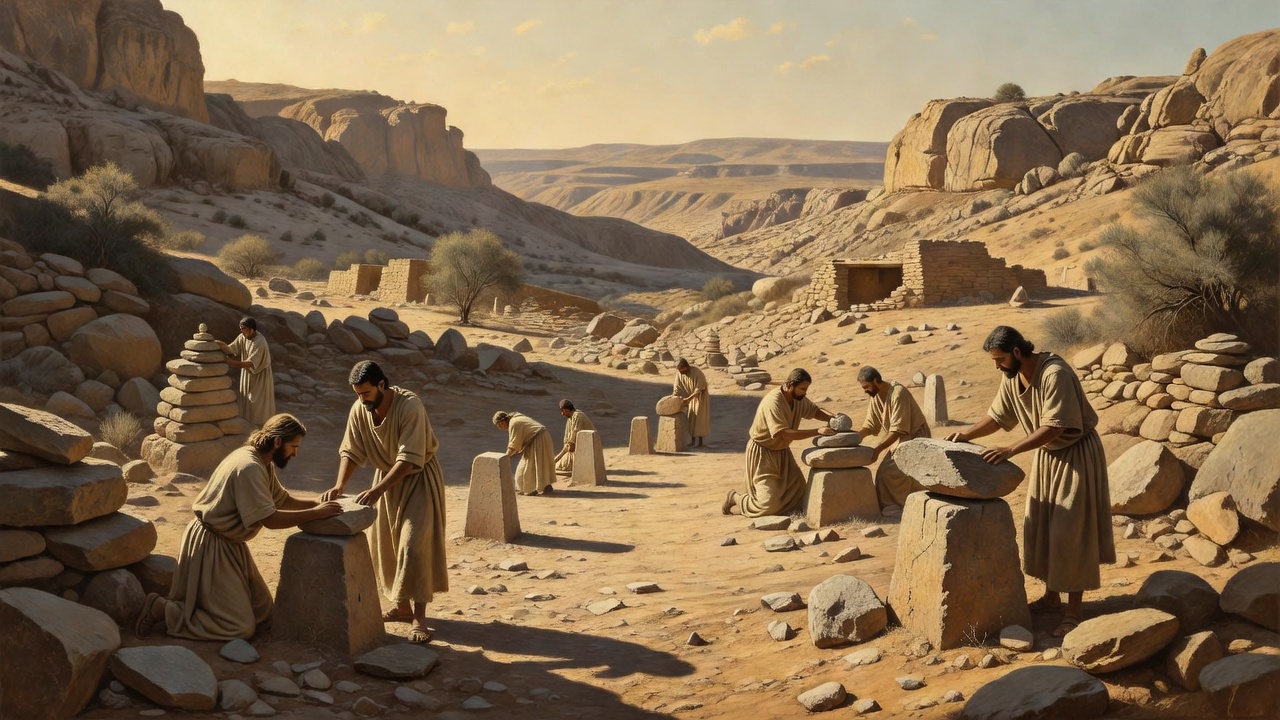
- The burial of Gog's fallen horde is described as taking seven months to cleanse the land. It takes place east of the Sea in the Valley of the Travelers, which is given the symbolic name the Valley of Hamon-gog, meaning the multitude of Gog, alongside a city named Hamonah.Sources: the Bible text itself · Hamonah · Valley of Hamongog
- Ezekiel addresses Gog as the chief prince of Meshech and Tubal from the land of Magog. Ancient traditions often linked Meshech with the Moschi between the Black and Caspian Seas, while early writers such as Jerome associated Magog with northern steppe peoples.Sources: the Bible text itself · Meshech · Magog
- The text depicts the inhabitants of Israel gathering abandoned wooden weapons—including shields, bows, arrows, and spears—to use as fuel for seven years, removing the need to harvest timber from the forests.Sources: the Bible text itself
Notes written with AI assistance from open sources (Theographic Bible Metadata, CC BY-SA 4.0; Easton’s Bible Dictionary, public domain) and reviewed before publishing.
Places in this chapter
- Meshech · Today: about 200 km around Gordion · 39.655, 31.994 · verse 1
- Tubal · Today: Tabal · 37.296, 36.254 · verse 1
- Salt Sea · Today: Dead Sea · 31.500, 35.500 · verse 11
- Hamonah · Today: in Abarim · 31.754, 35.715 · verse 16
- Bashan · 32.781, 35.935 · verse 18
Only places identified with high confidence are shown (90% or more according to the scholarly sources compiled by OpenBible). Period map: DARE (Digital Atlas of the Roman Empire), CC BY 4.0; modern map: © OpenStreetMap contributors; places: OpenBible.info (CC BY 4.0).
Credits and license for this translation
Paipel
The Holy Bible in the Chuukese language of the Federated States of Micronesia
copyright © 1984, 1989, 1991, 2001 Liebenzel Mission
Language: Chuukese
Translation by: Liebenzell Mission
Old Testament © 1989, 2001 Liebenzel Mission
New Testament © 1984, 1991 Liebenzel Mission
This translation is made available to you under the terms of the
Creative Commons Attribution-No Derivatives license 4.0.
You may share and redistribute this Bible translation or extracts from it in any format, provided that:
You include the above copyright and source information.
You do not make any derivative works that change any of the actual words or punctuation of the Scriptures.
Pictures included with Scriptures and other documents on this site are licensed just for use with those Scriptures and documents.
For other uses, please contact the respective copyright owners.
2024-01-24
Source: http://ebible.org/chk/ · eBible.org