Ezekiel 17
Paipel · Tap a verse to see its cross-references.
Pworausen awewe ren ruoman ikel me efoch irän wain
1Iwe, ewe Samol mi Lapalap a kapas ngeniei, 2“Nöün aramas, kopwe eäni eu kapas monomon ngeni ekewe chon Israel o apworausa ngeniir eu pworausen awewe. 3Iwe, kopwe üreniir pwe iei aloi ngang Kot ewe Samol mi Lapalap, ‘A wor eman ikel mi watte, pöükässin ra fokun langatam o wenewu, pwal ülöülan ra langatam o sokopat anüanür. Iwe, a ässitä won Lepanon o felei ülülen efoch irä setar. 4Iwe, a uweela ngeni eu fanüen chon amömö o isetiu lon eu telinimwen chon amömö. 5Mürin a angei efoch fasar seni ewe fanü Israel o fotukätiu lon eu pwül mi pwülüöch. Iwe, a fotukätiu usun efoch silifö arun eu koluk mi watte. 6Fasaran we a pwükütä pwe a wiliti efoch irän wain mi mochomoch, nge a fokun palapal. Iwe, palan ra pwükütä o wene ngeni ewe ikel, nge waran ra tötiu fan. Iei usun a wiliti efoch irän wain mi apwükawu palan me chön.
7Nge a pwal wor eman ikel mi watte, pöükässin ra fokun langatam, a pwal fökün ülöül. Iwe, iei ewe irän wain a atowu waran seni lenian wene ngeni ewe ikel, a pwal apwükawu palan ngeni, pwe epwe achöchönü. 8Nge a fen fot lon eu pwül mi pwülüöch arun eu koluk mi watte, pwe epwe tongeni apwükü palan o ua, epwe pwal wiliti efoch irän wain mi mürina.’ 9Iwe, kopwe üreniir, ‘Iei alon Kot ewe Samol mi Lapalap: Ifa usun, ewe irän wain epwe märöch? Ifa usun, ewe aemanün ikel esap üttawu waran kewe o fichi uan, pwe chön meinisin mi pwüküfö repwe pwasala? A mecheres ngeni eman mi apwangapwang pöün ika ngeni ekoch aramas chök ar repwe üttawu waran. 10Ewer, a fen fotetiu. Nge ifa usun, epwe märöch? Esap fokun pwasala, lupwen asepwälin ötiu epwe eniti me lon ewe leni ia a pwükütä ie?’”
11Iwe, ewe Samol mi Lapalap a kapas ngeniei, 12“Kopwe aisini ei täppin aramas mi lükümach o ü ngeniei, ika ra silei wewen ei pworausen awewe. Kopwe üreniir, pwe ewe kingen Papilon a feila Jerusalem, a liapenala ewe king me nöün kewe nöüwis o uweerela ngeni lenian we Papilon. 13Mürin a afili eman seni familien ewe king, a föri eu pwonen atipeeu ngeni o pesei pwe epwe pwon ngeni fän akapel. Iwe, a uweela souemwen seni ewe fanü, 14pwe mwün Juta epwe fefeitiu, nge esap chüen tongeni pöchökülsefäl. Ewe mwü epwe chök fis ren än ewe kingen Juta tümwünüöchü an we pwonen atipeeu ngeni ewe kingen Papilon. 15Nge ewe kingen Juta a ütä ngeni ewe kingen Papilon o tinala nöün chon künö Isip, pwe epwe tüngor seni oris me sounfiu mi chomong. Ifa usun, epwe pwäk ngeni? Ifa usun, eman aramas mi föri ei sokun esap angei liwinin an föför? Ifa usun, a tongeni atai eu pwonen atipeeu, nge esap angei liwinin? 16Mwo manauei, ngang Kot ewe Samol mi Lapalap üa apasa, ei king epwe fokun mäla lon Papilon, lon lenien ewe chök king a seikätä lon wisan wisen king, pun a aücheangaua o atai an we pwonen atipeeu a eäni fän akapel ngeni. 17Pwal Farao me nöün mwichen sounfiu mi pwora resap tongeni alisi lon maun, lupwen ekewe chon Papilon repwe senätä oror o aüetä imwen maun, pwe repwe niela chomong. 18Iwe, a aücheangaua o atai ewe pwonen atipeeu a eäni fän akapel me mwan. A föri ekana sokun föför meinisin, iei popun epwe fokun angei liwinin.”
19Iei mine Kot ewe Samol mi Lapalap a apasa, “Mwo manauei, üpwe liwini ngeni ükükün an tipis, pun a aücheangaua o atai ewe pwonen atipeeu a eäni fän akapel itei won. 20Iwe, üpwe aturala ai toloia won, pwe epwe tup lon. Üpwe pwal emwenala Papilon o kapwüng ngeni ikenan, pokiten a atai an pwon fän akapel ngeniei. 21Iwe, nöün kewe sounfiu meinisin mi sipeöch repwe mäla lon maun, nge chokewe mi chüen manau repwe toropasfeil ekis meinisin. Mürin oupwe silei, pwe ngang ewe Samol mi Lapalap üa kapas.”
22Iei alon Kot ewe Samol mi Lapalap,
“Püsin ngang üpwe fichi ülülen efoch irä setar,
üpwe fichi efoch fasaran mi pwüküfö
o fotuki won ungen eu chuk mi tekia.
23Üpwe püsin fotuki won eu chukun Israel mi fokun tekia,
pwe epwe apwükü palan o ua,
epwe pwal wiliti efoch irä setar mi fokun mürina.
Iwe, chomong sokun machang repwe so won palan
o fas fän nürün.
24Mürin, ekewe irän lemäl meinisin repwe silei,
pwe ngang ewe Samol mi Lapalap
üa amochomocha ewe irä mi langatam
o alangatama ewe irä mi moch.
Üpwe apwasala ewe irä mi manau
o amanaua ewe irä mi pwas.
Ngang ewe Samol mi Lapalap üa kapas, nge üpwe pwal apwönüetä.”
Did you know?
The Parable of the Eagles and the Cedar
- Ezekiel presents a political allegory where the first great eagle represents the king of Babylon, who captured Jerusalem's royal leadership and established a vassal king under a solemn covenant. The second eagle represents Egypt and its Pharaoh, to whom the Judean ruler turned for cavalry and military assistance in defiance of his sworn allegiance.Sources: the Bible text itself · Babylon · Egypt · Pharaoh
- In the prophetic message, breaking a political vassal oath made under Babylon was treated not merely as diplomatic rebellion, but as spiritual treason against God, who regarded the sworn pledge as His own oath.Sources: the Bible text itself
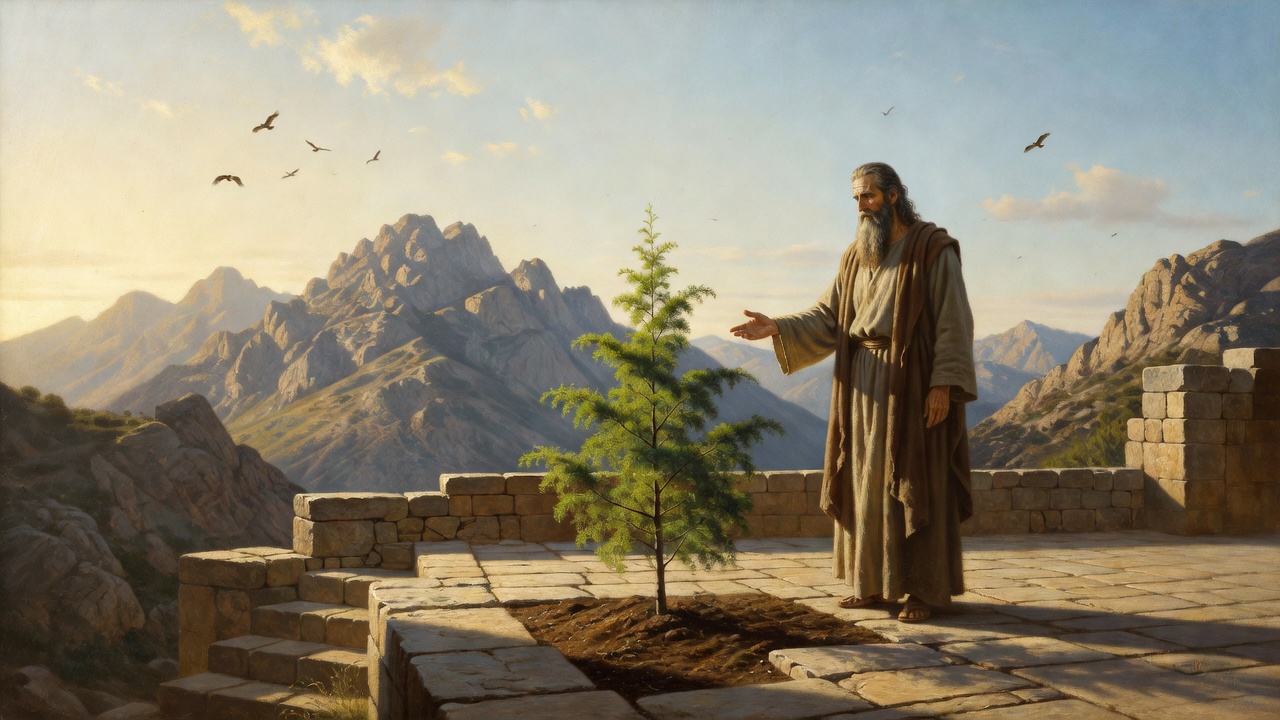
- The chapter concludes with a reversal of human political schemes: God Himself promises to take a tender shoot from the top of the cedar and plant it upon the mountain heights of Israel, where it will grow into a majestic tree offering shelter to birds of every kind.Sources: the Bible text itself
Notes written with AI assistance from open sources (Theographic Bible Metadata, CC BY-SA 4.0; Easton’s Bible Dictionary, public domain) and reviewed before publishing.
Places in this chapter
- Lebanon · 33.540, 35.584 · verse 3
- Canaan · 32.767, 35.333 · verse 4
- Babylon · 32.543, 44.422 · verses 12, 14, 15, 16, 17, 20
- Jerusalem · 31.777, 35.234 · verses 12, 17
- Egypt · 30.129, 31.308 · verse 15
Only places identified with high confidence are shown (90% or more according to the scholarly sources compiled by OpenBible). Period map: DARE (Digital Atlas of the Roman Empire), CC BY 4.0; modern map: © OpenStreetMap contributors; places: OpenBible.info (CC BY 4.0).
Credits and license for this translation
Paipel
The Holy Bible in the Chuukese language of the Federated States of Micronesia
copyright © 1984, 1989, 1991, 2001 Liebenzel Mission
Language: Chuukese
Translation by: Liebenzell Mission
Old Testament © 1989, 2001 Liebenzel Mission
New Testament © 1984, 1991 Liebenzel Mission
This translation is made available to you under the terms of the
Creative Commons Attribution-No Derivatives license 4.0.
You may share and redistribute this Bible translation or extracts from it in any format, provided that:
You include the above copyright and source information.
You do not make any derivative works that change any of the actual words or punctuation of the Scriptures.
Pictures included with Scriptures and other documents on this site are licensed just for use with those Scriptures and documents.
For other uses, please contact the respective copyright owners.
2024-01-24
Source: http://ebible.org/chk/ · eBible.org