Ecclesiastes 6
Paipel · Tap a verse to see its cross-references.
1Iwe, üa pwal küna och mi ngau won fanüfan a fokun aweiresi aramas: 2Are Kot a ngeni eman aramas wöü me pisek me iteüöch pwe esap wor an osupwang ren mine a mochen, a tongeni fis pwe Kot esap mwüt ngeni pwe epwe alomota wöün we, nge eman chon ekis a alomota. Iwe, ei pön chök, ewer, iei eu riaföü mi watte. 3Are eman mwän a wor ipükü nöün, are a pwal manauatam, inamwo ika fite ierin manauan, are esap tongeni alomota feiöchün manauan, esap pwal fisiöch angangen won peiasan, üa mefi pwe eman mönükol mi mwetela a feiöch seni. 4Pun eman mönükol mi mwetela esap wor lomotan, epwe feilong lon rochopwak, nge rochopwak epwe pwölüöla itan. 5Esap küna akkar, esap pwal silei och mettoch, nge a fen kinamwe seni ena mwän 6esap tongeni alomota wöün, inamwo ika a manau lon ruongeröü ier. Ifa usun, ir me ruoman resap feila lon eu chök leni?
7Aramas meinisin ra angang weires fän iten ener mongö chök, nge ar moneiti mongö esap fokun wes. 8Iwe, ren met eman mi mirit a feiöch seni eman mi umwes? Ifa än eman chon wöüngau feiöch, are a silei mine epwe föri lon manauan? 9A mürina än eman epwe menemenöch ren mine a nom ren lap seni an mocheniaiti pwal och. Pun ei pön chök, a usun chök turufi asepwäl.
10Meinisin mine a fis a fen akot seni me lom, nge a pwal sil sokun lapalapen aramas. Iwe, esap wor eman aramas a tongeni pälüeni eman mi pöchökül seni. 11Ia a wor chomong kapas ie, a pwal wor chomong kapas mi lomotongau o pön. Nge met lomotan ngeni eman aramas? 12Iwe, iö a tongeni silei mine a mürina ngeni eman aramas lon ränin manauan mi mochomoch o pön usun chök ngünüan? Nge iö a tongeni aiti ngeni eman aramas mine epwe fis won fanüfan mürin an mäla?
Did you know?
The Vanity of Unsatisfied Wealth
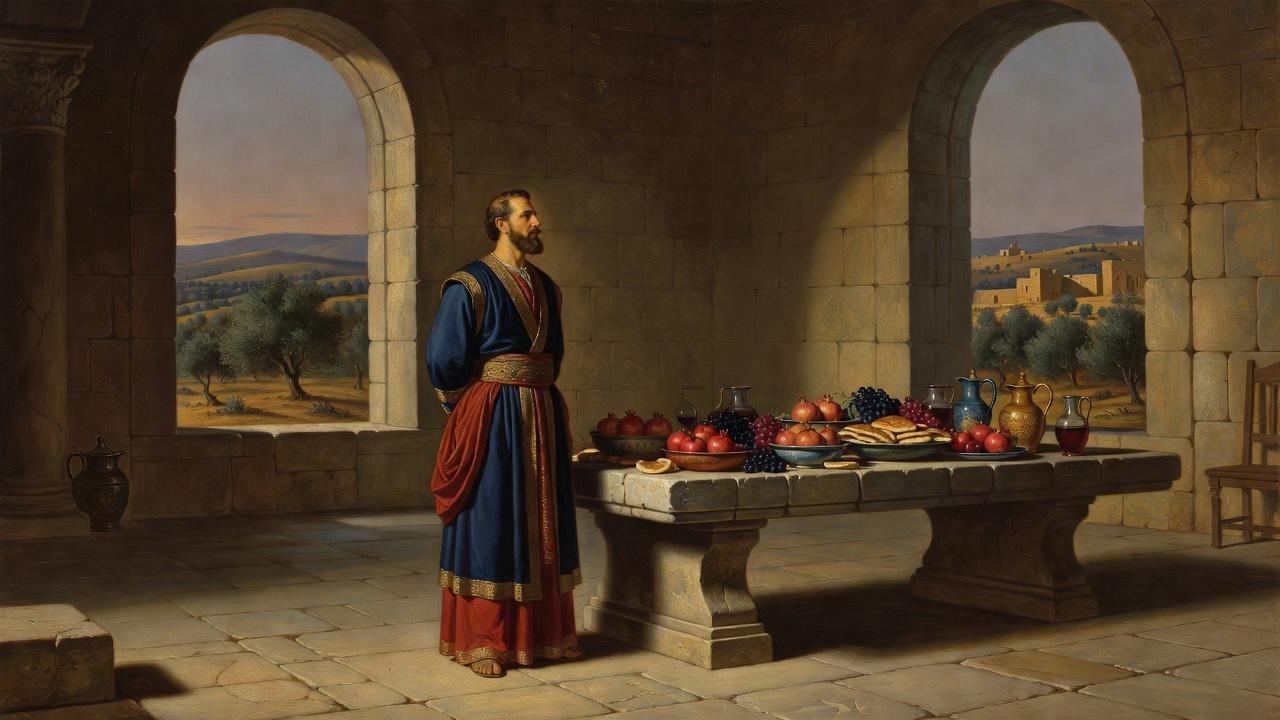
- In ancient thought, having a long life and fathering many children were considered the highest signs of blessing. Ecclesiastes observes, however, that even living two thousand years and fathering a hundred children is hollow if a person cannot enjoy their prosperity or receive a proper burial.Sources: the Bible text itself
- The author points out that although human labor is spent satisfying basic physical needs such as food, human appetite and desire remain continually unfulfilled. He contrasts enjoying what is directly present before the eyes with the ceaseless wandering of unsatisfied cravings.Sources: the Bible text itself
- The chapter emphasizes human limitations, noting that mortals cannot dispute with what has been established by one stronger than they are. Because life is fleeting like a shadow, humans cannot fully know what is truly good for them or foresee what will happen after they are gone.Sources: the Bible text itself
Notes written with AI assistance from open sources (Theographic Bible Metadata, CC BY-SA 4.0; Easton’s Bible Dictionary, public domain) and reviewed before publishing.
Credits and license for this translation
Paipel
The Holy Bible in the Chuukese language of the Federated States of Micronesia
copyright © 1984, 1989, 1991, 2001 Liebenzel Mission
Language: Chuukese
Translation by: Liebenzell Mission
Old Testament © 1989, 2001 Liebenzel Mission
New Testament © 1984, 1991 Liebenzel Mission
This translation is made available to you under the terms of the
Creative Commons Attribution-No Derivatives license 4.0.
You may share and redistribute this Bible translation or extracts from it in any format, provided that:
You include the above copyright and source information.
You do not make any derivative works that change any of the actual words or punctuation of the Scriptures.
Pictures included with Scriptures and other documents on this site are licensed just for use with those Scriptures and documents.
For other uses, please contact the respective copyright owners.
2024-01-24
Source: http://ebible.org/chk/ · eBible.org