Deuteronomy 24
Paipel · Tap a verse to see its cross-references.
Allük usun mwüfesen
1“Iwe, are eman mwän a pwülüeni eman fefin, nge mürin esap chüen sani, pun a küna och ter me won, ätewe epwe makei echö toropwen mwüfesen. Iwe, epwe ngeni neminewe ewe toropwe o tinala seni imwan. 2A tongeni fis, pwe mürin an feila seni imwan, pwal eman mwän a pwülüeni. 3Nge are aruomanün pwülüan a pwal oput o makei echö toropwen mwüfesen, mürin a ngeni neminewe o tinala seni imwan, ika ewe aruomanün pwülüan a mäla, 4ätewe mi pwülüeni me mwan o tinala, esap tongeni pwülüenisefäli, pun a limengau. Ei sokun föför a anioput me fän mesen ewe Samol mi Lapalap. Kosap awarato tipis won ewe fanü ewe Samol mi Lapalap epwe ngonuk pwe kopwe fanüeni.
5Iwe, are eman mwän a pwüpwülüfö, esap feila maun, esap pwal tolong lon och sokun angang. Epwe chök nom lon lenian lon ükükün eu ier, pwe repwe pwapwafengen me pwülüan.”
Ekoch sokun allük
6“Iwe, esap wor eman a tongeni angei seni eman an lenien üsüs, sap mwo nge ewe föün üsüs fän iten asisilen an liwinimang, pun epwe usun chök nge a angei seni mine a manau seni.
7Are a pwä pwe eman aramas a soläni eman lein pwin kewe chon Israel, mürin a nöüni amanau ika a amömöla, ewe chon solä epwe ninnila. Iei usun kopwe limetawu ewe mi ngau seni leimi.
8Iwe, lupwen a toruk samaun rupun pwötür, kopwe afäluk pwe kopwe tümwünüöchü le apwönüetä meinisin mine ekewe souasor ir chon ewe ainangen Lefi ra aiti ngonuk. Kopwe tümwünüöchü le apwönüetä mine üa allük ngeniir. 9Kopwe chechemeni mine ewe Samol mi Lapalap om we Kot a föri ngeni Miriam, lupwen oua towu seni Isip.
10Are ka mwüt ngeni chon arum och mettoch, kosap tolong lon imwan, pwe kopwe angei ewe asisilen an liwinimang ngonuk. 11Kopwe chök ütä lükün, nge ewe mwän ka mwüt ngeni och mettoch epwe uwawu reöm ewe asisilen liwinimang. 12Nge are ewe mwän a wöüngau, kosap annut fän üfan a ngonuk. 13Iwe, lupwen akkar a tuputiu, kopwe aliwinala ngeni an we asisilen lwinimang, pwe a tongeni annut fän üfan owokot o afeiöchuk. Ren ei föför kopwe küna pwüng fän mesen ewe Samol mi Lapalap om we Kot.
14Iwe, kosap ariaföüü eman chon angang mi mö a wöüngau o mwelele, ese lifilifil ika i eman pwiüm chon Israel ika eman chon ekis mi imweimw lon eu lein om kewe telinimw. 15Nge kopwe ngeni liwinin lon ewe rän a angang ngonuk mwen akkar esamwo tuputiu. Pokiten ewe mwän a wöüngau, a ekieki liwinin. Nge are ka amwöchü seni, epwe siö ngeni ewe Samol mi Lapalap, nge en kopwe tipis ren.
16Iwe, ekewe sam resap ninnila fän iten än nöür tipis, nge ekewe nau resap ninnila fän iten än semer tipis. Iteiten eman me eman epwe ninnila fän iten püsin an tipis.
17Kosap sorei mine a pwüng ngeni eman chon ekis ika eman mi mäsen, kosap pwal angei üfen eman fefin mi mä pwülüan fän iten asisilen an liwinimang. 18Kopwe chechemeni pwe ra nounuk amanau me lon ewe fanü Isip, nge ewe Samol mi Lapalap om we Kot a angasok seni ikenan. Iei mine üa allük ngonuk pwe kopwe föri iei usun.
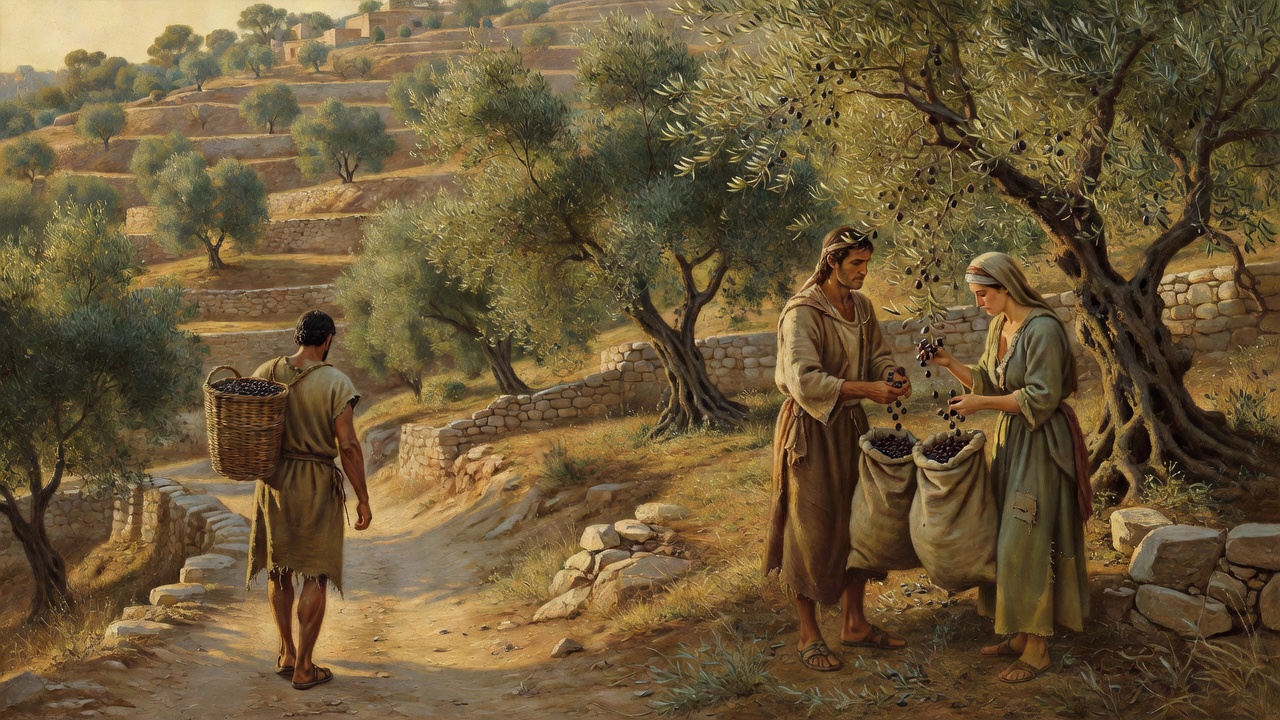
19Lupwen ka kini uän wiich lon om tanipi o manlükala eu pilük, kosap liwiniti om tanipi pwe kopwe angei. Kopwe likitala fän iten ekewe chon ekis, ekewe mi mäsen me ekewe fefin mi mä pwülüer. Ren ei ewe Samol mi Lapalap om Kot epwe afeiöchuk lon om angang meinisin. 20Lupwen ka wichiki om irä olif, kosap wichikisefäli palan. Kopwe likitala ekoch föün fän iten ekewe chon ekis, ekewe mi mäsen me ekewe fefin mi mä pwülüer. 21Nge lupwen ka kini uän om irän wain lon om tanipi, kosap kinisefäli me mürin. Kopwe likitala ekoch föün fän iten ekewe chon ekis, ekewe mi mäsen me ekewe fefin mi mä pwülüer. 22Iwe, kopwe chechemeni pwe ra nounuk amanau me lon ewe fanü Isip. Iei mine üa allük ngonuk pwe kopwe föri iei usun.
Did you know?
Laws of Compassion, Justice, and Social Protection
- Israelite harvesting laws required landowners to leave behind forgotten sheaves of grain, leftover olives, and grape gleanings for vulnerable groups: the resident foreigner, the orphan, and the widow. This social welfare system was grounded in the collective memory that the Israelites had once been oppressed slaves in Egypt.Sources: the Bible text itself · Egypt
- Debtors and hired workers were protected by explicit legal limits. Creditors were forbidden from entering a debtor's house to seize a pledge, taking essential millstones that provided a household's daily bread, or keeping an impoverished person's sleeping cloak past sunset, and day laborers had to be paid before nightfall.Sources: the Bible text itself
- When giving instructions concerning infectious skin diseases and the guidance of Levitical priests, the text points back to the affliction of Miriam, the sister of Moses and Aaron, during the wilderness journey following the Exodus from Egypt.Sources: the Bible text itself · Miriam · Egypt
Notes written with AI assistance from open sources (Theographic Bible Metadata, CC BY-SA 4.0; Easton’s Bible Dictionary, public domain) and reviewed before publishing.
Places in this chapter
Only places identified with high confidence are shown (90% or more according to the scholarly sources compiled by OpenBible). Period map: DARE (Digital Atlas of the Roman Empire), CC BY 4.0; modern map: © OpenStreetMap contributors; places: OpenBible.info (CC BY 4.0).
Credits and license for this translation
Paipel
The Holy Bible in the Chuukese language of the Federated States of Micronesia
copyright © 1984, 1989, 1991, 2001 Liebenzel Mission
Language: Chuukese
Translation by: Liebenzell Mission
Old Testament © 1989, 2001 Liebenzel Mission
New Testament © 1984, 1991 Liebenzel Mission
This translation is made available to you under the terms of the
Creative Commons Attribution-No Derivatives license 4.0.
You may share and redistribute this Bible translation or extracts from it in any format, provided that:
You include the above copyright and source information.
You do not make any derivative works that change any of the actual words or punctuation of the Scriptures.
Pictures included with Scriptures and other documents on this site are licensed just for use with those Scriptures and documents.
For other uses, please contact the respective copyright owners.
2024-01-24
Source: http://ebible.org/chk/ · eBible.org