Deuteronomy 21
Paipel · Tap a verse to see its cross-references.
Mine chon Israel repwe föri, lupwen ra küna eman mi ninnila
1“Iwe, are a fis lon ewe fanü ewe Samol mi Lapalap ämi we Kot epwe ngenikemi pwe oupwe fanüeni, pwe eman a küna eman mi ninnila lemäl, nge esap pwä iö a niela, 2mürin, nöümi kewe souakom me nöümi kewe soukapwüng repwe feito lon ewe leni. Iwe, repwe aükü toauen ewe leni, ia ewe somä a nom ie, ngeni ekewe telinimw mi nom ünükün. 3Mürin, ekewe souakom mine telinimwer ewe a kon kan ngeni ewe somä, repwe angei eman nienifön kow esamwo angang o mwärei efoch waas. 4Iwe, ekewe souakomwen ewe telinimw repwe emwenala ewe nienifön kow lon eu lemol ia a pupu koluk ie, esamwo tu pwülün, esap pwal mwo fot irä won. Iwe, ikenan repwe kupi üen ewe nienifön kow. 5Mürin, ekewe souasor ir chon ewe ainangen Lefi repwe pwal feito, pun ewe Samol mi Lapalap ämi we Kot a filiretä pwe repwe angang ngeni, repwe pwal afeiöchü aramas fän itan. Iwe, mine ra apasatä lon iteiten kapwüngün fitikoko ika kapwüngün feiengau epwe fis. 6Mürin, ekewe souakom meinisin seni ewe telinimw mi kon kan ngeni ewe somä repwe talü pöür me won ewe nienifön kow a kupukup üan me lon ewe lemol. 7Iwe, repwe pwärätä o apasa, ‘Äm aisap nimanauei ei aramas, aisap pwal küna iö a niela. 8Äm Samol mi Lapalap, kopwe amusala än noum aramasen Israel tipis, chokewe ka angaseer seni Isip. Kosap anomu won noum aramasen Israel tipisin nimanauei eman esap wor an tipis.’ Ren ei ewe tipisin nimanau epwe musala. 9Iei usun oupwe limetawu seni me leimi tipisin nimanauei eman esap wor an tipis, pun oua föri mine a pwüng fän mesen ewe Samol mi Lapalap.”
Mine chon Israel repwe föri ngeni fefin mi oola lon maun
10“Iwe, a tongeni fis pwe ka feila maun ngeni chon oputom, nge ewe Samol mi Lapalap a atolongeer lepoum pwe kopwe liapeniir. 11Are ka küna me lein ekewe chon oola eman fefin mi liöch pwe ka sani o mochen angei pwe pwülüom, 12kopwe emwenala neminewe lon imwom. Iwe, ewe fefin epwe reipöpöla möküran o fichiela ükkün, 13epwe pwal pwilitawu üfan a üföüf lupwen an oola o nonom lon imwom, pwe epwe kechüeiti saman me inan lon ükükün eu maram. Mürin ka tongeni pwülüeni, nge i epwe pwülüom. 14Nge are a fis pwe kosap chüen sani me mürin, kopwe mwüt ngeni pwe epwe feila ia a mochen feila ie. Nge kosap amömöla neminewe ren moni, kosap pwal föri ngeni usun mine ka föri ngeni eman amanau, pun ka fen kon ren.”
Allük usun ekewe mwänichi
15“Iwe, are eman mwän a pwülüeni ruoman fefin, eman a tongei, nge eman esap sani, mürin ir me ruoman ra nöünöü me won. Nge are neminewe ewe mwän esap sani a nöüni ewe mwänichi, 16mürin, lupwen epwe ineti wöün ngeni nöün kewe mwän, esap tongeni ngeni ätewe nöün neminewe a tongei ewe wisen mwänichi, nge epwe ngeni ätewe nöün neminewe esap sani, pun i wesewesen mwänichi. 17Iwe, epwe föri pwüngün inetin mwänichi ngeni ewe mwänichi nöün neminewe esap sani ren an epwe ngeni ruu inetin seni meinisin mine a eäni. Pokiten i aemanün nöün lon an pöchökül, iei mine ewe wisen mwänichi an.”
Mine epwe fis ngeni ät mi lükümach
18“Iwe, are eman mwän a nöüni eman ät mi tipeförea o lükümach, esap mochen aleasochisi alon saman ika inan, are ra fen emiriti, nge esap fokun aleasochsiir, 19mürin saman me inan repwe angei o emwenala ren ekewe souakomwen an we telinimw pwe epwe kapwüng. 20Iwe, repwe üreni ekewe souakom, ‘Iei i nöüm mi tipeförea o lükümach, esap mochen aleasochisi alom, a mongömong o ünüpuch.’ 21Mürin, mwänin ewe telinimw meinisin repwe monei ngeni fau tori a mäla. Iei usun oupwe atowu ewe mi ngau seni leimi. Iwe, chon Israel meinisin repwe rong usun o niuokus.”
Ekoch sokun allük
22“Iwe, are eman mwän a föri eu föför mi fokun ngau pwe a tipisin mäla ren, nge mürin ra niela o eitiuätä won efoch irä, 23inisin esap tongeni nom won ewe irä lon unusen ewe pwin. Nge kopwe peiaseni ewe mwän lon ewe chök ränin, pun eman aramas mi itiuätä won irä a anümamau me ren Kot. Kosap alimengaua ewe fanü ewe Samol mi Lapalap epwe ngonuk pwe kopwe fanüeni.
Did you know?
Justice, Family Rights, and Communal Purity
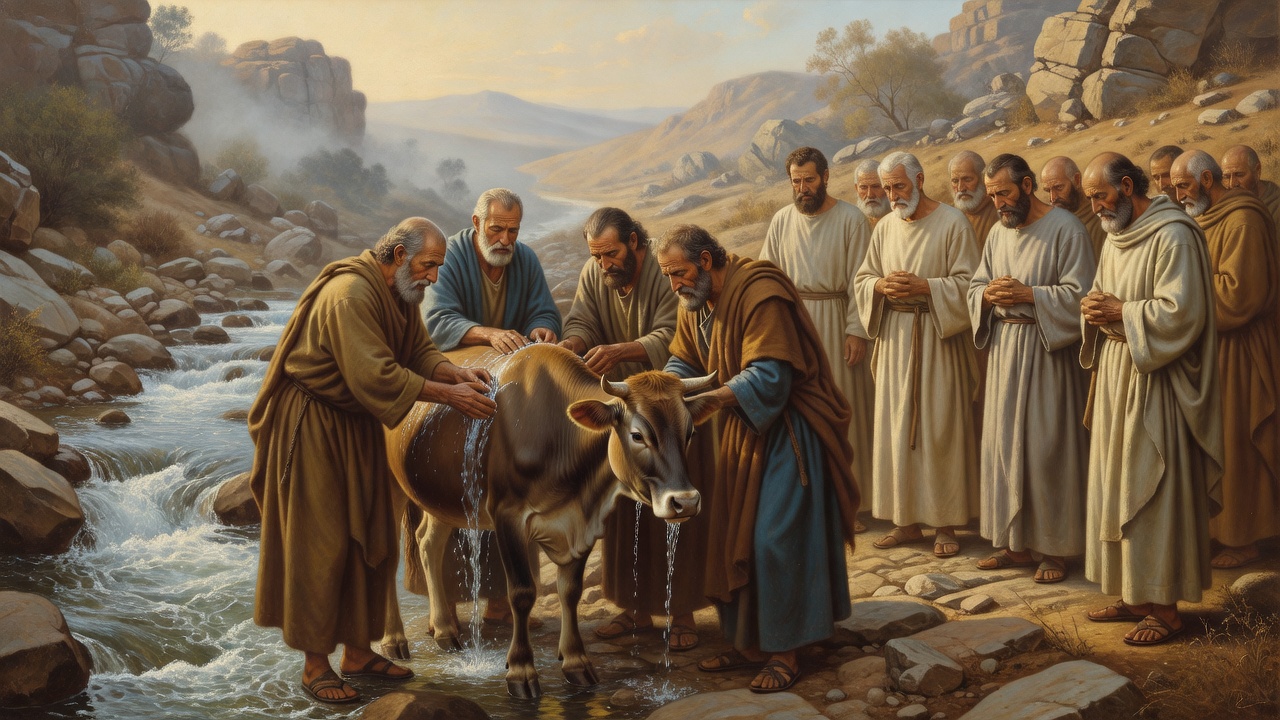
- When a murdered body was found in an open field with no known killer, the elders of the closest town were required to perform an atonement ritual. In an unplowed valley with running water, they washed their hands over a heifer while Levitical priests attended, clearing the community of bloodguilt.Sources: the Bible text itself
- Under the laws of inheritance, a father could not transfer the firstborn's rights to a younger son out of favoritism for a beloved wife. The eldest son, even if born to an unloved wife, was legally guaranteed a double portion of the father's estate.Sources: the Bible text itself
- If an executed criminal's body was hung on a tree as a public warning, it had to be taken down and buried before nightfall. The law stated that anyone hung on a tree was under God's curse, and leaving the corpse overnight would defile the land.Sources: the Bible text itself
Notes written with AI assistance from open sources (Theographic Bible Metadata, CC BY-SA 4.0; Easton’s Bible Dictionary, public domain) and reviewed before publishing.
Credits and license for this translation
Paipel
The Holy Bible in the Chuukese language of the Federated States of Micronesia
copyright © 1984, 1989, 1991, 2001 Liebenzel Mission
Language: Chuukese
Translation by: Liebenzell Mission
Old Testament © 1989, 2001 Liebenzel Mission
New Testament © 1984, 1991 Liebenzel Mission
This translation is made available to you under the terms of the
Creative Commons Attribution-No Derivatives license 4.0.
You may share and redistribute this Bible translation or extracts from it in any format, provided that:
You include the above copyright and source information.
You do not make any derivative works that change any of the actual words or punctuation of the Scriptures.
Pictures included with Scriptures and other documents on this site are licensed just for use with those Scriptures and documents.
For other uses, please contact the respective copyright owners.
2024-01-24
Source: http://ebible.org/chk/ · eBible.org