Daniel 8
Paipel · Tap a verse to see its cross-references.
Künään Taniel usun ewe ätemwänin sip me ewe ätemwänin kuuch
1Lon aülüngatin ierin mwün ewe king Pelsasar, ngang Taniel üa pwal küna och mürin künaei we me mwan. 2Iwe, lon künaei we a fis pwe itä üa nom lon Susa samolun ewe telinimwen ewe sop Elam ünükün ewe chanpupu Ulai. 3Nge lupwen üa nenetä, üa küna pwe eman ätemwänin sip a ütä ünükün ewe chanpupu. Iwe, a wor ruofoch mächän mi langatam, efoch a langatam seni efoch, nge ewe efoch mi langatam a pwükütä me mürin. 4Iwe, üa küna pwe ewe ätemwänin sip a opwuropwur ngeni lotou me efeng, pwal ngeni ör. Nge esap wor eman man a tongeni apälüa, esap pwal wor eman a tongeni sü seni fän an nemenem. Iwe, a chök föri mochenin letipan o püsin atekiatäi.
5Iwe, lupwen üa chüen ekieki usun ewe ätemwänin sip, eman ätemwänin kuuch a feito seni lotoun fanüfan, nge pokiten müttirin an sä pechen resap tori pwül. Iwe, ei kuuch a wor efoch mächän mi fokun langatam lefilen mesan. 6Iwe, ewe ätemwänin kuuch a feila ngeni ewe ätemwänin sip mi wor ruofoch mächän üa küna me ünükün ewe chanpupu, a sä ngeni fän an song mi fokun watte. 7Üa pwal küna pwe ewe kuuch a fiu ngeni ewe sip. A opwura o kupi mächän kewe ruofoch fän an song, nge esap wor pöchökülen ewe sip pwe epwe tongeni apälüa. Iwe, ewe kuuch a aturala ewe sip lepwül o ipweri, nge esap wor eman a tongeni amanaua. 8Mürin, ewe ätemwänin kuuch a püsin fokun atekiatäi. Nge lupwen an nemenem a senüküla, mächän mi langatam a kup. Iwe, lerasen ewe efoch ra pwükütä fofoch mächän mi langatam, nge iteiten efoch me efoch a iti ngeni lepelien läng me rüanü.
9Nge a pwal pwükütä efoch mächä mi kükün me won efoch lein ekewe fofoch, a fokun mämäritä pwe an nemenem a achöüala ngeni ör me ötiu, pwal ngeni ewe fanü mi mürina seni meinisin. 10Iwe, ewe mächä a fokun pöchökülela pwe a fiu ngeni ewe mwich seni läng. A aturätiu won fanüfan ekoch me leir, pwal ekoch fü, o ipweriretiu. 11Iwe, a püsin atekiai pwe epwe wewe ngeni Samolun ewe mwich, a aükätiu ewe asoren kek mi fis iteiten rän fän iten ewe Samol, a pwal atai imwan mi pin. 12Iwe, ewe mwich a tolong fän nemenien ewe mächä, nge ewe mächä a puri pinin ewe asoren kek mi fis iteiten rän, a pwal turunufasei ewe lamalam mi let. Iwe, meinisin mine a föri a chök fisitä. 13Mürin üa rongorong pwe eman chon pin a aisini pwal eman chon pin, “Ifa ükükün fansoun än ekewe mettoch mi pwä repwe fis? Ifa ükükün fansoun an epwe ouwongaua pinin ewe asoren kek mi fis iteiten rän? Nge ifa ükükün fansoun än ewe mächä purätiu ewe imw mi pin me ewe mwich?” 14Iwe, a pälüeni, “Epwe ükükün engeröü ipükü lime rän pwe esap fis asor lekuniol me lesosor. Mürin, ewe imw mi pin epwe kaüsefäl o pinsefäl.”
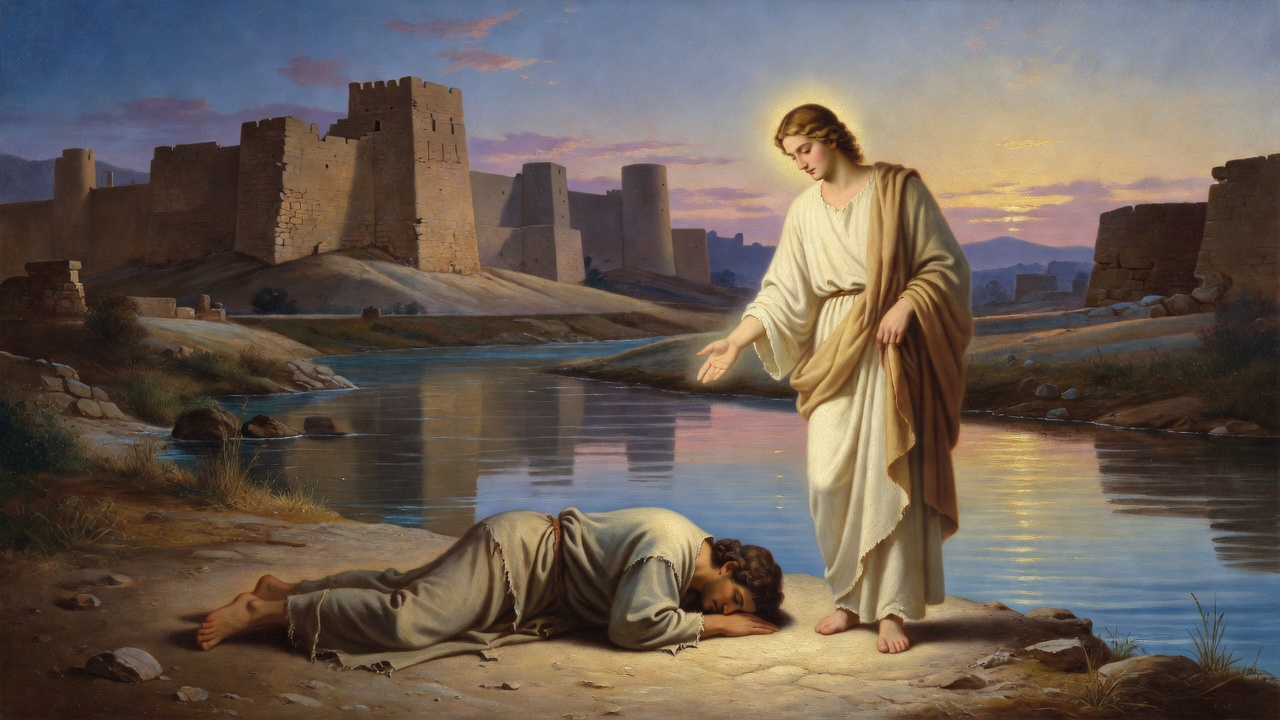
15Iwe, lupwen ngang Taniel üa sotuni ai üpwe weweiti wewen künaei we, nengeni, eman mi lapalapeni lapalapen mwän a ütä mwei. 16Iwe, üa rong mwelien eman aramas a kö seni epekin ewe chanpupu Ulai o apasa, “Kapriel, kopwe awewe ngeni ätei wewen künan we.” 17Mürin Kapriel a feito o ütä ünüki. Nge ngang üa fokun niuokus pwe üa chapetiu lepwül. Iwe, a üreniei, “Nöün aramas, kopwe weweiti pwe künaom we a pwärätä usun mine epwe fis lesopolan.”
18Lupwen a kapas ngeniei, och masaroch a toriei, pwe üa chapala lepwül. Nge ewe mwän a amwöchüei o aütäei. 19Iwe, a üreniei, “Üpwe asile ngonuk mine epwe fis lesopolan fansoun än Kot song, pun künaom a pwärätä usun fansoun sopolan. 20Wewen ewe ätemwänin sip ka küna fän ruofoch mächän ekewe kingen mwün Metia me Persia. 21Iwe, wewen ewe ätemwänin kuuch mwün Kriis, nge wewen mächän we mi langatam lefilen mesan aemanün kingen ewe mwü. 22Ekewe fofoch mächä mi pwükütä lerasen ewe efoch mi kup wewen rüanü mwü repwe ütä seni ewe mwü, nge pöchöküler esap wewe ngeni pöchökülen ewe aeuin mwü. 23Iwe, sopolan ar nemenem, lupwen ar tipis a fokun watte pwe repwe küna apwüng, eman king epwe seikitä, epwe fokun pwora o sile raaw. 24An nemenem epwe fokun wattela, nge sap seni püsin an tufich. Ataian me afeiengauean epwe fokun amairü, nge meinisin mine epwe föri epwe chök fisitä. Epwe afeiengaua ekewe chon nemenem me ewe mwichen chon pin. 25Pokiten an tipachemsolä an angangen atuputup epwe fisiöch, epwe pwal lamalamtekia lon lelukan. Iwe, epwe arosala chomong aramas mwen resamwo mefi, epwe pwal fiu ngeni ewe Samol mi lap seni samol meinisin. Mürin epwe ninnila, nge sap ren pöün eman aramas. 26Iwe, künaom we usun ekewe asor mi fis lekuniol me lesosor, eman a fen awewe ngonuk, epwe fokun fisitä. Nge kopwe amonomonala künaom ei, pun pworausen eu fansoun epwe feito.”
27Iwe, ngang Taniel üa apwangapwangala o samau lon ekoch rän. Mürin üa pwätä o föri ai angang ngeni ewe king. Nge üa chök rükö ren künaei we, pun üsap wewe ren.
Did you know?
The Vision of the Ram and the Goat
- In his vision, Daniel sees himself in the citadel of Susa in the province of Elam, standing by the Ulai Canal. Susa was the ancient capital of Elam, and the Ulai, known to the Greeks as the Eulaus, was a river that divided into two branches near the city.Sources: the Bible text itself · Susa · Ulai · Elam
- This passage contains the first biblical appearance of the angel Gabriel by name. Gabriel is commanded to explain the prophetic vision to Daniel, who collapses in fear before being lifted to his feet.Sources: the Bible text itself · Gabriel
- The vision provides explicit geopolitical identifications: the two-horned ram represents the kings of Media and Persia, while the shaggy goat represents the king of Greece.Sources: the Bible text itself · Media · Persia · Greece
Notes written with AI assistance from open sources (Theographic Bible Metadata, CC BY-SA 4.0; Easton’s Bible Dictionary, public domain) and reviewed before publishing.
Places in this chapter
- Elam · 32.189, 48.258 · verse 2
- Susa · Today: Shush · 32.189, 48.258 · verse 2
- Canaan · 32.767, 35.333 · verse 9
- Media · 34.806, 48.516 · verse 20
- Persia · 34.806, 48.516 · verse 20
- Greece · 37.972, 23.727 · verse 21
Only places identified with high confidence are shown (90% or more according to the scholarly sources compiled by OpenBible). Period map: DARE (Digital Atlas of the Roman Empire), CC BY 4.0; modern map: © OpenStreetMap contributors; places: OpenBible.info (CC BY 4.0).
Credits and license for this translation
Paipel
The Holy Bible in the Chuukese language of the Federated States of Micronesia
copyright © 1984, 1989, 1991, 2001 Liebenzel Mission
Language: Chuukese
Translation by: Liebenzell Mission
Old Testament © 1989, 2001 Liebenzel Mission
New Testament © 1984, 1991 Liebenzel Mission
This translation is made available to you under the terms of the
Creative Commons Attribution-No Derivatives license 4.0.
You may share and redistribute this Bible translation or extracts from it in any format, provided that:
You include the above copyright and source information.
You do not make any derivative works that change any of the actual words or punctuation of the Scriptures.
Pictures included with Scriptures and other documents on this site are licensed just for use with those Scriptures and documents.
For other uses, please contact the respective copyright owners.
2024-01-24
Source: http://ebible.org/chk/ · eBible.org